How something as simple as hand size changes control, finishing, and even how we remember players
Height, speed, strength — those are obvious.
Hands are different.
You don’t notice them until something slips. A gather that needs a second attempt. A finish that comes back into the body instead of staying out where it’s safe.
Or the opposite. A one-handed catch that shouldn’t work. A loose ball that sticks instead of bouncing away. A finish that looks effortless, like there was never any risk.
Those moments don’t show up clearly anywhere, but they accumulate. Not as highlights. As margins — how often a player looks in control, how rarely something unravels under pressure, how much space they seem to have when everything gets tight.
And that raises a different kind of question.
Not about skill. Not about effort.
Just… what if the hands were different?
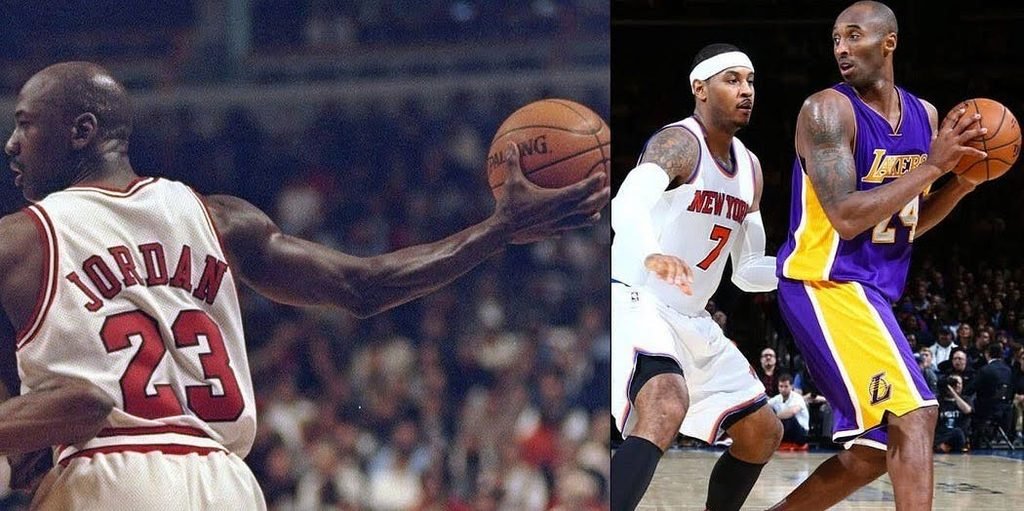
Experiment 1: Kobe Bryant ↔ Michael Jordan
Kobe Bryant (6’6″)
Hands: ~9.0″ length / ~9.1″ span
Michael Jordan (6’6″)
Hands: ~9.75″ length / ~11.375″ span
Kobe Bryant and Michael Jordan were built to be compared — same height, similar frame, similar scoring instincts. But their hands weren’t the same, and that difference shaped how the ball behaved around them.
Jordan’s hands gave him room. He could hold the ball away from his body, shift it mid-air, bring it back without rushing the next action. Even when everything else was moving, the ball stayed exactly where he put it.
Kobe could palm the ball too. He just didn’t have that same margin for error.
Jordan’s measurements place him among the players with the largest hands in NBA history, making the difference especially striking between two stars of the same height.
Give Kobe Jordan’s hands.
The change begins with control. The ball sits deeper in his grip, and when he extends it into a jab or a fake, it doesn’t drift. It stays out longer before coming back in, forcing defenders to respect space that wasn’t there before. That alters the geometry of the possession in small but repeatable ways.
Those contested midrange shots don’t suddenly become easy, but the path into them looks cleaner. Fewer mid-gather adjustments. Fewer last-second corrections before release. In traffic, the ball stays out instead of being pulled in and pushed back out again.
Across a season, that kind of friction adds up.
Give Jordan Kobe’s hands.
Nothing obvious breaks. He still gets to the same spots and makes the same reads. But the ball sits closer to his frame, especially on extensions. Finishes that once looked completely free now carry a trace of effort — a visible gather, a brief correction before release.
The outcome rarely changes.
The feel of it does.
And that’s where this starts to shift from mechanics into something else.
Some of what looked effortless was supported by how much space the body gave the skill to operate.
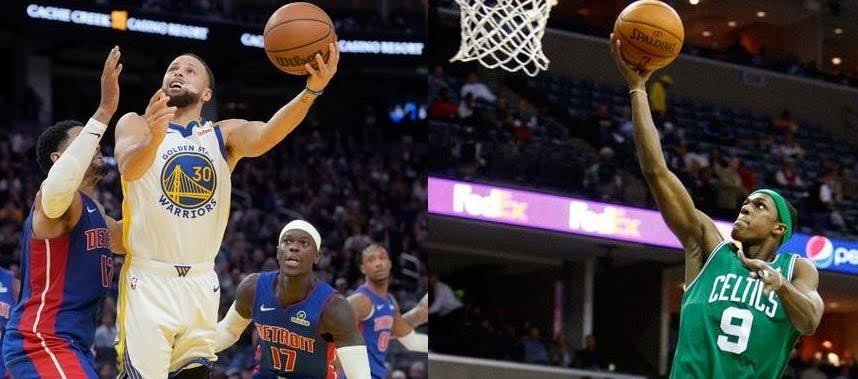
Experiment 2: Stephen Curry ↔ Rajon Rondo
Stephen Curry (6’2″)
Hands: ~8.5″ / ~9.0″
Rajon Rondo (6’1″)
Hands: ~9.5″ / ~10.0″
Curry bends the floor without touching the ball. Rondo needed it in his hands to shape anything.
Underneath that difference is something physical. Rondo had some of the biggest hands relative to height in NBA history, and the ball looked smaller with him. On drives, it stayed connected even when bodies closed in.
Curry’s hands don’t stand out in the same way.
Give Curry Rondo’s hands.
The shot doesn’t change much at first glance, but the handle does. The ball sits deeper on low dribbles, especially in tight spaces where it used to drift slightly away from his control. When he moves through traffic, the connection between hand and ball holds more consistently.
Passing shifts too, though in quieter ways. He can hold the ball out a moment longer, adjust the angle late, release from positions that previously required a reset. The reads are the same, but the execution has more room inside it.
That extra room comes at a cost.
Curry’s release depends on speed and touch. The ball doesn’t stay in his hands long enough to be gripped; it’s guided. If it sits deeper, even marginally, the timing shifts. The release lingers just enough to move it away from perfect repetition.
For most players, that difference wouldn’t matter.
For him, it does.
Give Rondo Curry’s hands.
The vision stays intact. The reads don’t change.
The control tightens. The ball can’t be held out as comfortably on drives, which compresses passing windows. Those one-handed probes into the lane require more precision because there’s less time to adjust before releasing.
Defensively, the same pattern holds. Reaching for the ball becomes more about timing than reach, because the margin for securing it shrinks.
Same mind.
Less room for error.
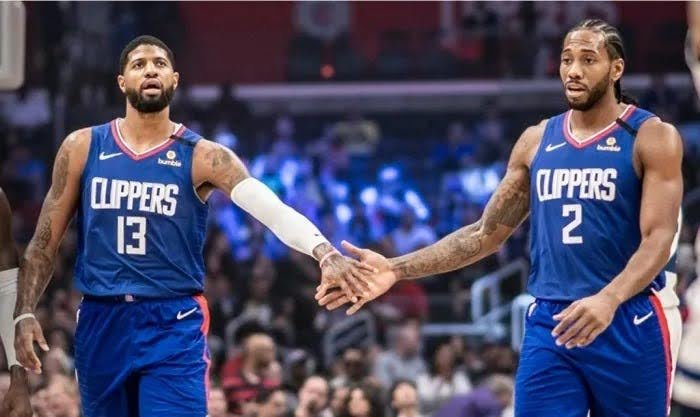
Experiment 3: Paul George ↔ Kawhi Leonard
Late clock. George brings it up, defender tight, help already leaning.
The handle sits a little high.
It’s enough.
Paul George (6’8″)
Hands: ~8.5″ / ~9.0″
Kawhi Leonard (6’7″)
Hands: ~9.75″ / ~11.25″
From a distance, they look similar. Long, smooth, controlled. Up close, especially when possessions tighten, they don’t feel the same.
Kawhi’s control is quiet. The ball rarely looks loose, even under pressure. When he reaches his spot, everything settles.
With George, there are moments where that control wavers — a gather that needs correcting, a dribble that rises just high enough to invite pressure. Small details, but they tend to appear when there’s no room for them.
Give George Kawhi’s hands.
In traffic, the ball stays where it should. It doesn’t drift before the gather, and he doesn’t need to bring it back in before finishing. Some of those late possessions where the ball gets poked loose simply never happen.
That changes the texture of his game more than the results. Fewer interruptions. Fewer broken sequences.
Defensively, the same pattern appears. He can reach and secure the ball in one motion instead of needing to recover it.
Kawhi with George’s hands still gets to the same spots and operates at the same pace, but the ball sits closer to his body. Extensions shorten. There’s a shift from control driven by grip to control driven by positioning.
The pressure remains.
The certainty softens.
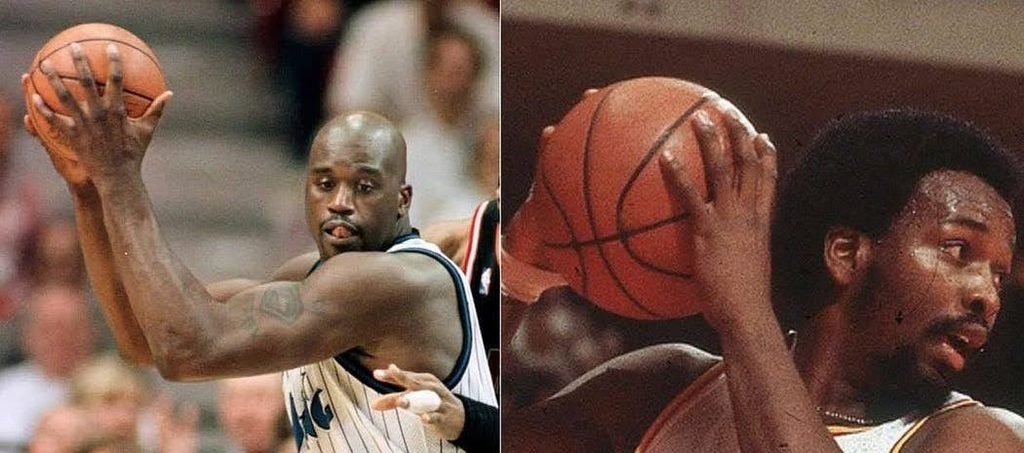
Experiment 4: Shaquille O’Neal ↔ Moses Malone
The ball comes off the rim. Bodies collapse.
With Shaq, the possession usually ends there.
Shaquille O’Neal (7’1″)
Hands: ~10.25″ / ~12.0″
Moses Malone (6’10”)
Hands: ~8.5″ / ~9.5″
Shaq’s dominance wasn’t just force. It was control in crowded space — the ability to hold the ball high and wide, away from hands reaching in, and finish without resetting.
Give him smaller hands.
He still establishes position and moves defenders. But once the ball arrives, the sequence changes. It comes in before going back up. In heavy traffic, that extra step — secure, then finish — stretches the play just enough to be felt.
The results remain strong.
The dominance looks different.
Less overwhelming, more constructed.
At the line, the change might even help. The ball sits more naturally, easier to guide.
But that’s not where his impact was built.
Give Malone Shaq’s hands.
Rebounds settle earlier. The ball doesn’t bounce away before being controlled. Around the rim, finishes happen without resetting because the ball stays high and secure through contact.
The repetition is still there — miss, recover, go again.
But more possessions end on the first clean touch.
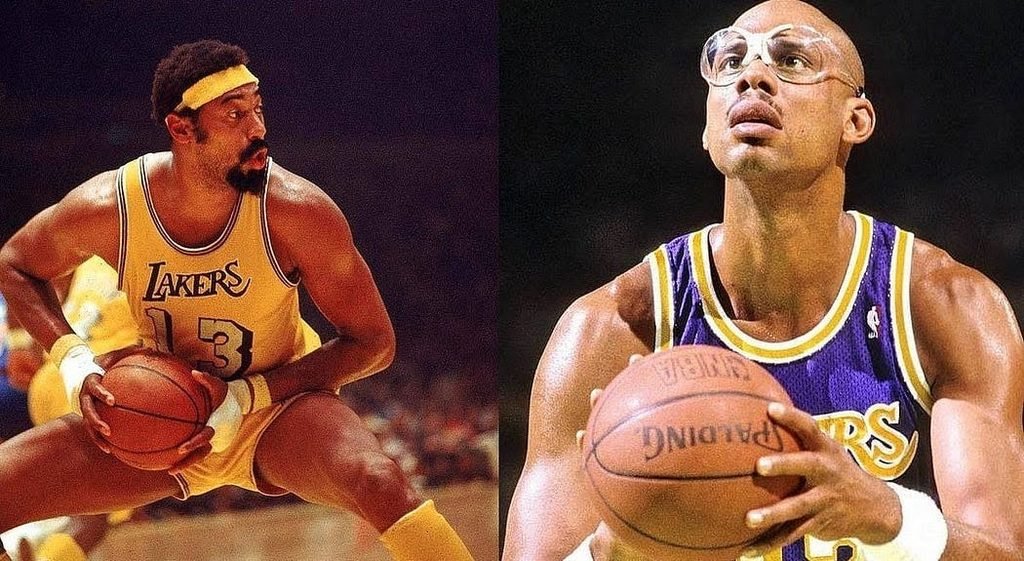
Experiment 5: Kareem Abdul-Jabbar ↔ Wilt Chamberlain
Kareem created space in small ways — a turn, a lean, just enough.
The skyhook didn’t need much margin.
It needed consistency.
Kareem Abdul-Jabbar (7’2″)
Hands: ~9.0″ / ~9.5″
Wilt Chamberlain (7’1″)
Hands: ~9.5″ / ~11.5″
Give Kareem Wilt’s hands.
The motion stays intact, but the ball sits differently throughout it. Less guiding, more placement. On rebounds, control comes earlier, and outlet passes leave sooner because the ball doesn’t need to be secured before moving again.
Those small interruptions disappear.
When they do, the game looks even smoother than it already was.
Wilt still reaches the same places.
But the ball doesn’t stay extended as comfortably. Rebounds require a second touch more often. Finishes through contact pull inward before release.
The reach remains.
The ease changes.
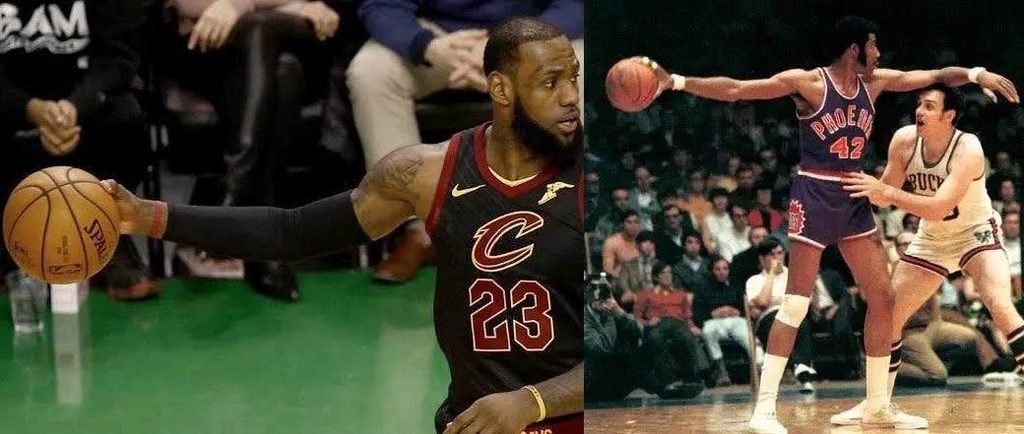
Experiment 6: LeBron James ↔ Connie Hawkins
LeBron plays with control, even at full speed.
On drives, you can see the sequence: gather, secure, extend.
Connie Hawkins — who played in an era before most of the game was preserved the way it is now — operated differently.
LeBron James (6’9″)
Hands: ~9.0″ / ~9.25″
Connie Hawkins (6’8″)
Hands: ~10.5″ / ~11.0″
Give LeBron Hawkins’ hands.
The gather shortens. The ball stays extended instead of being pulled back in, which removes one step from the sequence. Passes leave from wider angles without the need for final corrections.
A drive through traffic becomes a single motion.
Not because it’s easier.
Because there’s less that needs fixing along the way.
Hawkins with LeBron’s hands still attacks and creates, but the ball stays closer. Some of the angles he used to reach no longer open as naturally, and the freedom in his movement narrows into something more deliberate.
The creativity is still there, but it has to work inside tighter space.
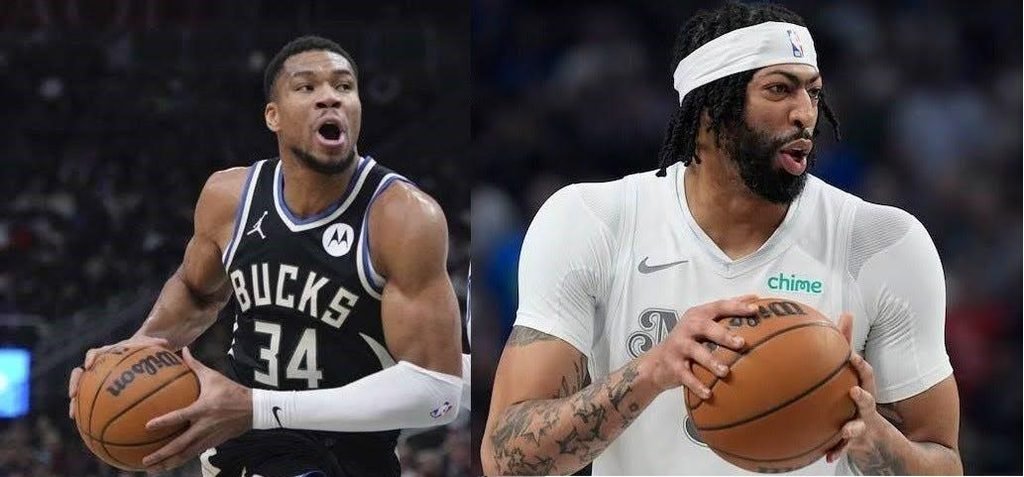
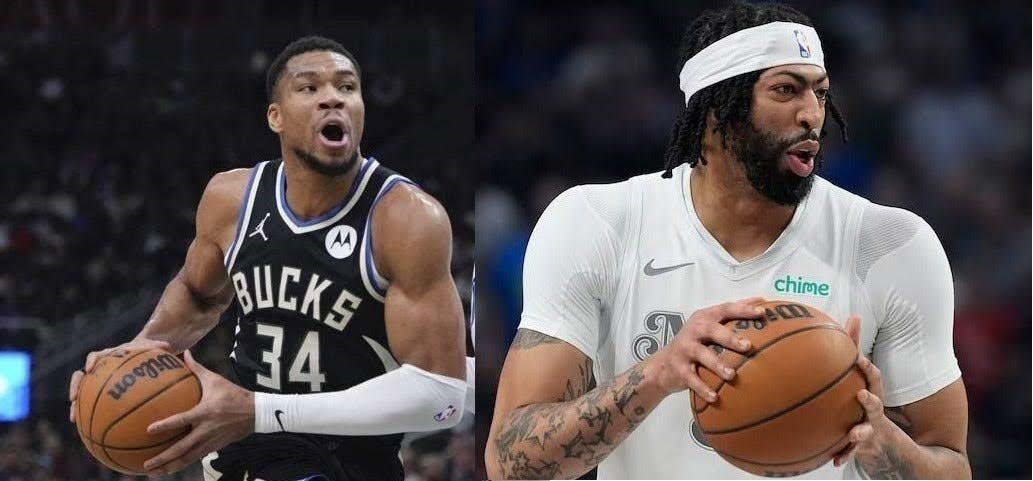
Experiment 7: Giannis Antetokounmpo ↔ Anthony Davis
Giannis is already past his defender.
One step, then another, and suddenly he’s a full arm’s length from the rim, the ball extended out where it shouldn’t be safe.
It doesn’t come loose.
It almost never does.
Giannis Antetokounmpo (6’11”)
Hands: ~9.85″ / ~12.0″
Anthony Davis (6’10”)
Hands: ~9.0″ / ~8.5″
Davis’s listed hand span is smaller than his hand length—one of the unusual NBA hand facts that make this comparison especially striking.
Give him smaller hands.
The stride and speed stay the same, but on those long extensions, the ball comes in earlier. He has to secure it before finishing rather than placing it from distance.
Some of those finishes — the ones that feel impossible — become more controlled.
More effort. Less inevitability.
Give Davis Giannis’ hands.
Rebounds settle immediately instead of requiring a second grab. Around the rim, he can finish further from defenders without needing perfect positioning because the ball stays secure even when his body isn’t fully set.
Defensively, that same margin appears in brief moments — the ball is exposed for an instant, and that’s enough.
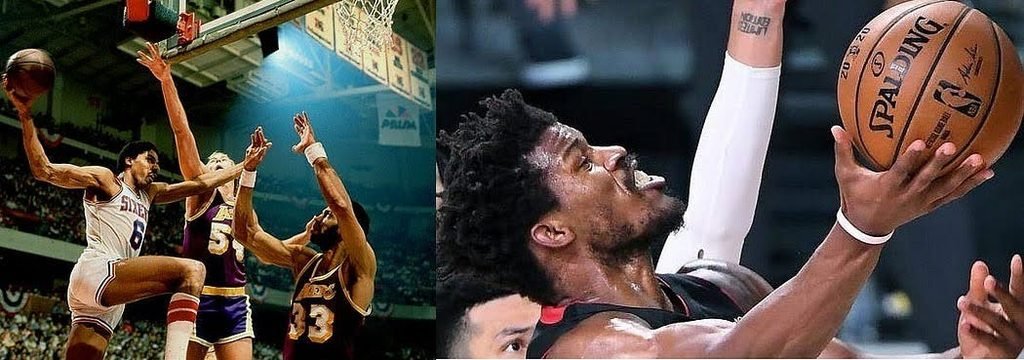
Experiment 8: Jimmy Butler ↔ Julius Erving
Late game.
Butler drives left. Contact comes early — one body on his hip, another rotating across.
Normally, he gathers, absorbs it, keeps the ball tight, finishes through balance and strength.
Jimmy Butler (6’7″)
Hands: ~9.0″ / ~9.0″
Julius Erving (6’6″)
Hands: ~9.5″ / ~11.75″
Give him Erving’s hands.
He leaves the floor the same way.
But the ball doesn’t stay fixed.
It moves outward first, away from the defender, then back in at the last moment. One hand instead of two. A longer path, still controlled.
The defender is still there.
Just not close enough.
The finish doesn’t rise higher.
It reaches further.
Erving with Butler’s hands still elevates and creates, but the ball stays closer. The wide extensions shorten, and the space between the ball and the defender narrows. Those sweeping finishes require more care.
The creativity remains.
It just operates with less room.
The Takeaway
After a while, the pattern becomes difficult to ignore.
Nothing here completely changes a career.
No one suddenly becomes someone else.
But the margins shift.
A ball that doesn’t get poked loose. A finish that doesn’t need correcting mid-air. A pass that leaves earlier.
On their own, they don’t matter much.
Together, they do.
We tend to treat skill as if it exists on its own.
It doesn’t.
It rests on something physical — height, reach, coordination, and sometimes something quieter, like how easily a player can control the ball when nothing else is.
Over time, that margin starts to look like composure.
Like control.
Like greatness.
And that’s the part that’s harder to sit with.
Because it means some of what we remember as pure skill was shaped, at least in part, by what a player was given before they ever developed it.
It doesn’t replace skill.
It shapes how that skill shows up.
The players don’t change.
The results don’t change much.
But the story we tell about why they looked the way they did probably should.