From mismatched pairs to guards with giant feet, these are the basketball dimensions that completely defy standard height logic
The biggest shoe in NBA history isn’t necessarily the most interesting one. Sometimes the surprising part is who’s wearing it.
A size 20 shoe sounds enormous. On a seven-footer, it’s easy to understand. A size 15 sounds ordinary by NBA standards. Put it on someone barely over six feet tall and the number gets a lot more interesting.
This isn’t a ranking of the biggest shoes in the league. It’s a look at the shoe sizes that don’t behave the way height would predict.
A quick note on the numbers: shoe size is one of the messiest measurements in basketball. Brands size differently, players can wear shoes that don’t correspond exactly to their foot size, and many figures circulating online can be traced back to the same unverified lists. Where reliable sources genuinely disagree, that disagreement is part of the story.
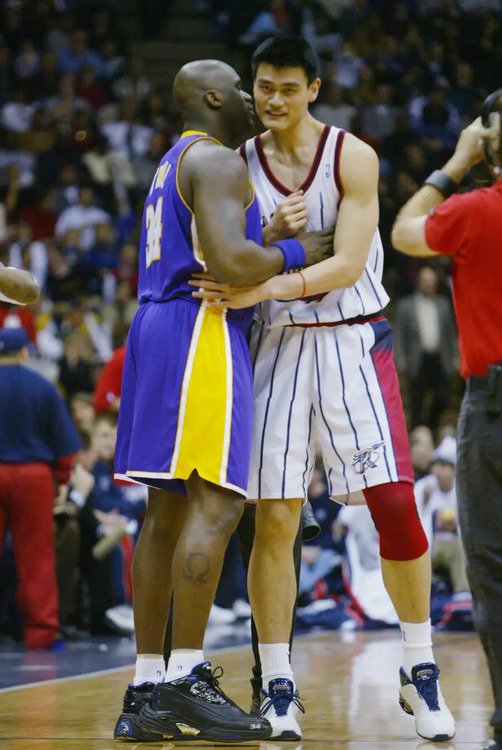
The best inversion in the sport: Shaq vs. Yao
Shaquille O’Neal: 7’1″, reported size 22
Yao Ming: 7’6″, reported size 18
Yao stood five inches taller than Shaq. He reportedly wore four sizes smaller.
That’s a remarkable difference between two players who were both among the largest men ever to play in the NBA.
Shaq’s reported size 22 is enormous even by NBA standards. Yao’s reported size 18 was still huge, but beside Shaq it looks almost ordinary.
The comparison shows why shoe size cannot simply be read from height. Two players can be separated by five inches of height while their feet tell an entirely different story.
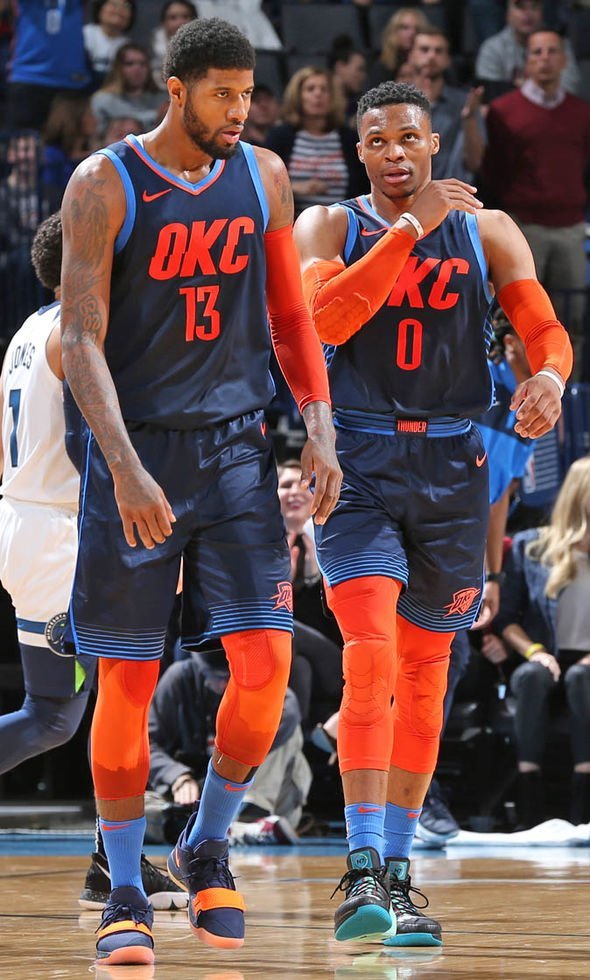
Westbrook’s feet were big before he was
Russell Westbrook: 6’3″, reported size 15
Paul George: 6’8″, documented size 13
Westbrook’s feet were unusual before he was anywhere close to his adult height.
As a 5’8″, 140-pound high-school freshman, Westbrook was already wearing size-14 shoes, according to a SLAM Magazine profile of his early basketball career. He eventually grew to 6’3″.
He later became an NBA guard associated with a reported size 15.
Paul George provides the perfect counterpoint. At 6’8″, George has been documented in size-13 player-issued footwear.
So the comparison works on two levels. Westbrook had unusually large feet while he was still a small high-school freshman, and he eventually became an NBA guard whose reported shoe size exceeded that of a player five inches taller.
That’s backwards from what height alone would suggest.
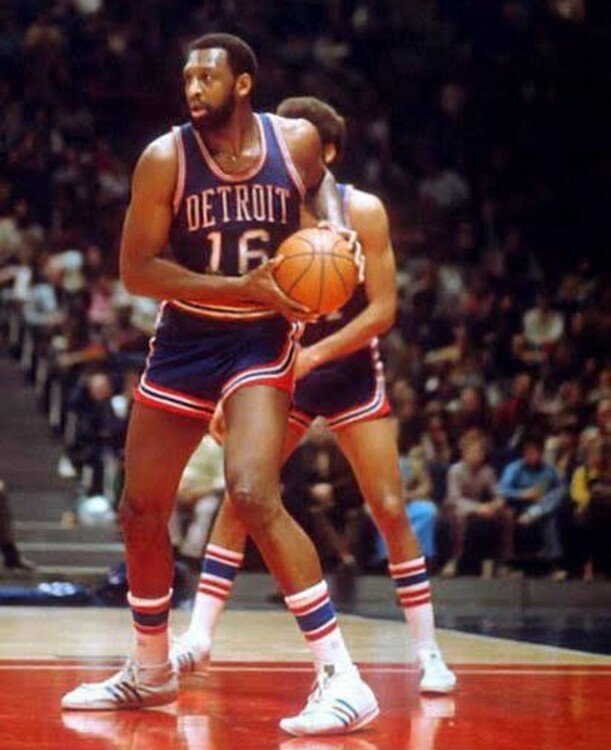
Bob Lanier’s Famous Size 22 May Not Have Been a Standard U.S. 22
Bob Lanier: 6’10”, famously associated with size 22; surviving game-worn shoes have been cataloged from 18.5 to 22
For decades, Bob Lanier was synonymous with size-22 basketball shoes. The number became so closely associated with him that a bronze size-22 shoe was placed in the Naismith Memorial Basketball Hall of Fame, while Lanier himself joked about the scale of his footwear.
But the legend has an important complication. In 1989, a Converse representative told The Atlanta Constitution that Lanier actually wore U.S. size 18.5 shoes, explaining that the “22” commonly attached to him referred to a Korean size. The NBA later repeated that account in its obituary for Lanier.
Actual game-worn shoes do not produce one simple answer. SCP Auctions sold an early-1980s signed, game-worn Converse pair described as size 18.5, while Heritage Auctions cataloged a 1970s Detroit Pistons Adidas pair as approximately size 19.
At the same time, Heritage has offered a heavily worn Milwaukee Bucks shoe described as size 22 and game-worn. So the size-22 reputation cannot simply be dismissed as a myth. At least one surviving player-worn shoe carries that size.
The most accurate conclusion is not that Lanier “was really” one size or the other. His surviving footwear tells a messier story: different pairs have been labeled from approximately 18.5 to 22, while contemporary reporting specifically challenged the famous 22 as a U.S. size.
Either way, the shoes were enormous.
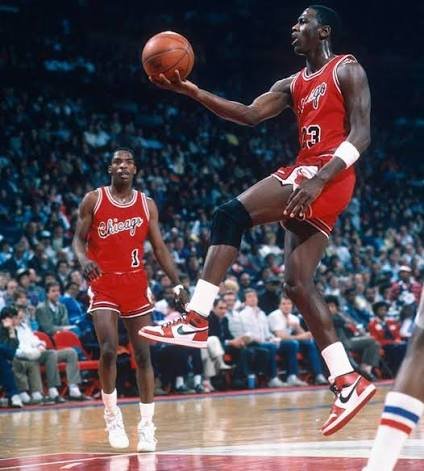
Michael Jordan Played in Two Different Shoe Sizes
Michael Jordan: 6’6″, typically size 13 on the left and 13.5 on the right
Michael Jordan played in mismatched basketball shoes.
Sotheby’s describes Jordan’s custom Air Jordan 1s as size 13 on the left and size 13.5 on the right, noting that he wore mismatched sizes for most of his career. The shoes were made specifically for him rather than sold at retail.
The evidence is unusually tangible. Authenticated, game-worn 1985 Air Jordan 1s have surfaced with a size-13 left shoe and size-13.5 right shoe, including pairs connected to specific rookie-season games. Heritage Auctions has also cataloged a size-13 left and size-13.5 right pair as Nike player samples.
There is one wrinkle: not every surviving early pair follows the same left-right arrangement. A 1984 game-worn Nike Air Ship listed by Christie’s was size 13.5 on the left and 13 on the right.
That variation does not weaken the broader point. It shows that Jordan’s game footwear could accommodate a half-size difference between his two feet, rather than simply putting the same size on both.
For a player whose career became inseparable from a famous shoe line, it is an unusually personal detail: Jordan’s game shoes were not just customized in appearance. The two shoes could actually be different sizes.
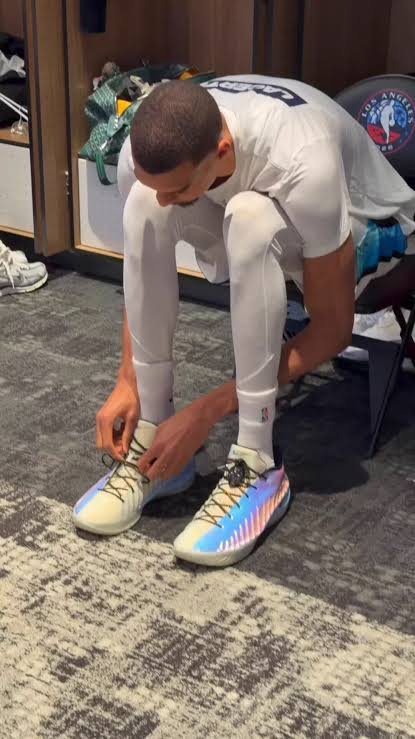
Victor Wembanyama’s Shoe Size Became a Moving Target During His Rookie Season
Victor Wembanyama: 7’4″, linked to sizes 20 through 22 during his rookie season
Victor Wembanyama’s shoe size became a moving target during his first NBA season.
Before the 2023–24 season, the Spurs listed Wembanyama at a U.S. size 20 in the annual footwear-size information teams submit to the NBA. During the preseason, the league’s NBA Kicks account identified a pair he wore as size 20.5.
The numbers continued to rise. Nike confirmed that its A.I.R. concept shoe for Wembanyama was made in size 21, while reporting later in the season connected him with a size-21.5 fit. A Nike G.T. Hustle 2 All-Star Weekend pair attributed to Wembanyama and cataloged by Sotheby’s was size 22.
That does not mean Wembanyama’s foot was literally changing from size 20 to size 22 every time a larger shoe appeared. Some of the shoes were player-issued rather than proven game-worn, and different models or custom fits can produce different sizes. But the available record does show something unusual: during roughly five months of his rookie season, Wembanyama was associated with basketball shoes ranging from size 20 to size 22.
For a 20-year-old standing 7’4″, the interesting part is therefore not simply that his shoes were enormous. It is that even his basketball footwear did not settle neatly on a single number.
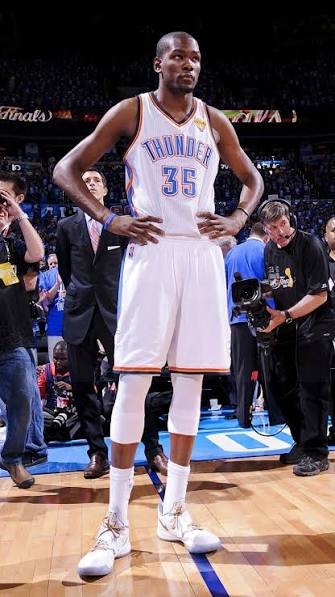
Kevin Durant and Paul George Went in Opposite Directions
Kevin Durant: 6’10”, size 17 off court / size 18 in games
Paul George: 6’8″, measured as a true size 14 / wore size 13, later preferred 13.5 in games
A basketball shoe’s tagged size does not always match the number associated with a player’s everyday footwear or measured foot. Kevin Durant and Paul George illustrate that point from opposite directions.
Durant has said that he wears a U.S. size 17 off the court but moves up to size 18 when he plays. An authenticated game-worn Nike Zoom KD IX from 2016 is also tagged size 18, matching his explanation.
George’s case runs the other way. During development of the Nike PG 1, Nike measured him as a “true” U.S. size 14. But George had been playing in size 13 shoes for years because he preferred a tight fit. Nike tried to move him into size 14, but he ultimately settled on a size-13.5 game fit instead.
Neither case means the player was wearing the wrong size. The numbers reflect how individual players choose to fit their basketball shoes.
Together, however, Durant and George show why a single NBA shoe-size number can be misleading. Durant sized up from his casual size for games; George sized down from Nike’s measured size for games.
That makes their cases more revealing than a simple list of shoe sizes. The number on the shoe tells you what the player wore, but not necessarily the size of his foot or the fit he preferred.
Manute Bol Was More Than a Foot Taller Than Vince Carter, But Their Shoe Sizes Overlapped
Manute Bol: listed at 7’6″–7’7″, reported size 16.5
Vince Carter: 6’6″, documented game-shoe range 16–16.5
Manute Bol’s shoe size is interesting precisely because of his extraordinary height. Listed at roughly 7’6″ to 7’7″, Bol was among the tallest players in NBA history, yet he was reported to wear a U.S. size 16.5 sneaker.
That number is enormous in ordinary life. But the comparison becomes much more striking when placed beside Vince Carter, who stood 6’6″, more than a foot shorter than Bol, yet wore documented NBA game shoes in sizes 16 and 16.5.
In other words, two players separated by roughly 12 to 13 inches in height were associated with overlapping shoe sizes.
Their feet were not necessarily the same anatomical size, and a shoe label is not a clinical measurement of the foot. But the comparison makes the larger point: height and basketball-shoe size do not rise in lockstep.
Bol’s reported 16.5 should still be treated as a reported footwear size rather than an exact measurement of his foot. A signed Nike pair marked 15.5 and associated with Bol also exists, but the auction record says it was presented as game-worn without supporting provenance. It therefore cannot be treated as verified game-used footwear.
That distinction matters because the strongest part of Bol’s story does not depend on proving the 15.5 pair. His reported 16.5 is already enough to create an unusual comparison with Carter: a player more than a foot shorter could wear essentially the same size shoe.
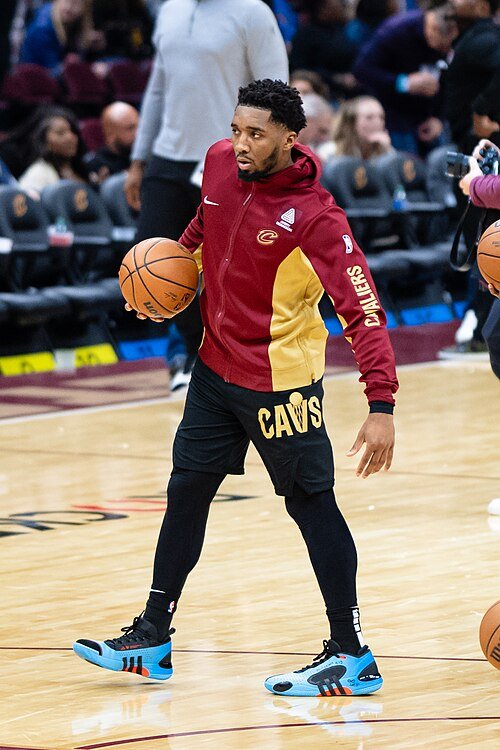
Donovan Mitchell needed more than a long shoe
Donovan Mitchell: 6’1″, size 15 base with a size-16 width
Mitchell’s shoe story is unusual because the issue wasn’t simply length.
His custom footwear has been reported with a size-15 base and a size-16 width, and he has spoken about the difficulty of finding shoes that fit while growing up.
That combination matters.
A size 15 is already a large shoe for a 6’1″ guard. Needing additional width makes the mismatch even more pronounced because the issue involves both dimensions of the foot.
It is one of the better examples of why shoe size should not be treated as a single number. Two players can both wear a size 15 while needing very different shoes.
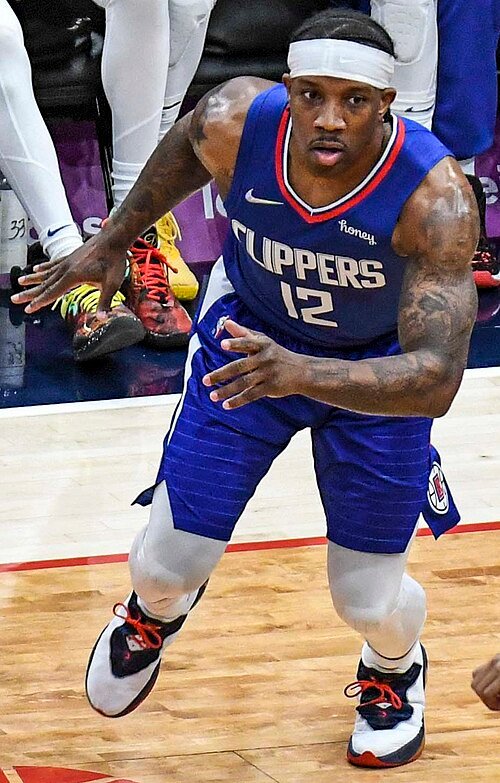
The Other End of the Spectrum: Eric Bledsoe
Eric Bledsoe: 6’1″, size 11.5
Donovan Mitchell: 6’1″, size 15 base / size 16 width
The other end of the spectrum comes from a completely different direction.
In a 2015 feature, the Phoenix Suns said Eric Bledsoe wore a U.S. size 11.5 shoe. That is not unusually small in everyday life. In the NBA, however, it stands out, particularly for a player listed at 6’1″.
Bledsoe makes an interesting comparison with Donovan Mitchell because the two guards were listed at the same height. Mitchell has said that he once wore size 17 shoes before deciding they were too large. He now wears a size-15 base with a size-16 width.
Same listed height. Very different footwear.
The difference is striking. Bledsoe’s team documented his size at 11.5, while Mitchell’s preferred fit is built around a size-15 length and size-16 width.
Put two players of the same listed height side by side, and their shoes can tell a very different story.
Kevin Love Was Near the Top of the NBA’s Shoe-Size Range
Kevin Love: 6’8″, documented size-19 game shoe
Kevin Love’s shoe size was not merely large for a forward-center. It sat near the top of the NBA’s documented range.
A Minnesota Timberwolves game-used Nike pair attributed to Love is tagged U.S. size 19. In SLAM’s 2013 footwear database, compiled with information from all 30 NBA teams, the league-wide average was 14.81 and the largest listed shoe size was 20.
That placed Love more than four full sizes above the database average and only one size below its largest listed number.
For a player listed at 6’8″ under the NBA’s updated measurement system, that is the revealing part. Love did not simply have large shoes for his height. He wore footwear near the extreme end of the NBA’s overall size range.
The comparison with Kareem Abdul-Jabbar makes the number even more striking. Abdul-Jabbar stood 7’2″ and was reported as wearing size-17 shoes, while authenticated game-worn footwear from his Lakers years is tagged size 16. Love was six inches shorter, yet his documented size-19 game shoe was two to three sizes larger.
Height clearly does not tell the whole story.
The Biggest Number Is Not Always the Best Story
The most interesting NBA shoe sizes are not always the biggest ones.
A size 22 shoe on a seven-footer is remarkable, but it is also easy to understand. The more revealing cases are the ones that disrupt the expected pattern: Michael Jordan needing two different sizes; Paul George playing in shoes smaller than Nike’s measured size 14; Donovan Mitchell needing a size-15 base with size-16 width; and Yao Ming standing five inches taller than Shaquille O’Neal while wearing smaller game shoes.
Those examples make one point clear: shoe size is not a simple extension of height. It reflects anatomy, brand-specific fit, width, personal preference, the demands of movement and, in some cases, a player’s footwear changing during a period of physical growth.
That is why NBA shoe-size lists need more than a row of numbers. The real story is in the mismatch: between height and footwear, between the two feet, or between a player’s measured size and the shoes he chooses to play in.