Even a slightly negative ape index is unusual in a league where long arms are the norm
For every NBA player with an unusually long wingspan relative to his height, there’s someone going in the exact opposite direction.
Their wingspan doesn’t stretch several inches beyond their height. In rare cases, it doesn’t even match it.
That is where the unofficial nickname comes from: T-Rex arms.
This list looks at 13 NBA players whose recorded wingspans are shorter than their listed heights. Some fall below by only a fraction of an inch. Others are two or three inches in the negative.
At first glance, the smaller numbers might not seem particularly unusual.
In the NBA, they are.
What Is an Ape Index?
Ape index is calculated as wingspan minus height. A 6’6” player with a 6’10” wingspan has a +4-inch ape index. If that same player had a 6’4” wingspan, his ape index would be −2 inches.
For the average person, height and wingspan tend to be relatively close. NBA players are different. Long arms are heavily represented at the highest level of basketball, and the average NBA player has a wingspan roughly four inches longer than his height.
That changes how every number on this list should be read.
Zero is not really the NBA baseline. A player whose wingspan simply matches his height is already roughly four inches below the proportions of the average NBA player. A −0.5-inch ape index pushes that proportional difference to about 4.5 inches, while a −3-inch index puts it around seven inches below the NBA norm.
That is why even the smallest negative measurements here matter.
Cody Zeller’s −0.25-inch ape index, for example, does not mean his arms are dramatically shorter than his body. They aren’t. What makes the measurement unusual is that a 6’11” NBA player can have a wingspan that does not even equal his height in a league where several additional inches are far more typical.
The differences become much harder to ignore as the list progresses.
By the time we reach the most extreme cases, some nearly seven-foot players have wingspans matched by guards several inches shorter than them.
That is where the numbers start getting strange.
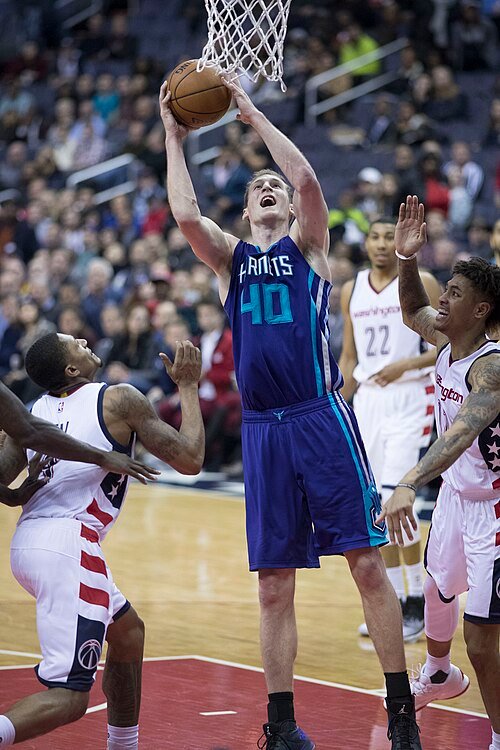
13. Cody Zeller
6’11” tall | 6’10.75″ wingspan | Ape index: −0.25″
A quarter of an inch hardly sounds like a disadvantage.
And compared with his own height, it really isn’t much. Cody Zeller stands 6’11” with a 6’10.75” wingspan, leaving him just barely on the negative side of the ape-index line.
But this is where the NBA baseline matters.
The average NBA player has roughly four inches more wingspan than height. Giannis Antetokounmpo provides an almost perfect comparison. He has been listed at the same 6’11” height as Zeller, but his 7’3” wingspan gives him a +4-inch ape index, almost exactly in line with that NBA average.
Put Zeller beside him and the significance of −0.25” becomes much clearer. Two players of the same listed height are separated by more than four inches in wingspan. Zeller is not dramatically short-armed compared with an ordinary person. He is dramatically short of the proportions commonly found in the NBA.
There is another way to see it.
Mario Chalmers stood only 6’2”, nearly nine inches shorter than Zeller, yet his 6’10” wingspan was almost identical. A near-seven-foot center gained less than an inch of total arm span over a point guard.
That is why Zeller is a useful place to begin this list.
His −0.25” ape index is the smallest deficit here, and by itself it barely looks noteworthy. But NBA proportions change the comparison completely.
Zeller is only a quarter-inch below his own height. He is more than four inches below what NBA proportions would lead you to expect.
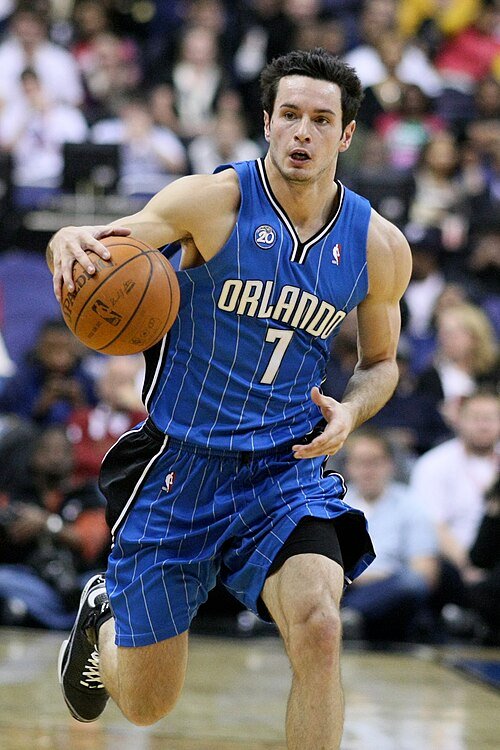
12. JJ Redick
6’3.5″ tall | 6’3″ wingspan | Ape index: −0.5″
JJ Redick’s measurements are a good example of why a small negative ape index can be misleading. Half an inch sounds negligible, but in a league where wingspans tend to extend several inches beyond height, Redick’s 6’3″ wingspan was unusually short for a 6’3.5″ guard.
Isaiah Thomas makes that easier to appreciate. At just 5’9″, Thomas was more than six inches shorter than Redick, yet his 6’2″ wingspan was only one inch shorter. Most of the difference in their height produced almost no difference in their reach.
The contrast is also clear with a player Redick’s own size. Russell Westbrook, at roughly 6’3.5″ to 6’4″, has a 6’8″ wingspan, giving him about five inches more reach despite the two being nearly identical in height.
Redick nevertheless became one of the NBA’s most accomplished three-point shooters. He shot 41.5 percent from three over his career, relying heavily on off-ball movement, screens and a quick release rather than the additional length common among NBA guards.
His success fits a broader pattern among NBA stars who excelled without elite length, using other strengths to overcome a limited reach advantage.
Redick −0.5″ ape index may look minor on paper, but the players around him show just how unusual those proportions were.
11. T.J. Ford
6’0″ tall | 5’11.5″ wingspan | Ape index: −0.5″
T.J. Ford is unusual on this list for another reason: his wingspan did not even reach six feet.
At 6’0″ tall, Ford measured just 5’11.5″ from fingertip to fingertip. That is only a half-inch negative ape index, but sub-six-foot wingspans are rare territory in a league where players, including many of its shortest guards, tend to have arms extending beyond their height.
Nate Robinson is a good example. He stood three inches shorter than Ford at 5’9″, yet his 6’1″ wingspan was an inch and a half longer.
The difference becomes much larger without changing much in height. Dennis Schröder, another guard around the six-foot range, has a 6’8″ wingspan. That puts more than eight inches between his reach and Ford’s despite their relatively similar heights.
Ford’s measurements were therefore compact even by the standards of smaller NBA point guards. His defining physical advantage came from somewhere else entirely: speed. He was one of the quickest guards of his era, using his acceleration and change of pace to get into the paint despite giving up considerable length to many of the players around him.
At 5’11.5″, Ford’s wingspan is one of those measurements that sounds ordinary until you remember where he was playing.

10. Mason Plumlee
7’0″ tall | 6’11″ wingspan | Ape index: −1.0″
Put Mason Plumlee and Mo Bamba side by side and height tells you almost nothing about how differently the two are proportioned.
Both stand 7’0″. Plumlee has a 6’11″ wingspan, while Bamba measured 7’10″. That is an 11-inch difference in wingspan between two centers of the same height.
Bamba is an exceptional case, but the comparison highlights something unusual about Plumlee. Seven-foot NBA players generally come with wingspans comfortably beyond seven feet. Plumlee’s does not reach his own height.
Michael Jordan provides an even stranger reference point. At 6’6″, Jordan was six inches shorter than Plumlee but had the same 6’11″ wingspan.
So despite standing a full seven feet, Plumlee had no more absolute wingspan than one of the NBA’s most famous shooting guards. Those unexpected overlaps also appear when comparing the best NBA players at every wingspan, where the same measurement can belong to players of very different heights and positions.
His −1″ ape index also moves this list beyond the fractional deficits of Cody Zeller, JJ Redick and T.J. Ford. From this point on, every remaining player has a wingspan at least a full inch shorter than his height.
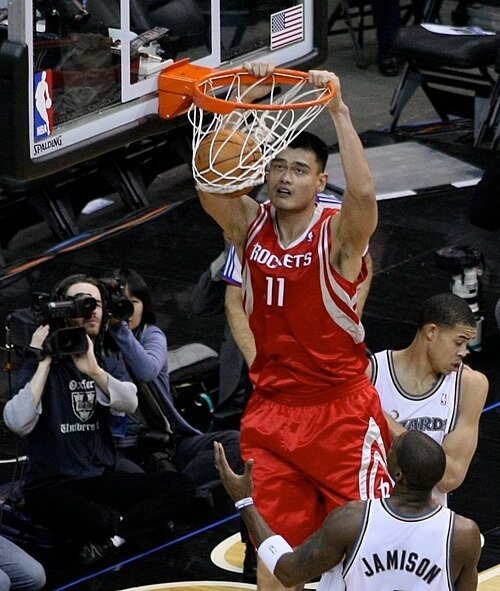
9. Yao Ming
7’6″ tall | 7’5″ wingspan | Ape index: −1.0″
Anthony Davis is eight inches shorter than Yao Ming.
Yet Davis’s 7’5.5″ wingspan is actually half an inch longer.
That comparison captures what makes Yao’s proportions so unusual. A 7’5″ wingspan sounds enormous, and in absolute terms it is. But Yao stood 7’6″, leaving his arm span one inch short of his height.
Another 7’6″ player shows just how differently someone that tall can be built. Tacko Fall measured an 8’2″ wingspan, nine inches longer than Yao’s despite the two sharing the same listed height. Fall sits near the top of the longest wingspans in NBA history, illustrating how different the reach of two similarly tall centers can be.
Yao therefore presents an unusual contradiction. He had one of the longest wingspans in basketball simply because of his extraordinary size, yet relative to that size, his arms were remarkably short by NBA standards.
Few comparisons make that clearer than a 6’10″ player being able to stand beside a 7’6″ center and stretch his arms slightly farther.
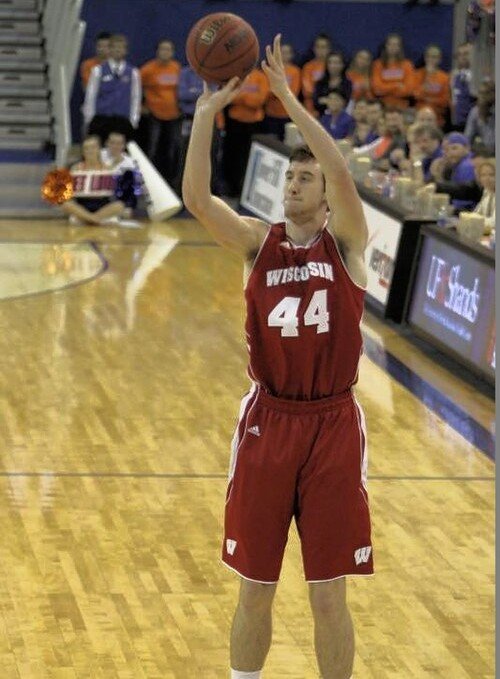
8. Frank Kaminsky
7’0″ tall | 6’11″ wingspan | Ape index: −1.0″
Frank Kaminsky never had the proportions typically associated with a seven-foot NBA center.
His game reflected that in some ways. He was comfortable away from the basket, could shoot from three and spent much of his career as a floor-spacing big man. Physically, his 6’11″ wingspan was an inch shorter than his 7’0″ height.
Shaquille O’Neal shows how different the dimensions of another seven-footer can be. At roughly 7’1″, Shaq had a reported 7’7″ wingspan, eight inches longer than Kaminsky’s despite standing only about an inch taller.
But Kaminsky’s proportions may be easier to grasp by looking in the other direction.
Donovan Mitchell stands just 6’3″, nine inches shorter than Kaminsky, yet his 6’10″ wingspan comes within a single inch of Kaminsky’s. Almost three-quarters of a foot separates them vertically, but barely anything separates their arm spans.
For a seven-footer, that is what makes Kaminsky’s 6’11″ measurement stand out. His height placed him firmly among NBA big men, while his wingspan was close to what can be found on players much farther down the height chart.

7. Antonis Fotsis
6’10″ tall | 6’8.5″ wingspan | Ape index: −1.5″
Anthony Edwards is six inches shorter than Antonis Fotsis, but he actually has the longer wingspan.
Fotsis stood 6’10″ with a 6’8.5″ wingspan. Edwards, at 6’4″, measures 6’9″, putting him half an inch ahead despite the considerable difference in height.
The comparison with Dwight Howard shows an even wider gap. Howard stood around the same 6’10″ height as Fotsis, but his wingspan extended roughly six inches beyond his height. That leaves about 7.5 inches between the wingspans of two similarly tall frontcourt players. Howard was on the longer end, but a positive ape index of several inches is far closer to the proportions Fotsis could expect to encounter among NBA players at his height and position.
That left Fotsis in a peculiar spot. He had the height of an NBA big man, but not the reach that usually came with it. A player six inches shorter could outstretch him, while someone standing eye-to-eye with him could have more than half a foot of additional wingspan.
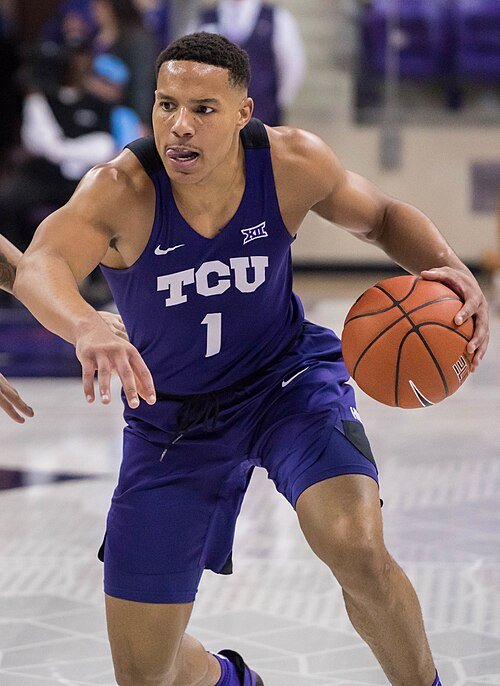
6. Desmond Bane
6’6″ tall | 6’4″ wingspan | Ape index: −2.0″
Few players fit the theme of this list as literally as Desmond Bane. The “T-Rex” jokes have followed him for years, and Bane himself has been willing to laugh along with them.
The measurements explain why. At 6’6″, Bane has a 6’4″ wingspan, putting him two inches into the negative.
Then there is Kawhi Leonard.
Leonard stands the same 6’6″ as Bane but has a 7’3″ wingspan. Two players with identical listed heights are separated by an extraordinary 11 inches of wingspan. Kawhi is exceptionally long even by NBA standards, but Bane was already starting from the other side of a league where an extra several inches of wingspan is commonplace.
Chris Paul makes Bane’s measurement even more unusual. Paul stands only 6’0″, a full six inches shorter, yet also has a 6’4″ wingspan.
For most players on this list, “T-Rex arms” is simply a convenient description. With Bane, it became part of his basketball identity. He has joked about the nickname himself, making him perhaps the one player here who needs the least convincing that he belongs.

5. Kelly Olynyk
7’0″ tall | 6’10″ wingspan | Ape index: −2.0″
Rajon Rondo and Kelly Olynyk should not be particularly close in any measurement involving size.
One was a 6’1″ point guard. The other is a seven-footer.
Yet stretch out their arms and only one inch separates them.
Rondo measured 6’9″ in wingspan. Olynyk, despite standing eleven inches taller, measures just 6’10″. It is one of the stranger comparisons on this list because Olynyk’s wingspan does not sound short until you remove his height from the equation.
Put the height back in, and the picture changes completely.
Olynyk is a full seven feet tall with a −2″ ape index. Kevin Durant, at roughly the same height, has been measured with a 7’5″ wingspan. That is a seven-inch difference between two players who can practically look each other straight in the eye.
And Olynyk himself has always been an unusual seven-footer. His game has featured ball handling, passing and outside shooting, rather than fitting neatly into the traditional image of a center stationed around the rim.
So perhaps the best way to remember his proportions is not the −2″ beside his name.
It is that Rajon Rondo almost had the same wingspan.

4. Svi Mykhailiuk
6’7″ tall | 6’5″ wingspan | Ape index: −2.0″
Svi Mykhailiuk is 6’7″, a perfectly ordinary height for an NBA wing. His 6’5″ wingspan is far less ordinary.
Damian Lillard makes the proportions especially hard to ignore. The point guard stands just 6’2″, yet owns a 6’8″ wingspan. Five inches separate them in height, in Svi’s favor. Three inches separate their wingspans, in Lillard’s.
Draymond Green shows how dramatically different the proportions of another 6’7″ NBA player can be. His 7’1″ wingspan is six inches longer than his height and eight inches longer than Mykhailiuk’s.
Green sits on the long-armed side of the NBA spectrum, so he is not an average example. But that eight-inch gap captures what makes Svi’s measurement so unusual: he is unusually short-armed in a league already tilted toward long arms.
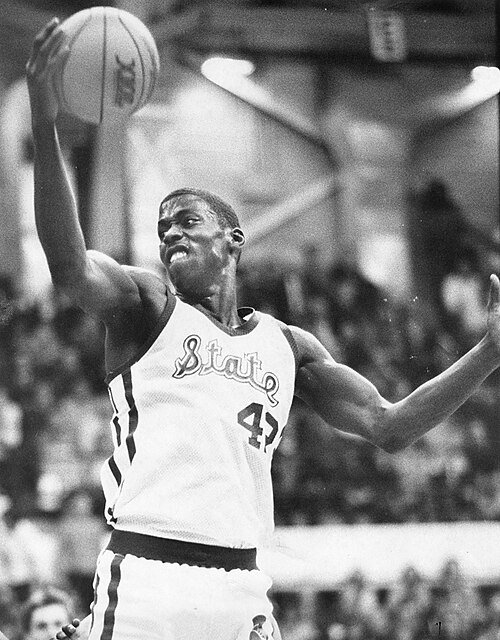
3. Kevin Willis
7’0″ tall | 6’10″ wingspan | Ape index: −2.0″
Kevin Willis played 21 NBA seasons. That longevity is impressive for any player, but his measurements make it an especially interesting part of his story.
At 7’0″, Willis had a recorded wingspan of just 6’10″. For a player who spent much of his career battling bigger bodies around the basket, that gave him an unusual build for his position.
Perhaps the easiest way to picture it is Gilbert Arenas. The 6’4″ guard was eight inches shorter than Willis, yet both were measured with the same 6’10″ wingspan. Willis had all the extra height, but none of it translated into additional reach in that comparison.
Rudy Gobert shows what the other end can look like for a seven-footer. At roughly the same height as Willis, Gobert’s 7’8.5″ wingspan extends 10.5 inches farther.
Willis therefore spent more than two decades playing NBA basketball with a body that looked like a center vertically, but produced a remarkably different measurement once the tape measure turned sideways.
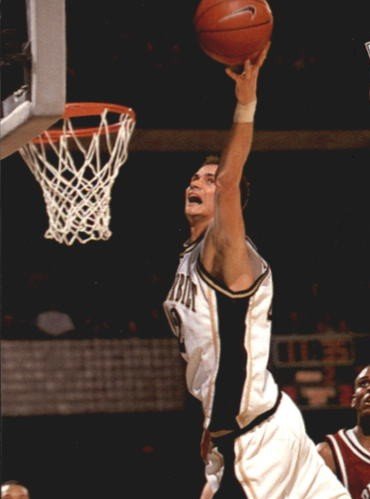
2. Dan Langhi
6’11″ tall | 6’8″ wingspan | Ape index: −3.0″
Dan Langhi was only an inch shy of seven feet, but his 6’8″ wingspan belonged in a very different size conversation.
Consider Derrick Rose.
Rose stood 6’2″, giving up nine inches in height to Langhi. Yet stretch their arms out and the height difference disappears completely: both were measured with a 6’8″ wingspan.
That is a remarkable match for two players built for entirely different positions. A point guard nearly a foot shorter could equal the reach of a 6’11″ forward.
And among players closer to Langhi’s own size, the contrast could become enormous. Alonzo Mourning, at roughly seven feet, had a reported 7’6.5″ wingspan. That puts 10.5 inches of wingspan between two players separated by very little in height.
Langhi’s −3″ ape index is therefore one of those measurements that barely needs embellishment. He stood 6’11″ and had the same wingspan as Derrick Rose.
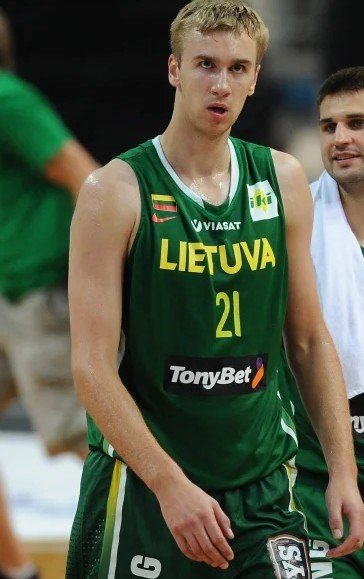
1. Martynas Andriuškevičius
7’2″ tall | 6’11″ wingspan | Ape index: −3.0″
There are not many circumstances in basketball where a 6’11″ wingspan sounds short.
Put it on a 7’2″ body and suddenly it does.
That was the unusual combination recorded for Lithuanian center Martynas Andriuškevičius. His wingspan stopped three inches short of his height, tying Dan Langhi for the largest negative ape index on this list, but doing so on an even taller frame.
The Kobe Bryant comparison almost sounds backwards. Kobe stood 6’6″, eight inches shorter than Andriuškevičius, yet he was also measured with a 6’11″ wingspan. A shooting guard and a 7’2″ center ended up at exactly the same number.
Wilt Chamberlain takes the comparison in the opposite direction. At roughly the same towering height, Wilt’s reported 7’8″ wingspan stretched nine inches beyond Andriuškevičius’s.
But Kobe provides the image that best captures why Andriuškevičius finishes at No. 1. He stood 7’2″, yet his wingspan could be matched by a shooting guard eight inches shorter.
The Near-Miss
Jon Scheyer: At 6’5″ with a 6’3″ wingspan, Scheyer has a −2″ ape index that would place him comfortably among the players above. There is one reason he is not included: Scheyer never appeared in an NBA regular-season game.
He played professionally overseas before moving into coaching and eventually becoming Duke’s head coach. So while his measurements fit the list, his playing career does not meet the NBA requirement used here.
The T-Rex Trivia Wrap-Up
The raw ape indexes tell only part of the story.
A −0.25″ or −0.5″ measurement can look insignificant on paper until it is placed in an NBA environment where wingspans tend to run several inches beyond height. At the other end, the −3″ measurements recorded for Dan Langhi and Martynas Andriuškevičius sit roughly seven inches below the proportions of the average NBA player.
Here is the full group, from the largest negative ape index to the smallest.
The Full Club Reference Table
| Player | Height | Wingspan | Ape Index | Approx. Shortfall vs. +4″ NBA Baseline |
| Martynas Andriuškevičius | 7’2″ | 6’11” | -3.0″ | 7.0″ |
| Dan Langhi | 6’11” | 6’8″ | -3.0″ | 7.0″ |
| Svi Mykhailiuk | 6’7″ | 6’5″ | -2.0″ | 6.0″ |
| Kelly Olynyk | 7’0″ | 6’10” | -2.0″ | 6.0″ |
| Kevin Willis | 7’0″ | 6’10” | -2.0″ | 6.0″ |
| Desmond Bane | 6’6″ | 6’4″ | -2.0″ | 6.0″ |
| Antonis Fotsis | 6’10” | 6’8.5″ | -1.5″ | 5.5″ |
| Frank Kaminsky | 7’0″ | 6’11” | -1.0″ | 5.0″ |
| Yao Ming | 7’6″ | 7’5″ | -1.0″ | 5.0″ |
| Mason Plumlee | 7’0″ | 6’11” | -1.0″ | 5.0″ |
| JJ Redick | 6’3.5″ | 6’3″ | -0.5″ | 4.5″ |
| T.J. Ford | 6’0″ | 5’11.5″ | -0.5″ | 4.5″ |
| Cody Zeller | 6’11” | 6’10.75″ | -0.25″ | 4.25″ |