Ranking the division’s best combinations of resistance, recovery and the ability to keep fighting after clean power lands
Jared Cannonier keeps landing. Marvin Vettori keeps standing.
Their June 2023 fight becomes increasingly one-sided, but Vettori continues trying to answer. The punches hurt him. They slow his offense. They still cannot finish him.
Robert Whittaker’s rematch with Yoel Romero tells a different story.
Romero puts him on the canvas. Whittaker survives, regains enough sharpness to fight back and leaves with a split-decision victory.
Which performance deserves more credit?
That is the central question in a chin ranking. Staying upright matters, but so does what a fighter can still do afterward. A knockdown reveals a vulnerability; the response can reveal something exceptional.
These ten middleweights made the cut because their fights offer more than a reputation for toughness.
What Makes a Great Middleweight Chin?
For this ranking, a great chin combines resistance to head strikes with the ability to recover when those strikes cause serious trouble.
We considered four qualities together:
| Criterion | What earns credit |
|---|---|
| Resistance | Taking clean head strikes while remaining capable of defending and attacking. |
| Power actually absorbed | Withstanding damaging impacts from proven middleweight hitters—not merely facing them. |
| Repeated meaningful tests | Demonstrating durability against different opponents across demanding fights. |
| Functional recovery | Surviving immediate danger and returning to effective fighting after being hurt. |
Remaining conscious is only part of the assessment. Covering intelligently, returning punches or finding a useful clinch tells us more than simply enduring unanswered punishment.
Recovery also involves composure and defensive skill. Wrestling, round breaks and an opponent’s hesitation can provide breathing room. We acknowledge that assistance when it materially changes the sequence.
Head kicks and ground punches count. Their force and effect matter more than the raw number landed. Cuts, injuries and body-led finishes receive separate treatment.
There are no numerical grades or fixed percentages. The order reflects an editorial balance of the four qualities. Repeated demonstrations carry more weight than one spectacular survival, while decisive striking failures remain part of the record at any age.
Only Middleweight Fights Count
This ranking considers performances in the 185-pound division, including the standard non-title allowance.
Welterweight, light-heavyweight, heavyweight, openweight and separately contracted catchweight bouts are excluded. Historical divisions are classified by their weight limits: PRIDE’s “middleweight” division was approximately 205 pounds and therefore belongs to light heavyweight here.
That boundary changes several familiar names’ cases. Our pound-for-pound ranking of the best chins in MMA history considers their entire professional MMA careers across weight classes.
Honorable Mentions
Dan Henderson: His recovery against Hector Lombard deserves recognition. His performances against Rua and Cavalcante underpin his place among the best chins in light-heavyweight MMA history. Those fights and his heavyweight victory over Fedor Emelianenko are excluded here, while his middleweight striking defeats to Vitor Belfort and Gegard Mousasi count.
Patrick Côté: A legitimate resistance candidate. His knee injury against Anderson Silva was not a chin failure, and Donald Cerrone’s welterweight finish is outside this ranking. The main ten offer more extensively demonstrated combinations of power absorbed and responses afterward.
Jake Shields: Surviving Henderson’s early assault and then winning their five-round Strikeforce title fight is an outstanding recovery achievement. His collection of comparable striking tests is smaller.
Paulo Costa: The Romero and Whittaker fights provide strong divisional tests. His overall case is less developed than those above him, and the Vettori fight took place at light heavyweight.
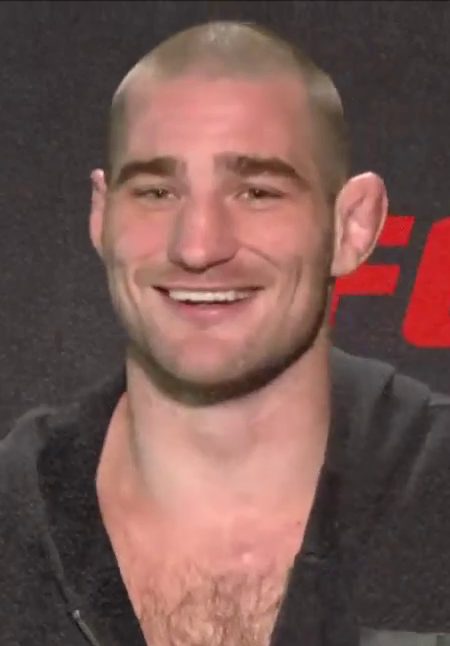
10. Sean Strickland
A fourth-round right hand damaged his nose. He still had another round to fight.
Strickland makes durability difficult to separate from defense.
His positioning and reactions prevent many punches from landing cleanly. Across two championship fights with Dricus du Plessis, however, enough reached him to provide a substantial test.
The rematch at UFC 312 was particularly punishing. Du Plessis landed a clean right hand in round four that damaged Strickland’s nose and left his face bloodied. Strickland continued through the fifth, but struggled to mount sustained offense or reverse the exchanges.
He remained capable of fighting, without recovering control of the fight.
His repeated middleweight exchanges earn the final place. His defense reduced exposure, while his record offers fewer examples of escaping severe trouble and taking command again.
Alex Pereira’s first-round knockout at UFC 276 supplies the clearest resistance limit.
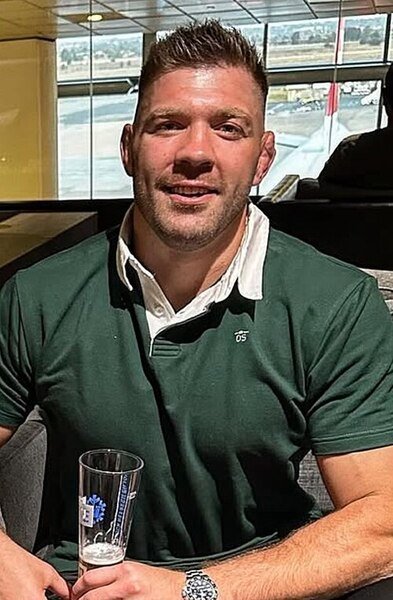
9. Dricus du Plessis
He can look off balance while remaining fully capable of hurting the other man.
Du Plessis’s unusual movement can make an exchange look more desperate than it is. A stumble or awkward retreat does not establish that a punch scrambled him. His next actions matter.
Against Strickland, he absorbed return fire while continuing to press, combine punches and sustain championship-round offense. Their rematch strengthened that case: Du Plessis increasingly dictated the exchanges rather than merely surviving them.
His bouts with Israel Adesanya, Robert Whittaker and Derek Brunson broaden the sample. Those victories matter here where landed strikes were followed by continued, purposeful work.
His five-round loss to Khamzat Chimaev requires a different assessment. Chimaev landed 529 total strikes, with 37 classified as significant. Those categories help explain the fight’s shape; they do not establish that the remaining punches were harmless.
The control and repeated ground contact tested Du Plessis’s endurance and defensive responses. Surviving the distance did not mean he recovered enough freedom to make the contest competitive.
His resistance against varied opponents earns ninth. The fighters above him generally have deeper records of responding to serious striking trouble.
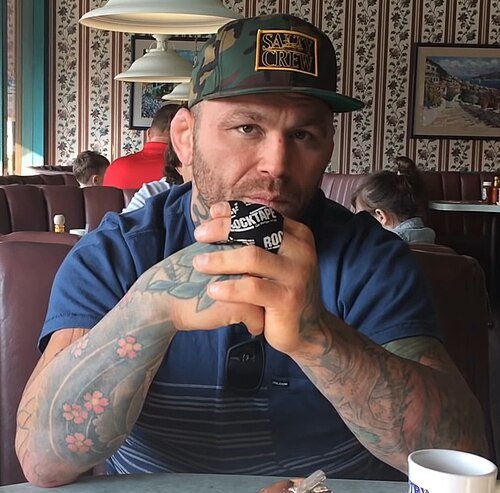
8. Chris Leben
With Akiyama still attacking, Leben found the submission that ended the fight.
At UFC 116 in July 2010, Yoshihiro Akiyama repeatedly reached Leben during a demanding contest. Leben kept attacking, then secured a triangle choke late in the third round.
It was a fitting demonstration of his durability: absorbing punishment without losing every route to victory.
That performance belonged to a broader middleweight history. Leben repeatedly fought in exchanges where clean punches landed and he immediately threw back.
His limits were equally visible. Anderson Silva overwhelmed him, and Brian Stann stopped him. At UFC 168, Uriah Hall dropped him late in the opening round. Leben told his corner he could not continue, and the fight ended by TKO through retirement.
Leben’s best performances justify his reputation. His repeated crises and uneven ability to recover keep him below the more dependable combined cases.
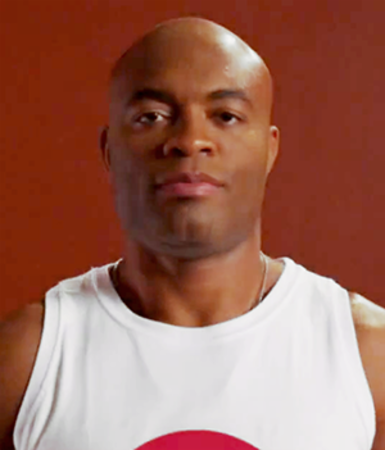
7. Anderson Silva
The punches he avoided built his legend. The ones he survived belong in this ranking.
Silva’s extraordinary defense cannot substitute for chin evidence. His strongest examples come from opponents who actually reached him.
Chael Sonnen did so at UFC 117. Silva absorbed punches and spent long stretches underneath, yet remained alert enough to defend and eventually attack from his guard. His fifth-round triangle-armbar turned a losing performance into a championship defense.
The grappling control was not continuous heavy punishment. Nevertheless, Silva’s responses to the strikes that landed—and his eventual finish—showed that he remained dangerous.
Michael Bisping provided another five-round test in London in 2016. Silva took punches and continued creating threatening offense throughout the contest.
Chris Weidman’s knockout in their first meeting and Uriah Hall’s later striking finish establish clear resistance failures. The broken leg in the Weidman rematch is a separate injury.
Silva combines resistance, composure and continued danger. Bisping ranks higher here because his recovery from clearly identifiable crises is more repeatedly demonstrated.
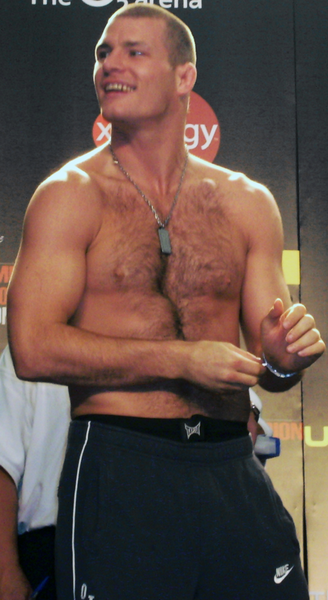
6. Michael Bisping
The flying knee dropped him at the bell. He still had two rounds to fight.
Anderson Silva’s knee landed at the end of round three in London, leaving Bisping on the canvas and Silva celebrating prematurely.
The fight continued. The interval gave Bisping essential recovery time, but it could not fight the remaining rounds for him. He returned to exchanges and completed a five-round decision victory.
Later that year, Dan Henderson put him in serious danger again at UFC 204. Bisping survived knockdowns in the opening two rounds and resumed the sustained work that carried him to another five-round win.
Those performances make his recovery case unusually clear.
His resistance record is less secure. Henderson’s first-fight knockout, Belfort’s head kick and Kelvin Gastelum’s punches all ended middleweight contests decisively.
Bisping places sixth because his best recoveries restored enough sharpness to win demanding fights. The severity of his knockout losses prevents a higher position.
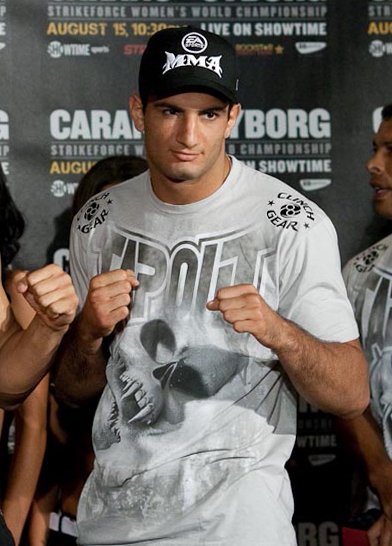
5. Gegard Mousasi
Machida’s head kick landed. Mousasi stayed in the exchange.
Mousasi’s middleweight resistance case has a concrete example beyond his damaged eye against Alexander Shlemenko.
Against Lyoto Machida in February 2014, Mousasi absorbed a second-round head kick and continued attacking, although Machida remained the more effective fighter overall.
Machida ultimately won a clear five-round decision. The useful evidence is Mousasi’s response to the impact, not simply his completion of the distance.
Shlemenko presented a different problem at Bellator 185 in October 2017. An early right hand badly damaged Mousasi’s eye. He pursued takedowns, established control and continued producing offense despite the impaired vision.
The decision in his favor was disputed. His ability to adapt does not depend on accepting the scorecards, but injury management receives less crisis-recovery credit than an immediate comeback after a knockdown.
Uriah Hall supplied the decisive counterexample in 2015: a spinning kick, knee and follow-up attack ended their first meeting.
Bisping has the clearer recovery peaks. Mousasi ranks above him for more consistently demonstrated resistance, with Hall’s finish remaining a major limitation. Whittaker’s more extensive recoveries from clearly demonstrated striking crises place him immediately above.
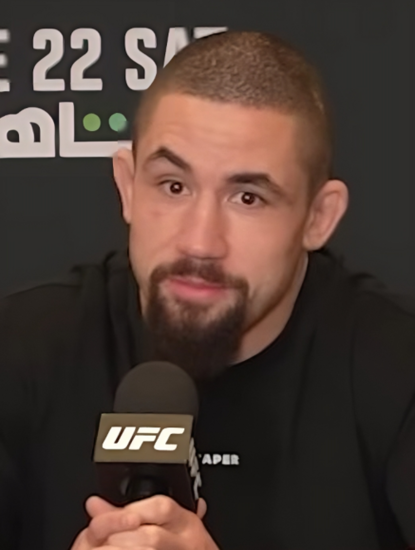
4. Robert Whittaker
Romero dropped him twice. Whittaker still found enough offense to win.
The Romero rematch at UFC 225 in June 2018 is the centerpiece of Whittaker’s case.
Knockdowns in the third and fifth rounds repeatedly threatened to overturn the fight. Whittaker survived, returned to exchanges and completed a split-decision victory.
Their first meeting adds another demanding contest against the same dangerous opponent. Together, the fights show repetition, although they were not ten rounds of uninterrupted clean punching.
Paulo Costa presented a different crisis at UFC 298 in February 2024. His spinning heel kick caught Whittaker late in the first round. The bell helped Whittaker recover; he then returned to outwork Costa over the remaining rounds.
Few middleweights have clearer examples of regaining enough sharpness to remain competitive against this level of power.
The knockout against Adesanya and striking stoppage against Du Plessis weigh heavily on the other side. Whittaker’s recovery peak is exceptional; his resistance has been breached decisively.
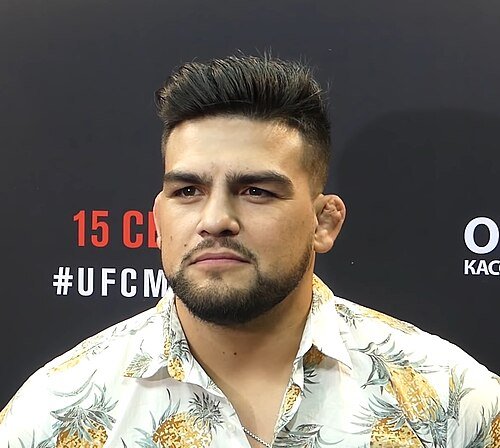
3. Kelvin Gastelum
A Cannonier knockdown did not keep him from pressing forward again.
Gastelum’s placement rests on repeated responses to different middleweight opponents.
Against Cannonier in August 2021, a third-round knockdown interrupted his pressure. He recovered, resumed advancing and continued trying to close the distance and exchange.
The Adesanya fight at UFC 236 was a more severe examination. Gastelum remained threatening deep into the contest before multiple late knockdowns left him struggling to regain control. Completing that fight demonstrated recovery, but the final round also exposed its limits.
Whittaker beat him comprehensively over five rounds. Gastelum nevertheless kept attempting offense rather than disappearing from the contest. Chris Curtis provided another prolonged striking test against a different opponent.
Gastelum’s middleweight record contains no KO/TKO defeat. That supports his resistance case, but the knockdowns against Adesanya and Cannonier show why an unbroken stoppage record does not mean he was difficult to hurt.
His later defeats remain part of the assessment. The April 2026 submission loss to Vicente Luque adds no direct head-strike failure, but it also offers little support for his chin ranking.
Gastelum ranks above Whittaker for his repeated combination of power absorbed and continued responses, without comparable middleweight striking stoppages. Repeated knockdowns and difficulty restoring sustained offense keep him below the leading two.
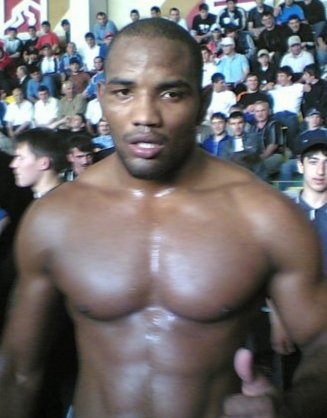
2. Yoel Romero
Costa put him down. Romero answered with a knockdown of his own.
Their opening-round exchange at UFC 241 in August 2019 captures Romero’s strongest quality.
Paulo Costa dropped him. Romero recovered quickly enough to return dangerous offense and put Costa down in the same round.
That sequence shows more than the ability to get up. Romero restored the timing and coordination needed to reverse the immediate threat.
His two Whittaker fights add repeated exchanges in which clean punches reached him without removing his ability to attack.
The Tim Kennedy comeback at UFC 178 needs a different reading. Kennedy badly hurt Romero late in round two. Romero then remained on his stool during a delayed restart, receiving additional recovery time before returning to finish Kennedy in the third.
The delay matters. The comeback remains impressive, but it cannot receive the same credit as recovery under uninterrupted pressure.
Romero’s immediate response to Costa gives him the edge over Gastelum. His strongest argument for No. 1 is the speed with which he could become dangerous again after being hurt.
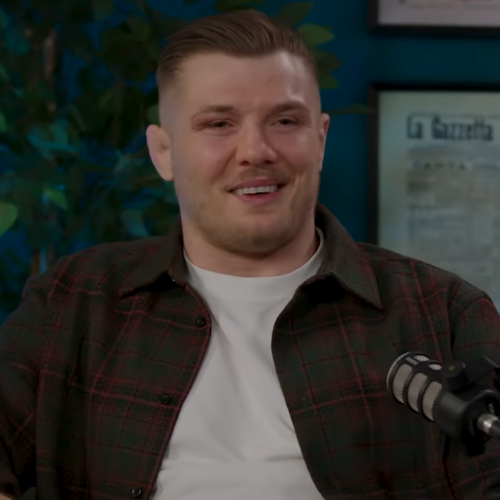
1. Marvin Vettori
Cannonier hurt him. Vettori kept making him work for the finish that never came.
Vettori ranks first for repeatedly absorbing clean middleweight power while retaining enough control to defend and answer. His record without a stoppage defeat supports that argument; the exchanges themselves must carry it.
Cannonier sharply reduced that ability, making their June 2023 fight both his strongest resistance test and the clearest qualification to his placement.
Both men were hurt during the opening exchanges. Cannonier then took control, particularly in a punishing second round, and increasingly overwhelmed Vettori’s attempts to answer. Vettori continued defending and returning offense, but his effectiveness declined sharply.
The statistics show the scale: 241 significant strikes landed by Cannonier, including 173 significant head strikes. Those figures describe a sustained and unusually severe test—not 173 equally clean, full-power blows.
Vettori’s first-place case extends beyond that defeat. His two Adesanya fights and three-round contest with Whittaker add different striking styles and repeated contact without comparable collapse.
His subsequent decision defeats, including those against Roman Dolidze and Brendan Allen, also belong in the picture. They underline his declining effectiveness rather than establishing fresh chin achievements merely because he reached the final bell.
The Brunno Ferreira contest is excluded because Ferreira missed weight. Vettori’s famous survival of Costa’s head kick also contributes nothing here: that bout took place at light heavyweight.
Vettori’s first place rests on repetition, not invulnerability. Cannonier showed how far his effectiveness could fall; the wider record shows how difficult it was to take him out of the fight entirely.
Why Vettori Edges Romero
Vettori has the stronger resistance case. Romero has the clearer immediate recovery.
Romero’s response to Costa is more impressive as a single recovery sequence than anything in Vettori’s middleweight record.
Vettori’s advantage is the repeated difficulty opponents encountered in disrupting him enough to end the fight. The Cannonier defeat reveals how much his performance could deteriorate, but his wider record supports resistance beyond one night of survival.
That distinction decides first place. We favor Vettori’s repeated resistance over Romero’s greater demonstrated recovery peak.
Readers who give more weight to restoring dangerous offense after a knockdown have a compelling reason to reverse them.
The Middleweight Rankings at a Glance
| Rank | Fighter | Signature test | Main limitation |
| 1 | Marvin Vettori | Resistance against Cannonier, June 2023 | Sharply reduced effectiveness |
| 2 | Yoel Romero | Immediate counteroffense against Costa, UFC 241 | Additional recovery time against Kennedy |
| 3 | Kelvin Gastelum | Recovery and renewed pressure against Cannonier, August 2021 | Multiple knockdowns against Adesanya; diminished late offense |
| 4 | Robert Whittaker | Surviving Romero’s power to win at UFC 225 | Decisive striking losses |
| 5 | Gegard Mousasi | Continuing after Machida’s head kick, February 2014 | Hall’s finish; fewer severe recovery examples |
| 6 | Michael Bisping | Recovery against Henderson, UFC 204 | Several severe knockout losses |
| 7 | Anderson Silva | Remaining dangerous against Sonnen, UFC 117 | Defensive protection and striking stoppages |
| 8 | Chris Leben | Damaging exchanges and a late finish against Akiyama, UFC 116 | Repeated serious trouble and stoppages |
| 9 | Dricus du Plessis | Sustained offense against Strickland, UFC 312 | Less extensive crisis-recovery record |
| 10 | Sean Strickland | Continuing through Du Plessis’s attack, UFC 312 | Pereira’s knockout; defense reduces exposure |
Why Some Familiar Names Missed Out
Jared Cannonier deserves consideration for his own durability, not just the power he landed on Vettori. His resistance and continued attacks against opponents such as Gastelum strengthen that case. Against Nassourdine Imavov, he was hurt against the fence and the referee intervened for a fourth-round TKO; Cannonier disputed the stoppage. That outcome requires context, but still belongs in the assessment. He is a legitimate close omission.
Israel Adesanya has absorbed power across a long championship career. His defense often reduced exposure, while Pereira’s MMA striking finish remains a significant failure. Their kickboxing results are outside this ranking.
Robbie Lawler’s most persuasive durability performances largely come from his welterweight title run. They cannot carry a middleweight placement.
Ronaldo “Jacaré” Souza has a substantial case. Romero’s first-round spinning backfist dropped him and led to a sustained ground attack. Jacaré recovered, finished strongly in the third round and lost a split decision. His later victory over Chris Weidman adds another demanding striking contest, while stoppages against Mousasi and Whittaker establish clear limits.
Other familiar contenders, including Luke Rockhold and Derek Brunson, have genuine survival moments. Their strongest middleweight exchanges did not produce a stronger overall case than the ten selected here.
Who Gets Your Vote?
Vettori’s resistance or Romero’s recovery? The Cannonier fight or the Costa exchange?
Whittaker’s supporters can point to UFC 225. Gastelum’s can argue for the breadth of his testing. The disagreement depends on what those performances persuade you to value most.
Which middleweight would you move and which fight convinced you?
Sources and Further Reading
- Vettori–Cannonier: UFC fight report
- Vettori–Cannonier: Sherdog’s statistical breakdown
- Whittaker–Romero II: UFC fight report
- Whittaker–Costa: UFC 298 results
- Adesanya–Gastelum: UFC 236 results
- Cannonier–Gastelum: UFC fight report
- Machida–Mousasi: MMA Fighting’s report
- Mousasi–Shlemenko: MMA Fighting’s report
- Mousasi–Hall: UFC fight report
- Bisping–Silva: UFC results
- Leben–Akiyama: UFC 116 report
- Leben–Hall: UFC 168 preliminary results
- Du Plessis–Strickland II: UFC 312 results
- Du Plessis–Chimaev: UFC 319 results
- Cannonier–Imavov: UFC results
- Jacaré–Romero: UFC 194 report
- Jacaré–Weidman: UFC 230 report
- Marvin Vettori: UFC fight history
- Kelvin Gastelum: UFC fight history