Ranking light-heavyweight durability through resistance, recovery and the shots that actually landed
Anthony Johnson’s right hand sends Daniel Cormier to the canvas early in their title fight.
Johnson had already stopped Alexander Gustafsson in the first round. He would later knock out Glover Teixeira in thirteen seconds.
Cormier gets up, closes the distance and begins wrestling. By the third round, he is securing the submission victory. Johnson’s power found its target. Cormier found his way back.
Jon Jones’s first fight with Gustafsson offers a different picture. Punches repeatedly reach him, but Jones continues defending, attacking and adjusting through five demanding rounds.
Which deserves more credit: taking powerful shots without losing control, or recovering after those shots have put you in serious trouble?
A knockout record alone cannot answer that question. Neither can one famous comeback.
This ranking looks at what actually landed and what each fighter could do afterward. Only light-heavyweight MMA fights count. Middleweight wars and heavyweight victories belong to a different comparison.
Nine fighters made the main list. We stopped there rather than adding another name simply to complete a top ten.
What Makes a Great Chin?
Here, a great chin means both resisting disruption from head strikes and recovering effective fighting function when those strikes cause trouble.
We considered four qualities together:
| Criterion | What earns credit |
|---|---|
| Resistance | Taking clean head strikes while remaining capable of defending and attacking. |
| Power actually absorbed | Withstanding meaningful impacts from proven hitters—not merely facing them. |
| Repeated meaningful tests | Demonstrating durability against different opponents across demanding fights. |
| Functional recovery | Surviving immediate danger and returning to effective fighting after being hurt. |
A knockdown exposes a resistance limit. What happens next can still demonstrate exceptional recovery.
Purposeful defense matters too. Clinching, covering intelligently or reaching a safer position can show that a fighter remains functional. Simply staying conscious under unanswered punishment earns less credit.
Composure, defensive skill and grappling can assist recovery. So can round breaks and an opponent’s hesitation. Those circumstances belong alongside the achievement.
Head kicks, soccer kicks and ground punches all count. Cuts, body-led finishes and injuries require separate treatment.
We used no numerical scores or fixed percentages. Close decisions depend on the quality and repetition of the tests, balanced against the striking failures. Recovery does not automatically outrank resistance.
The Divisional Boundary
The ranking includes light-heavyweight bouts and their standard non-title allowance. PRIDE’s approximately 205-pound “middleweight” division counts as its historical equivalent.
Actual middleweight, heavyweight, openweight and separately contracted catchweight bouts are excluded.
PRIDE’s Japanese rules generally allowed kicks and knees to a grounded opponent’s head. Those threats matter when assessing a particular sequence, but the rules themselves earn no automatic bonus.
That narrower scope explains why this order can differ from our pound-for-pound ranking of the best chins in MMA history, which considers fighters’ entire professional MMA careers across weight classes.
Honorable Mention: Vadim Nemkov
A first-round knockdown became the beginning of a championship comeback.
Julius Anglickas dropped Nemkov with a right hand in the opening round of their Bellator 268 title fight. Nemkov responded with a takedown, recovered and imposed ground attacks before eventually winning by submission.
His exchanges with Phil Davis add supporting resistance evidence. He misses the main list because the ranked candidates have more extensively demonstrated clean-power tests. The Anglickas comeback makes the cutoff close.
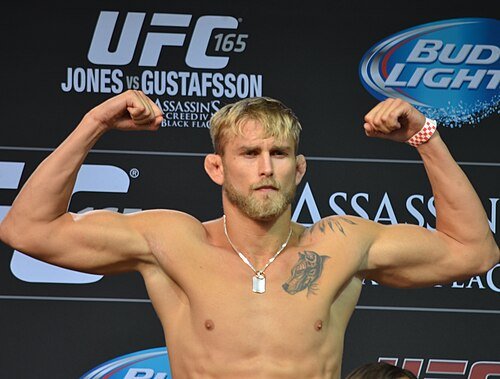
9. Alexander Gustafsson
Still dangerous after demanding exchanges with Jones and Cormier.
Gustafsson’s strongest durability evidence comes from two championship fights.
Against Jones at UFC 165, he remained competitive across five rounds. Late in the fourth, a spinning elbow began a damaging attack. Gustafsson survived and continued into the final round, with the interval providing recovery time.
Cormier’s close-range uppercuts repeatedly reached him at UFC 192. Gustafsson continued working at distance and creating offense, including the third-round knee-and-punch sequence that dropped Cormier.
His own knockdown of Cormier earns no chin credit. His ability to keep threatening Cormier while absorbing those attacks does.
The failures are substantial: Johnson stopped him in the first round, Jones finished their rematch with ground punches, and Nikita Krylov later knocked him out.
We favor Gustafsson’s sustained competitive function against Jones and Cormier over Nemkov’s clearer individual comeback. The stoppages keep him at the bottom of the list.
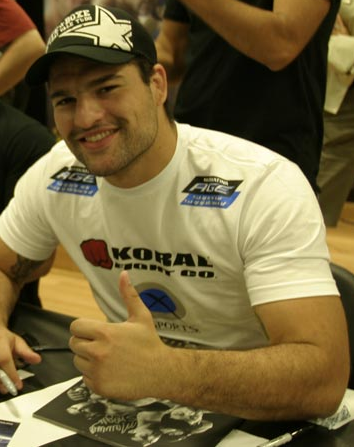
8. Maurício “Shogun” Rua
Nearly finished early, controlling Henderson by the closing rounds.
Rua’s first fight with Dan Henderson supplies his strongest recovery evidence.
Henderson repeatedly hurt him. In the third round, a knockdown and follow-up ground strikes brought Rua close to a stoppage.
Yet Rua survived and changed the contest. He rallied in the fourth and controlled much of the fifth, forcing Henderson to defend. Their five-round fight at UFC 139 in 2011 became far closer than the early punishment suggested.
The intervals and Henderson’s fatigue helped. Rua still had to recover enough to exploit those opportunities.
His striking-failure record is extensive. Jones, Henderson in their 2014 rematch, Ovince Saint Preux, Anthony Smith, Paul Craig and Ihor Potieria all stopped him with strikes. Craig’s finish involved Rua submitting to punches.
Rua ranks above Gustafsson because his defining performance shows a more pronounced return from severe danger to sustained offense. Eighth recognizes that achievement without overlooking the failures.
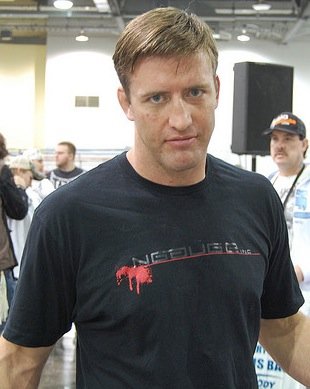
7. Stephan Bonnar
Soszynski’s punches hurt him. Bonnar’s answer finished the fight.
Against Krzysztof Soszynski at UFC 116, Bonnar absorbed hard punches in the opening round and was wobbled again early in the second.
He returned punches, worked into grappling exchanges and eventually dropped Soszynski with a knee before finishing with strikes.
At UFC 94, Jones’s spinning elbow dropped him in the first round. Bonnar recovered and completed the three-round fight.
The Forrest Griffin bouts add repeated exchanges. Their historical importance earns no bonus; Bonnar’s continued attacks supply the evidence.
His UFC stoppages tell different stories. The first Soszynski fight ended through a cut following an accidental headbutt. Anderson Silva dropped him with a knee to the body, then finished with punches.
Rua faced more clearly established knockout power in his defining Henderson test. Bonnar’s advantage comes from repeated exchanges, comeback offense and less repeated loss of function from head strikes.
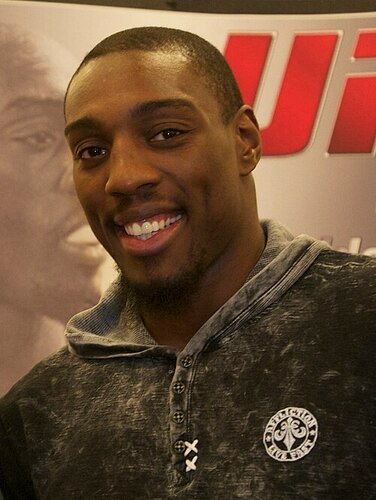
6. Phil Davis
Cauley’s head kick dropped him. Davis reached the legs and fought back.
Johnson’s right hands repeatedly reached Davis at UFC 172, including damaging attacks against the fence. Davis completed three rounds but lost a unanimous decision after being comprehensively outperformed.
Against Nemkov in their 2021 rematch, punches put Davis down in the second round. He returned to his feet and produced better offense later, although Nemkov won the decision.
Sullivan Cauley created another crisis in 2025. A second-round head kick and follow-up right hand dropped Davis. He pursued the legs, secured a takedown, moved to the back and returned punches before the bell.
Cauley won by unanimous decision. The sequence demonstrates recovery within a losing performance.
Three different opponents created meaningful striking danger. Davis found functional responses, but protective grappling and reduced offense limit the credit.
Johnson’s landed power and those repeated recoveries give Davis the advantage over Bonnar. They fall short of the more productive responses found higher in the list.
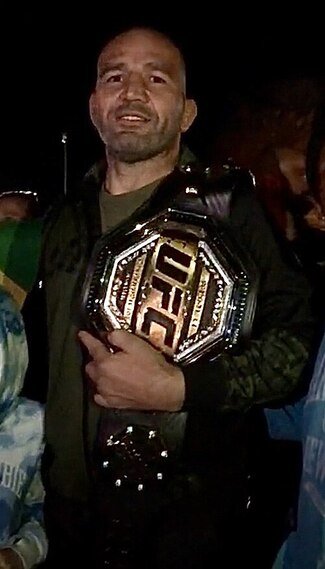
5. Glover Teixeira
Dropped by Santos in round three. Won by submission in that same round.
Teixeira’s strongest argument is a repeated recovery pattern.
Against Thiago Santos, he survived early danger and regained control through wrestling. Santos dropped him again in the third round, but Teixeira reversed position, took the back and secured the submission.
Karl Roberson’s elbows left him in trouble during a takedown attempt. Teixeira survived the follow-up, reversed position and finished with an arm-triangle in the same round.
Ion Cutelaba’s spinning backfist put him down in the opening round. Teixeira survived and returned to win by submission in the second.
Different opponents hurt him in different ways. He repeatedly recovered enough to create winning offense.
Johnson’s rapid knockout and Gustafsson’s fifth-round finish establish clear limits.
Teixeira takes fifth because restored function repeatedly became decisive offense. His vulnerability to the initial impact prevents a higher placement.
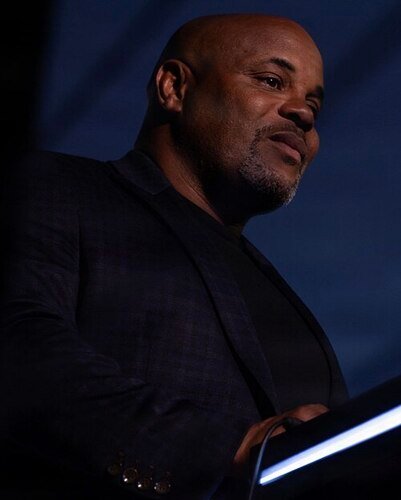
4. Daniel Cormier
An early knockdown did not stop him from imposing his own fight.
Johnson’s opening right hand at UFC 187 created an unmistakable test.
Cormier regained his feet, closed the distance and began wrestling. He eventually took control and won by third-round submission.
Gustafsson put him in trouble again at UFC 192. A knee followed by punches dropped Cormier late in the third round. He reached the interval and resumed competitive fighting across the final two rounds, retaining his title by split decision.
The break supplied important assistance. The subsequent fighting still demonstrated restored function.
The Jones rematch provides counterevidence. A head kick hurt Cormier before follow-up strikes ended the fight. The result was overturned to a no contest, so it is not an official knockout defeat; the observed sequence remains relevant.
Cormier places above Teixeira because he combines high-quality recoveries with less repeated severe vulnerability in the eligible fights.
The Johnson performance captures his case: he survived the danger and recovered enough to take control.
His three-fight rivalry with Miocic receives a separate assessment among the best chins in heavyweight MMA history, where only his heavyweight performances count.
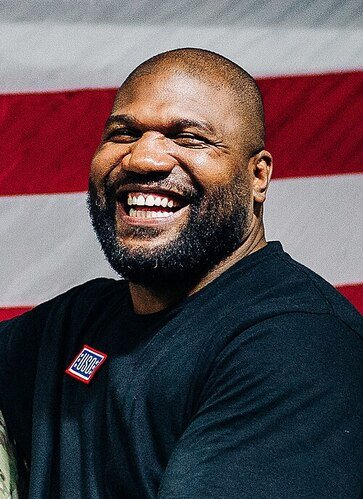
3. Quinton “Rampage” Jackson
Henderson landed cleanly. Jackson kept answering through five rounds.
Jackson’s strongest evidence comes from exchanges in which powerful strikes landed without removing his ability to respond.
At UFC 75, Henderson connected with meaningful punches. Jackson continued working, regained positions and produced effective offense across five rounds, winning the decision.
Against Keith Jardine, Jackson absorbed return punches while continuing to press and attack through three rounds.
Lyoto Machida’s third-round surge forced him onto the defensive. Jackson survived, although completing the contest does not mean the attacks left him unaffected.
His PRIDE defeats remain substantial limits. Wanderlei Silva stopped him twice with damaging punch-and-knee sequences. Rua overwhelmed him with an attack culminating in soccer kicks.
Jackson passes Cormier through the broader pattern of absorbing power while continuing to fight effectively. Cormier has the clearer crisis recoveries; Jackson has the deeper repeated-resistance case.
The Silva and Rua finishes make this one of the ranking’s closest comparisons.
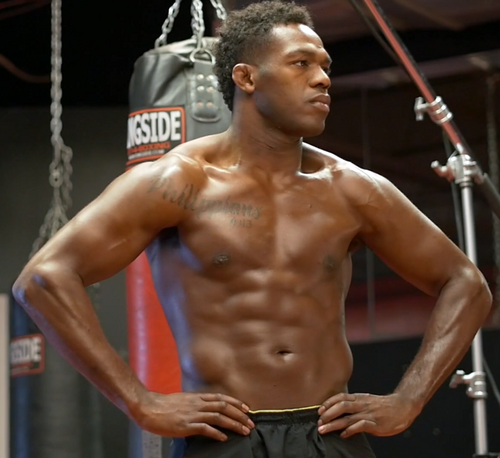
2. Jon Jones
His strongest rounds could still come after the damaging exchanges.
Gustafsson’s boxing repeatedly tested Jones at UFC 165. Their five-round contest required him to keep defending and attacking through damaging contact, and he produced his strongest offense late.
Machida’s counter left hands reached Jones in the opening round at UFC 140. Jones remained functional, adjusted and finished in the second.
Dominick Reyes landed meaningful uppercuts and other head strikes at UFC 247. A separate first-round body punch caught Jones off balance and he briefly went to the canvas; accounts differ on whether it was a knockdown. We do not count that incident as a head-strike resistance failure.
Jones’s advantage over Jackson combines retained function across these fights with an absence of comparable divisional striking finishes.
His defense reduced exposure. What landed still demonstrates strong resistance, while his recovery from severe trouble remains less thoroughly tested.
Second place rests on those responses—not an assumption that he could never be knocked out.
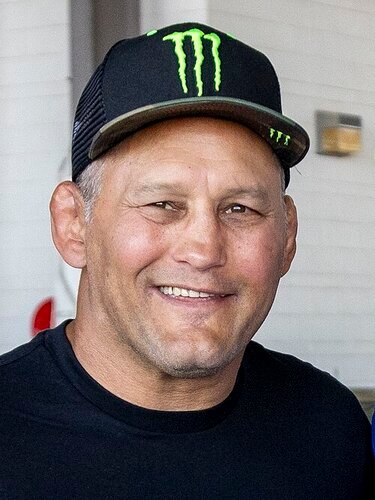
1. Dan Henderson
Rua dropped him twice. Henderson recovered and finished him in the third.
Henderson takes first through repeated performances in which serious trouble was followed by restored, winning offense.
In the Rua rematch at UFC Fight Night 38 in 2014, he was dropped in each of the opening two rounds. He survived, reached the intervals and returned to land the right hand that began the third-round finish.
Rafael Cavalcante also dropped him early in their 2011 Strikeforce light-heavyweight title fight. Henderson recovered through grappling, continued competing and stopped Cavalcante in the third.
His five-round fights with Jackson and Rua add sustained exposure.
Vitor Belfort’s 2013 finish is a major resistance failure. An uppercut hurt Henderson and began the attack. As Henderson returned to his feet, Belfort landed the head kick that led to the finish.
That defeat counts fully against him. Henderson ranks first despite it because his repeated recoveries against Rua and Cavalcante provide the strongest combined case under our definition—not because the knockout is discounted.
His 2015 Belfort defeat and the Gegard Mousasi stoppage occurred at middleweight. They are excluded here but count toward his separate assessment among the best chins in middleweight MMA history.
Why Henderson Edges Jones
Jones has the stronger case for taking meaningful head strikes without a major collapse.
Henderson has the clearer evidence of recovering from severe danger against different opponents and restoring the offense needed to win.
That repetition decides our comparison. Recovery does not automatically outrank resistance; Henderson’s particular recoveries give him the narrow overall advantage.
Readers who place greater emphasis on resistance have a reasonable argument for Jones.
The Rankings at a Glance
| Rank | Fighter | Strongest evidence | Key limitation |
| 1 | Dan Henderson | Recoveries producing victories against Cavalcante and Rua | Knockdowns, recovery assistance and Belfort’s finish |
| 2 | Jon Jones | Resistance with function retained against Gustafsson, Machida and Reyes | Reduced exposure and less-established crisis recovery |
| 3 | Quinton Jackson | Repeated resistance while returning effective offense | Decisive finishes against Wanderlei and Rua |
| 4 | Daniel Cormier | Recovery against Johnson and Gustafsson | Interval assistance and the Jones finishing sequence |
| 5 | Glover Teixeira | Repeated recovery-to-victory performances | Frequent serious trouble and knockout failures |
| 6 | Phil Davis | Johnson resistance and recoveries against Nemkov and Cauley | Reduced offense and protective grappling |
| 7 | Stephan Bonnar | Repeated exchanges and the Soszynski comeback | Less-established exposure to the strongest divisional punchers |
| 8 | Maurício Rua | Restored offense after Henderson’s punishment | Extensive striking-failure record |
| 9 | Alexander Gustafsson | Competitive championship tests against Jones and Cormier | Repeated striking stoppages |
Other Names in the Discussion
Chuck Liddell had substantial early resistance evidence, but his later light-heavyweight knockouts weigh heavily against the lifetime divisional case.
Wanderlei Silva demonstrated memorable toughness in damaging exchanges. His own striking failures prevent reputation from settling the comparison.
Machida and Rashad Evans combined durability with defensive styles that reduced exposure. Their strongest surviving exchanges must be separated from the attacks they avoided.
Johnson’s knockout power made him an important opponent in several profiles. That offensive power alone does not establish a place among the division’s best chins.
These omissions concern the balance of demonstrated evidence. They are not declarations that the fighters had weak chins.
Who Has Your Vote?
Henderson’s repeated recoveries give him our overall advantage over Jones.
Cormier’s response to Johnson illustrates why both qualities matter. Being dropped exposed a limit; recovering and winning revealed an exceptional response.
Which fighter would you move and which light-heavyweight fight convinced you?
Sources and Further Reading
- Jones–Gustafsson: UFC’s detailed retrospective
- Jones–Machida: fight report
- Jones–Reyes: round-by-round coverage
- Jones–Bonnar: UFC 94 play-by-play
- Cormier–Gustafsson: UFC’s fight report
- Bonnar–Soszynski II: round-by-round coverage
- Johnson–Davis: UFC 172 play-by-play
- Nemkov–Davis II: Bellator 257 play-by-play
- Teixeira–Roberson: the first-round comeback
- Teixeira–Cutelaba: UFC’s retrospective
- Jackson–Henderson: UFC 75 play-by-play
- Henderson–Cavalcante: Strikeforce title-fight report
- Belfort–Henderson: the 2013 finishing sequence