In a sport where reach usually exceeds height, these elite fighters were built the other way around and still found ways to beat longer opponents.
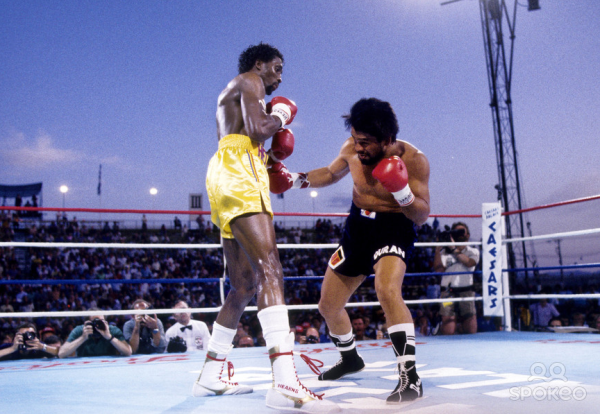
In boxing, reach is one of the sport’s most valuable physical advantages.
Longer arms allow a fighter to land first, control distance, and stay safer while throwing jabs and straight punches. Marvin Hagler, Sam Langford, and Sonny Liston feature among 15 boxing champions with freakishly long arms compared to their height, illustrating how substantial that physical advantage can be.
Liston, for example, stood 6’1″ with an 84-inch reach, giving him an extraordinary advantage over opponents of similar dimensions.
The pattern extends across eras. Anthony Joshua stands 6’6″ with an 82-inch reach. Floyd Mayweather Jr., at 5’8″, has a 72-inch reach, while Amir Khan’s reach is about 2.5 inches longer than expected for his height.
Even fighters known for overcoming physical disadvantages can have reach working in their favor. Mike Tyson, at 5’10.5″ with a 71-inch reach, was considered short-armed for a heavyweight, yet his reach remained within a functional range for his height.
And being short does not necessarily mean being short-armed.
Tommy Burns is a striking example. At 5’7″, he was the shortest heavyweight champion in history, yet his 73-inch reach gave him an arm-length advantage over many heavier and taller opponents of his era.
Such trade-offs are common in boxing. A fighter who lacks height may compensate with reach, while another physical advantage can help offset shorter arms.
But some fighters had no such luxury.
Their reach wasn’t merely shorter than an opponent’s. It fell below what their own height would normally suggest.
One way to measure that difference is through the ape index, which compares a fighter’s reach with his height. When reach exceeds height, the index is positive; when reach is shorter, it is negative.
In boxing, where reach often exceeds height, a negative ape index means a fighter has less reach than his frame would typically suggest. The more negative the number, the greater the shortfall.
What Counts as a Disadvantage Here?
This isn’t a list of the shortest reaches in boxing overall. It focuses on fighters whose reach was shorter than their height, particularly in divisions where they faced opponents of similar dimensions.
On average, a boxer’s reach is about 2 to 3 inches longer than his height. That makes the baseline important: even a fighter whose reach simply matches his height is already below the proportions typically seen in boxing, while a negative ape index pushes the difference further. Against an opponent with unusually long arms, that gap can become much larger.
The size of that difference becomes clearer when comparing fighters of similar height.
Take Canadian super heavyweight Jean-François Bergeron. Standing at 6’5″, his 73-inch reach sounds respectable in isolation. For a fighter of that height, however, it falls well below expectation. A boxer built like him would normally have a reach closer to 79 inches.
Anthony Joshua, at a similar height, has an 82-inch reach. Lennox Lewis, also 6’5″, had an 84-inch reach—one of the longest reaches ever recorded in boxing history.
That leaves a gap of more than 10 inches between fighters of nearly identical height. In practical terms, one can land from a distance where the other cannot reach his opponent.
Because boxing doesn’t work in absolute terms. It works in relation to the man standing across from you.
A reach that looks adequate in isolation can become a liability against opponents of similar height, or even shorter fighters, who can still land from farther away. Closing that distance may force a boxer to step into danger before he can land his own punches.
That’s what makes this group of fighters so impressive. They faced a physical limitation built into their own frame, often against opponents with the very advantage boxing rewards.
And still, they found ways to compete, adapt, and win.
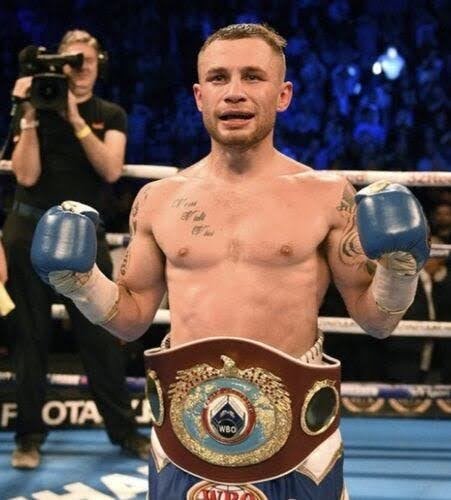
1. Carl Frampton — Ape Index: −3.0″
Height: 5’5”
Division: Super Bantamweight / Featherweight
Reach: 62”
Reach Disadvantage vs. Peers: A reach well below expectation for his height, compounded by competing against larger-framed opponents
Being short in boxing does not necessarily mean being short-armed.
Some fighters compensate for a lack of height with disproportionately long arms, giving them a way to remain competitive at distances where their stature might otherwise work against them. Tommy Burns is an extreme historical example. At 5’7”, the shortest heavyweight champion in history still possessed a 73-inch reach.
Carl Frampton had no such compensation.
He stood 5’5” and had a reach of only 62 inches. So when Frampton encountered a taller opponent, the problem wasn’t simply that the other fighter stood higher. His own arms gave him little help in bridging the physical difference.
That combination is what makes Frampton particularly interesting on this list. He was already on the shorter side in the divisions in which he competed, yet his proportions pushed him even further in the same direction. Instead of one measurement partly balancing another, height and reach could work against him simultaneously.
His boxing had to account for both.
Frampton became a disciplined, precision-based fighter who relied heavily on timing, positioning, and shot selection. He did not need to throw himself into every opening or turn every fight into a continuous battle at close range. He could wait for the right moment, step into position, land cleanly, and move before an opponent had fully responded.
That precision was especially important against larger, longer-armed fighters. Every unnecessary moment spent entering or remaining in their preferred range gave them another opportunity to exploit the physical difference.
So Frampton became selective.
He picked the exchanges worth entering and concentrated on winning those exchanges rather than trying to overcome his dimensions through sheer activity.
That is what separates his case from many of the others here. Frampton wasn’t a short fighter whose unusually long arms provided a hidden equalizer.
He was a short fighter whose arms made the problem even harder.
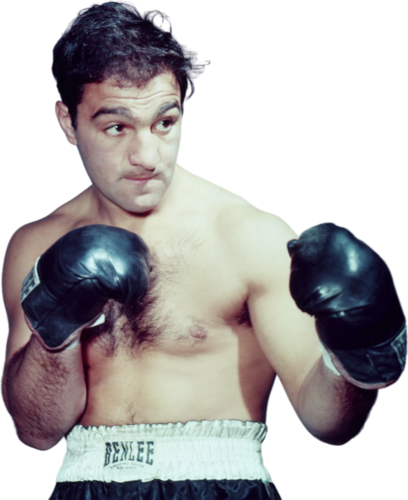
2. Rocky Marciano — Ape Index: −2.5″
Height: 5’10.5”
Division: Heavyweight
Reach: 68”
Reach Disadvantage vs. Peers: Often giving up 6–10 inches to similarly sized heavyweights
Rocky Marciano didn’t just fight with a reach disadvantage. He built his entire career around it.
At just under 5’11” with a 68-inch reach, Marciano was undersized even by the standards of his own era. Heavyweights around his height typically had longer arms, while many of his opponents could use their reach to control distance.
The gap becomes clearer when you look at the men he faced.
Jersey Joe Walcott, who stood around 5’11”, had a reach of roughly 73 inches. That was a five-inch difference between two fighters of nearly identical height.
Ezzard Charles, another elite opponent, stood around 6’0” with a reach in the mid-70s, giving him a clear advantage in range. Even Roland La Starza, who wasn’t significantly taller, had a longer reach.
Marciano therefore had to work his way inside against opponents who could reach him before he could reach them.
He couldn’t comfortably dictate distance from the outside. Instead, he had to close the gap, often entering range under fire, before he could make his own punches count.
That is where his fighting style became so effective.
Marciano became one of boxing’s most relentless pressure fighters. He kept moving forward, used his durability to withstand punishment, and pushed opponents into close-range exchanges where their reach mattered less. Once inside, his compact punching power and relentless attack could take over.
He wasn’t trying to match his opponents’ range. He was trying to take it away.
And he did it well enough to retire undefeated at 49–0, one of the most remarkable records in boxing history.
Marciano’s reach was a physical limitation, but he developed a style that turned closing the distance into one of his greatest strengths.
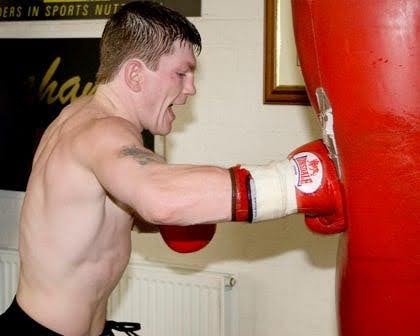
3. Ricky Hatton — Ape Index: −2.5″
Height: 5’7.5”
Division: Light Welterweight / Welterweight
Reach: 65”
Reach Disadvantage vs. Peers: Often giving up 4–7 inches to similarly sized opponents
Ricky Hatton’s answer to longer arms was to give his opponents as little room as possible to use them.
His fights were often crowded, physical affairs. He cut off the ring, rushed opponents out of comfortable positions, attacked the body, worked through clinches, and kept moving forward. The closer the fight became, the less useful a reach advantage could be.
That approach suited his dimensions.
Hatton stood 5’7.5” but had a reach of only 65 inches. Even against fighters around his own height, he could find himself at a disadvantage in arm length.
Kostya Tszyu is a good example. Tszyu stood around 5’7”, almost identical in height to Hatton, but had a 67-inch reach. Hatton was therefore facing a longer-armed fighter without any meaningful difference in height between them.
Their 2005 fight showed how Hatton could deal with that problem. Rather than allowing Tszyu the space to settle into a comfortable rhythm, Hatton repeatedly closed the distance and turned the contest into the kind of exhausting, close-range fight that suited him. Tszyu’s extra reach still existed, but Hatton worked to deny him the space needed to make full use of it.
The physical disparity became much greater against Floyd Mayweather Jr. Mayweather stood only slightly taller at 5’8”, yet his 72-inch reach exceeded Hatton’s by seven inches. From the outside, that was an enormous difference between two fighters separated by barely half an inch in height.
Hatton couldn’t make those seven inches disappear.
What he could do was build a style around preventing fights from remaining at the distance where they mattered most.
That is why his reach disadvantage and his fighting style are difficult to separate. Hatton didn’t become successful by learning to compete with longer fighters on their terms. He dragged fights toward his own.
For Ricky Hatton, distance wasn’t something to manage. It was something to eliminate.
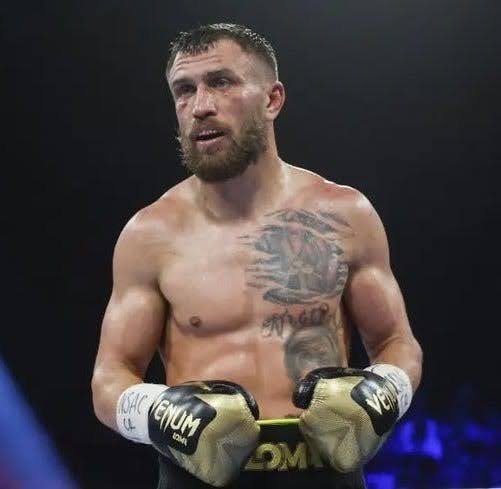
4. Vasyl Lomachenko — Ape Index: −1.5″
Height: 5’7”
Division: Featherweight to Lightweight
Reach: 65.5”
Reach Disadvantage vs. Peers: Often giving up 3–6 inches to similarly sized or even shorter opponents
Watching Vasyl Lomachenko move around an opponent, it is easy to assume that his ability to control space comes with some kind of physical advantage.
It doesn’t.
At 5’7”, Lomachenko has a reach of just 65.5 inches, shorter than you would typically expect for a boxer of his height. Teófimo López, for example, stood at a similar 5’8” but had a 68.5-inch reach, giving him a three-inch advantage despite the small difference in height.
The comparison with Gary Russell Jr. is even more revealing. Russell stood around 5’4.5” with a 64-inch reach. Lomachenko was more than two inches taller, yet his reach advantage was only 1.5 inches. Physically, he wasn’t getting nearly as much range from his height as you might expect.
But Lomachenko rarely depended on conventional range in the first place.
Rather than remaining directly in front of an opponent and trying to reach him first, he constantly changed the position from which the exchange took place. A step to the side, a sudden angle change, or a quick repositioning could force an opponent to turn and reset before throwing back.
By the time that adjustment happened, Lomachenko could already be in position to land.
That is what made his footwork so valuable against longer-armed fighters. He wasn’t simply trying to reach farther or force his way through their advantage. He was creating exchanges from positions where that advantage became less useful.
In that sense, Lomachenko approached the reach problem very differently from a pressure fighter. Instead of repeatedly fighting his way across the distance separating him from an opponent, he changed the geometry of the exchange itself.
His reach was shorter than expected for his height. His boxing was built around making sure the fight was rarely decided by that measurement.
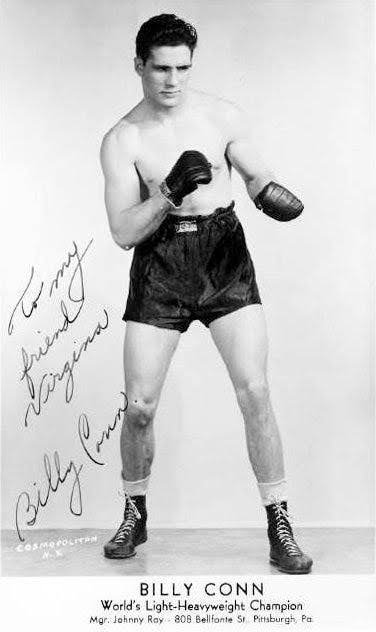
5. Billy Conn — Ape Index: −1.0″
Height: 6’1.5”
Division: Light Heavyweight / Heavyweight
Reach: 72.5”
Reach Disadvantage vs. Peers: Often giving up 3–10+ inches to similarly sized fighters
A 72.5-inch reach doesn’t sound short.
That is exactly what makes Billy Conn’s measurements so interesting.
Put that reach on a shorter fighter and there would be little reason to notice it. Conn, however, stood 6’1.5”. His arms did not provide the range normally associated with a fighter that tall, especially in a sport where reach typically extends beyond height.
Joe Louis illustrates the difference without requiring a dramatic height mismatch. Louis stood around 6’1”, slightly shorter than Conn, yet had a 76-inch reach. Conn was the taller man, but Louis could reach several inches farther.
The proportions become even more striking when placed beside Sonny Liston. At roughly 6’1”, Liston possessed an extraordinary 84-inch reach. More than 10 inches separated the arm spans of two men who stood at almost the same height.
Conn’s solution was never going to be winning a contest of measurements.
Movement was his equalizer.
Rather than remaining at the end of a heavyweight’s punches and trying to trade jabs from conventional range, Conn could use his speed, footwork, timing, and positioning to determine when exchanges happened. He needed to create openings rather than expect his dimensions to provide them.
His famous first fight with Joe Louis showed just how far that approach could take him. Conn used his movement and speed to trouble the heavyweight champion for long stretches, finding opportunities against a man who possessed not only greater power and size, but also the longer reach.
That fight also captures something important about Conn’s place on this list. His 72.5-inch reach was not exceptionally short when viewed by itself.
The anomaly only appears when you put the rest of Billy Conn behind it.
At 6’1.5”, those 72.5 inches meant something very different.
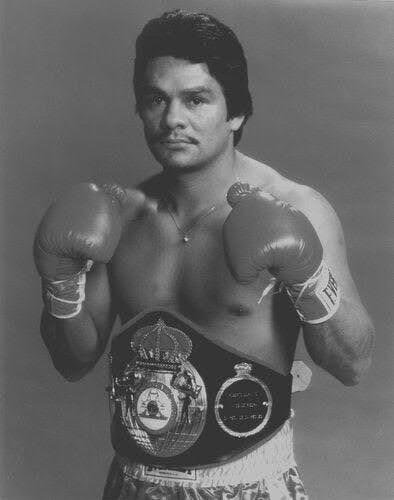
6. Roberto Durán — Ape Index: −1.0″
Height: 5’7”
Division: Lightweight to Middleweight
Reach: 66”
Reach Disadvantage vs. Peers: Often giving up 2–6 inches to opponents of similar or even smaller height
For Roberto Durán, the reach problem didn’t get easier as his career progressed. It got bigger.
Durán stood 5’7” with a 66-inch reach, putting him on the wrong side of the reach-to-height relationship commonly seen in boxing. Ken Buchanan showed what that could mean at lightweight. He was also around 5’7”, yet his 70-inch reach exceeded Durán’s by four inches.
Then Durán started moving up.
By the time he encountered Sugar Ray Leonard, the difference had become far more substantial. Leonard stood 5’10” with a 74-inch reach, giving Durán roughly eight additional inches of arm span to negotiate.
Thomas Hearns represented the extreme. At 6’1” with a 78-inch reach, Hearns presented dimensions that Durán could never hope to match from the outside.
But matching them was never the point.
Few fighters were more comfortable than Durán once a fight moved into close quarters. Getting there required more than simply charging forward. He used head movement and timing to work past punches, then relied on positioning, balance, and compact combinations once the available space disappeared.
That distinction matters. Closing distance was only the first part of the problem. Durán also had to know what to do when he arrived.
Against Buchanan, he repeatedly found his way past the champion’s longer reach and did his best work at closer range. Years later, against the naturally larger Leonard, Durán showed that the same skills could travel with him through the divisions. In their first fight, he pressured Leonard, competed effectively at close range, and came away with one of the defining victories of his career.
Not every size difference could be overcome, and Hearns would eventually demonstrate just how dangerous an enormous combination of height, reach, and power could be.
But Durán’s career is remarkable partly because he kept confronting increasingly unfavorable dimensions in the first place.
His 66-inch reach never grew as he moved from lightweight toward middleweight.
The men standing across from him did.
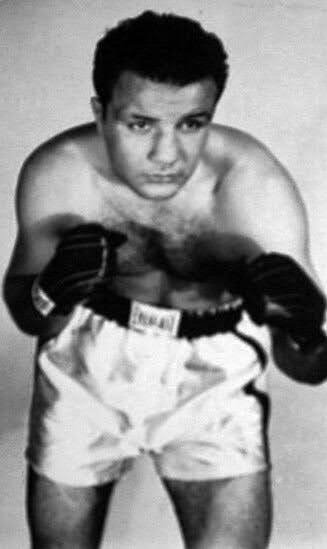
7. Jake LaMotta — Ape Index: −1.0″
Height: 5’8”
Division: Middleweight
Reach: 67”
Reach Disadvantage vs. Peers: Often giving up 4–6 inches to similarly sized opponents
Sometimes there was no clean way for Jake LaMotta to get where he wanted to be.
He had to go through punches to get there.
That was one of the consequences of fighting at middleweight with a 67-inch reach, a measurement already working against the reach-to-height proportions common in boxing. LaMotta stood 5’8”, yet even opponents who gave up height to him could still have longer arms.
Marcel Cerdan is perhaps the strangest example. At approximately 5’6½”, Cerdan was noticeably shorter than LaMotta but had a reach of around 69 inches. LaMotta could look down at an opponent and still be the man who had to reach farther to land.
Against Sugar Ray Robinson, the problem became more severe. Robinson stood around 5’11” with a reach of roughly 72 to 72.5 inches. From the outside, Robinson had several additional inches with which to work before LaMotta could get close enough to answer.
LaMotta’s response was not elegant, and that was precisely the point.
He possessed extraordinary durability and was willing to accept punishment while moving into the positions he needed. Where another fighter might retreat after being caught on the way in, LaMotta could continue forward, stay in the exchange, and make the fight increasingly physical.
Once the space between the two men disappeared, the equation changed. The extra inches at the end of an opponent’s arms mattered less when LaMotta was already close enough to work.
His rivalry with Robinson repeatedly tested that approach. Robinson was taller, longer, faster, and one of the most technically gifted fighters boxing has ever produced. Yet in their second meeting, LaMotta managed to impose enough pressure to hand Robinson the first defeat of his professional career.
That victory did not erase the physical disadvantage. It showed what LaMotta was prepared to endure in order to fight through it.
For some fighters on this list, overcoming reach meant finding a clever way around the problem.
LaMotta was willing to go straight through it.
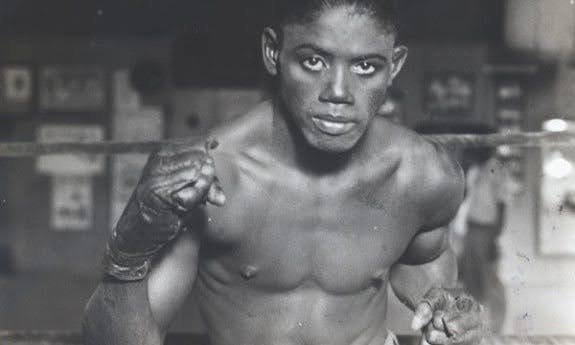
8. Kid Chocolate — Ape Index: −1.0″
Height: 5’6”
Division: Featherweight / Junior Lightweight
Reach: 65”
Reach Disadvantage vs. Peers: Below the typical reach expected for his height
Kid Chocolate could make distance look like something controlled by skill rather than anatomy.
His boxing was smooth and composed, built around footwork, timing, positioning, and clean technique. He could manage exchanges without appearing dependent on the physical advantage of simply being able to reach his opponent first.
His measurements make that ability more interesting.
At 5’6”, Kid Chocolate had a reach of 65 inches. That one-inch negative ape index becomes more meaningful against a boxing baseline where reach commonly extends 2 to 3 inches beyond height.
There was no exceptional arm length helping him create space.
Instead, Kid Chocolate could use his feet and positioning to decide where exchanges happened. He could move into range when an opportunity appeared, adjust his position after punching, and avoid spending unnecessary time at distances that favored a longer-armed opponent.
That required a different kind of control.
Some fighters on this list responded to unfavorable reach by applying enormous pressure. Others were willing to absorb punishment while crossing the gap. Kid Chocolate’s boxing was built around making those compromises less necessary.
He managed distance rather than trying to overpower it.
His 65-inch reach was not the defining feature of his boxing. What mattered was how effectively he could operate without reach being one of the physical advantages available to him.
For Kid Chocolate, control came from what he did with the space, not from how far his arms extended into it.

9. Gennady Golovkin — Ape Index: −0.5″
Height: 5’10.5”
Division: Middleweight
Reach: 70”
Reach Disadvantage vs. Peers: Slight by itself, but more meaningful against the positive reach-to-height proportions common in boxing
Half an inch sounds like nothing.
If zero were the normal baseline in boxing, it almost would be.
But as established earlier, a boxer’s reach typically extends about 2 to 3 inches beyond his height. Golovkin’s −0.5-inch ape index therefore places him roughly 2.5 to 3.5 inches below that typical reach-to-height relationship.
And there is an unusually clear way to see what that means.
Canelo Álvarez stands around 5’8” with a 70.5-inch reach. Golovkin is roughly 2.5 inches taller, yet Canelo’s arms span slightly farther. The taller fighter receives none of the reach advantage his additional height might lead you to expect.
Go in the other direction and the problem changes again. Daniel Jacobs stood around 5’11.5” with a 73-inch reach, giving him several additional inches to work with from the outside.
Golovkin spent his career between those possibilities: shorter fighters who could unexpectedly match or exceed his reach, and taller fighters whose arms extended considerably farther.
Yet distance control became one of the strengths of his boxing.
Golovkin’s jab was central to that. Combined with intelligent positioning and steady forward pressure, it allowed him to occupy useful space without needing exceptional arm length to dictate where exchanges happened. He could gradually take away an opponent’s room, establish his own punching distance, and keep himself close enough to threaten without simply rushing forward.
That is why the Canelo and Jacobs matchups are particularly revealing. The measurements favored different opponents for different reasons, yet Golovkin could still control significant portions of those fights through his jab, timing, positioning, and pressure.
His −0.5-inch ape index is not an extreme anatomical measurement.
The point is that −0.5 isn’t being measured against zero. In boxing, it is being measured against a population that typically sits several inches on the positive side.
Golovkin became an elite middleweight without having that advantage available to him.
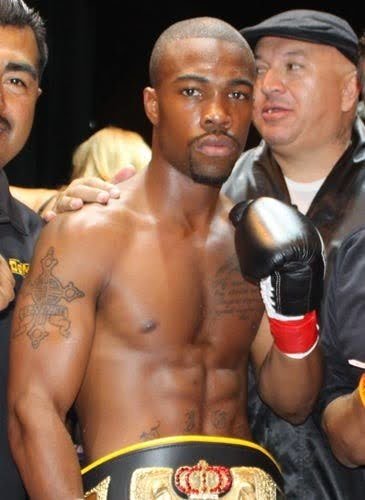
10. Gary Russell Jr. — Ape Index: −0.5″
Height: 5’4.5”
Division: Featherweight
Reach: 64”
Reach Disadvantage vs. Peers: Below the typical boxing reach-to-height relationship despite the small raw difference
Gary Russell Jr. could make a few inches of distance disappear remarkably quickly.
His exceptional hand speed was the obvious reason. Once Russell decided to attack, punches could arrive in rapid combinations before an opponent had much time to respond. That quickness gave him a way to compete at distances his measurements alone did not necessarily favor.
And those measurements deserve some context.
Russell stood 5’4.5” with a 64-inch reach, producing an ape index of just −0.5 inches. The raw number looks almost negligible, but zero is not the typical baseline here. With boxers averaging roughly 2 to 3 inches more reach than height, Russell sits about 2.5 to 3.5 inches below that typical reach-to-height relationship.
That distinction becomes especially interesting when Russell is placed beside Vasyl Lomachenko.
Lomachenko stood roughly 5’7” with a 65.5-inch reach. Despite giving up around 2.5 inches in height, Russell was separated from him by only about 1.5 inches in reach. Neither fighter possessed the kind of long arms that normally accompany their respective heights, which made positioning and speed especially important when they met.
For Russell, speed was the more obvious weapon.
He did not need every exchange to begin at the outer limit of his reach. His quick hands allowed him to attack rapidly once an opening appeared, while his timing helped him find opportunities before a longer-armed opponent could fully exploit the additional distance available to him.
That is different from simply having long arms.
Reach determines how far a fighter can hit. Russell’s speed helped determine how quickly his punches occupied the space that was available.
His −0.5-inch ape index will never look dramatic on a measurement table. It isn’t supposed to.
What matters is what that number means against the proportions typical of the sport, and how Russell found another physical attribute capable of compensating for what his arms did not provide.
Final Thoughts: When Reach Isn’t Enough
In boxing, reach is supposed to be one of the sport’s simplest advantages.
Longer arms can help a fighter land first, control distance, and stay safer while throwing straight punches. For most fighters, having more reach simply gives them more options.
The boxers on this list had to work with fewer of them.
Some faced dramatic proportional differences. Carl Frampton’s reach fell three inches short of his height. Rocky Marciano and Ricky Hatton were 2.5 inches in the negative.
Others appear much less unusual until the numbers are placed in the context of boxing itself. A −1.0 or −0.5-inch ape index may look insignificant in isolation, but not in a sport where reach typically extends 2 to 3 inches beyond height.
The Reach Disadvantage, by the Numbers
| Boxer | Height | Reach | Ape Index | Approx. Shortfall vs. +2″ to +3″ Boxing Baseline |
| Carl Frampton | 5’5” | 62” | −3.0” | 5.0–6.0” |
| Rocky Marciano | 5’10.5” | 68” | −2.5” | 4.5–5.5” |
| Ricky Hatton | 5’7.5” | 65” | −2.5” | 4.5–5.5” |
| Vasyl Lomachenko | 5’7” | 65.5” | −1.5” | 3.5–4.5” |
| Billy Conn | 6’1.5” | 72.5” | −1.0” | 3.0–4.0” |
| Roberto Durán | 5’7” | 66” | −1.0” | 3.0–4.0” |
| Jake LaMotta | 5’8” | 67” | −1.0” | 3.0–4.0” |
| Kid Chocolate | 5’6” | 65” | −1.0” | 3.0–4.0” |
| Gennady Golovkin | 5’10.5” | 70” | −0.5” | 2.5–3.5” |
| Gary Russell Jr. | 5’4.5” | 64” | −0.5” | 2.5–3.5” |
The table also shows why the raw ape index tells only part of the story.
The same measurement could produce very different problems. Conn had to navigate heavyweight dimensions with relatively short arms for his height. Durán carried the same −1.0-inch ape index while climbing through increasingly larger weight classes. LaMotta accepted the punishment that could come with crossing distance. Kid Chocolate approached that space with technique and control.
At the more extreme end, Marciano and Hatton built pressure-heavy styles around getting where their arms could work. Frampton had neither height nor relative reach to fall back on. Lomachenko found answers through angles and positioning. Golovkin used his jab and pressure to control space without exceptional length, while Russell could make distance disappear with speed.
There was no single solution because reach was never the only variable.
Timing could change the moment an exchange began. Footwork could change where it happened. Pressure could take away the space longer arms needed. Speed could shorten the time available to exploit them. Durability could allow a fighter to survive the dangerous journey inside.
That is ultimately what these measurements reveal.
Reach shapes the geometry of a boxing match, but it does not determine what a fighter can do within it.
The men on this list could not change the distance between their fingertips.
They changed everything around it.