From negative ape indexes to nine-inch divisional deficits, these fighters show why having short arms for your height and being short-reached for your weight class are not always the same thing
In MMA, reach is more than a number on the tale of the tape. Longer arms can help a fighter land from farther away, manage distance, work from the clinch, and attack without stepping as deeply into an opponent’s range.
Most fighters have a reach at least slightly longer than their height.
A small group goes in the opposite direction.
These are fighters with a negative ape index, meaning their recorded reach is shorter than their height. It is the same unusual proportion that has earned athletes in other sports the unofficial nickname “T-Rex arms.”
But ape index only tells part of the story.
A fighter can have short arms relative to his own height without being dramatically short-reached for his weight class. Max Holloway is a perfect example. At 5’11″ with a 69-inch reach, he has a −2″ ape index. Yet because he is tall for a featherweight, his reach is only about an inch below the divisional average.
The opposite can also happen. A shorter fighter can have a similar ape index but find himself several inches below the typical reach of the opponents around him. In those cases, the unusual proportions become a much larger competitive disadvantage.
That distinction becomes important with these nine fighters. Some had unusual proportions without facing an enormous divisional reach deficit. Others entered the cage with reaches five, seven, or even nine inches below the typical measurement in their weight class.
And sometimes the strangest comparisons come between individual fighters. A shorter opponent can have longer arms, while two fighters of exactly the same height can be separated by an extraordinary amount of reach.
The countdown starts with a modest −1″ ape index and works toward the most extreme case, where a fighter’s reach falls four full inches short of his own height.

9. Justin Gaethje — 5’11″ Height / 70″ Reach
- Division: Lightweight (average height ~5’10″, average reach ~72″)
- Ape Index: −1″
- Reach Disadvantage vs. Average: ~2 inches shorter than typical lightweights
Justin Gaethje starts the countdown with the smallest negative ape index on the list. At 5’11″, his 70-inch reach falls just one inch short of his height and roughly two inches below the lightweight average.
That sounds fairly modest. Then put him next to Conor McGregor.
The former undisputed lightweight champion stands only 5’9″, two inches shorter than Gaethje, yet stretches out to 74 inches. So despite being the taller man, Gaethje gives up four full inches of reach.
For a fighter who has spent his career throwing himself into striking exchanges, that makes Gaethje an especially interesting case. His game has never been built around keeping opponents safely at the end of long arms. He pressures, attacks the legs, explodes into range, and is perfectly willing to fight where both men can land.
And the story has now come full circle. Gaethje sits atop the same lightweight division McGregor once ruled.
One champion stood 5’9″ with a 74-inch reach. The other stands 5’11″ with only 70.
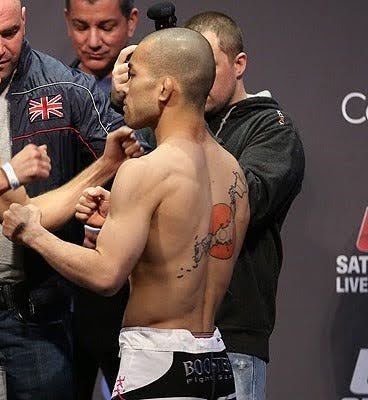
8. Issei Tamura — 5’5″ Height / 63″ Reach
- Division: Bantamweight (average height ~5’7″, average reach ~69″)
- Ape Index: −2″
- Reach Disadvantage vs. Average: ~6 inches shorter than typical bantamweights
At 5’5″, Issei Tamura was already one of the shorter fighters at bantamweight. His arms were shorter still, with a reach of just 63 inches.
To appreciate how unusual that is, consider Marcus Brimage. He also fought at bantamweight and stood only 5’4″, an inch shorter than Tamura. But Brimage had a 71-inch reach.
So despite being the taller fighter, Tamura had an astonishing eight inches less reach.
Even against the division as a whole, Tamura stood out. The typical bantamweight reach is around 69 inches, putting his 63-inch measurement roughly six inches below average.
Tamura’s fighting style helped make those proportions workable. He was a quick, explosive attacker who could counter his way into range and mix his striking with takedowns rather than relying on fighting from the outside. In his UFC debut against Tiequan Zhang, Tamura showed that explosiveness, scoring a second-round knockout with a well-timed right hand.
And he did it with one of the shortest reaches in the division: 63 inches on a 5’5″ frame.

7. Max Holloway — 5’11″ Height / 69″ Reach
- Division: Featherweight (average height ~5’9″, average reach ~70″)
- Ape Index: −2″
- Reach Disadvantage vs. Average: ~1 inch shorter than typical featherweights
Max Holloway is taller than the average featherweight, but his reach tells a very different story. At 5’11″ with a 69-inch reach, his arms span two inches less than his height and even sit slightly below the typical reach for the division.
Alexander Volkanovski puts those proportions into perspective.
Volkanovski stands only 5’6″, five inches shorter than Holloway, yet his 71.5-inch reach is 2.5 inches longer. The two eventually met three times at the highest level of the featherweight division, with the much shorter fighter still holding the reach advantage.
That makes Holloway’s success as a high-volume striker particularly interesting. Rather than having long arms to match his height, he built his offense around relentless combinations, pace, accuracy, and the ability to keep exchanges flowing once he found his range.
It carried him to the undisputed UFC featherweight championship and, later, the BMF title.
Holloway stands five inches taller than Volkanovski. His reach is still 2.5 inches shorter.
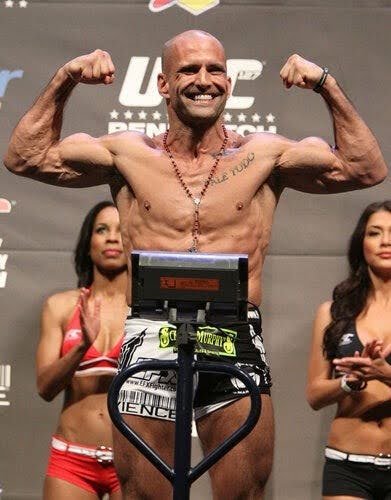
6. Jason Reinhardt — 5’6″ Height / 64″ Reach
- Division: Bantamweight (average height ~5’7″, average reach ~69″)
- Ape Index: −2″
- Reach Disadvantage vs. Average: ~5 inches shorter than typical bantamweights
Jason Reinhardt arrived in the UFC with a remarkable 18–0 professional record, having finished every opponent he faced.
What makes that run especially interesting here are the proportions he did it with.
Reinhardt stood 5’6″ with a reach of just 64 inches, two inches shorter than his height. At bantamweight, that put him roughly five inches below the typical reach for the division.
A shorter reach can make entering striking range more difficult, but Reinhardt built much of his early success around getting fights to the ground and finding submissions. Seventeen of his 20 professional victories came by submission, allowing him to build an unbeaten record without needing the kind of range a longer-armed striker might depend on.
His brief UFC and WEC run proved much tougher, and he ultimately retired at 20–3.
But the number that stands out is still 18–0. Before Reinhardt ever lost a professional fight, he had won 18 straight with only a 64-inch reach.

5. Darren Uyenoyama — 5’6″ Height / 64″ Reach
- Division: Primarily Flyweight (also competed at Bantamweight and catchweight fights up to Featherweight)
- Ape Index: −2″
- Reach Disadvantage vs. Average Flyweight: ~2 inches shorter than typical
At 5’6″ with a 64-inch reach, Darren Uyenoyama already had unusual proportions for a flyweight.
What makes his case more remarkable is that he did not stay there. Uyenoyama also competed at bantamweight, took catchweight fights, and even entered the featherweight tournament at DREAM 4.
At flyweight, his reach was already roughly two inches below the divisional average. Every move upward meant carrying that same 64-inch reach against generally larger opposition.
Uyenoyama’s grappling-heavy style gave him another way to compete. Rather than depending on long-range striking, he could close distance, take opponents down, and work for submissions, tools that helped him succeed despite his unusual dimensions.
Uyenoyama had a 64-inch reach at flyweight and carried it all the way up to featherweight. For perspective, 5’3″ Demetrious Johnson had a 66-inch reach.

4. Cody Garbrandt — 5’7″ Height / 65″ Reach
- Division: Bantamweight (average height ~5’7″, average reach ~69″)
- Ape Index: −2″
- Reach Disadvantage vs. Average: ~4 inches shorter than typical bantamweights
Cody Garbrandt reached the top of the bantamweight division with a reach of just 65 inches.
At 5’7″, his height was right around the divisional average. His reach was another matter. It measured two inches shorter than his own height and roughly four inches below what was typical for a bantamweight.
Garbrandt compensated with some of the qualities that made him such a dangerous boxer: exceptional hand speed, quick footwork, sharp counters, and the explosiveness to close distance before opponents could comfortably exploit their longer reach.
Those tools eventually carried him to the UFC bantamweight championship, where he defeated longtime champion Dominick Cruz at UFC 207.
What makes Garbrandt fascinating here is the contrast between his fighting style and his proportions. He became known for fast, precise combinations and knockout power despite having a reach that was not only short for the division, but shorter than his own 5’7″ frame.
A 65-inch reach was enough to take Cody Garbrandt all the way to the UFC bantamweight championship.
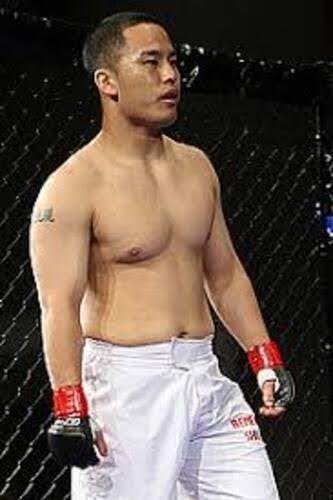
3. Andy Wang — 5’6″ Height / 63″ Reach
- Division: Lightweight (average height ~5’10″, average reach ~72″)
- Ape Index: −3″
- Reach Disadvantage vs. Average: ~9 inches shorter than typical lightweights
Most fighters on this list found ways to make a short reach work. Andy Wang represents the other side of the equation.
At 5’6″ with a 63-inch reach, Wang was roughly four inches shorter and an extraordinary nine inches below the typical lightweight reach, the largest divisional deficit among the fighters on this list.
As a Brazilian jiu-jitsu black belt, Wang had a game that could take fights away from long striking range. But even with that tool, sustained success at the highest level eluded him. He finished his professional career 8–9–1 with one no contest, including an 0–1 UFC record.
His reach alone cannot explain those results. But Wang illustrates an important reality: there may be a point where a physical disadvantage becomes extremely difficult to compensate for.
Sometimes the gap is so large that overcoming it becomes part of the fight itself.

2. Chris Lytle — 5’11″ Height / 68″ Reach
- Division: Welterweight (average height ~5’11½″, average reach ~73½″)
- Ape Index: −3″
- Reach Disadvantage vs. Average: ~5½ inches shorter than typical welterweights
Chris Lytle spent years fighting at welterweight with a reach of just 68 inches, more than five inches below the divisional average.
For perspective, Georges St-Pierre stood an inch shorter at 5’10″ but had a 76-inch reach. That is an extraordinary eight-inch difference between two similarly sized welterweights.
Lytle built a remarkably durable career around tools that worked at closer range. A professional boxer with a dangerous submission game, he could pressure opponents, exchange in the pocket, and turn fights into the kind of close-range battles where reach mattered less.
The results speak for themselves. Lytle competed 20 times in the UFC, challenged for the welterweight title, and finished his career with four consecutive UFC victories.
For a 5’11″ welterweight with only a 68-inch reach, lasting that long at the UFC level was an achievement in itself.
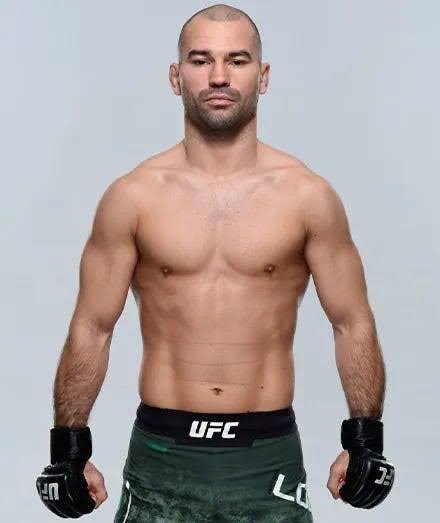
1. Artem Lobov — 5’9″ Height / 65″ Reach
- Division: Lightweight (average height ~5’10″, average reach ~72″)
- Ape Index: −4″
- Reach Disadvantage vs. Average: ~7 inches shorter than typical lightweights
Artem Lobov takes the top spot with a 65-inch reach on a 5’9″ frame, giving him a −4″ ape index, the largest negative figure on this list.
Even compared with the average lightweight, Lobov was unusually short-armed. A typical reach in the division is around 72 inches, putting him roughly seven inches below that mark.
Then there is Kevin Lee.
Lee also stands 5’9″, but his reach measures 77 inches, placing him among UFC fighters with exceptionally long reaches for their height. Two lightweights of exactly the same height were separated by a full foot of reach.
That helps explain why Lobov’s arms became such a recurring joke and meme among MMA fans. But inside the cage, the proportions presented a real problem. Lobov could not comfortably operate at the distances available to longer fighters, so his style leaned heavily on pressure, forward movement, and getting close enough to exchange.
The results were mixed. Lobov went 2–5 across seven UFC fights, but he competed against established names including Cub Swanson and Michael Johnson and later found success in bare-knuckle boxing.
There are more accomplished fighters on this list. None, however, combines such an extreme negative ape index with a same-height comparison quite like this one.
Kevin Lee: 5’9″, 77-inch reach.
Artem Lobov: 5’9″, 65-inch reach.
A full foot.
Reach Deficit vs. Division Average and Ape Index
| Rank | Fighter | Weight Class | Height / Reach | Deficit vs. Division Avg. | Ape Index |
| 1 | Artem Lobov | Lightweight | 5’9″ / 65″ | ~7″ | −4″ |
| 2 | Chris Lytle | Welterweight | 5’11″ / 68″ | ~5.5″ | −3″ |
| 3 | Andy Wang | Lightweight | 5’6″ / 63″ | ~9″ (largest) | −3″ |
| 4 | Cody Garbrandt | Bantamweight | 5’7″ / 65″ | ~4″ | −2″ |
| 5 | Darren Uyenoyama | Flyweight | 5’6″ / 64″ | ~2″ | −2″ |
| 6 | Jason Reinhardt | Bantamweight | 5’6″ / 64″ | ~5″ | −2″ |
| 7 | Max Holloway | Featherweight | 5’11″ / 69″ | ~1″ | −2″ |
| 8 | Issei Tamura | Bantamweight | 5’5″ / 63″ | ~6″ | −2″ |
| 9 | Justin Gaethje | Lightweight | 5’11″ / 70″ | ~2″ | −1″ |
The table makes the difference between the two measurements even clearer.
Darren Uyenoyama and Jason Reinhardt had exactly the same dimensions: 5’6″ tall with 64-inch reaches, giving both fighters a −2″ ape index. But Uyenoyama’s reach was only about two inches below the flyweight average, while Reinhardt’s was roughly five inches below the bantamweight average.
Same height. Same reach. Same ape index. Very different divisional context.
Andy Wang provides another example. His −3″ ape index is less extreme than Artem Lobov’s −4″, yet Wang’s 63-inch reach was roughly nine inches below the lightweight average, the largest divisional deficit among the fighters on this list.
Ape index shows how unusual a fighter’s reach is relative to his own body. Comparing that reach with the weight-class average gives a better sense of the disadvantage he may actually face inside the cage.
Final Thoughts: How Much Does Reach Really Matter?
Reach matters in MMA, but these nine fighters show why the number needs context.
Some built elite careers despite unusually short arms. Max Holloway became a featherweight champion, Cody Garbrandt reached the top of the bantamweight division, and Chris Lytle competed 20 times in the UFC. Their careers make it difficult to treat reach as a simple predictor of success.
But the opposite conclusion would be too easy as well. A severe reach deficit can still create a genuine problem, particularly when a fighter is not just short-armed for his height but significantly below the typical reach of his weight class.
That is ultimately what separates an unusual anatomical measurement from a meaningful competitive disadvantage.
A negative ape index might make a fighter an outlier. Who he has to fight tells us much more about what that outlier actually means.
For a comparison with the opposite end of the range, the longest reaches in UFC history explores how fighters such as Jon Jones and Francis Ngannou used their extra reach inside the Octagon.