A season-by-season look at how LeBron James evolved from a teenage prodigy into one of the most dominant players in basketball history
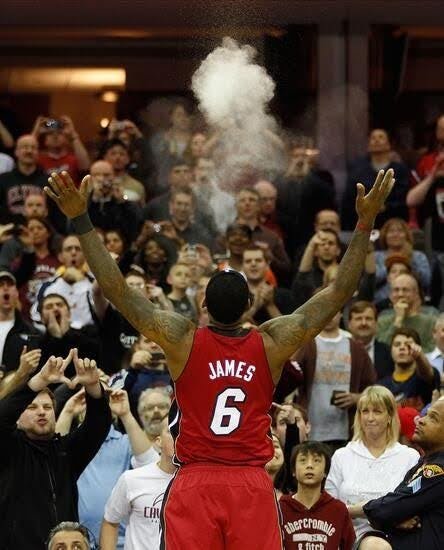
When LeBron James entered the NBA in 2003, he arrived with a level of hype almost no player had ever faced.
He was called The Chosen One before he played a single professional game. Two decades later, he has somehow exceeded the impossible expectations that followed him into the league.
Most superstars are remembered for a short peak. LeBron built an entire career out of elite seasons.
He has dominated the NBA across multiple eras, won championships with three franchises, broken the league’s all-time scoring record, and remained an All-NBA-level force deep into his late 30s and early 40s. That kind of longevity makes his career uniquely difficult and fascinating to evaluate.
Some of his seasons were defined by MVP-level dominance. Others were carried by historic playoff runs, championship breakthroughs, or statistical milestones that no one had seen before.
So instead of asking the usual question, whether LeBron belongs among the greatest players ever, this article asks a more specific one:
Which LeBron James season was actually his best?
Because the 2025–26 season has now concluded, this ranking covers all 23 seasons of his NBA career, from his rookie year in 2003–04 through 2025–26.
How the Seasons Were Ranked
Ranking LeBron’s seasons is not just about points per game or championships.
Some years featured better regular-season production. Others were elevated by playoff brilliance, team success, or historic significance. To make the ranking fair, several factors matter:
Regular-season performance
Scoring, efficiency, playmaking, defense, and overall impact.
Playoff performance
How dominant LeBron was when the stakes were highest.
Team success
Championships, Finals appearances, and deep postseason runs.
Historical significance
Record-breaking moments, iconic performances, and seasons that shaped LeBron’s legacy.
That means a season with slightly weaker regular-season numbers may still rank higher if it included an unforgettable title run or a legendary postseason carry job.
With that in mind, let’s start from the bottom and work toward the greatest season of LeBron James’ career.
23. 2003–04 Season
LeBron James entered the NBA in 2003 carrying an unprecedented level of hype for a teenager. At just 18 years old, he immediately proved he belonged.
In his rookie season with the Cleveland Cavaliers, LeBron averaged 20.9 points, 5.5 rebounds, and 5.9 assists per game, becoming the first rookie in franchise history to average more than 20 points. His size, athleticism, and playmaking ability were already clear.
Despite the strong individual performance, Cleveland finished 35–47 and missed the playoffs.
Compared with the historic seasons that followed later in his career, the rookie campaign ranks last on this list. But it also marked the beginning of one of the greatest careers the NBA has ever seen.
22. 2025–26 Season
At 41, LeBron James showed he could still anchor a winning team, even as the toll of late-career decline became impossible to ignore.
He averaged 20.9 points, 6.1 rebounds, and 7.2 assists per game over 60 appearances, a clear step down from the previous year. His three-point shooting slipped to 31.7 percent, though he still shot an efficient 51.5 percent from the field and earned his 22nd All-Star selection.
Team success keeps this season from landing at the very bottom. The Lakers finished 53–29 and won a playoff round, with LeBron raising his scoring to 23.2 points per game in the postseason. But the Oklahoma City Thunder swept Los Angeles in the second round, and the season ended as the weakest of his late-career run. Still, a winning playoff team edges out his rookie year.
21. 2024–25 Season
More than two decades into his career, LeBron James was still producing at a remarkably high level.
Even in his early forties, he remained one of the most versatile players in the league, contributing as a scorer, playmaker, and leader for the Los Angeles Lakers. His ability to maintain elite basketball intelligence and skill allowed him to stay effective despite the natural physical decline that comes with age.
However, compared with the championship seasons and MVP-level campaigns that dominate the top of this ranking, the 2024–25 season falls closer to the bottom.
Still, the mere fact that LeBron remained a productive NBA star after more than twenty seasons speaks volumes about his longevity.
20. 2018–19 Season
The 2018–19 season marked the beginning of a new chapter in LeBron’s career.
After eight consecutive Finals appearances, he left Cleveland to join the Los Angeles Lakers, hoping to restore the franchise to championship contention. Early in the season, the Lakers showed flashes of promise.
But a significant groin injury sidelined LeBron for an extended stretch, interrupting the team’s momentum. Without consistent chemistry and with a young roster still developing, the Lakers ultimately missed the playoffs.
It was the first time LeBron had failed to reach the postseason since 2005, ending one of the longest playoff streaks in modern NBA history.
19. 2010–11 Season
Statistically, LeBron James remained one of the best players in the league during the 2010–11 season.
In his first year with the Miami Heat, he averaged 26.7 points, 7.5 rebounds, and 7 assists, forming a powerful trio alongside Dwyane Wade and Chris Bosh.
However, the season will always be remembered for the 2011 NBA Finals, where Miami lost to the Dallas Mavericks. LeBron’s performance in that series, particularly his unusually low scoring output, became one of the most heavily scrutinized moments of his career.
While the year still included elite regular-season play, the disappointing Finals performance pushes it lower in this ranking.
18. 2004–05 Season
LeBron’s second NBA season demonstrated how quickly he was evolving into a superstar.
At just 20 years old, he averaged 27.2 points, 7.4 rebounds, and 7.2 assists, becoming one of the youngest players ever to produce such complete numbers.
His explosive scoring and improved playmaking turned Cleveland into a much more competitive team. The Cavaliers finished 42–40, narrowly missing the playoffs.
Although the season showed enormous growth, it still came before the deep playoff runs and MVP performances that would soon define LeBron’s prime years.
17. 2022–23 Season
Even in his 20th NBA season, LeBron James continued to produce numbers that most players reach only in their prime.
During the 2022–23 season, he averaged 28.9 points, 8.3 rebounds, and 6.8 assists per game, demonstrating once again that his scoring ability had not faded with age. The most historic moment of the season came in February 2023, when LeBron surpassed Kareem Abdul-Jabbar to become the NBA’s all-time leading scorer.
Despite the historic milestone, the season was not without challenges. Injuries and roster instability created an inconsistent start for the Los Angeles Lakers.
However, after a major midseason roster overhaul, the Lakers surged into the playoffs and eventually reached the Western Conference Finals before losing to the Denver Nuggets.
Although the team fell short of the championship, the season remains one of the most remarkable examples of longevity in NBA history.
16. 2005–06 Season
The 2005–06 season marked LeBron’s true arrival as one of the league’s brightest young superstars.
At just 21 years old, he averaged 31.4 points per game, finishing second in the league in scoring while continuing to contribute across the board with rebounds, assists, and defensive impact.
More importantly, LeBron finally led the Cleveland Cavaliers back to the postseason. Cleveland finished 50–32, earning the franchise’s first playoff appearance in eight years.
Although the Cavaliers were eliminated in the second round, the season confirmed that LeBron was already capable of carrying a team deep into the playoffs.
15. 2021–22 Season
In what would have been considered an MVP-caliber season for most players, LeBron James once again defied expectations during the 2021–22 campaign.
At 37 years old, he averaged 30.3 points per game, becoming the oldest player in NBA history to score more than 30 points per game over a full season.
LeBron displayed incredible scoring versatility, attacking the rim, hitting deep three-pointers, and even experimenting with extended minutes at center.
However, despite his individual brilliance, the Lakers struggled throughout the season and ultimately missed the playoffs, which lowers its placement in the ranking.
14. 2023–24 Season
By the time the 2023–24 season arrived, LeBron had already secured his place among the greatest players in basketball history. Yet he continued to perform at an elite level well into his late thirties.
Throughout the season, LeBron remained a central offensive engine for the Lakers, combining scoring efficiency with his trademark playmaking and court vision.
While no longer the explosive athlete he had been earlier in his career, his basketball IQ and skill allowed him to adapt his game and remain one of the league’s most productive players.
The season further reinforced LeBron’s extraordinary longevity, proving that his impact on the game extended far beyond his athletic prime.
13. 2006–07 Season
The 2006–07 season produced one of the most memorable early moments of LeBron’s career.
At just 22 years old, he carried the Cleveland Cavaliers to the NBA Finals for the first time in franchise history. His performance in the Eastern Conference Finals, particularly the legendary 48-point game against the Detroit Pistons, became one of the defining performances of his young career.
Although Cleveland was ultimately swept by the San Antonio Spurs in the Finals, LeBron’s ability to lead a relatively inexperienced roster to the championship stage demonstrated how quickly he had become one of the league’s most dominant forces.
The season marked the beginning of LeBron’s reputation as one of basketball’s most unstoppable playoff performers.

12. 2020–21 Season
Even after winning a championship the previous year, LeBron showed no signs of slowing down during the 2020–21 season.
Before injuries disrupted the year, he was widely considered one of the leading candidates for the NBA MVP award. Through the first half of the season, LeBron was guiding the Los Angeles Lakers near the top of the Western Conference standings while averaging 25 points, nearly 8 rebounds, and 8 assists per game.
However, the season changed dramatically after LeBron suffered a high ankle sprain in March. The injury forced him to miss a significant portion of the schedule and disrupted the Lakers’ rhythm heading into the postseason.
Although LeBron returned for the playoffs, the Lakers were eliminated in the first round by the Phoenix Suns. The injury ultimately prevented what could have been another MVP-caliber campaign from reaching its full potential.
11. 2014–15 Season
The 2014–15 season marked LeBron’s return to Cleveland after four years with the Miami Heat.
Now paired with Kyrie Irving and Kevin Love, expectations were immediately sky-high. Early in the season, Cleveland struggled to find chemistry, but as the year progressed the team became one of the Eastern Conference’s most dangerous contenders.
LeBron averaged 25.3 points, 7.4 rebounds, and 6 assists per game, once again demonstrating his ability to control the game in multiple ways.
The season is best remembered for LeBron’s incredible performance during the 2015 NBA Finals. After injuries sidelined both Kyrie Irving and Kevin Love, LeBron carried the Cavaliers almost single-handedly against the Golden State Warriors.
He averaged 35.8 points, 13.3 rebounds, and 8.8 assists during the series, delivering one of the most dominant Finals performances ever despite Cleveland eventually losing in six games.
10. 2007–08 Season
The 2007–08 season further established LeBron as one of the most complete players in the league.
He averaged 30 points, 7.9 rebounds, and 7.2 assists per game, continuing to evolve into a dominant all-around force. His ability to attack the basket, facilitate offense, and impact the game defensively made him one of the most versatile players in the NBA.
Cleveland once again reached the playoffs and advanced to the Eastern Conference Semifinals, where they were eliminated by the Boston Celtics.
Although the Cavaliers did not reach the Finals that year, LeBron’s individual performance demonstrated that he was firmly entering the prime of his career.
9. 2019–20 Season
The 2019–20 season delivered one of the most meaningful achievements of LeBron’s career.
After a disappointing first season in Los Angeles, LeBron led the Lakers to the best record in the Western Conference, averaging 25.3 points and a league-leading 10.2 assists per game.
The season was later interrupted by the COVID-19 pandemic, forcing the NBA to complete the playoffs inside the Orlando bubble.
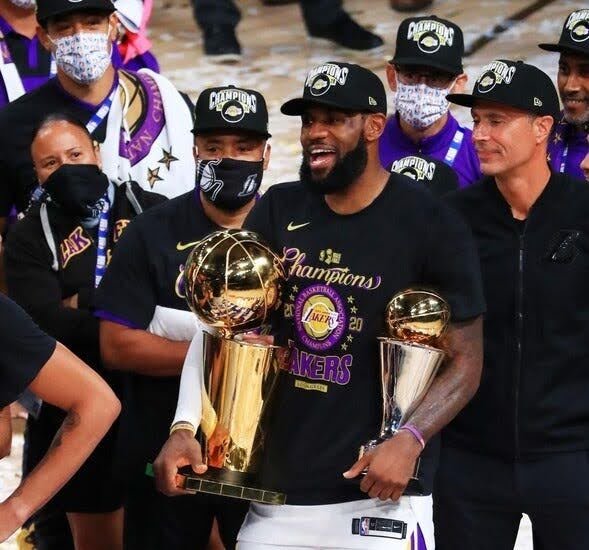
LeBron thrived under the pressure. He led the Lakers to the 2020 NBA championship, capturing his fourth Finals MVP award while guiding the franchise to its first title in a decade.
The championship also made LeBron the first player in NBA history to win Finals MVP with three different franchises.
8. 2013–14 Season
The 2013–14 season showcased one of the most efficient scoring performances of LeBron’s career.
At the peak of his Miami years, he averaged 27.1 points per game while shooting an extraordinary 56.7 percent from the field, a remarkable number for a perimeter-oriented player.
LeBron’s combination of power, speed, and skill made him almost impossible to defend. He could attack the rim, create offense for teammates, and dominate in transition.
The Miami Heat once again reached the NBA Finals, but they were defeated by the San Antonio Spurs in five games.
Even without the championship, the season remains one of LeBron’s most impressive offensive performances.
7. 2009–10 Season
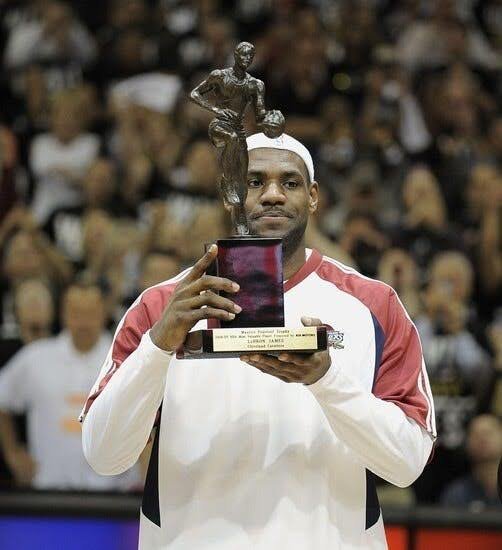
During the 2009–10 season, LeBron captured his second consecutive MVP award, further cementing his dominance over the league.
He averaged 29.7 points, 8.6 assists, and 7.3 rebounds, leading the Cleveland Cavaliers to the best record in the NBA.
At the time, LeBron’s athleticism and versatility made him the most unstoppable player in basketball. He could overpower defenders in the paint, facilitate offense for teammates, and guard multiple positions on defense.
However, Cleveland’s season ended in disappointment when they were eliminated by the Boston Celtics in the Eastern Conference Semifinals.
The playoff exit overshadowed what had otherwise been another spectacular MVP campaign.
6. 2008–09 Season
The 2008–09 season may represent the most statistically dominant regular season of LeBron’s career.
He averaged 28.4 points, 7.6 rebounds, and 7.2 assists, while also becoming a major defensive presence. His all-around performance earned him the first MVP award of his career.
LeBron led the Cavaliers to a 66–16 record, the best in franchise history.
His postseason run was equally impressive. He averaged 35.3 points per game in the playoffs, including a legendary game-winning buzzer-beater against the Orlando Magic in the Eastern Conference Finals.
Although Cleveland ultimately fell short of the Finals, the season firmly established LeBron as the most dominant player in the NBA.
5. 2016–17 Season
By the 2016–17 season, LeBron James had already established himself as the best player in the world. Yet he continued to evolve his game in ways that made him even more dangerous.
That year, LeBron averaged 26.4 points, 8.6 rebounds, and 8.7 assists, nearly averaging a triple-double while serving as the complete engine of Cleveland’s offense.
The Cavaliers entered the playoffs with championship expectations after their historic 2016 title run. LeBron delivered one of the most dominant postseason performances of his career, leading Cleveland through the Eastern Conference with remarkable efficiency.
During the playoffs, he averaged 32.8 points, 9.1 rebounds, and 7.8 assists, guiding the Cavaliers back to the NBA Finals for the third consecutive year.
Although Cleveland ultimately lost to the Golden State Warriors, who had added Kevin Durant to an already historic roster, LeBron’s individual performance throughout the season demonstrated just how complete his game had become.
4. 2011–12 Season
The 2011–12 season marked one of the most important turning points in LeBron’s career.
After the disappointing 2011 Finals, LeBron responded with a season of overwhelming dominance. He averaged 27.1 points, 7.9 rebounds, and 6.2 assists, capturing his third MVP award.
More importantly, he delivered one of the most iconic playoff performances in NBA history.
Facing elimination in Game 6 of the Eastern Conference Finals against the Boston Celtics, LeBron produced a legendary 45-point performance, silencing critics and shifting the momentum of the series.
The Miami Heat went on to defeat the Oklahoma City Thunder in the 2012 NBA Finals, giving LeBron his first championship and first Finals MVP.
The season permanently changed the narrative surrounding his legacy.
3. 2017–18 Season
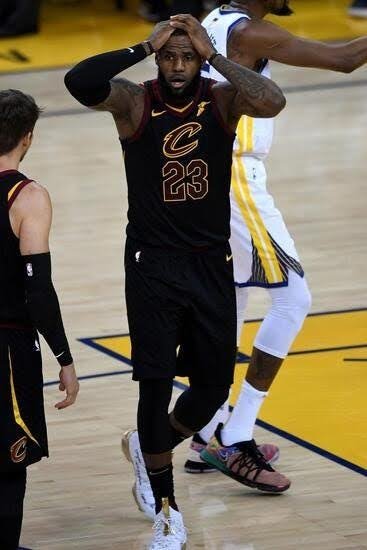
The 2017–18 season may represent the greatest individual carry job of LeBron’s career.
After Kyrie Irving was traded before the season, the Cleveland Cavaliers entered the year with an unstable roster and uncertain expectations. LeBron responded by producing one of the most complete seasons of his career.
He averaged 27.5 points, 9.1 assists, and 8.6 rebounds, playing all 82 games for the first time in his career.
The postseason elevated the season to legendary status.
LeBron repeatedly carried Cleveland through the playoffs, delivering multiple game-winning shots and unforgettable performances. His 51-point performance in Game 1 of the NBA Finals against the Golden State Warriors remains one of the greatest Finals games ever played.
Although Cleveland ultimately lost the series, the season showcased LeBron at the absolute peak of his powers.
2. 2015–16 Season
The 2015–16 season produced one of the most iconic championship runs in NBA history.
After falling behind 3–1 in the NBA Finals against the record-breaking 73-win Golden State Warriors, LeBron led the Cleveland Cavaliers through an incredible comeback.
He became the first player in Finals history to lead both teams in points, rebounds, assists, steals, and blocks.
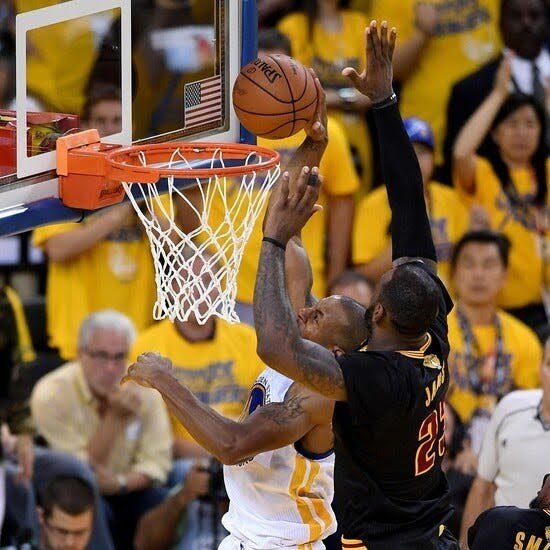
His performances in Games 5, 6, and 7 remain legendary, highlighted by the famous chase-down block on Andre Iguodala in Game 7.
The championship delivered Cleveland its first major professional sports title in more than 50 years and fulfilled LeBron’s promise to bring a title to his hometown.
It remains one of the defining moments of his entire career.
1. 2012–13 Season
The 2012–13 season represents the absolute peak of LeBron James’ basketball powers.
That year, he averaged 26.8 points, 8 rebounds, and 7.3 assists while shooting an incredible 56.5 percent from the field, combining efficiency with all-around dominance.
LeBron’s impact extended far beyond statistics. His defense, playmaking, and scoring versatility made him the most complete player in the league.
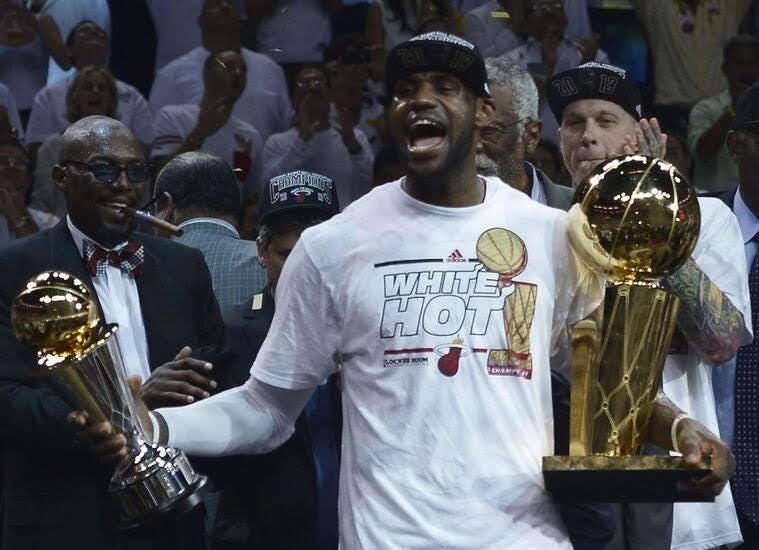
The Miami Heat finished the regular season with a 66–16 record, including a 27-game winning streak, one of the longest in NBA history.
LeBron captured his fourth MVP award and then led the Heat to another championship, defeating the San Antonio Spurs in a dramatic seven-game Finals series.
At his best during that season, LeBron looked nearly unstoppable.
Many analysts still consider the 2012–13 campaign the most complete season of his legendary career.
Two decades into his career, LeBron James has produced more elite seasons than almost any player in basketball history. Ranking them only highlights how extraordinary his longevity and impact have truly been.