From a kicker with arms under 28 inches to a defensive end measured at 38½, one winner in every one-inch band among players with sourced measurements
Tom Brady and Odell Beckham Jr. land in the same arm-length group. Move further up the scale and Orlando Pace, Calvin Johnson and Tyron Smith are competing for a single spot.
Sorting football history by arm length produces a different kind of all-time team. Positions collide, familiar hierarchies disappear, and some of the greatest players ever find themselves competing with opponents they never faced on a field.
The question is simple: who built the best NFL career in each one-inch band?
The interesting part is the collision: a receiver’s scoring records against a linebacker’s defensive command, or a tackle’s protection against a quarterback’s control of an offense.
There is one winner in every category. Some decisions are comfortable. Others require choosing between players who belong near the top of their respective positions.
How this list works
Measurements determine eligibility. Players are grouped into one-inch bands: 32 to under 33 inches, for example, includes 32″, 32¼″ and 32¾″. A player at 33″ enters the next band. Values displayed as rounded decimals in the research file are written here as their corresponding eighth-inch fractions; that formatting adds no measurement precision.
Arm length means one arm, not wingspan. These measurements cannot be treated as interchangeable or converted reliably by simply doubling arm length.
The career determines the winner. We consider peak performance, sustained excellence, positional standing and major individual honors. Championships provide context, but a quarterback does not automatically beat a defender because he has more rings. College accomplishments do not decide an NFL career ranking. Careers are assessed through the 2025 season. The 2026 season is excluded; active players receive credit only for achievements through the cutoff.
The field is limited to players with sourced measurements. The research pool combines Rare Athlete Lab’s existing measurement file, a candidate search across the NFL’s 2019 All-Time Team and additional modern candidates. The All-Time Team supplies names to investigate, not arm measurements. This is not a complete measurement census of every NFL player.
Source quality is identified. A † marks a winner whose arm length relies on published secondary reporting; the original measurement record has not been located. Other measurements come from the supplied research file, NFL profiles or draft databases. Heights are listed playing heights and may differ from pre-draft measurements.
Honorable mentions appear only where there is a substantial alternative case. Their eligibility follows the same measurement pool as the winners; they are not included solely because of their fame.
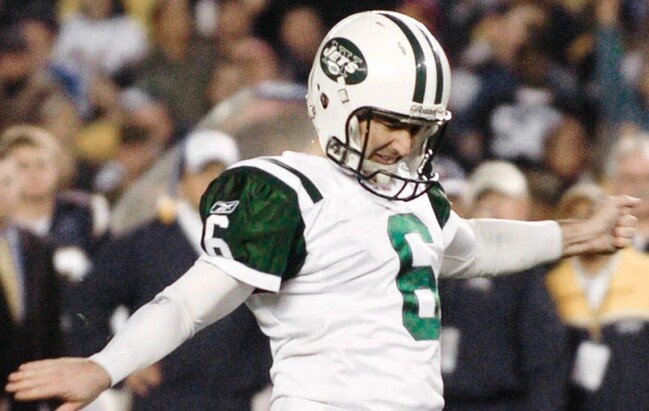
27 to Under 28 Inches · Doug Brien
Position: Kicker · Listed height: 5′11″ · Arm length: 27⅞″
The first winner is a reminder that football greatness cannot be assessed through one physical template. For a kicker, arm length has little connection to the task that determines whether he keeps his job.
Brien played 154 regular-season games across 12 seasons, making 207 of 258 field-goal attempts (80.2%). That is a substantial working career at a position where a brief loss of accuracy can end an opportunity. His longevity earns the nod.
Johnny Bailey’s Pro Bowl recognition provides an alternative peak-performance argument. Brien wins this comparison on the longer record of regular responsibility. This is a thin-field selection: the available measurements produce a narrower contest than the crowded bands ahead.
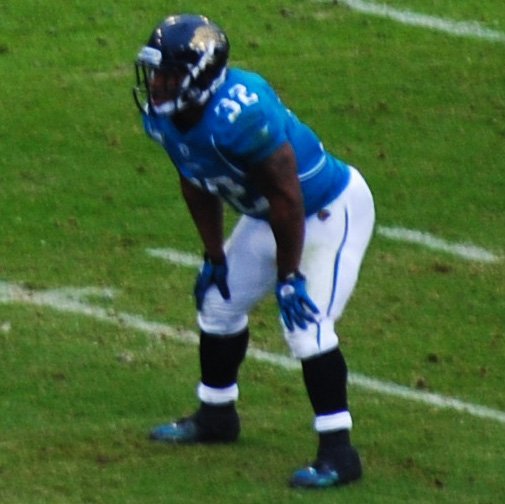
28 to Under 29 Inches · Maurice Jones-Drew
Position: Running back · Listed height: 5′7″ · Arm length: 28⅛″
Maurice Jones-Drew could disappear behind the line of scrimmage and emerge carrying an offense. His compact build gave defenders a smaller target, but his career was about much more than being difficult to locate.
In 2011, he led the NFL with 1,606 rushing yards and earned AP first-team All-Pro honors. It was his third consecutive season with at least 1,300 rushing yards—a sustained stretch as a primary offensive weapon.
That distinction decides this group. Jones-Drew combined an elite rushing peak with several seasons of heavy responsibility, rather than relying on one exceptional campaign.
Strongest honorable mentions: Darren Sproles and Jason Elam. Sproles has the stronger versatility-and-longevity argument; Elam brings an outstanding specialist career. Jones-Drew wins on his sustained peak as a featured offensive player.
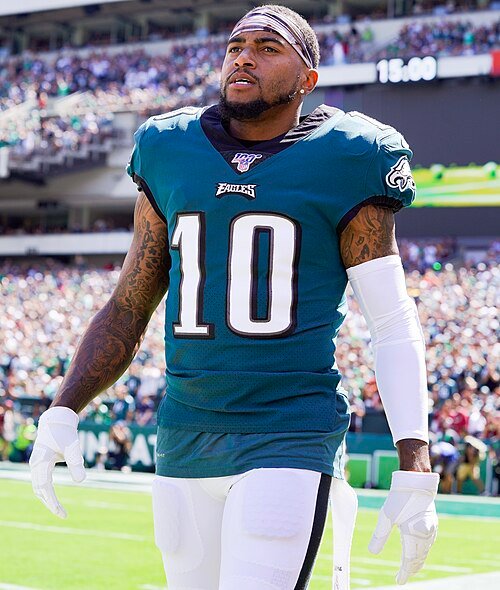
29 to Under 30 Inches · DeSean Jackson
Position: Wide receiver · Listed height: 5′10″ · Arm length: 29¾″
DeSean Jackson changed where defenses had to stand before the snap. His speed made a safety’s starting position matter and turned a moment of hesitation into a potential touchdown.
He finished with 11,263 receiving yards, three Pro Bowl selections and averaged 17.6 yards per reception. That average makes his deep threat concrete: the danger kept producing substantial gains over an entire career. His impact extended beyond the passes he caught: defenses had to account for where he might go.
Jackson wins because he sustained that distinctive threat over a long career. The case rests on repeated production and an enduring offensive role.
Strongest honorable mention: Trent McDuffie, whose defensive excellence makes him a serious challenger. Jackson gets the nod for the much longer completed body of work.
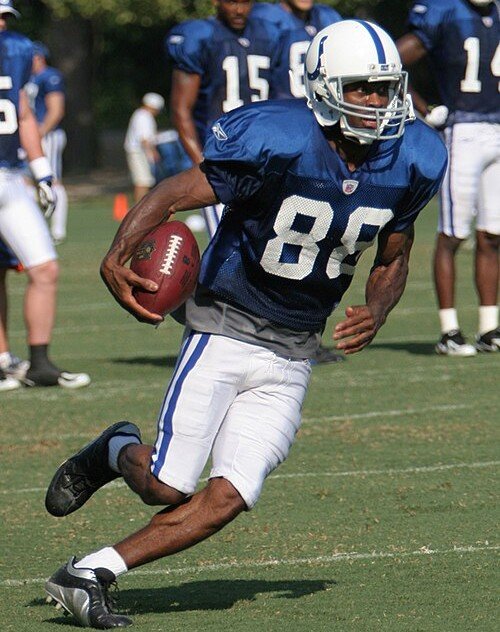
30 to Under 31 Inches · Marvin Harrison†
Position: Wide receiver · Listed height: 6′0″ · Reported arm length: 30¾″
Marvin Harrison did not need an enormous catching radius to make a passing game feel inevitable. His routes, timing and connection with Peyton Manning created opportunities before a defender could turn the play into a contest of reach.
Harrison finished with 1,102 receptions, 14,580 receiving yards and 128 receiving touchdowns. His 143 catches in 2002 set the NFL single-season record at the time, and his career earned him a place in the Pro Football Hall of Fame.
Tyreek Hill offers a different kind of receiving threat, while Zach Thomas supplies a substantial defensive case. Harrison wins the comparison with Hill on career receiving volume and scoring. Thomas’s five AP first-team All-Pro selections give him a formidable positional case; Harrison gets the edge for combining a record-setting receiving peak with the larger career scoring contribution. That cross-positional judgment is narrower than the receiving totals alone suggest.
Strongest honorable mentions: Tyreek Hill and Zach Thomas.
Harrison’s 30¾″ is a published secondary figure. It refers to Marvin Harrison Sr.; his son’s draft measurements are separate.
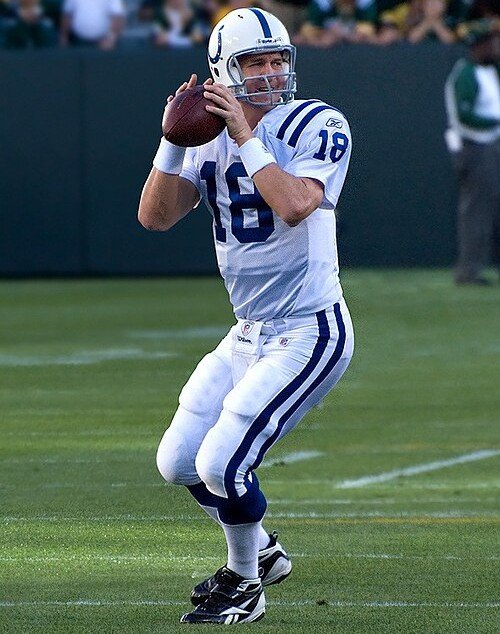
31 to Under 32 Inches · Peyton Manning
Position: Quarterback · Listed height: 6′5″ · Arm length: 31½″
The most important work Peyton Manning did with his arms often followed work he had already done with his eyes. He identified coverage, changed protections and moved an offense toward the matchup he wanted before releasing the ball.
His record includes five AP MVP awards and seven AP first-team All-Pro selections. Those honors capture both an exceptional peak and repeated recognition as the best quarterback in the league.
Brees surpassed Manning in career passing yards, but Manning’s repeated recognition as the league’s leading quarterback outweighs that volume advantage. Favre’s three consecutive MVPs make the peak comparison closer; Manning earned his five across a longer span. Rod Woodson’s defensive and return brilliance supplies the strongest challenge from another position. Manning wins on the combination of an exceptional peak and repeated seasons at the top.
Strongest honorable mentions: Drew Brees, Brett Favre and Rod Woodson.
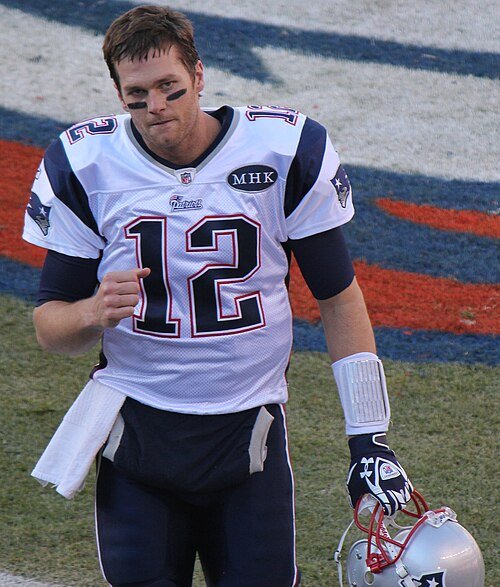
32 to Under 33 Inches · Tom Brady
Position: Quarterback · Listed height: 6′4″ · Arm length: 32¾″
Tom Brady’s arm measurement puts him beside Odell Beckham Jr., also measured at 32¾″, but the career comparison in this group runs through Aaron Donald and Aaron Rodgers.
Brady wins through the combination of longevity, regular-season excellence and postseason achievement. Seven Super Bowl victories are central to that case, but they do not stand alone: three AP MVP awards and sustained elite play across changing teams and supporting casts strengthen it.
Donald won three Defensive Player of the Year awards, matching Brady’s three MVPs in number, though the awards recognize different things. His ability to wreck an offense from the interior gives him a serious peak-performance case. Rodgers adds another exceptional quarterback peak. Brady wins because his regular-season excellence lasted so long and translated into an unmatched postseason record. The rings extend that case; they do not substitute for it.
Strongest honorable mentions: Aaron Donald and Aaron Rodgers.
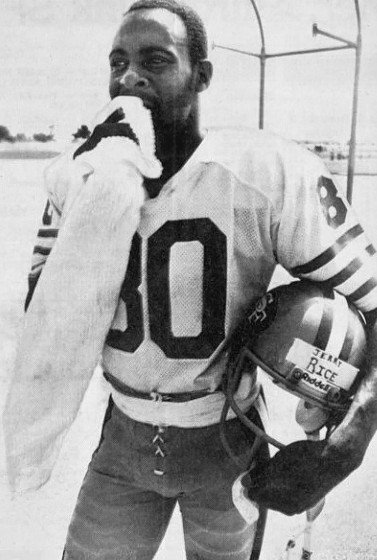
33 to Under 34 Inches · Jerry Rice†
Position: Wide receiver · Listed height: 6′2″ · Reported arm length: 33″
Jerry Rice turns a crowded group into a difficult place for everyone else to win.
His career totals—1,549 receptions, 22,895 receiving yards and 197 receiving touchdowns—show the scale of the separation. His argument combines an extraordinary prime with production that continued long beyond the point at which most receivers decline.
Patrick Mahomes is the strongest challenger, with a postseason résumé that already belongs in an all-time discussion. Rice’s counterargument is the scale of his separation: his 22,895 receiving yards put him 5,403 ahead of Larry Fitzgerald, second on the career list. That extraordinary margin, alongside his reception and touchdown records, gives Rice the stronger career case through the cutoff.
Strongest honorable mention: Patrick Mahomes.
Sporting News reports 33″ without identifying an original measurement record or finer precision. Because that figure sits exactly on the boundary, Rice’s placement in this band depends on accepting the reported value; a rounded figure could conceal a different assignment.
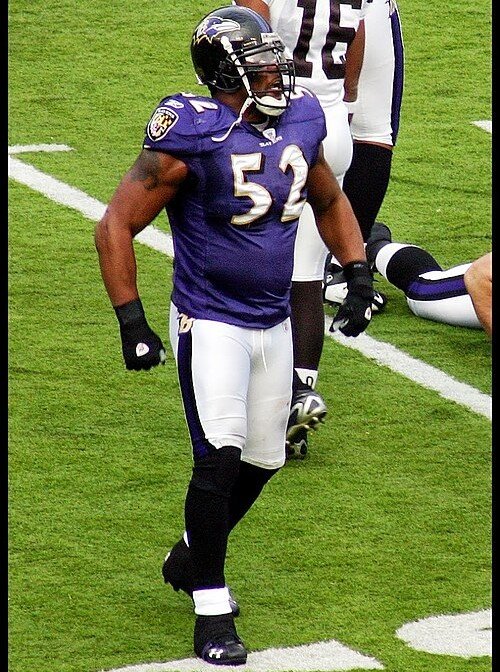
34 to Under 35 Inches · Ray Lewis†
Position: Middle linebacker · Listed height: 6′1″ · Reported arm length: 34⅛″
This is the hardest category. Randy Moss, J.J. Watt, Jonathan Ogden, Rob Gronkowski and Walter Jones all offer serious alternatives.
Ray Lewis wins on the balance of peak and longevity. He spent 17 seasons with Baltimore, earned seven AP first-team All-Pro selections, won Defensive Player of the Year twice and was Super Bowl XXXV MVP.
The deciding factor is sustained excellence in a position that demanded coverage judgment, tackling, communication and work against blockers. His case extends from the historic 2000 defense to high-level seasons well beyond that championship.
Watt has a powerful argument for the most destructive peak. Moss changed how defenses approached the passing game. Lewis gets the edge for combining a longer run of defensive excellence with repeated recognition at the top of his position.
Ogden and Jones made elite pass protection dependable for years. Gronkowski’s receiving and blocking give him a formidable peak case, too. Lewis’s combination of longevity, coverage and tackling responsibility, and his central role in the historic 2000 defense narrowly wins the group. This remains the list’s closest editorial call.
Strongest honorable mentions: Randy Moss, J.J. Watt, Jonathan Ogden, Rob Gronkowski and Walter Jones. This group warrants the longer list because every name represents a substantial positional-greatness argument.
Lewis’s 34⅛″ is a published secondary measurement; the original record has not been located.
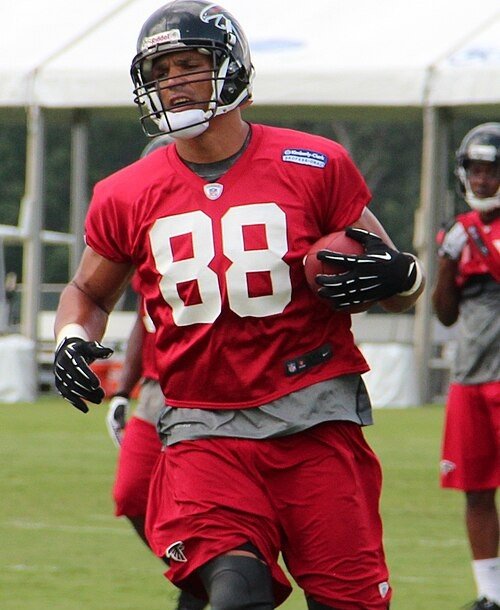
35 to Under 36 Inches · Tony Gonzalez
Position: Tight end · Listed height: 6′5″ · Arm length: 35⅛″
Tony Gonzalez supplied a large target without becoming a stationary one. His receiving game combined the ability to work through traffic with the movement and positioning needed to create a usable throwing window.
He finished with 1,325 receptions, 15,127 receiving yards and 111 receiving touchdowns. That production gives Gonzalez the strongest career case in the group through 2025.
Myles Garrett provides the most compelling alternative through defensive dominance. Calais Campbell and Chandler Jones deepen the field. Gonzalez wins on the scale and durability of his contribution at tight end.
Strongest honorable mention: Myles Garrett.
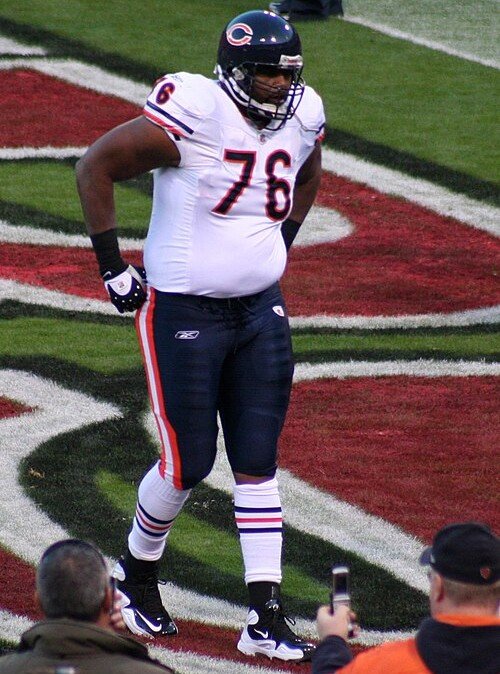
36 to Under 37 Inches · Orlando Pace
Position: Offensive tackle · Listed height: 6′7″ · Arm length: 36¼″
Orlando Pace’s work made other players’ highlights possible. The long completion, the clean pocket and the running lane often began with a block that received less attention than the play it enabled.
Pace protected the edge of the Rams’ Greatest Show on Turf offense, earned seven consecutive Pro Bowl selections and three AP first-team All-Pro selections, and became a Pro Football Hall of Famer. His career combined the highest level of individual recognition with a central role in an exceptional offense.
Calvin Johnson presents a remarkable receiving peak. Tyron Smith offers another outstanding tackle career. Pace gets the narrow nod for the combination of his prime, sustained recognition and standing among the defining offensive tackles of his era.
Long arms can help a tackle establish contact with a pass rusher before the defender reaches his chest. Pace turned that advantage into protection through footwork, balance and timing.
Strongest honorable mentions: Calvin Johnson and Tyron Smith.
The Field Thins Here
The final two bands have a smaller documented field. The question remains the same, but the winning careers look very different.
37 to Under 38 Inches · Alex Barron
Position: Offensive tackle · Listed height: 6′8″ · Arm length: 37¾″
Alex Barron wins this group because he established a substantially larger starting role than the other identified candidates. He started 74 games across five seasons with the Rams, making him a regular part of their offensive line rather than a brief roster presence.
His five seasons as a regular starter decide the category. The win places him at the top of this documented band; it does not put him alongside Pace in an all-time tackle ranking. Barron also leads the offensive-tackle comparison in NFL players with the longest arms at every position, where measurement rather than career achievement determines selection.
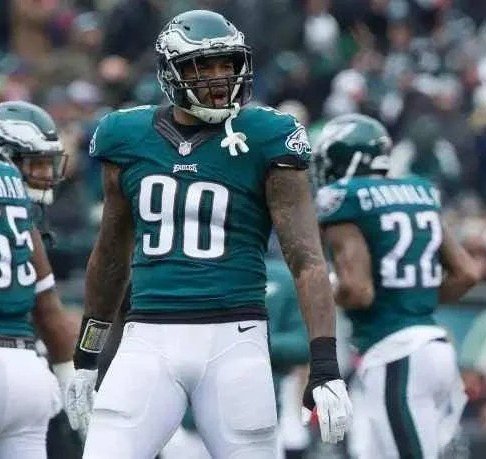
38 to Under 39 Inches · Jon Harris
Position: Defensive end · Listed height: 6′7″ · Arm length: 38½″
The final winner has the longest arms in this research pool and one of its shortest careers.
Jon Harris is the only eligible candidate identified in the 38-inch group. The Eagles selected him 25th overall in 1997, but his regular-season career amounted to 24 games, eight starts and two sacks.
Ending here gives the article its clearest physical contrast. The largest measurement creates eligibility for one category. It cannot create the career needed to win a more crowded one.
The Greats We Cannot Yet Place
A search across an all-time team does not produce an arm measurement for every member. Jim Brown, Walter Payton, Barry Sanders, Emmitt Smith, Lawrence Taylor and other major names remain unassigned because this research has not established a sufficiently supported figure.
Their absence is a limitation of the measurement evidence. None should be placed by estimating from height, appearance or reputation.
Have a dated scouting report, team record or newspaper archive with an arm measurement for one of these players? Send the source to Rare Athlete Lab. A supported measurement could change an entire category.
The Full Index
| Arm-length band | Winner | Pos. | Height | Arm length |
| 27–<28″ | Doug Brien | K | 5′11″ | 27⅞″ |
| 28–<29″ | Maurice Jones-Drew | RB | 5′7″ | 28⅛″ |
| 29–<30″ | DeSean Jackson | WR | 5′10″ | 29¾″ |
| 30–<31″ | Marvin Harrison† | WR | 6′0″ | 30¾″ |
| 31–<32″ | Peyton Manning | QB | 6′5″ | 31½″ |
| 32–<33″ | Tom Brady | QB | 6′4″ | 32¾″ |
| 33–<34″ | Jerry Rice† | WR | 6′2″ | 33″ |
| 34–<35″ | Ray Lewis† | MLB | 6′1″ | 34⅛″ |
| 35–<36″ | Tony Gonzalez | TE | 6′5″ | 35⅛″ |
| 36–<37″ | Orlando Pace | OT | 6′7″ | 36¼″ |
| 37–<38″ | Alex Barron | OT | 6′8″ | 37¾″ |
| 38–<39″ | Jon Harris | DE | 6′7″ | 38½″ |
What the Winners Reveal
The journey from Brady and Rice to Barron and Harris supplies the contrast. Extraordinary reach can accompany a Hall of Fame career, a working starter’s career or a brief NFL stay. This selected pool cannot show whether arm length predicts success across the league. It can show why the longest measurement and the greatest career are different prizes.
The hardest argument remains in the middle: Lewis, Moss, Watt, Ogden, Gronkowski or Jones? That single band contains a transformative receiver, a devastating pass rusher, two defining offensive tackles, a dominant two-way tight end and the leader of a historic defense. Their measurements bring them together; their very different forms of greatness make choosing one so difficult.
Sources & Method
Measurements draw on Rare Athlete Lab’s verified research file, NFL records, the RAS database and the published reports linked above. Career comparisons use NFL statistics and Pro Football Hall of Fame records through the 2025 season. Reported measurements are marked †; selections reflect the documented candidate pool.