From Oliver Miller to Shawn Kemp, these players discovered how excess weight could threaten their opportunities in the NBA
NBA teams often ask players to get bigger. Occasionally, they tell them to lose weight before they can play again. For some players, that meant watching from the bench. For others, it meant a suspension without pay or months spent trying to earn another opportunity.
Oliver Miller had the touch and passing ability to keep teams interested, but his weight repeatedly complicated those opportunities. John Williams missed an entire season during a weight-related suspension. Shawn Kemp, once known for racing up the floor and finishing above defenders, later struggled with his conditioning in Portland.
These cases show how a conditioning problem could reach beyond performance to affect playing time, pay and roster opportunities. Each player had already demonstrated NBA ability. Getting into condition to use it was another challenge. Other players made lasting changes to their physiques, as explored in the most remarkable NBA body transformations, including Charles Barkley and Kendrick Perkins shedding substantial weight.
Weights below come from reporting, team accounts and player recollections, rather than standardized measurements. Injury, illness and personal difficulties often overlapped with conditioning problems; the figures describe these players’ circumstances, not weight-loss targets.
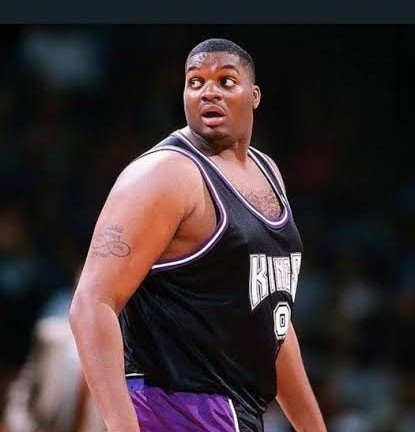
Oliver Miller
Oliver Miller was already a very big man when he entered the NBA. The problem was that he became bigger still.
Phoenix selected the 6’9” center with the 22nd pick in the 1992 draft. Although commonly listed at 280 pounds, contemporary reporting described him as weighing at least 310 during his rookie season.
He could also play. During Toronto’s inaugural season in 1995–96, Miller averaged 12.9 points, 7.4 rebounds, 2.9 assists and 1.9 blocks. Those numbers help explain why teams kept finding room for him. There was more to his game than occupying space beneath the basket.
Phoenix had already taken unusual steps to address his weight. During his rookie season, Miller spent nearly two weeks in the hospital for weight control. Coach Paul Westphal still wanted further weight loss afterward.
That happened during a season in which the Suns reached the NBA Finals. Miller was contributing to a contender while his team was trying to bring his weight under control.
The difficulty persisted. Minnesota later reported a peak of 375 pounds (about 170 kg) and linked his excess weight to his NBA absence beginning in 2000.
His familiar 280-pound listing is not a reliable starting point for calculating his gain: contemporary rookie reporting already placed him substantially above it.
Miller continued playing outside the NBA before Minnesota signed him in December 2003. At 33, he appeared in 48 regular-season games for the Timberwolves, averaging 10.5 minutes. After more than three years without an NBA appearance, he had earned another season in the league.
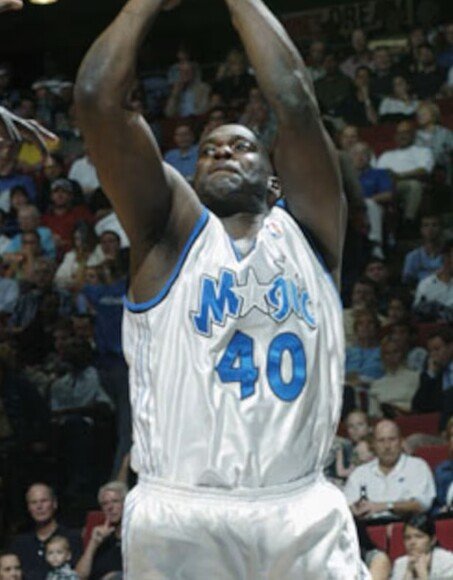
Shawn Kemp
For anyone who remembers Shawn Kemp in Seattle, his later weight problems were a striking change. The “Reign Man” was known for running the floor and finishing above the rim. His explosiveness was a large part of what made him worth watching.
By the time Portland acquired him in 2000, his conditioning had become a recurring concern. An Associated Press report published in August 2000 said Kemp had reached 317 pounds (about 144 kg) before the 1999 training camp.
Kemp remained productive despite the added weight, averaging 20.5 points during the shortened 1998–99 season. The following year, he played all 82 games and averaged 17.8 points and 8.8 rebounds. His Cleveland years were more productive than the familiar story of his decline might suggest.
Portland proved more difficult. Kemp was joining a crowded frontcourt, and adjusting to a reserve role was part of the problem. But contemporary reporting also identified his weight and foul trouble as obstacles. The player who had once beaten opponents with his quickness was struggling to provide the contribution Portland expected.
He was trying to lose weight. In December 2000, Kemp blamed fatigue from a new diet for sleeping through practice; Portland fined him.
By late February, coach Mike Dunleavy had benched him. There were brief improvements afterward, including a 14-point game against Golden State, but they did not develop into a sustained recovery. Kemp finished his first Portland season averaging 6.5 points and 3.8 rebounds.
He also entered treatment for substance abuse in April 2001 and missed the remainder of the season. His difficulties in Portland extended beyond conditioning.
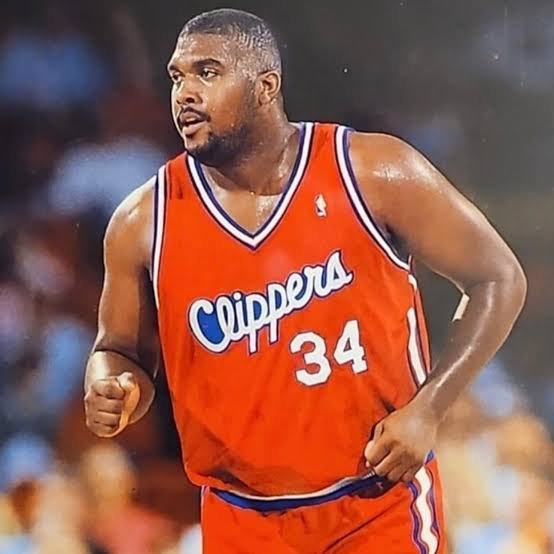
John Williams
John Williams lost an entire NBA season over his weight. Then, with another team, he faced the same problem again.
Before those disputes, Williams had shown why Washington valued him. In 1988–89, he averaged 13.7 points, 7.0 rebounds and 4.2 assists. He could score and rebound, but his passing made him particularly useful: this was a large forward capable of helping organize an offense.
A knee injury in December 1989 interrupted his career. During the extended absence that followed, his weight became an additional obstacle to returning. When he reported at 305 pounds (about 138 kg) in October 1991, Washington suspended him without pay; medical clearance required reaching 260.
The dispute lasted through the entire 1991–92 season. Williams eventually received another opportunity with the Clippers, who acquired him in 1992. But changing teams did not resolve the conditioning problem. He finished his first Los Angeles season weighing approximately 300 pounds, and entered another weight-loss program in October 1993.
The Clippers wanted to keep him. They simply did not consider him ready to play.
General manager Elgin Baylor explained the decision when Los Angeles placed Williams on the suspended list:
“Our options are to activate him, which we can’t do based on his condition, or to waive him, which we don’t want to do.”
Williams entered Duke University’s Diet and Fitness Center at a reported 330 pounds. By March 1994, after his February activation, he said he weighed 276.
The return did not secure his future in Los Angeles. His suspension had lasted 42 games; that June, the Clippers declined his contract option.
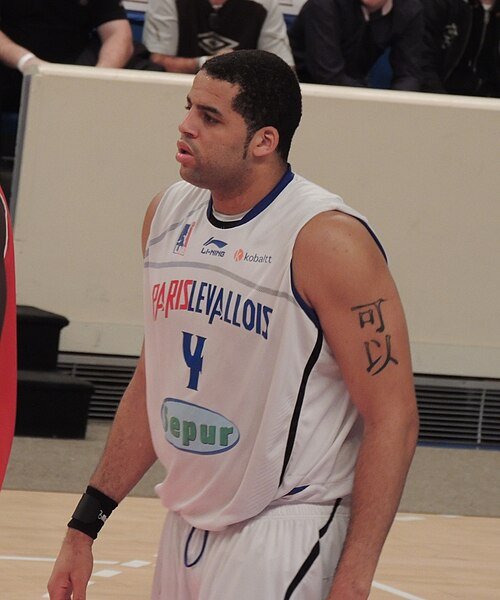
Sean May
Sean May wanted to prove he could still help Charlotte. Larry Brown wanted him in better shape first.
By December 2008, the disagreement had left May watching games in a suit. He believed he was ready to contribute; his coach remained unconvinced.
May put it plainly:
“I want to prove to this organization that I can help this team for the future. You can’t do that in a suit.”
There had been reasons for Charlotte to believe in him. The Bobcats selected May 13th in the 2005 draft after he helped North Carolina win the national championship. In his second NBA season, he averaged 11.9 points and 6.7 rebounds, although injuries limited him to 35 games.
His knee problems then required microfracture surgery, costing him the entire 2007–08 season. During that absence, May later acknowledged becoming depressed, and his weight climbed above 300 pounds (about 136 kg). He lost some before training camp, but returning to the roster did not mean he had regained the conditioning Brown expected.
May started the 2008–09 opener against Cleveland and missed all six of his shots. Brown subsequently made him inactive, with his fitness remaining a recurring concern.
Eventually, the requirement became explicit: Brown would not play him until he reached 260 pounds. He had spent a year waiting for his knee to recover. Now his weight was another hurdle to getting back on the court.
May appeared in just 24 games that season, averaging 3.9 points and 2.9 rebounds. In June 2009, Charlotte declined to make the qualifying offer that would have kept him a restricted free agent. He had played only 82 regular-season games across four years with the franchise.
He received another opportunity with Sacramento, appearing in 37 games during 2009–10, his final NBA season.
Kevin Duckworth
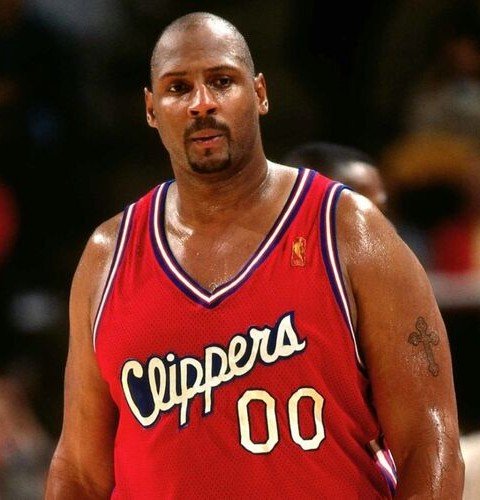
Kevin Duckworth had already been an All-Star twice and played in two NBA Finals when Washington acquired him in 1993. The Bullets were hoping to get an established center who could help them immediately. Instead, much of his time there became a dispute about whether he was in suitable condition to play.
His weight reportedly reached approximately 340 pounds (about 154 kg) during his first Washington season. In summer 1994, he entered Duke’s weight-loss clinic at the team’s urging.
There was initially reason for encouragement. He returned roughly 40 pounds lighter, although maintaining the improvement proved difficult.
In February 1995, Washington suspended him without pay after his weight exceeded 310 pounds, saying his conditioning had affected his performance.
Duckworth wanted to return. Coach Jim Lynam encouraged him to lose the extra weight and prepare to play after the All-Star break.
Following another suspension, Washington required him to drop from 317 to 300 pounds. Duckworth objected to how publicly management had handled the dispute.
“To use the newspapers to solve a team problem is tasteless,” he said.
Injuries also restricted him. During 1994–95, he missed games with Achilles soreness and later calcium deposits in his ankle. He appeared in 40 games that season, averaging 7.1 points and 4.9 rebounds.
Washington traded him to Milwaukee in October 1995. Two seasons after acquiring a former All-Star to strengthen their frontcourt, the Bullets moved on following repeated conditioning disputes and two suspensions.
Stanley Roberts
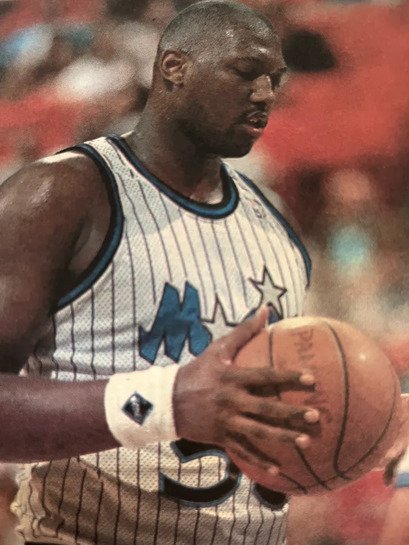
Stanley Roberts had already shown the Clippers what he could do. In his first season with the team, he averaged 11.3 points and 6.2 rebounds across 77 games. For a young center, it was a promising beginning.
Then came a difficult combination of injuries and deteriorating conditioning. Roberts ruptured his right Achilles tendon in December 1993. During the following summer, his weight reportedly reached 345 pounds (about 156 kg). Even after dropping to 328, coach Bill Fitch withheld him pending conditioning clearance.
Like John Williams and Kevin Duckworth, Roberts attended Duke’s weight-loss clinic. Even after that help, he arrived at camp unprepared for full workouts.
Clippers broadcaster Ralph Lawler later recalled that Roberts was initially limited largely to low-impact pool work. Once cleared for an exhibition game, he suffered another devastating setback: a rupture of his left Achilles tendon. His surgeon, Gene Osher, identified weight as one contributing factor, alongside a relatively small tendon for Roberts’s size.
That second injury cost him the entire 1994–95 season. The following year, weight remained a barrier to returning. In October 1995, Fitch threatened suspension without pay unless Roberts met his contract’s weight requirement.
Roberts needed to lose weight before returning to contact drills, then build the conditioning to play. After two Achilles ruptures, simply getting back into a game was a substantial challenge.
He eventually returned to appear in 51 games during 1995–96, averaging 7.0 points and 3.2 rebounds in 15.6 minutes. Three seasons earlier, he had been a regular starter playing more than 23 minutes a night.

Derrick Coleman
Paul Silas could see the difference in Derrick Coleman’s game. His concern went beyond what the forward weighed.
“He doesn’t have lift on his shot and he can’t move as well on defense,” Charlotte’s coach said in November 2000. Running the floor had become difficult too.
Only the previous season, Coleman had averaged 16.7 points and 8.5 rebounds in 74 games for the Hornets. He was still a productive veteran. But his preparation for the next season was interrupted by treatment for an irregular heartbeat. A change in medication kept him out of preseason and the first four regular-season games, with contact work prohibited during that period.
Coleman acknowledged gaining weight while sidelined. Once cleared to return, he struggled to run the court and shot just 38% across his first six appearances.
He and Silas disagreed over his preparation. Coleman maintained that he had been working; Silas believed he should have done more of the exercise permitted during his treatment. The coach wanted his weight reduced before he could perform effectively.
On November 18, Charlotte placed him on the injured list to address his conditioning. He was listed at 260 pounds, but the team did not disclose his actual weight or announce a target for his return.
Coleman missed the next 18 games before Charlotte activated him on December 26. During his absence, the Hornets won 15 times, with P.J. Brown occupying the starting position Coleman had previously held.
Eddy Curry
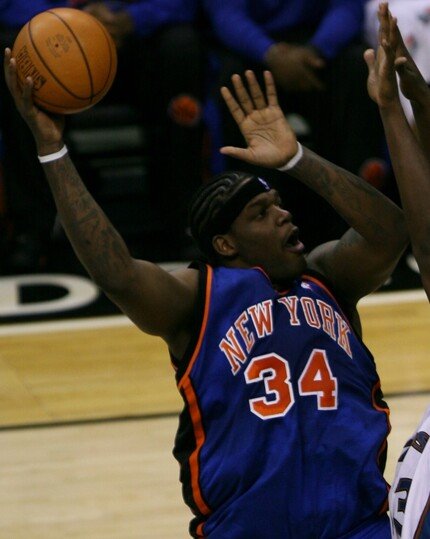
Eddy Curry had lost close to 30 pounds, and he still did not consider himself ready to play.
That was the situation in July 2009, when Knicks president Donnie Walsh discussed the center’s progress. Curry had reportedly reached 328 pounds (about 149 kg) after two months of weight loss. Asked about playing in summer league, he felt he needed more preparation.
“I think he feels like he has to lose another 20 [pounds] to be able to play,” Walsh said.
Only a few seasons earlier, Curry had averaged 19.5 points while shooting 57.6% for New York in 2006–07. His scoring around the basket had made him a significant offensive option. Keeping up with NBA basketball eventually became a much greater concern.
For Walsh, the practical test was whether Curry could keep pace with the team, rather than whether he reached his listed weight.
The problem persisted. By December 2011, ESPN reported that Curry’s weight was believed to have reached approximately 350 pounds at times during the previous three seasons. He had played only ten NBA games across that period, with injuries also limiting his availability.
Miami offered a possible route back, but an initial workout was not enough. After seeing him twice during the previous season, Pat Riley wanted further conditioning improvements before committing to him. Curry continued working through the lockout and, when he signed with the Heat in December, said he had lost approximately 70 pounds.
He had earned another opportunity alongside LeBron James, Dwyane Wade and Chris Bosh. It remained a limited return: Curry appeared in 14 regular-season games for Miami, averaging 5.9 minutes.
Honorable Mentions
The following cases show other ways teams addressed weight and conditioning, including fitness standards and financial incentives. Diaw’s bonuses and Williamson’s contract provisions put money at stake without imposing the same restrictions on playing described in the main profiles.
Antoine Walker
Winning a championship did not exempt Antoine Walker from Miami’s conditioning requirements. In January 2007, months after the Heat’s first title, Pat Riley deactivated Walker and James Posey for failing team fitness standards.
Walker faced further scrutiny that October, reportedly arriving at 262 pounds and 15% body fat. His case involved enforcement of Miami’s fitness standards, without the prolonged exclusion seen in several main entries.
Boris Diaw
Diaw’s conditioning became a concern in Charlotte, but his difficulties there also involved disagreements over his approach to the game. Paul Silas wanted more scoring and greater commitment; describing the entire dispute as a weight problem would leave out important context.
San Antonio later gave him a financial reason to maintain his weight. His 2014 contract reportedly included several weight-related bonuses, beginning with $150,000 for weighing no more than 254 pounds at an October checkpoint.
Shaquille O’Neal
Shaq’s size helped make him dominant, so a higher weight did not automatically mean a worse player. There were nevertheless documented conditioning concerns: a Lakers assessment in June 2003 reportedly put him around 355 pounds with approximately 20% body fat.
Pat Riley later recalled substantial weight loss during Shaq’s first Miami season, while also stressing that he had not arrived grossly out of shape. That distinction makes his story less straightforward than the main entries.
Zion Williamson
New Orleans’ concern extended into Williamson’s contract. Reporting on his 2022 extension described periodic weigh-ins and provisions allowing guaranteed money to be reduced if his weight and body-fat percentage exceeded a combined threshold.
The provision concerned contract guarantees, rather than a documented instruction that he could not play until he lost weight.
When Weight Became a Basketball Problem
| Player / period | Reported weight or conditioning issue | Team response | Basketball outcome |
| Oliver Miller — Phoenix/Minnesota, 1992–2004 | At least 310 lb reported during his rookie season; a later team feature reported a peak of 375 lb | Hospital-based weight-control treatment in Phoenix; weight remained an obstacle to NBA opportunities | Returned with Minnesota in 2003 after more than three years without an NBA appearance |
| Shawn Kemp — Cleveland/Portland, 1999–2001 | Reported at 317 lb before the 1999 training camp | Conditioning scrutiny and reduced playing time in Portland; attempted weight loss | Averaged 6.5 points in his first Portland season; his season also ended early when he entered substance-abuse treatment |
| John Williams — Washington/Los Angeles, 1991–94 | Reported at 305 lb in 1991 and 330 lb entering a clinic in 1993 | Suspensions in Washington and Los Angeles; weight-loss requirements | Missed the entire 1991–92 season and the first 42 games of 1993–94 |
| Sean May — Charlotte, 2007–09 | Acknowledged exceeding 300 lb during his injury absence | Larry Brown required him to reach 260 lb before playing him | Appeared in 24 games in 2008–09; Charlotte subsequently declined a qualifying offer |
| Kevin Duckworth — Washington, 1993–95 | Reportedly reached approximately 340 lb; later returned above 310 lb | Weight-loss treatment and two Washington suspensions | Traded to Milwaukee in 1995 |
| Stanley Roberts — Los Angeles, 1994–96 | Reported at 345 lb during rehabilitation in 1994 | Withheld pending conditioning clearance; threatened with unpaid suspension over a contractual weight requirement in 1995 | Returned for 51 games in 1995–96 after serious Achilles injuries |
| Derrick Coleman — Charlotte, 2000 | Acknowledged gaining weight; Charlotte did not disclose his actual weight | Placed on the injured list to improve conditioning | Missed 18 games before activation in December 2000 |
| Eddy Curry — New York/Miami, 2009–12 | Reported at 328 lb after weight loss in 2009; later said he lost approximately 70 lb before joining Miami | Conditioning work in New York; Miami sought further improvement before signing him | Signed with the Heat in December 2011 and appeared in 14 regular-season games |
Losing weight could reopen a door, but it did not promise a return to the same career. Miller found another NBA opportunity after more than three years away. Williams returned from his Clippers suspension, only for the team to decline his contract option that summer.
Curry’s return offers perhaps the clearest picture. After the months of preparation and the weight he said he had lost, he was back on an NBA roster alongside Miami’s biggest stars. His reward was a chance to play—14 games, at 5.9 minutes a night.
Voted “Another player mentioned”? Tell us who in the comments—and what surprised you about his story.
Sources
- Oliver Miller: Little Things Come In Big Packages — Minnesota Timberwolves
- Blazers hope Kemp turns his act around — Associated Press / ESPN
- Clippers suspend Williams — Deseret News
- Bobcats let May become unrestricted free agent — Associated Press / Sports Illustrated
- Duckworth suspended — The Washington Post
- Clipper Center Roberts Faces Heavy Fine — Los Angeles Times
- Hornets put Coleman on injured list — Associated Press / ESPN
- Summer League notes — Sports Illustrated, including Eddy Curry’s conditioning
- Eddy Curry signs with Miami Heat — ESPN
- Eating Away at Problem — Los Angeles Times, John Williams’s 1994 return
- Clippers’ Roberts Sidelined for Season — Los Angeles Times, including his surgeon’s assessment
- Career statistics: Oliver Miller, Stanley Roberts and Derrick Coleman and Sean May, Basketball-Reference.