
Some fighters began their preparations more than 40 pounds above their division’s limit. For smaller athletes, even a lighter reduction could mean losing an extraordinary share of their body weight
When Vinicius Oliveira’s fight was booked, he says he weighed 183 pounds. His division’s limit was 135.
The distance between those numbers was greater than a quarter of his starting weight. Although Oliveira’s case stands out, he was far from alone in bringing a much larger body down to a much smaller division.
A weigh-in photograph captures only the end of that journey. Before the sunken cheeks and anxious appearance on the scales, there may already have been weeks of restricted eating, changing training routines and trying to get smaller without surrendering the strength needed to fight.
This countdown examines that overall reduction, from reported usual or preparation weights to a division limit. It includes the longer preparation and final dehydration phase—not simply water lost during fight week.
The Weight Cuts Compared
| Rank | Fighter | Reported starting weight | Division limit | Estimated reduction | Share of starting weight |
| 1 | Vinicius Oliveira | 183 lb when the fight was booked | 135 lb | 48 lb | 26.2% |
| 2 | Josh Emmett† | Self-reported high 180s | 145 lb | More than 40 lb | Around 22–23% |
| 3 | Kenny Florian | Approximately 182 lb | 145 lb | 37 lb | 20.3% |
| T-4 | Cris Cyborg | Earlier 180–185 lb | 145 lb | 35–40 lb | 19.4–21.6% |
| T-4 | Dustin Poirier | Approximately 180 lb | 145 lb | 35 lb | 19.4% |
| T-6 | Anthony Johnson | Approximately 210 lb during his welterweight years | 170 lb | 40 lb | 19.0% |
| T-6 | Thiago Alves | Earlier 210 lb | 170 lb | 40 lb | 19.0% |
| T-6 | Johny Hendricks | Approximately 210 lb outside camp, reported in 2014 | 170 lb | 40 lb | 19.0% |
| 9 | TJ Dillashaw* | 154 lb before flyweight preparation | 125 lb | 29 lb | 18.8% |
| T-10 | Duane Ludwig | 190–195 lb | 155 lb | 35–40 lb | 18.4–20.5% |
| T-10 | Michael Chandler | Approximately 190 lb in his 2016 account | 155 lb | 35 lb | 18.4% |
| T-10 | Rafael dos Anjos | Earlier approximately 190 lb | 155 lb | 35 lb | 18.4% |
| T-10 | Khabib Nurmagomedov | Active-career weight recalled as around 190 lb | 155 lb | 35 lb | 18.4% |
| 14 | Alex Pereira | 226.2 lb during preparation in August 2022 | 185 lb | 41.2 lb | 18.2% |
| 15 | Craig White | 207.2–211.6 lb | 170 lb | 37.2–41.6 lb | 18.0–19.7% |
| T-16 | Ilia Topuria | 176.4–180.8 lb during his featherweight years | 145 lb | 31.4–35.8 lb | 17.8–19.8% |
| T-16 | Deiveson Figueiredo | Approximately 152 lb | 125 lb | 27 lb | 17.8% |
† Emmett’s starting figure comes from his own Q&A answer, rather than a recorded camp-start measurement. Its wording does not support a precise starting weight or decimal percentage.
How We Ranked Them
Estimated overall reduction ÷ reported starting weight × 100.
Percentage allows comparison across divisions. Where an account gives a range, ranking uses its lower end. Calculations that match when rounded to one decimal place share a rank, including Topuria and Figueiredo at 17.8%. Smaller differences would imply more precision than these approximate starting weights support.
The starting points are not identical measurements: Oliveira’s figure comes from when his fight was booked, Pereira’s and Dillashaw’s describe preparation snapshots, and most others are reported usual weights. The profiles identify those differences.
Calculations use standard division limits, excluding the one-pound non-title allowance. They are standardized comparisons rather than exact measurements of what each fighter lost for a particular bout.
Known exceptional injury-related or unusually heavy offseason peaks are excluded. Some accounts predate a fighter’s UFC career. A walk-around figure does not automatically establish body composition or fight-night weight.
These numbers describe reported experiences, not weight-loss targets. The honorable mentions provide additional cases rather than a strict ranking of the next three places.
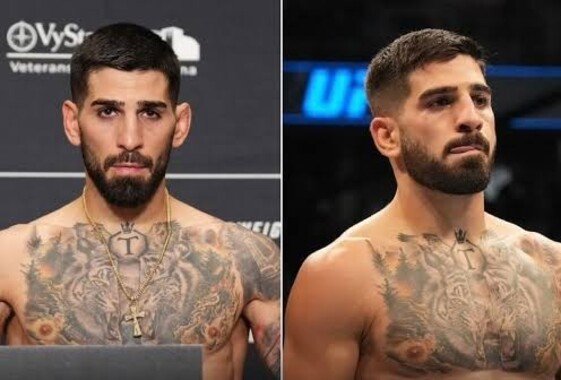
T-16. Ilia Topuria
Reported starting weight: 176.4–180.8 lb (80–82 kg)
Featherweight limit: 145 lb
Estimated overall reduction: 31.4–35.8 lb; 17.8–19.8%
Ilia Topuria said he walked around at 80–82 kilograms. Reaching featherweight meant removing more than 30 pounds from even the lower end of that range.
Speaking on The Joe Rogan Experience in April 2025, in an interview reported by Fighters Only, Topuria described making 145 as the hardest part of his preparation.
“I had to become more professional in the weight cut,” he explained, comparing the attention it demanded with the work of fighting itself.
The process consumed time and energy he wanted to spend preparing for his opponent. His account also went beyond ordinary discomfort: severe dehydration, an extended period without sleep, and an overwhelming preoccupation with food and water.
Moving toward lightweight offered the prospect of enjoying preparation again. The estimated difference between his usual weight and featherweight was roughly 18–20% of his starting body weight.
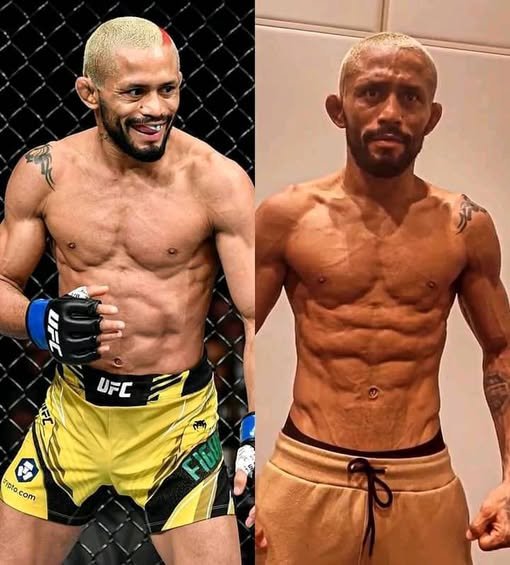
T-16. Deiveson Figueiredo
Reported usual starting weight: Approximately 152 lb (68.9 kg)
Flyweight limit: 125 lb
Estimated overall reduction: 27 lb; 17.8%
“I usually weigh around 152 pounds,” Deiveson Figueiredo told MMA Fighting in April 2019.
For a flyweight, that left a substantial distance to travel: approximately 27 pounds, or 17.8% of his reported starting weight.
His account came after a particularly difficult preparation for Jussier Formiga. Figueiredo had reached 165 pounds, but explained that a foot injury had prevented him from training. That exceptional peak is excluded here.
He felt the disrupted preparation had left him slow and short of strength and timing against Formiga. The injury, lost training and larger reduction had overlapped.
His normal figure was striking enough without using the heaviest point from that troubled camp.
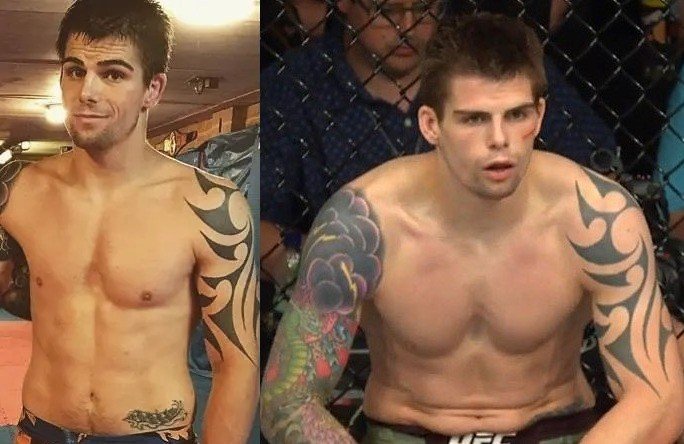
15. Craig White
Reported usual starting weight: 207.2–211.6 lb (94–96 kg)
Welterweight limit: 170 lb
Estimated overall reduction: 37.2–41.6 lb; 18.0–19.7%
When the opportunity to fight in the UFC finally arrived, Craig White needed only a couple of seconds to accept it.
Getting his body ready would take considerably more work.
The call came roughly two weeks before UFC Liverpool in May 2018. Neil Magny needed an opponent, and White had the chance to make his promotional debut.
He weighed about 216 pounds when the call came, the heaviest he said he had ever been. He accepted anyway. At the official weigh-in, he registered 171 pounds, a reduction of about 45 pounds. By fight day, he told MMA Fighting, he was back near 202 pounds, a reported rebound of roughly 31 pounds.
His ranking here uses his earlier account of a usual 94–96 kilograms, given to MMA UK in 2017, rather than that exceptional peak. Even without the Liverpool starting point, the distance to welterweight was substantial.
White later described trying to conceal how badly he felt during public appearances before the fight. An open workout meant demonstrating his readiness while struggling through the preparation.
Magny stopped him in the first round.
Before his next UFC appearance, White changed his approach. Adjustments to his eating habits and strength-and-conditioning work brought his reported walk-around weight down to approximately 198 pounds. He said he could train with greater intensity when losing weight no longer interfered so heavily with the work.

14. Alex Pereira
Reported preparation weight: 226.2 lb (102.6 kg), August 2022
Middleweight limit: 185 lb
Estimated overall reduction: 41.2 lb; 18.2%
Standing beside Dominick Reyes in August 2022, Alex Pereira hardly looked like someone preparing to compete a division below him.
Reyes had challenged twice for the UFC light heavyweight title. Pereira was still a middleweight, although the figures he shared on Instagram helped explain why the photograph attracted attention: 226.2 pounds, with a reported body-fat reading of 9.8%.
MMA Fighting’s August 31 report said Pereira had captured the readings the previous day. That placed the snapshot approximately ten and a half weeks before UFC 281 on November 12.
The readings were not independently verified. Nevertheless, they showed the scale of the reduction Pereira was reporting during preparation for Israel Adesanya.
At the official weigh-in, he registered 184.6 pounds.
Before the bout, Pereira shared another scale reading: 95.9 kilograms, approximately 211 pounds. That was more than 26 pounds above his official weight. It was a personal update rather than a commission-recorded measurement at the cage, but it illustrated the distinction between making weight and entering the fight.
Pereira stopped Adesanya in the fifth round to become middleweight champion.
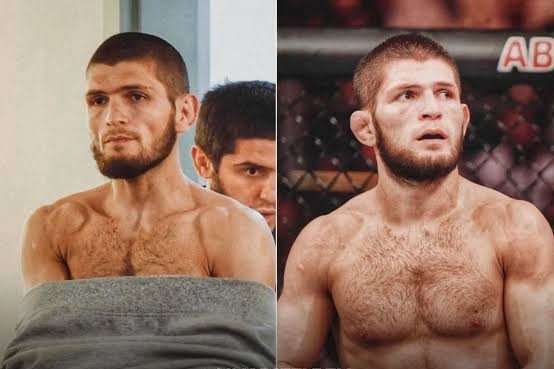
T-10. Khabib Nurmagomedov
Reported active-career weight: Approximately 190 lb (86.2 kg)
Lightweight limit: 155 lb
Estimated overall reduction: 35 lb; 18.4%
Retirement changed what Khabib Nurmagomedov could allow himself to weigh.
Speaking at a charity event in 2022, as reported by MiddleEasy that September, he described reaching approximately 205 pounds after leaving competition. Crucially, he distinguished that figure from his active-career weight.
“When I was an active fighter, I was around 190lb and I cut weight to 155lb,” he said.
That wording supports the approximately 190-pound starting point used here. It is a retrospective account rather than a measurement tied to one specific camp, but it leaves 35 pounds between his reported usual weight and lightweight.
Using his heavier retirement figure would exaggerate the reduction associated with his fighting career.
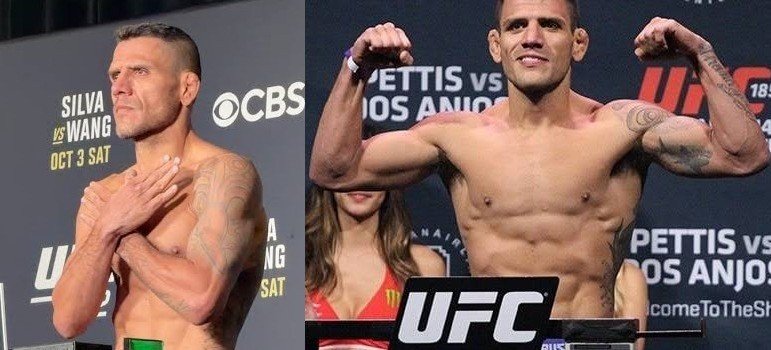
T-10. Rafael dos Anjos
Earlier reported starting weight: Approximately 190 lb (86.2 kg)
Lightweight limit: 155 lb
Estimated overall reduction: 35 lb; 18.4%
Before Eddie Alvarez took his lightweight title, Rafael dos Anjos had already endured a frightening experience away from the cage.
During the weight cut for their July 2016 fight, he lost consciousness. Recalling it the following year, dos Anjos said he had been out for almost three minutes and that his coaches had considered calling emergency services and cancelling the bout.
He recovered, made weight and fought. Looking back, he believed he should not have gone through with it.
Alvarez stopped him in the first round. Dos Anjos remained at lightweight for one more appearance, against Tony Ferguson, before moving to welterweight in 2017.
His later account of walking around at approximately 190 pounds, reported by MMA Fighting, helps explain the distance involved. Reaching lightweight meant bringing that body down by roughly 35 pounds.
Yet leaving the division did not prove permanent.
Before returning in 2020, a conversation with José Aldo encouraged him to reconsider his approach. Aldo connected him with a doctor in Brazil, and dos Anjos began changing his eating habits and daily routine months before the fight.
By November, he reported a walk-around weight of approximately 178 pounds. After one training session, he had reached 170 and felt good—a striking contrast with how difficult that number had previously felt.
He was returning to the same division with a lighter starting body.

T-10. Michael Chandler
Reported starting weight: Approximately 190 lb (86.2 kg), 2016 account
Lightweight limit: 155 lb
Estimated overall reduction: 35 lb; 18.4%
When Michael Chandler was asked about becoming a champion in another division, going smaller held little appeal.
Speaking before his November 2016 Bellator title defense against Benson Henderson, Chandler told MMA Junkie that he walked around at approximately 190 pounds between fights. Making lightweight already meant bringing that body down by roughly 35 pounds.
Featherweight would require another ten.
He had no interest in surrendering the muscle he had spent years building. The original interview is reproduced in the forum archive linked in the comparison table; that dated account supplies his ranking figure.
Years later, after moving to the UFC, Chandler described a similar starting point. In a February 2023 interview reported by MMA Fighting, he put his usual range at 185–190 pounds and emphasized that he maintained his condition there.
“I’m not getting fluffy or fat,” he said.
His description of making lightweight extended well beyond the final trip to the scales: approximately 12 weeks of dietary discipline and training, followed by dehydration at the end.
Discussing the possibility of competing at welterweight, his enthusiasm was clear.
“So 170, for me, would be a dream come true.”
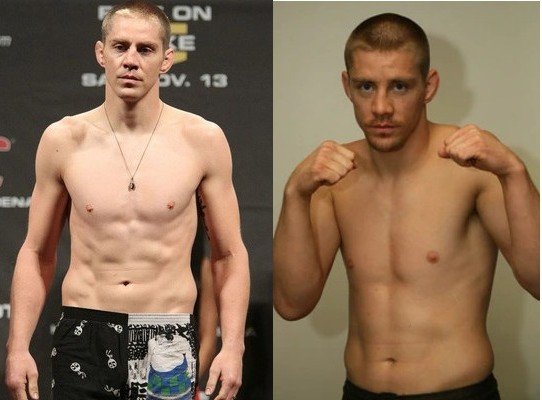
T-10. Duane Ludwig
Reported starting weight: 190–195 lb (86.2–88.5 kg)
Lightweight limit: 155 lb
Estimated overall reduction: 35–40 lb; 18.4–20.5%
Duane Ludwig was eating at a restaurant with his family when he explained how much better life had become at welterweight.
Previously, preparing for a fight had meant constantly thinking about food in a different way. Making 155 demanded so much attention that he felt dieting was taking priority over improving as a fighter.
In a January 2012 interview with MMA Mania, Ludwig said he had been walking around at 190–195 pounds for the previous three or four years. Lightweight required him to lose roughly 35–40 pounds.
Nutrition coach Mike Dolce had helped him reach the limit, but eventually recommended moving up, alongside others around Ludwig.
At 170, Ludwig described a change in what occupied his mind during training. He could concentrate on developing his skills instead of counting calories.
“When I train, when I lift weights and when I step on the mat, I focus on getting better,” he explained.
The restaurant setting offered a small illustration of what had changed.
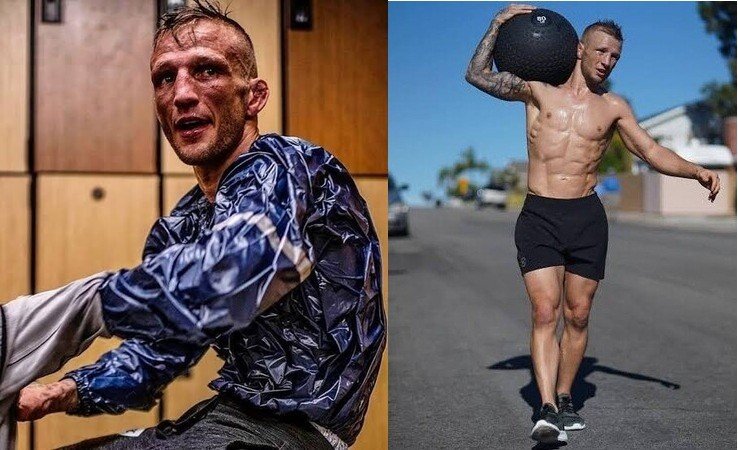
9. TJ Dillashaw
Reported starting weight: 154 lb (69.9 kg)
Flyweight limit: 125 lb
Estimated overall reduction: 29 lb; 18.8%
TJ Dillashaw was already lean when he decided to become smaller.
When he began preparing for his January 2019 flyweight title challenge against Henry Cejudo, coach Sam Calavitta said he weighed 154 pounds with 8% body fat. ESPN documented the preparation in a feature published on January 18, 2019.
Reaching 125 meant reducing that reported starting weight by almost a fifth.
The preparation lasted approximately 12 weeks. Dillashaw spoke confidently about the process, saying he was still improving his lifting numbers despite becoming lighter.
On the morning of the official weigh-in, he was the first fighter onto the scales.
124.6 pounds.
He had reached a weight he said he had not made since his freshman year of college. Whether he could make flyweight had its answer. Whether he could win there was settled much faster: Cejudo stopped him in 32 seconds.
The story subsequently took a more serious turn. USADA announced that Dillashaw’s weigh-in-day sample had tested positive for EPO, and he accepted a two-year suspension.
His inclusion reflects the reported size of the reduction. The finding prevents his preparation from being presented as an uncomplicated example of what dieting and training alone achieved; it does not establish how much EPO affected the reduction.
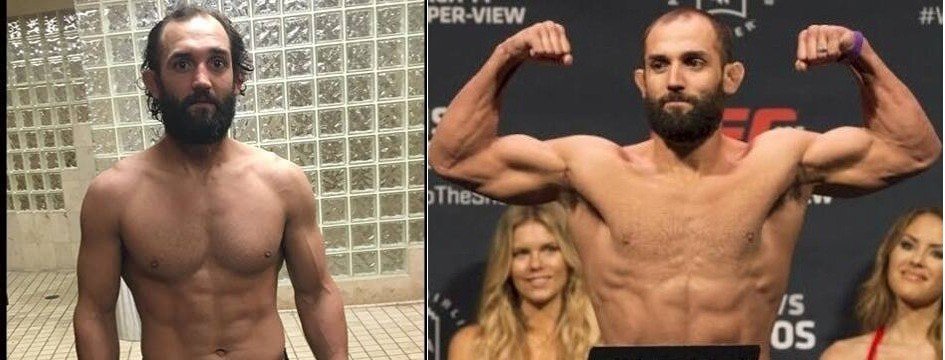
T-6. Johny Hendricks
Reported starting weight: Approximately 210 lb (95.3 kg), reported in 2014
Welterweight limit: 170 lb
Estimated overall reduction: 40 lb; 19.0%
Before Johny Hendricks could fight Robbie Lawler for the UFC welterweight championship, he had to deal with one final pound and a half.
His first attempt at the March 2014 weigh-in registered 171.5 pounds. A title fight offered no one-pound allowance. He needed to return and reach 170.
The preparation behind that moment had begun much farther away.
A March 15, 2014 MMA Fighting profile described Hendricks at approximately 210 pounds outside camp. Strength-and-conditioning coach Adrian Ramirez explained how their work drew on his college wrestling background: building strength between competitions, then trying to preserve it while bringing his weight down.
The powerful frame that helped make his left hand dangerous also left roughly 40 pounds between his reported usual weight and the division limit.
Mike Dolce oversaw the reduction, while Ramirez’s training changed as the fight approached. It was a process extending over weeks, rather than 40 pounds disappearing on the eve of the weigh-in.
Hendricks eventually made 170. The following night, he fought Lawler for five rounds and won a unanimous decision, leaving Dallas as UFC welterweight champion.
Later preparations ended differently. Hendricks missed weight at both welterweight and middleweight, a pattern covered in 15 MMA fighters who kept missing weight—and what it cost them.
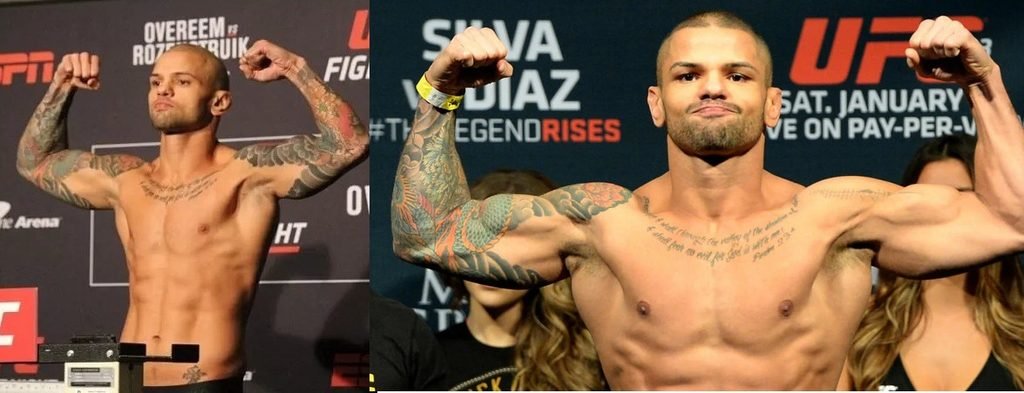
T-6. Thiago Alves
Earlier reported starting weight: Approximately 210 lb (95.3 kg)
Welterweight limit: 170 lb
Estimated overall reduction: 40 lb; 19.0%
Thiago Alves loved fighting. Getting ready to fight had made him consider finding another job.
In an interview with Heavy MMA, Alves described approaching bouts with growing anxiety about making weight. Losing consciousness had become something he accepted as part of preparation.
Mike Dolce’s account helps explain the scale of the task. The nutrition coach put Alves’s earlier walk-around weight at 210 pounds, with a reported 10% body fat: a heavily muscular athlete facing roughly 40 pounds of reduction.
The difficulty became public at UFC 117 in August 2010, when Alves weighed 171.5 pounds for his rematch with Jon Fitch—half a pound above the non-title allowance.
Dolce subsequently began working with him. Later, the coach reported that Alves was waking at approximately 193 pounds, substantially reducing the distance to welterweight.
The emotional difference mattered to Alves. He could concentrate more on his opponent, with less dread about reaching the scales.
“Before Mike, making weight was the hardest thing in my career,” he said.

T-6. Anthony Johnson
Reported usual starting weight: Approximately 210 lb (95.3 kg)
Welterweight limit: 170 lb
Estimated overall reduction: 40 lb; 19.0%
Anthony Johnson challenged for the UFC’s 205-pound title twice. Earlier in his career, he had squeezed himself down to welterweight.
In an account reported by MMA Mania in April 2017, Johnson put his usual weight during those earlier years at approximately 210 pounds.
“When I was fighting at welterweight, I used to walk around at 210,” he recalled.
That left roughly 40 pounds between his reported usual weight and the division limit, with much of his preparation devoted to getting smaller.
One camp produced an even larger figure. Johnson said he reached 230 pounds following knee surgery before preparing to face Dan Hardy in March 2011. His official weight for that non-title bout was 171 pounds, at the permitted allowance.
Comparing those figures produces a 59-pound reduction—the basis of the widely repeated story that he lost about 60 pounds.
That exceptional injury-related starting point is excluded from his ranking. His regular reported weight already describes an unusually large reduction.
After weight problems and his departure from the UFC, Johnson eventually returned as a light heavyweight. He earned two title challenges against Daniel Cormier in a division where far less of his size had to disappear before competing.
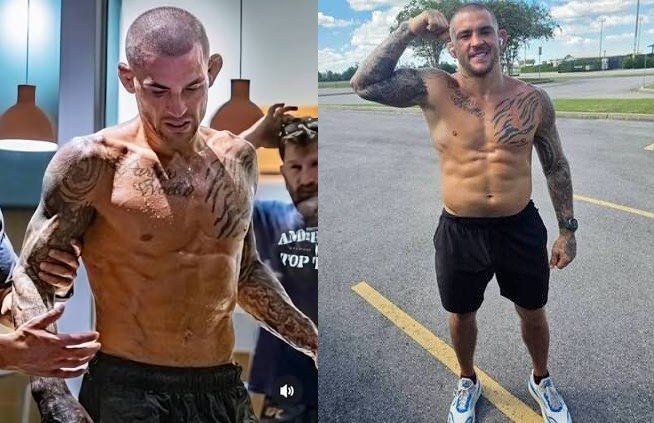
T-4. Dustin Poirier
Reported starting weight: Approximately 180 lb (81.6 kg)
Featherweight limit: 145 lb
Estimated overall reduction: 35 lb; 19.4%
Dustin Poirier found something unexpected after leaving featherweight: competing in a heavier division helped him stay lighter between fights.
While making 145, he had sometimes reached 182–185 pounds outside competition. After moving to lightweight, he told Sportsnet that he was eating more, maintaining his condition and no longer reaching 180 even weeks after a fight.
The smaller division had not necessarily meant a smaller everyday body.
When he announced his return to lightweight in December 2014, Poirier gave a useful description of his starting point.
“I’m 180 right now and in great shape,” he told MMA Fighting.
That left approximately 35 pounds between his reported conditioned weight and featherweight.
Poirier had won eight of his eleven UFC appearances in the division, but preparation was taking away his enjoyment. His attention had shifted toward getting his body onto the scales rather than working out how to beat the person waiting for him.
Moving up meant leaving his place in the featherweight rankings behind. He accepted that cost.
By 2016, he had won his first four fights back at lightweight while describing a more enjoyable routine: more food, less weight to remove and more attention available for fighting.

T-4. Cris Cyborg
Earlier reported starting weight: 180–185 lb (81.6–83.9 kg)
Featherweight limit: 145 lb
Estimated overall reduction: 35–40 lb; 19.4–21.6%
Before defending her featherweight title against Holly Holm, Cris Cyborg sounded pleased about something that had often dominated discussion of her fights.
Her weight was under control.
Speaking on the UFC 219 conference call, reported by MMA Fighting on December 22, 2017, Cyborg explained that she was walking around at approximately 170 pounds. That represented a substantial change from her earlier starting point.
“Before I used to walk around at 180 or 185,” she said.
At those earlier weights, reaching featherweight meant an overall reduction of approximately 35–40 pounds. Even the lower estimate represents nearly a fifth of her starting weight.
This time, she had kept working after her July title victory over Tonya Evinger. A vacation in Thailand included daily training. She watched her diet and credited Rob Emerson with helping her prepare for the scales.
Her 170-pound account described a lighter starting body, rather than a smaller division.
Cyborg made 145 pounds for Holm, then completed five rounds the following night to retain her championship by unanimous decision.
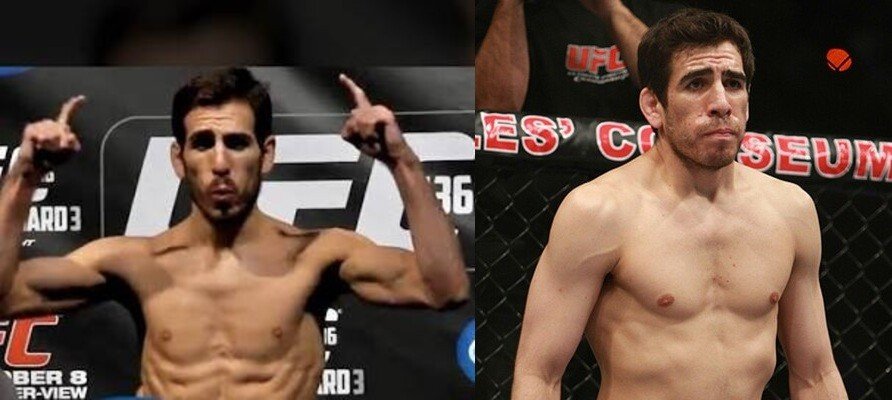
3. Kenny Florian
Reported starting weight: Approximately 182 lb (82.6 kg)
Featherweight limit: 145 lb
Estimated overall reduction: 37 lb; 20.3%
By the time Kenny Florian stepped into the cage for his featherweight debut, the part he had worried about most was already over.
Diego Nunes was waiting at UFC 131 in June 2011. During preparation, however, Florian’s greatest concern had been whether he could get his body small enough to face him.
In a later UFC feature, he recalled starting a couple of pounds above 180.
Florian described reaching featherweight as physically the hardest thing he had done. It was a weight he had not approached since college, and the difficulty made him question why he was putting himself through it.
He officially weighed 146 pounds, using the non-title allowance. Against the standard division limit, his reported starting point represents an estimated 37-pound reduction.
Then came a surprise. After all that anxiety, Florian felt good on fight night. He beat Nunes by unanimous decision and earned a championship opportunity against José Aldo.
His next preparation began from a lighter starting point. The first journey down had already changed his body.

2. Josh Emmett
Self-reported walk-around weight: High 180s lb, approximately 85 kg
Featherweight limit: 145 lb
Estimated overall reduction: More than 40 lb; around 22–23%
Josh Emmett gave fans two different answers about his weight during a July 2019 Reddit question-and-answer session.
Inside the Octagon, he said, he usually fought at 168–170 pounds. Asked about walk-around weight, he put himself in the high 180s.
Those numbers describe different stages. The first was his reported weight after recovering from the weigh-in. The second was the heavier body he said he carried outside it.
Taken against featherweight’s limit, the walk-around account suggests a reduction exceeding 40 pounds.
Its wording does not justify assigning an exact starting weight. Even a hypothetical 185 pounds, below “high 180s,” would produce a reduction of approximately 21.6%, still enough for second place in this selection.
In an August 26, 2019 interview with Enter the Court, Emmett explained that he had gone approximately a year without lifting weights after becoming a featherweight. Running, swimming, cycling and endurance work took a larger role as he tried to lose muscle.
Building more strength could leave him with more weight to remove before competing. Even the 168–170 pounds he reported carrying into the cage remained 23–25 pounds above the division limit.

1. Vinicius Oliveira
Reported fight-booking weight: 183 lb (83 kg)
Bantamweight limit: 135 lb
Estimated overall reduction: 48 lb; 26.2%
Three months before his February 7, 2026 fight against Mario Bautista, Vinicius Oliveira said he weighed 183 pounds.
By fight week, he had reached 163.
That timeline, reported by Sherdog before the bout, describes preparation in stages. Working with a nutritionist had brought him down 20 pounds, yet a substantial amount remained before the official weigh-in.
Oliveira registered 136 pounds, using the non-title allowance—47 pounds below his reported booking weight. For consistency with the other entries, the ranking compares his starting point with the standard 135-pound limit: 48 pounds, or approximately 26.2%.
The fight-week figure does not establish that every remaining pound was lost through dehydration.
Afterwards, Oliveira told Ag Fight that he weighed 84 kilograms, approximately 185 pounds, outside camp. That was close to his contemporaneous booking figure, rather than a dramatically different account of his size.
Injuries complicated the preparation. Oliveira described arm pain that restricted his cardiovascular training and called it the worst weight cut of his career.
Bautista submitted him in the second round.
By June, a UFC feature was discussing Oliveira’s move to featherweight. Looking back at making bantamweight, he described losing 23–24 kilograms, approximately 51–53 pounds.
The accounts broadly reinforce the scale of the burden, although they do not document identical starting points or the same preparation. The dated 183-pound booking account supplies the figure used here.
His next move was toward a division that required less of him before the fight began.
Honorable Mentions
These three add useful variations in starting condition and reported fight-night size.
Gleison Tibau
Asked about his normal weight in a 2008 Tatame interview reproduced by MMARocks, Tibau answered 85 kilograms, approximately 187 pounds.
That put him roughly 32 pounds above lightweight, an estimated reduction of about 17.3%. He also described returning to a much heavier weight by fight day. The body opponents encountered was closer to his everyday size than the 155-pound weigh-in figure suggested.
By his January 2018 return, Tibau described having much less weight left to remove during fight week. That later change features in UFC fighters’ physique changes before and during the USADA era, alongside his account of altered eating habits.
Dricus du Plessis
Discussing his size in 2024, du Plessis put his walk-around weight at approximately 222 pounds. Reaching middleweight meant an estimated 37-pound reduction, or 16.7%.
He separately said he entered the cage against Sean Strickland at 96.5 kilograms, approximately 213 pounds. His accounts distinguish three stages: usual weight, official weigh-in and the larger body that returned for the fight.
Kayla Harrison
Harrison’s reported 160–165-pound starting range deserves attention because it described an athlete in training shape.
Before her UFC debut, longtime judo coach and mentor Jimmy Pedro emphasized that she was training twice daily at that weight. Making bantamweight meant bringing that body down to 135 pounds—an estimated reduction of 25–30 pounds, or 15.6–18.2%.
The challenge was finding weight to lose from an athlete who already carried considerable muscle.
The Weight They Had to Lose Before They Could Fight
The number announced on the scales leaves much of the preparation out of view: the weeks spent getting lighter, the training affected by restricted eating and the uncertainty about how much strength would return before the fight.
Several fighters here eventually changed the arrangement. Johnson and Poirier moved up. Dos Anjos returned to lightweight with a lighter starting body. Others described keeping their weight lower between appearances so the next preparation would be less demanding.
Their experiences complicate the idea that a larger cut automatically creates a greater advantage. The larger fighter still has to arrive ready to use that size. Reaching the division can take time and energy away from becoming better at fighting. Other fighters accepted competing closer to their everyday size. 15 MMA fighters who barely cut weight—or didn’t cut at all examines that approach, including Frankie Edgar’s lightweight championship run with roughly five pounds to lose.
The most troubling accounts concern more than discomfort. Dos Anjos described losing consciousness. Alves recalled blackouts. White tried to conceal how badly he felt. Those experiences belong beside the impressive-looking percentages.
The UFC Performance Institute’s 2018 analysis emphasized gradual weight descent and better fueling so fighters could continue developing their skills and physical capacity during camp.
Ludwig offered a quieter picture of what could improve after moving up: training with his attention on his skills, then sitting down to a meal with his family.
Reader Poll
In 2016, the UFC recommended arriving for fight week within 8% of contracted weight, without penalties for exceeding it, ESPN reported. That historical recommendation concerned the weight remaining near the end of preparation, rather than the full reduction from a fighter’s usual or earlier preparation weight.
Official weigh-in requirements are another distinction: non-title bouts generally permit one pound above the division limit, while title bouts require the exact limit or below. Neither measure, by itself, describes the entire journey ranked here.
Which fighter’s reduction surprised you most? Tell us in the comments.
Additional Sources and Further Reading
The comparison table links to the starting-weight accounts. These sources provide further context:
- Vinicius Oliveira: Sherdog, February 6, 2026—booking and fight-week weights; Ag Fight—his post-fight account; UFC, June 19, 2026—his move to featherweight.
- Khabib Nurmagomedov: MiddleEasy, September 15, 2022—his distinction between active-career and retirement weights.
- Anthony Johnson: MMA Mania, April 5, 2017—his usual 210-pound account and injury-related peak; MMA Fighting, March 25, 2011—his official Hardy weigh-in.
- TJ Dillashaw: ESPN, January 18, 2019—his flyweight preparation; USADA, April 9, 2019—the EPO finding and suspension.
- Michael Chandler and Josh Emmett: MMA Fighting, February 1, 2023—Chandler’s later 185–190-pound account; Enter the Court, August 26, 2019—Emmett’s training changes.
- Craig White and weight management: UFC’s official Liverpool weigh-in results, May 26, 2018; MMA Fighting, June 18, 2018—White’s account of his preparation and fight-day weight; MMA Fighting’s report on the UFC Performance Institute analysis, June 18, 2018; UFC’s weigh-in explainer.
- Historical weight-management guidance: ESPN, May 23, 2016—the eight-percent recommendation and absence of penalties.
- Honorable mentions: Tibau’s interview reproduced by MMARocks; du Plessis’s reported weights; Sportsnet’s account of Harrison’s preparation.