From Hakeem’s Dream Shake to Jokić’s Sombor Shuffle, the techniques that made basketball’s tallest creators so difficult to defend
A defender sees the fadeaway coming. He recognizes the setup, stays balanced and prepares to contest. Then a shoulder fake draws him forward, a pivot changes the angle, and the shot he expected becomes a finish he cannot reach.
That is where basketball skill becomes visible.
At extraordinary height, the possibilities multiply. Kareem Abdul-Jabbar protected a release above defenders. Hakeem Olajuwon moved them with fakes. Dirk Nowitzki created separation while balancing on one leg. Nikola Jokić turned the same scoring threat into a shot or a pass.
This ranking examines that craft: the techniques these players could execute, how precisely they performed them, and the answers they retained when a defender stopped the first option.
How We Define Skill
Skill is the breadth and depth of a player’s offensive techniques, combined with the precision, control and adaptability of his execution.
| Criterion | What we assess |
|---|---|
| Technical repertoire | Variety across shooting, handling, passing and finishing; depth within each area |
| Precision and control | Touch, balance, ball security and repeatable execution |
| Adaptability and connected execution | Counters, deception, footwork and transitions between techniques |
Breadth and command carry equal importance. Counters deepen a repertoire, while executing them under pressure demonstrates command. When two players show comparable precision, the broader set of dependable techniques breaks the tie. Greater specialized mastery can prevail when the extra options are less reliable.
A weakness in one area does not automatically settle the comparison. We assess the quality of the complete skill set: a player can surrender an advantage in passing while gaining one in shooting or individual creation.
Athleticism contributes through skilled actions. Giannis Antetokounmpo’s coordination of a Eurostep at speed belongs in the discussion; speed by itself does not. Intelligence contributes through reads and execution, such as disguising a pass while preparing a shot.
This is an editorial ranking, not a numerical scoring model. Statistics illustrate particular abilities rather than measure skill directly. Players are assessed at their demonstrated professional best, including international careers, through the 2025–26 season. We look for techniques repeated across games and seasons. A longer record increases confidence; longevity itself earns no additional skill credit.
Height eligibility: Players qualify if official NBA or team records list them at 6′11″ or taller during their careers. “Seven-footer” includes those near-seven-foot players. NBA.com currently lists Kevin Durant and Jokić at 6′11″; Denver’s 2025–26 media guide lists Jokić at 7′0″. Listings establish eligibility rather than a uniform barefoot measurement.
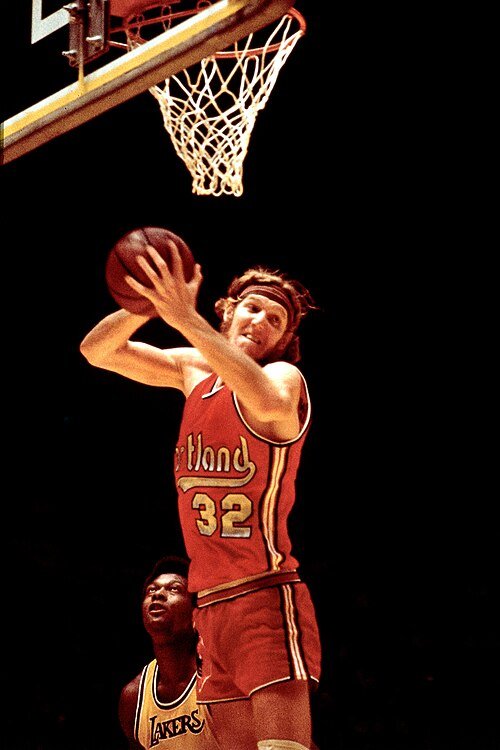
15. Bill Walton
Signature craft: high-post passing and the give-and-go.
Walton’s most revealing possessions often began with a teammate passing to him and immediately cutting. From the high post, he could return the ball into that movement. NBA analysis identifies that give-and-go game as central to his playmaking.
The technical challenge was delivering the pass while the opening still existed. A cutter needed the ball ahead of his movement, not behind it; a defender’s reach could require a different angle or a quicker release.
Walton could also finish around the basket, so approaching him carried a cost. His scoring threat helped make the next pass possible.
Game 6 of the 1977 Finals supplied 20 points and seven assists, supported by the historical box score and NBA footage. Watch the deliveries as well as the totals: their timing and placement explain the technique.
His passing depth earns inclusion over several stronger shooters. The give-and-go, early delivery and quick redirection offer multiple ways to create a basket for someone else. Fewer self-created jumpers and perimeter attacks keep him at the edge of the fifteen.
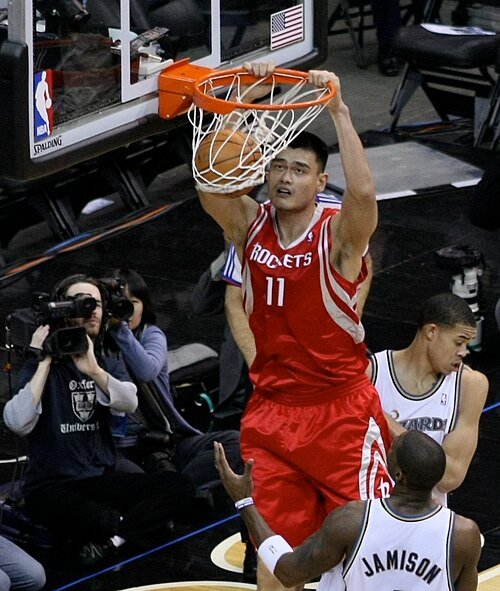
14. Yao Ming
Signature craft: the turnaround jumper, jump hook and up-and-under.
Yao could make a defender respect the first shot, then use that respect to create the second. A raised ball suggested a jumper; a defender leaving his feet opened a route underneath. Staying balanced through the fake allowed Yao to choose the finish.
His turnaround supplied another answer. Instead of forcing his way directly toward the rim, he could pivot into a high release. Marc Stein singled out the baseline turnaround during Yao’s first Houston training camp.
The touch was visible in the numbers, too: 83.3% from the free-throw line over his NBA career. That supports a specific claim about shooting coordination and repeatability, rather than proving the quality of every post move.
Yao’s case rests on depth within interior scoring, backed by a credible midrange shot. He offered less perimeter handling and passing variety than the broader creators above him. His height made the release difficult to reach; his feet and hands made it dependable. That combination earns him a place ahead of a shooting-led candidate such as Towns.
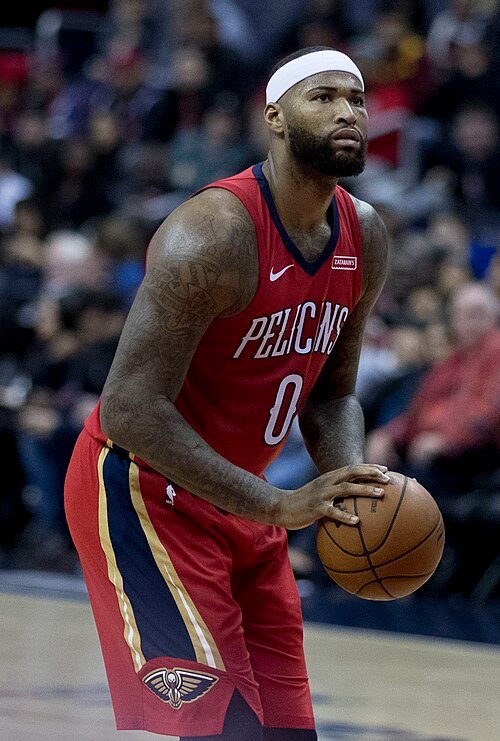
13. DeMarcus Cousins
Signature craft: face-up drives, spin finishes and passing off the dribble.
Cousins brought a wider range of dribble attacks than either Gasol. His lower placement reflects less consistent command of those options.
A 2015 coast-to-coast sequence against Boston shows him initiating an attack himself. He could move into a scoring opportunity rather than wait for an entry pass.
In slower possessions, he could face up, threaten a jumper and drive a defender who stepped too close. Spin moves and post finishes supplied additional endings. Passing gave him an answer when another defender committed to the ball.
His final Sacramento stretch supplies useful context. Across 55 games in 2016–17, he averaged 4.8 assists and 3.8 turnovers, while making 35.6% of his threes, as recorded in his season statistics.
That technical range earns his place in the ranking. The turnover figure identifies a possession cost alongside that range, although role, usage and decision-making also contributed. His passing and handling expanded the offense without always preserving the cleaner execution of the Gasol brothers.
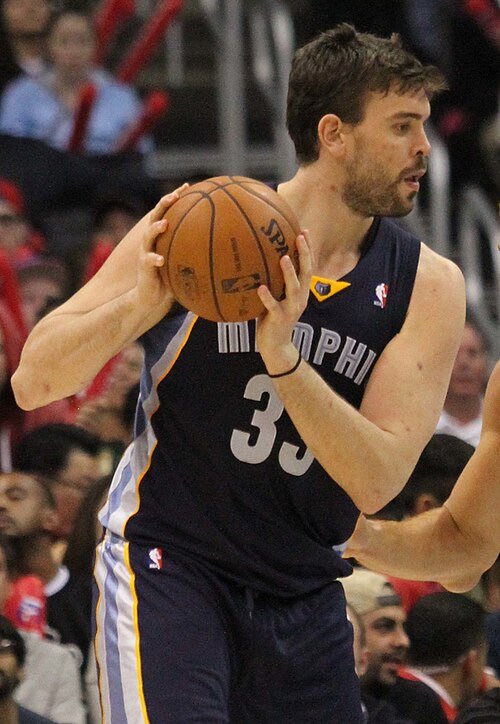
12. Marc Gasol
Signature craft: elbow passing, handoffs and pick-and-pop shooting.
Gasol’s catch at the elbow could place three threats in the same small area: a jumper, a handoff to a moving guard, or a pass behind the defender following that guard.
The handoff was more than transferring the ball. Gasol could use his body as a screen, delay the exchange or find a cutter when defensive attention shifted. His passing gave the action more than one ending.
Shooting expanded those choices. In 2016–17, he made 104 three-pointers and averaged 4.6 assists, according to Memphis’ season review. Defenders had to follow a passing center farther from the basket, where he could still organize an attack.
Hooks and short jumpers supported the passing game, giving him a finish when the defender stayed with a cutter.
Gasol ranks above Cousins on cleaner combination play. He remains below Pau because he offered less variety as a post finisher and less elaborate footwork when creating his own basket. Marc’s distribution and expanded shooting range keep that comparison close.
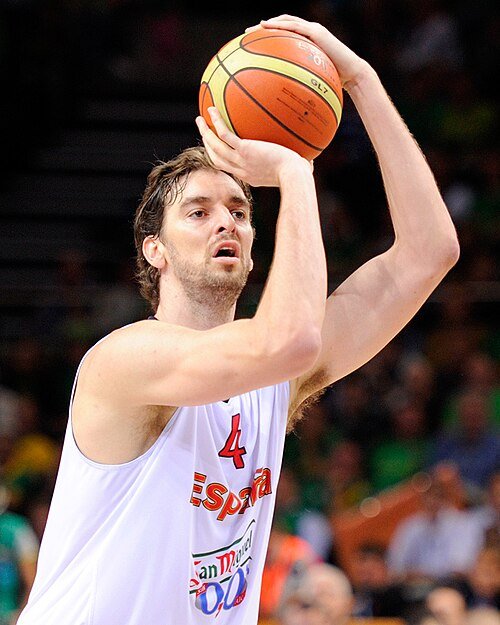
11. Pau Gasol
Signature craft: jump hooks over either shoulder and high-low passing.
Pau’s advantage over Marc begins with finishing variety. A post catch did not dictate one preferred direction: he could turn into a hook, threaten the shot and step through, or open a passing angle.
The Lakers highlighted moves over either shoulder alongside face-up scoring and passing. A defender could not simply send him toward a side on which the finish became unfamiliar.
Gasol’s soft hands also helped him receive awkward entries without losing the position his feet had established. Securing the catch and keeping his balance preserved the next move.
His scoring and distribution also worked together against Portland on November 7, 2010, when he produced 20 points and ten assists. Contemporary reporting supplies a concrete example of that combined role.
From above the lane, his high-low passes could find a teammate sealing a defender closer to the basket.
Pau sits just outside the top ten because those players offer either more exceptional specialized mastery or greater individual creation. His hooks, pivots and passing keep the margin small.
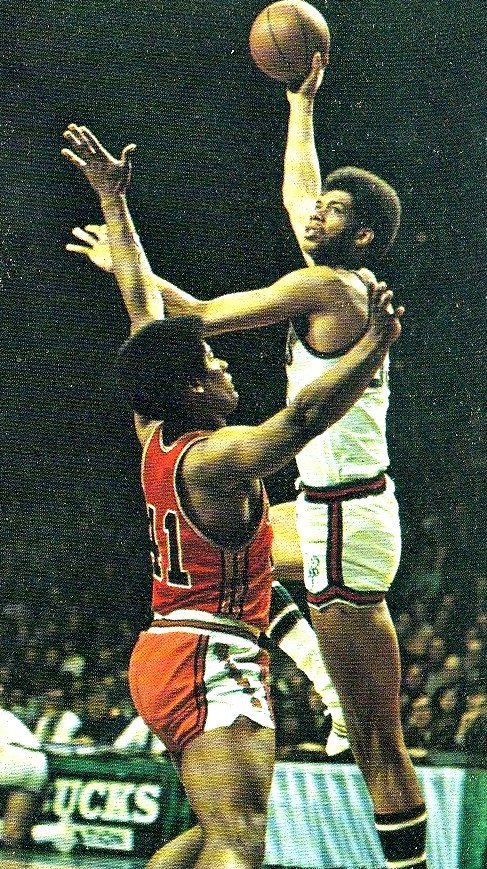
10. Kareem Abdul-Jabbar
Signature craft: the skyhook and its changes of angle, distance and preparation.
In Game 6 of the 1974 Finals, Kareem scored 34 points, including the skyhook that won a double-overtime game. The historical account and footage anchor the technique in a specific performance.
The shooting arm extended away from the contest while Kareem’s body occupied the space between opponent and ball. Foot placement organized the lift; the wrist and fingers supplied the final adjustment. Starting farther out, turning toward the baseline or releasing under pressure changed the task even when the shot retained its familiar shape.
The skyhook represents a family of demanding executions. His post positioning, shorter hooks and passing supported that central weapon.
Kareem’s tenth place reflects the preference for dependable techniques across several offensive tasks. His skyhook mastery is exceptional; the players above him add more handling, distribution or self-created shooting away from the post.
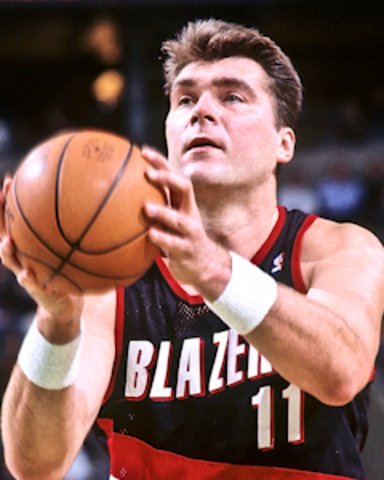
9. Arvydas Sabonis
Signature craft: outlet deliveries, touch passes and high-post distribution.
Sabonis could turn a rebound into an attack before a guard came back to collect the ball. Long deliveries required pace and placement; close-range redirections demanded a different touch.
NBA’s Arvydas-and-Domantas passing collection offers footage of the father’s deliveries. In 1997–98, he averaged 16.0 points and 3.0 assists for Portland, according to NBA records. His scoring and passing remained useful even after his mobility declined.
The assessment also includes his career before Portland: Soviet-era basketball, then Valladolid and Real Madrid in Spain. Real Madrid’s club history traces those Spanish stages; his Hall of Fame profile records Olympic gold in 1988.
Sabonis edges Kareem through dependable passing variety alongside interior and outside scoring. Kareem retains the stronger case in concentrated scoring mastery. His advantage within the skyhook remains larger than any single scoring advantage Sabonis holds; Sabonis wins this comparison across the combined tasks.
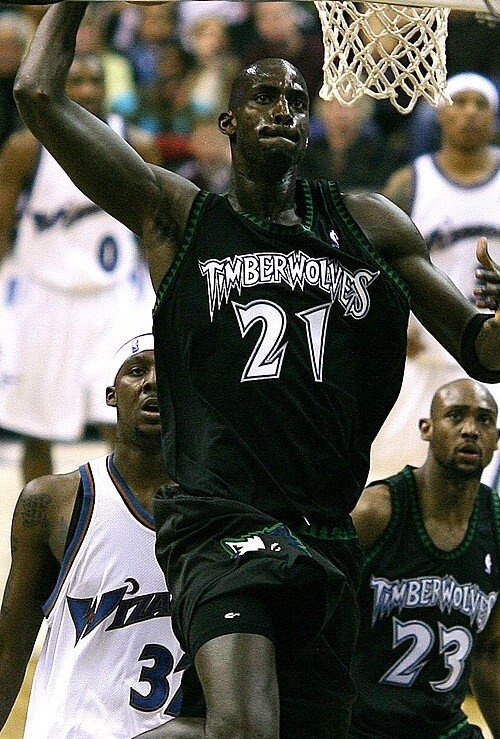
8. Kevin Garnett
Signature craft: the face-up jab, turnaround jumper and elbow passing.
A Garnett jab step asked a defender a question: are you protecting the shot or the drive? His next action could use the answer.
The midrange jumper made that question credible. He could shoot over space, attack a defender leaning toward him, or pass when help opened another area. From the post, a shoulder fake could lead into a turnaround.
A December 2012 sequence against the Clippers shows him converting a turnaround at the buzzer. It captures the catch, turn and release under a time constraint.
His broader scoring-and-passing role also lasted beyond isolated highlights. In 2003–04, he averaged 24.2 points and 5.0 assists, according to season statistics. Those numbers establish the scale of his involvement; the techniques explain how he contributed.
Dirk ranks higher because his shooting and individual scoring counters had greater depth. Garnett’s passing advantage narrows that gap. His eighth place rewards versatility while recognizing the more exacting scoring craft of the players ahead.
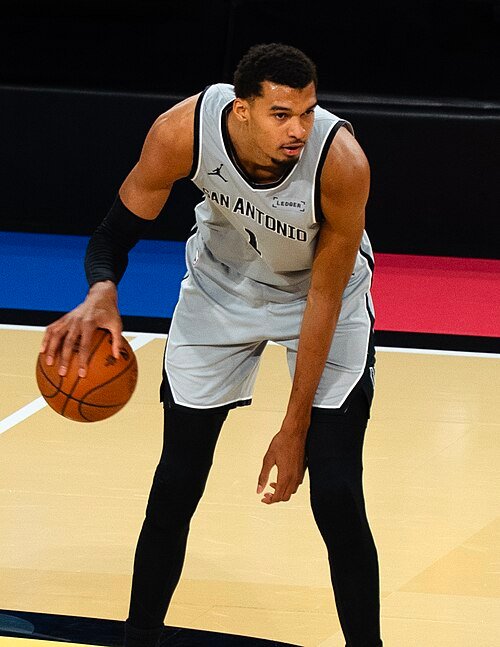
7. Victor Wembanyama
Signature craft: between-the-legs dribbles into step-back threes and spin jumpers.
Wembanyama connects movements rarely seen together in a center’s frame: handle outside, change direction, step away from a contest and pull up from long distance.
Between-the-legs dribbles into step-back threes appear in his rookie-season analysis; later footage isolates a spin jumper.
The shooting evidence extends beyond individual highlights. In the 2025–26 regular season, he made 122 of 350 three-pointers—34.9%—and shot 82.7% at the line across 64 games, according to his season statistics. That supports usable range and repeatable shooting touch, rather than elite accuracy from three.
Garnett offers more established passing and possession control. Wembanyama earns the place above him through a wider range of perimeter creation and finishing combinations. Duncan’s deeper, more dependable counters keep him below sixth. The shorter professional record still makes this placement less secure than those of the established veterans.
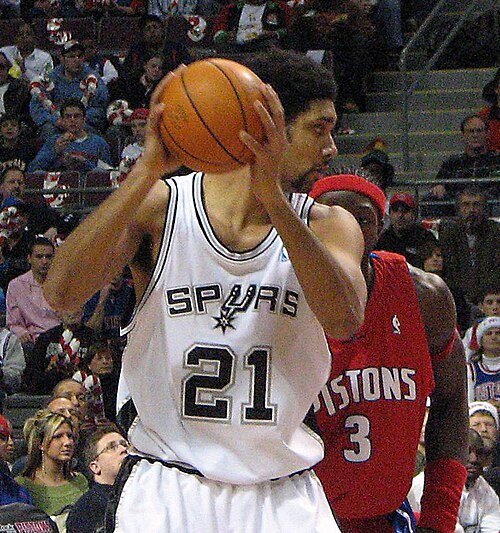
6. Tim Duncan
Signature craft: the bank shot, drop step and patient post counters.
Duncan’s offensive technique rarely demanded that a viewer admire it before it worked.
His face-up bank shot gave a defender a reason to step forward. A jab could test that response; a drive or post turn could exploit it. His signature-move feature shows the familiar release off the glass.
Closer to the basket, Duncan could use a drop step to gain position, a hook to finish without facing the rim, or a fake to postpone the release until the contest changed. The first action did not require him to commit to one ending.
Game 6 of the 2003 Finals included 21 points and ten assists, alongside 20 rebounds and eight blocks. For this offensive ranking, the scoring and passing are the relevant parts. The footage shows how his own threat could create an opening for a teammate.
He ranks ahead of Wembanyama on more established command of the moves and their counters. Embiid edges him on a wider set of self-created scoring techniques, including pull-ups and perimeter shooting. Duncan’s precise counters keep the comparison close.
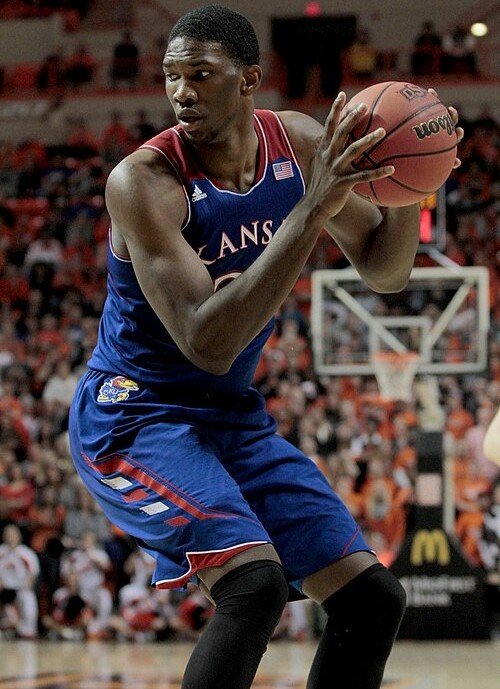
5. Joel Embiid
Signature craft: face-up jab-and-pull-ups, turnaround fades and up-and-under counters.
Duncan manages post continuations more cleanly. Embiid takes the position above him because his shooting and face-up techniques add reliable scoring options alongside his interior game.
Embiid can begin with the same stance and produce different problems. Give him room, and he can rise into a jumper. Move closer, and a jab, dribble or shot fake can open another route. His post game adds jump hooks, drop steps, spins and turnaround shots.
His shooting touch has a season-level anchor: in 2022–23, he made 85.7% of his free throws while attempting 11.7 per game, according to his player statistics. That establishes repeatable release control across substantial volume; it does not measure his entire scoring repertoire.
His 70-point performance against San Antonio on January 22, 2024 provides a complementary film reference for the range of those actions.
Handling into traffic and responding to double-teams can disrupt his possessions. Those limitations reduce the margin over Duncan, while his demonstrated shooting and face-up execution preserve the breadth advantage. Dirk remains above him on shooting precision and balance; Hakeem offers a more intricate chain of post counters.
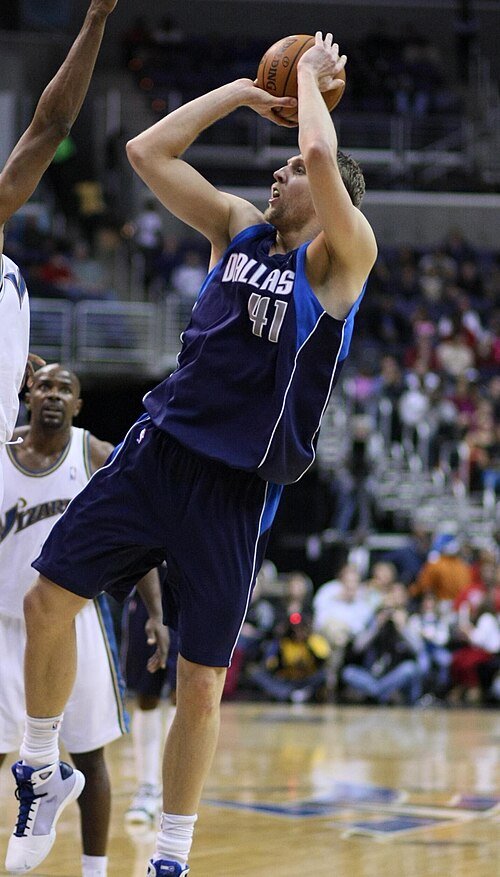
4. Dirk Nowitzki
Signature craft: the one-legged fadeaway, jab-step drive and trailing three.
Dirk’s fadeaway asked him to solve two problems at once: move the release away from the defender while keeping it aligned with the basket.
His signature shot followed several setups: a post turn, a spin or a face-up action. NBA’s Archive 75 feature documents those variations.
The lifted knee and backward lean changed the contest. Repetition made the unusual balance point usable without forcing every possession toward an identical starting position.
The shooting threat also opened the drive. In Game 2 of the 2011 Finals, Dirk hit the go-ahead left-handed layup with 3.6 seconds remaining, despite a torn tendon in his left middle finger. The finish illustrates the counter available when a defender prepared for the jumper.
Catch-and-shoot threes, pull-ups, post fades and attacks against closeouts required different entries into a dependable release.
He leads Embiid on the precision of that scoring craft. Garnett had more passing variety, but Dirk’s depth within shooting and individual creation offsets the difference. His ranking rests on the preparation around the famous shot, not the signature alone.
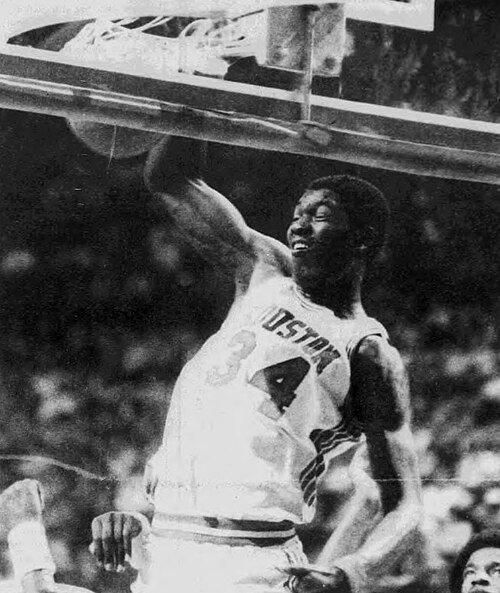
3. Hakeem Olajuwon
Signature craft: the Dream Shake, baseline spin and up-and-under.
On May 24, 1995, Hakeem drew David Robinson into the air before finishing underneath. NBA preserves the sequence in its Dream Shake clip.
A believable fake creates an opening only if the attacker remains ready to use it. Hakeem’s balance let him postpone the release and select the next action.
That sequence belonged to a wider vocabulary: drop steps, jump hooks, baseline turns, spins and fadeaways. He connected them according to the defender rather than perform a predetermined routine.
His craft also sustained a large offensive role. In the 1995 Finals, he averaged 32.8 points and 5.5 assists, as recorded in his NBA historical profile. Those totals establish the scale of his scoring and playmaking; the footage reveals the techniques behind them.
Hakeem’s deception and counters give him a first-place argument. Durant offers greater depth in outside shot creation; Jokić’s passing adds more ways to manipulate an entire possession. Hakeem retains the most intricate post craft of the three. His third place reflects the broader comparison across offensive tasks.
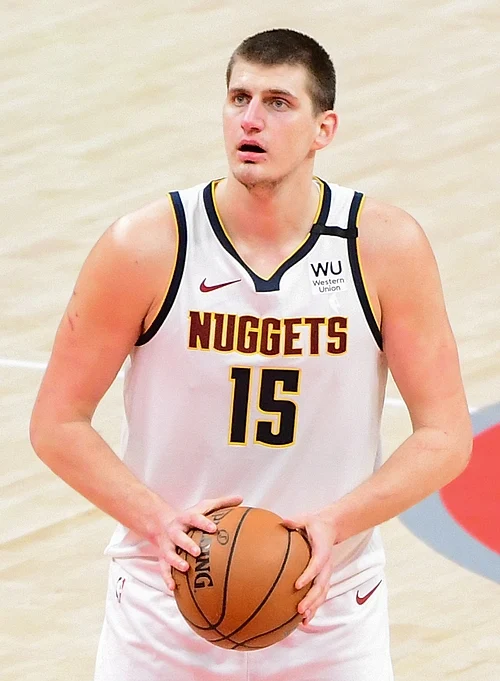
2. Nikola Jokić
Signature craft: the Sombor Shuffle, one-handed touch shots and disguised passes.
The Sombor Shuffle launches off Jokić’s right foot, a variation developed while protecting an injured left ankle. ESPN’s account explains its origins; a career compilation shows the action.
He leans back and lifts the ball into a high release over an unconventional takeoff. Keeping the shooting line repeatable as the lower-body setup changes is the technical challenge.
His passing contains comparable variety: redirecting a catch, delivering one-handed or disguising the destination while threatening a shot.
Jokić passed Kareem for the career regular-season assists record among centers on December 18, 2025, a milestone documented by Denver. It establishes the scale of his playmaking rather than deciding this ranking.
The stronger argument is how scoring and distribution share their preparation. A defender cannot always tell which action is coming.
That sophisticated offensive game emerged from the 41st pick in the draft—a beginning explored among NBA draft picks who were underestimated before becoming stars.
He leads Hakeem on passing depth and integrated creation. Durant leads on perimeter handling and self-created jumpers. Jokić has a persuasive first-place case; this selection favors Durant’s combination of shooting command and creation breadth.
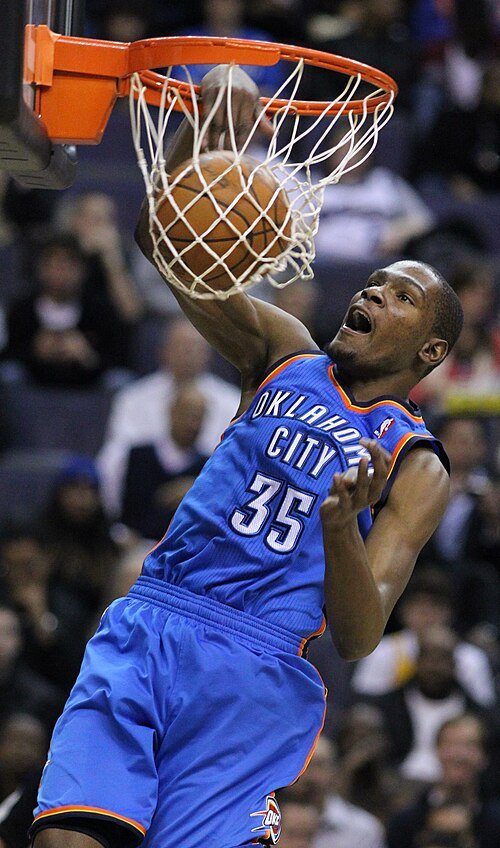
1. Kevin Durant
Signature craft: the hesitation pull-up, crossover-to-jumper and post fadeaway.
Durant’s height makes a jumper hard to reach. His preparation makes the release hard to prevent.
A hesitation can suggest a drive and become a pull-up. A crossover changes the angle; a step-back creates separation; a post turn opens a fade.
In Game 3 of the 2017 Finals, his pull-up three over LeBron James gave Golden State the late lead.
For Oklahoma City in 2012–13, he shot 51.0% from the field, 41.6% from three and 90.5% at the line, as recorded in his NBA biography. The added shooting options came with exceptional accuracy: here, breadth did not require surrendering command. Those season figures support that judgment without measuring every move separately.
Jokić is the deeper passer; Hakeem is the more intricate post counter-player. Durant wins through shooting mastery connected to perimeter and post creation. He can initiate with a dribble, stop into an accurate jumper and use post footwork when the matchup shifts. Neither rival matches that shooting-and-handling combination across the same range of setups.
The Debate at the Top
Durant, Jokić and Hakeem offer three distinct first-place cases.
Favor the widest range of precisely executed, self-created jumpers, and Durant leads. Give passing technique and its integration with scoring greater emphasis, and Jokić can take first. Center the comparison on deception, footwork and post counters, and Hakeem becomes the strongest choice.
This ranking gives Durant the edge because his shooting-and-handling combination remains effective across more scoring setups. The order is an editorial judgment with an explicit basis, rather than a statistical result.
A broader career assessment produces different choices. Our all-time NBA teams by position weigh defense, sustained excellence and postseason performance alongside offensive contribution.
Honorable Mentions
Karl-Anthony Towns: Deep shooting range, pick-and-pop scoring and drives against closeouts make him the closest shooting-led challenger at the cutoff. Walton’s passing depth and Yao’s post counters prevail here. Greater emphasis on perimeter shooting could put Towns inside the fifteen.
Jack Sikma: His reverse pivot opened space for a high-release jumper. That footwork, alongside passing and shooting, makes him a strong candidate; the selected players offer greater depth in creation or finishing.
Giannis Antetokounmpo: His Eurostep requires him to coordinate the gather, change the finishing angle and protect the ball while moving quickly. The skill lies in those adjustments. Limited shooting variety leaves him fewer alternatives when the driving route closes.
David Robinson and Vlade Divac: Robinson’s face-up attacks and finishing deserve technical credit. Divac’s disguised passing and post craft make a different case, documented in the Kings’ historical profile. Both warrant consideration beyond their best-known reputations.
Notable Exclusions
Shaquille O’Neal: His drop step and spin involved precise foot placement, a protected gather and balance through contact. Powerful finishing did not make those actions unskilled. The limitation appears elsewhere: 52.7% career free-throw shooting and a narrower outside shooting repertoire weaken his case under our command-and-breadth criteria.
Wilt Chamberlain: Scoring touch and high-post distribution gave him techniques beyond physical force. More varied shooting preparation favors the selected players here, although surviving footage makes comparisons across eras uneven.
Patrick Ewing, Rik Smits, Ralph Sampson and Kristaps Porziņģis: Ewing brings post-and-midrange craft, Sampson coordination at extreme height, and Porziņģis shooting range. Smits supplies a memorable example: on May 29, 1995, he faked Tree Rollins into a commitment before hitting the winning jumper in Game 4 against Orlando. Each has a substantial specialist case, but falls outside the fifteen on the complete comparison.
Chris Bosh and Rasheed Wallace: Bosh brought face-up drives and pick-and-pop shooting; Wallace combined a turnaround game with three-point range. The selected players have a stronger combination of creation depth and execution across the assessed areas.
Developing Candidates
Alperen Şengün and Chet Holmgren belong in the developing candidate pool. Şengün’s post counters and passing make him especially relevant; Holmgren brings shooting and mobile finishing.
Their cases must rest on what they have repeatedly executed. Projected improvement earns no additional credit.
Height Eligibility
Moses Malone falls outside the height rule, rather than being rejected as unskilled: NBA’s historical profile identifies him as 6′10″.
The same 6′11″ threshold applies throughout. Defensive excellence also does not determine this offensive ranking, limiting arguments built chiefly around rim protection.
The Skill Sets at a Glance
| Rank | Player | Technique to watch |
| 15 | Bill Walton | High-post give-and-go passing |
| 14 | Yao Ming | Turnaround jumper and up-and-under |
| 13 | DeMarcus Cousins | Face-up drive into a spin finish |
| 12 | Marc Gasol | Elbow handoff and passing counter |
| 11 | Pau Gasol | Jump hook over either shoulder |
| 10 | Kareem Abdul-Jabbar | Skyhook from different setups |
| 9 | Arvydas Sabonis | Outlet delivery and touch pass |
| 8 | Kevin Garnett | Face-up jab into jumper or drive |
| 7 | Victor Wembanyama | Between-the-legs dribble into step-back |
| 6 | Tim Duncan | Bank shot and patient post counter |
| 5 | Joel Embiid | Face-up fake into pull-up or attack |
| 4 | Dirk Nowitzki | One-legged fadeaway |
| 3 | Hakeem Olajuwon | Dream Shake into up-and-under |
| 2 | Nikola Jokić | Sombor Shuffle and disguised pass |
| 1 | Kevin Durant | Hesitation dribble into pull-up jumper |
Kareem protected a release. Hakeem manipulated a defender’s balance. Dirk created separation. Jokić made a scoring motion serve as a passing disguise. Durant turned several different setups into a precise jumper.
The craft differs. What connects these players is the range of their answers and the command to make the option they select work against a defender.
Who did you choose, and which skill separates him from the rest? If you selected “Someone else,” name your pick in the comments.