
From Frankie Edgar’s lightweight championship to Minowa’s victories over giants, these fighters achieved major success while standing unusually short for their competition
At 6′3″, James Vick stood five inches above our lightweight height benchmark. Making the division’s weight limit came at a considerable cost: in 2015, he described cutting roughly 30 pounds during fight week.
“You feel like you’re gonna die,” Vick said. “But I do it because of the size advantage it gives me.” Alongside his height, Vick brought a 76-inch reach into the cage—four inches beyond our lightweight benchmark.
Frankie Edgar won the championship in that same division at 5′6″—nine inches shorter than Vick.
That contrast puts these careers into perspective. While some fighters endured punishing weight cuts to compete with a physical advantage, others found success in divisions where they stood well below the typical height.
Some became champions in two weight classes. Others earned title shots or defeated opponents more than a foot taller. What connects them is the gap between their height and what they accomplished against larger opposition.
Height and Reach Benchmarks by Weight Class
A 5′8″ bantamweight is relatively tall. A 5′8″ light heavyweight faces a very different comparison.
The rounded UFC benchmarks below provide the context for this article.
| Division | Height benchmark | Reach benchmark |
| Flyweight | 5′5″ | 66″ |
| Bantamweight | 5′7″ | 69″ |
| Featherweight | 5′9″ | 70″ |
| Lightweight | 5′10″ | 72″ |
| Welterweight | 5′11½″ | 73½″ |
| Middleweight | 6′1″ | 75″ |
| Light heavyweight | 6′2″ | 76″ |
| Heavyweight | 6′3″ | 77½″ |
Height is the focus. Reach enters the discussion where it adds a meaningful disadvantage—or explains why a shorter fighter was not necessarily outmatched in every measurement.
How We Selected the Fighters
For the main divisional profiles, “remarkably short” means at least four inches below the relevant height benchmark. Four inches is an editorial cutoff chosen to focus on substantial differences.
Each fighter must also have won a major MMA championship, including an interim title; won a significant MMA tournament, including established international vale tudo tournaments; or challenged for a major MMA championship.
The height and achievement requirements are assessed separately. One professional appearance in a qualifying division is enough, while championship or tournament achievements can come elsewhere. Each profile identifies where those accomplishments occurred.
Actual opposition informs our editorial choices too. A brief heavier appearance against someone of similar height is less compelling than encounters with much taller opponents. That distinction explains Dan Henderson’s honorable mention.
Minowa and Penn appear as openweight special cases, assessed through actual matchups rather than a divisional benchmark. Official UFC heights take precedence where available; attributed personal statements add context without replacing the measurements used in our calculations.
The profiles run from the largest divisional height deficits to the smallest, with openweight cases at the end. This is not a ranking of career greatness.
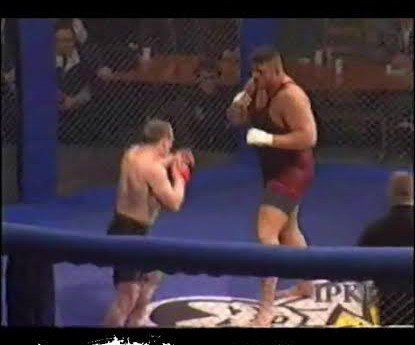
1. Igor Vovchanchyn — 5′8″
Heavyweight benchmark: seven inches below
Igor Vovchanchyn gave up an entire foot in height when he stopped 6′8″ Paul Varelans with punches in the semifinal of IFC 1: Kombat in Kiev in March 1996. He then defeated John Dixson in the final to win the tournament.
At 5′8″, Vovchanchyn stood seven inches below our heavyweight benchmark, yet his career repeatedly placed him against considerably larger men.
At World Vale Tudo Championship 5 in Brazil in 1998, he won three fights in one night. He finished the tournament by knocking out Nick Nutter with a knee in just 14 seconds.
He later reached the final of PRIDE’s 2000 openweight Grand Prix, losing to Mark Coleman after earlier victories over Gary Goodridge and Kazushi Sakuraba that night.
Those tournaments were openweight. The heavyweight comparison reflects his broader career against heavyweight opposition rather than a formal classification of every tournament he entered.
Vovchanchyn never became PRIDE heavyweight champion, but he built an accomplished tournament career at a height closer to our lightweight benchmark than our heavyweight figure.
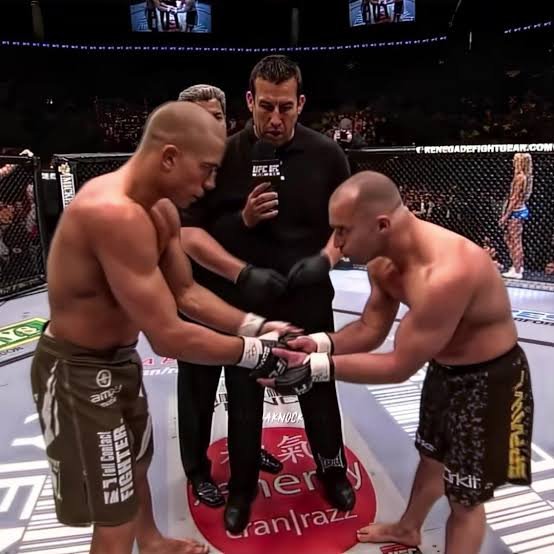
2. Matt Serra — 5′6″
Welterweight benchmark: 5½ inches below
Matt Serra’s victory over Georges St-Pierre was extraordinary before the measurements entered the discussion.
At UFC 69 in April 2007, Serra stopped the champion in the first round to win the UFC welterweight title. St-Pierre subsequently established one of MMA’s greatest championship careers, making that defeat one of the sport’s enduring upsets.
Serra stood 5′6″, 5½ inches below the welterweight benchmark. Against the 5′10″ St-Pierre, he surrendered four inches in height. His 68-inch reach also left him eight inches short of St-Pierre’s 76 inches.
St-Pierre was not Serra’s tallest opponent. 5′11″ Chris Lytle stood five inches taller. Serra defeated him by split decision in The Ultimate Fighter 4 finale in November 2006, earning the championship opportunity.
St-Pierre reclaimed the belt in their rematch. Serra’s upset did not need a long reign to become historic.
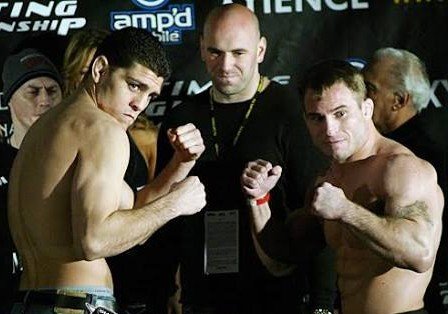
3. Sean Sherk — 5′6″
Welterweight benchmark: 5½ inches below; lightweight: four inches below
When Sean Sherk fought Nick Diaz at welterweight in 2006, the measurements strongly favored Diaz.
Diaz stood 6′1″ against Sherk’s 5′6″, a seven-inch height difference. His 76-inch reach exceeded Sherk’s 67 inches by nine.
Sherk won a unanimous decision.
He had already challenged Matt Hughes for the UFC welterweight championship in 2003, taking him through five rounds before losing a decision. Sherk competed 5½ inches below the welterweight height benchmark, with a reach 6½ inches below the divisional benchmark.
Moving to lightweight reduced those discrepancies without eliminating them. He remained four inches below that division’s height benchmark.
Sherk defeated Kenny Florian at UFC 64 in October 2006 to win the vacant lightweight championship, then defended it against Hermes Franca at UFC 73. He was subsequently stripped after testing positive for nandrolone.
Before that ending, a 5′6″ fighter had become a title challenger at 170 pounds and a champion at 155.
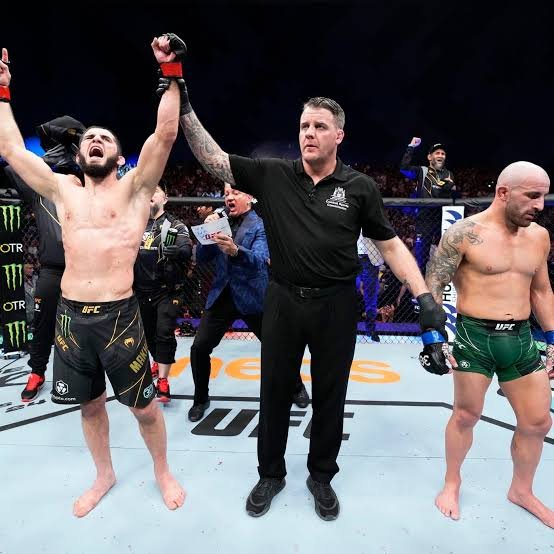
4. Alexander Volkanovski — 5′6″
Welterweight benchmark: 5½ inches below; lightweight: four inches below
Alexander Volkanovski’s defining achievements came at featherweight, where he became UFC champion and defeated Max Holloway three times.
He also competed above that division. At AFC 5 in May 2013, Volkanovski fought Corey Nelson at welterweight, losing by third-round stoppage. At 5′6″, he stood 5½ inches below our welterweight benchmark and four below the lightweight figure.
One striking height mismatch came against 6′0″ Jamie Mullarkey in 2016. Volkanovski knocked out the six-inch-taller Australian to win the Australian Fighting Championship featherweight title.
Height did not always bring a reach disadvantage. Volkanovski’s approximately 71½-inch reach exceeded Holloway’s listed 69 inches, despite Holloway standing five inches taller.
His two lightweight championship challenges against Islam Makhachev in 2023 supplied another test. Makhachev is officially listed at 5′10″, although he has reportedly put his height at 181 cm—about 5′11¼″. That would make him roughly five inches taller than Volkanovski, rather than the four inches suggested by their official listings.
Volkanovski lost a competitive five-round decision in their first meeting and suffered a first-round knockout in the rematch. Both challenges came against a champion four inches taller by the official listings—and roughly five inches taller using Makhachev’s reported statement.

5. Manny Gamburyan — 5′5″
Lightweight benchmark: five inches below
At 5′5″, Manny Gamburyan reached The Ultimate Fighter’s fifth-season final at lightweight. Across from him stood 6′0″ Nate Diaz, a seven-inch-taller opponent.
A shoulder injury ended Gamburyan’s challenge in the second round. His later career supplied a clearer example of beating much taller opposition: in 2013, he defeated 6′1″ Cole Miller by unanimous decision at featherweight, overcoming an eight-inch height disadvantage.
A first-round knockout of former WEC champion Mike Brown helped earn Gamburyan a shot at José Aldo’s WEC featherweight championship in 2010. Aldo stopped him in the second round.
Gamburyan stood five inches below our lightweight height benchmark and four below the featherweight figure. His listed 67-inch reach was also five inches below the lightweight benchmark.
His career included a major featherweight title challenge, but the Miller victory supplied its most dramatic successful height comparison: a 5′5″ fighter defeating an opponent eight inches taller.
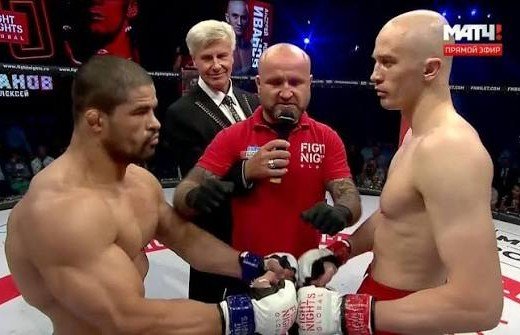
6. Rousimar Palhares — 5′8″
Middleweight benchmark: five inches below
Rousimar Palhares competed five inches below our middleweight height benchmark. His 71-inch reach also fell four inches below the divisional benchmark.
His middleweight victories included Ivan Salaverry and David Branch. He lost to 6′2″ Alan Belcher, but later submitted Alexei Ivanov, listed by Sherdog at 6′2″, with a heel hook at Fight Nights Global 70 in July 2017. Using those listings, both opponents stood six inches taller.
His major championship success came after moving to welterweight. Palhares submitted Steve Carl in 2014 to win the World Series of Fighting title.
WSOF later stripped him of the championship and suspended him following his conduct against Jake Shields, including holding a submission too long. Similar conduct had already ended his UFC tenure.
Palhares competed at middleweight and became a champion at welterweight. His repeated misconduct remains part of that record.

7. Mark Hunt — 5′10″
Heavyweight benchmark: five inches below
Mark Hunt stood 5′10″. Stefan Struve was billed at 7′0″.
When they met in March 2013, Hunt gave up 14 inches in height. Struve’s 84½-inch reach also exceeded Hunt’s 72 inches by 12½.
Hunt stopped him in the third round.
Hunt was not small in every dimension. His considerable body mass made him a heavyweight, but his height and reach were well below our divisional benchmarks: five inches shorter in height and 5½ inches shorter in reach.
He eventually earned a UFC interim heavyweight championship fight against Fabricio Werdum in 2014. Hunt lost by second-round stoppage, but the opportunity established him as a major MMA title challenger.
His victories over established heavyweights included Roy Nelson and Antônio Silva. After their celebrated 2013 draw, Hunt stopped Silva in the first round of their 2015 rematch.
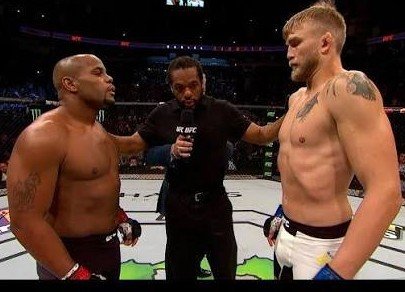
8. Daniel Cormier — 5′11″
Heavyweight benchmark: four inches below
Daniel Cormier won the Strikeforce Heavyweight Grand Prix before becoming a UFC champion at both light heavyweight and heavyweight.
His official 5′11″ listing places him four inches below our heavyweight benchmark and three below the light heavyweight figure. Cormier himself described his height as 5′10½″ in a published Nemiroff interview, although we retain the official listing for our calculations.
At heavyweight, he knocked out 6′4″ Antônio “Bigfoot” Silva during the Strikeforce tournament. He later knocked out Stipe Miocic in the first round at UFC 226 in 2018 to win the UFC heavyweight championship.
His tallest prominent opponent came at light heavyweight. 6′5″ Alexander Gustafsson stood six inches taller, yet Cormier defeated him over five rounds to defend his UFC championship in 2015.
Reach could make those challenges greater still. Cormier’s 72½ inches left him five inches below the heavyweight benchmark. Against Jon Jones’s 84½ inches, he surrendered a full foot of reach.
Jones defeated him in their first meeting; their second ended as a no contest after Jones failed a drug test. Cormier nevertheless finished his career with a heavyweight tournament victory and UFC championships at both 205 and 265 pounds.

9. Frankie Edgar — 5′6″
Lightweight benchmark: four inches below
Frankie Edgar was shorter than our bantamweight benchmark, yet won a UFC championship two weight classes above bantamweight, at lightweight.
At 5′6″, he stood four inches below the lightweight height benchmark. His 68-inch reach was also four inches below the divisional benchmark.
Edgar defeated BJ Penn to win the championship in 2010, then beat him again in the immediate rematch. He subsequently retained the belt through a draw with Gray Maynard before knocking Maynard out in their third meeting.
His tallest prominent opponents included 5′11″ Max Holloway and Cory Sandhagen, each five inches taller. Those fights came later, at featherweight and bantamweight respectively. Edgar lost a decision to Holloway and was knocked out by Sandhagen’s flying knee just 28 seconds into their meeting.
His eventual move to bantamweight makes the earlier achievement especially striking. The same 5′6″ fighter who competed at 135 pounds had already won and defended a championship at 155.

10. Patricio “Pitbull” Freire — 5′6″
Lightweight benchmark: four inches below
Patricio Pitbull needed just 61 seconds to stop Michael Chandler and win Bellator’s lightweight championship in 2019.
Already the featherweight champion, he became a simultaneous champion in two divisions.
At 5′6″, Pitbull stood four inches below our lightweight height benchmark. His UFC-listed 67-inch reach was five inches below the lightweight benchmark.
Chandler was not an extreme height mismatch. A more dramatic example came during Pitbull’s featherweight career against 5′11″ Ádám Borics, who stood five inches taller. Pitbull defeated him by unanimous decision over five rounds in 2022.
His multiple Bellator featherweight championship reigns established sustained success. The Chandler victory extended it into a heavier division where his height was even more unusual.
Pitbull combined a major championship at lightweight with a lengthy record of success at featherweight, including against substantially taller challengers.

11. Kelvin Gastelum — 5′9″
Middleweight benchmark: four inches below
Against Israel Adesanya at UFC 236, Kelvin Gastelum surrendered seven inches in height and approximately 8½ inches in reach.
Adesanya stood 6′4″ with an 80-inch reach. Gastelum was listed at 5′9″ with a 71½-inch reach.
Their 2019 interim middleweight championship fight went five rounds. Gastelum lost a unanimous decision, but the contest became one of the division’s most celebrated fights and entered the UFC Hall of Fame’s Fight Wing in 2025.
Gastelum earned that opportunity through middleweight victories over Tim Kennedy, Michael Bisping and Ronaldo “Jacaré” Souza.
He stood four inches below the middleweight height benchmark, with a reach 3½ inches below the divisional benchmark. Against Adesanya, both disadvantages expanded considerably.
Gastelum did not leave with the championship. His performance against a seven-inch-taller opponent nevertheless became part of the UFC’s Hall of Fame.

12. Hector Lombard — 5′9″
Middleweight benchmark: four inches below
Hector Lombard became Bellator’s inaugural middleweight champion by defeating Jared Hess in the promotion’s first middleweight tournament in 2009.
At 5′9″, he stood four inches below our middleweight height benchmark. His 71-inch reach was also four inches below the divisional benchmark.
His most abrupt victory over a taller opponent came against 6′2″ Jay Silva in 2010. Lombard knocked him out in six seconds in a fight contested at a 190-pound catchweight. Silva stood five inches taller.
An even larger gap appeared against 6′4″ Anthony Smith in the UFC. Lombard surrendered seven inches in height and lost by third-round knockout in 2017.
His strongest championship achievements came before his UFC tenure. His later record also included a failed drug test that overturned his victory over Josh Burkman.
The Bellator title established his success in a division where he was unusually short. The Silva and Smith fights illustrate how differently his encounters with taller opponents could end.
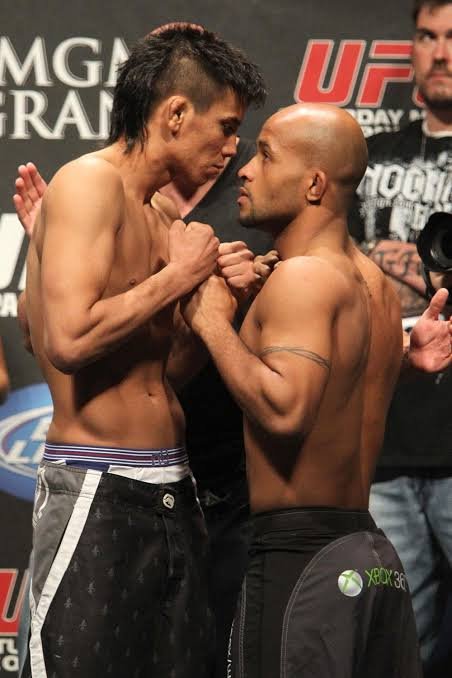
13. Demetrious Johnson — 5′3″
Bantamweight benchmark: four inches below
Before establishing his historic UFC flyweight reign, Demetrious Johnson challenged for a championship at bantamweight.
At 5′3″, he stood four inches below our bantamweight benchmark. His 66-inch reach was three inches below the divisional benchmark, although particular opponents presented much larger gaps.
Miguel Torres stood 5′9″ with a 76-inch reach. Johnson surrendered six inches in height and ten inches in reach, yet won a unanimous decision at UFC 130 in 2011.
Later that year, he challenged 5′8″ Dominick Cruz for the UFC bantamweight championship and lost over five rounds.
His greatest achievements followed the introduction of the UFC flyweight division. Johnson became its inaugural champion and made 11 consecutive successful title defenses.
He subsequently won ONE Championship’s flyweight title with a fourth-round flying-knee knockout of Adriano Moraes in 2022. ONE’s weight classes do not map directly onto the UFC’s, so “flyweight” should not be read as an identical classification.
Johnson’s bantamweight title challenge preceded one of the most accomplished championship careers in MMA.

14. John Dodson — 5′3″
Bantamweight benchmark: four inches below
John Dodson stopped TJ Dillashaw in 1 minute, 54 seconds to win The Ultimate Fighter’s bantamweight tournament in 2011. Dillashaw later became a two-time UFC bantamweight champion.
Dodson stood 5′3″, four inches below our bantamweight benchmark. His route through the show included a knockout of 5′10″ Johnny Bedford, a seven-inch-taller opponent. That semifinal was an exhibition bout and is separate from his official professional record.
In professional competition, Dodson defeated 5′7″ Tim Elliott, giving up four inches in height, before stopping Jussier Formiga on his way to a flyweight championship opportunity.
He challenged Demetrious Johnson for the UFC flyweight championship twice, losing both meetings, and later returned to bantamweight.
His first-round finish of Dillashaw remains a particularly memorable success in the division where his height was most unusual.

15. Ikuhisa Minowa — 5′9″
Openweight special case
Hong-man Choi stood 7′2″. Ikuhisa Minowa stood 5′9″.
When they met in DREAM’s 2009 Super Hulk semifinal, Minowa gave up 17 inches in height and, according to contemporary reporting, over 125 pounds. He won by second-round heel hook.
Openweight competition has no divisional height benchmark. Minowa’s case rests on the extraordinary differences between him and the opponents he actually fought.
The Choi victory also led somewhere significant. Minowa reached the Super Hulk final and knocked out Rameau Thierry Sokoudjou in the third round to win the tournament. Its smallest entrant finished as its champion.
Choi was no isolated experiment. Minowa’s victories also included Bob Sapp, Butterbean and Giant Silva.
Those contests involved enormous weight differences as well as height differences. Minowa repeatedly accepted opponents far outside the physical range normally associated with his stature—and accumulated victories rather than merely memorable photographs.

16. BJ Penn — 5′9″
Openweight special case
BJ Penn was only an inch below our lightweight height benchmark. He appears here because of his openweight fight against Lyoto Machida, alongside his championship achievements in two UFC divisions.
Their March 2005 meeting in Japan placed the 5′9″ Penn opposite the 6′1″ Machida. Penn gave up four inches in height and entered at a reported 191 pounds, having already won a UFC championship at 170.
He lost a unanimous decision, taking the fight the distance against a man who would eventually become UFC light heavyweight champion.
Penn’s listed 70-inch reach was also four inches shorter than Machida’s 74 inches.
His championship success came elsewhere. In 2004, he submitted Matt Hughes to win the UFC welterweight title. He later captured the lightweight championship and successfully defended it against Sean Sherk, Kenny Florian and Diego Sanchez.
The Machida bout remains an unusually ambitious addition to the résumé of a fighter whose greatest success came at considerably lighter weights.
Honorable Mentions
The following fighters also met our achievement standard, but their height deficits were generally smaller—two to three inches below the relevant benchmark rather than four or more.
Fedor Emelianenko — 6′0″
Three inches below our heavyweight benchmark, Fedor won the PRIDE heavyweight championship and its 2004 Heavyweight Grand Prix. At Yarennoka! in December 2007, he also submitted 7′2″ Hong-man Choi, overcoming a 14-inch height disadvantage with a first-round armbar.
Henry Cejudo — 5′4″
Cejudo stood three inches below the bantamweight benchmark but became UFC champion at both flyweight and bantamweight. He defended the latter title by stopping 5′8″ Dominick Cruz, a four-inch-taller opponent, in the second round at UFC 249.
Chad Mendes — 5′6″
Three inches below the featherweight benchmark, Mendes challenged José Aldo twice for the UFC championship. He also fought 5′9″ Conor McGregor for the interim belt, surrendering three inches in height and approximately eight inches in reach, before losing by second-round stoppage.
Jens Pulver — 5′7″
Pulver’s official UFC height places him three inches below the lightweight benchmark. He defeated Caol Uno to become the UFC’s first lightweight champion, then successfully defended the title against Dennis Hallman and 5′9″ BJ Penn.
Urijah Faber — 5′6″
At three inches below the featherweight benchmark, Faber became WEC featherweight champion. He later made four UFC bantamweight championship challenges, including one for the interim title, against Dominick Cruz and Renan Barão.
Joe Stevenson — 5′7″
Stevenson stood three inches below the lightweight benchmark and challenged BJ Penn for the vacant UFC title in 2008. The following year, he defeated 6′0″ Nate Diaz by unanimous decision despite a five-inch height disadvantage.
Georges St-Pierre — 5′10″
Already an established welterweight great, St-Pierre returned after almost four years away and submitted Michael Bisping to win the UFC middleweight championship. At three inches below the middleweight benchmark, he defeated a 6′1″ champion in his only appearance in the division.
Tyron Woodley — 5′9″
Woodley stood 2½ inches below the welterweight benchmark, yet won the UFC championship by knocking out Robbie Lawler and retained it across four title defenses. His final successful defense came against 6′0″ Darren Till, whom he submitted in the second round.
Dan Henderson — 5′11″
Henderson won championships in two PRIDE divisions and captured Strikeforce’s light heavyweight title. He stood three inches below the light heavyweight benchmark. His heavyweight victory over Fedor meets our four-inch divisional threshold, but Fedor stood only one inch taller; that brief heavyweight appearance earns Henderson an honorable mention rather than a main profile.
Height Deficits at a Glance
| Fighter | Height | Division | Below benchmark |
| Igor Vovchanchyn* | 5′8″ | Heavyweight | 7″ |
| Matt Serra | 5′6″ | Welterweight | 5½″ |
| Sean Sherk | 5′6″ | Welterweight | 5½″ |
| Alexander Volkanovski | 5′6″ | Welterweight | 5½″ |
| Manny Gamburyan | 5′5″ | Lightweight | 5″ |
| Rousimar Palhares | 5′8″ | Middleweight | 5″ |
| Mark Hunt | 5′10″ | Heavyweight | 5″ |
| Daniel Cormier | 5′11″ | Heavyweight | 4″ |
| Frankie Edgar | 5′6″ | Lightweight | 4″ |
| Patricio Pitbull | 5′6″ | Lightweight | 4″ |
| Kelvin Gastelum | 5′9″ | Middleweight | 4″ |
| Hector Lombard | 5′9″ | Middleweight | 4″ |
| Demetrious Johnson | 5′3″ | Bantamweight | 4″ |
| John Dodson | 5′3″ | Bantamweight | 4″ |
Figures use the rounded benchmarks in our opening table. Sherk and Volkanovski were also four inches below the lightweight benchmark. Minowa and Penn are excluded because their featured bouts were openweight, which has no divisional height benchmark.
Vovchanchyn’s heavyweight comparison contextualizes his heavyweight opposition; his featured tournament victories were openweight.
The Shortest UFC Fighters by Weight Class
The profiles above concern achievement relative to height. This table concerns height alone, with no championship or title-challenge requirement.
It covers appearances in the UFC’s men’s divisions, not every MMA promotion. Even one UFC appearance in the relevant class counts.
| Division | Shortest listed fighters | Height |
| Flyweight | Hector Sandoval | 5′2″ |
| Bantamweight | Demetrious Johnson, John Dodson, John Lineker, Antonio Banuelos | 5′3″ |
| Featherweight | Manny Gamburyan, Daniel Teymur | 5′5″ |
| Lightweight | Manny Gamburyan, Daniel Teymur | 5′5″ |
| Welterweight | Matt Serra, Sean Sherk, Michel Prazeres | 5′6″ |
| Middleweight | Deron Winn | 5′6″ |
| Light heavyweight | Alexandre Ferreira | 5′7″ |
| Heavyweight | Chris Barnett | 5′9″ |
These are the shortest documented examples identified here, using UFC listings where available. They are not a claim about every fighter in MMA history.
Alexandre Ferreira’s UFC stint was brief, but his listed 5′7″ height still counts under this table’s appearance-based rule. That places him below 5′8″ Dalcha Lungiambula, another exceptionally short UFC light heavyweight.
Height Set the Challenge
A 5′6″ lightweight and a 5′6″ bantamweight share a measurement, but face different physical expectations. Edgar’s championship becomes more striking when his height is placed beside the lightweight benchmark and the opponents he fought.
These careers also show why height cannot explain a result by itself. Volkanovski could be substantially shorter than Holloway while holding the longer reach. Other fighters faced disadvantages in both measurements. Winning a championship, earning a title shot and defeating a much taller opponent remain distinct achievements.
The measurements establish the scale of the challenge. The fights show what each man managed to do with it.
If you voted “Someone else,” name your pick in the comments and explain what makes his achievements stand out.