The power they absorbed, the trouble they survived, and what they could still do afterward.
Paul Daley drops Nick Diaz during a frantic opening round. Diaz is hurt, and the finish looks close.
Then the fight turns.
Diaz survives, gets back to attacking and stops Daley at 4:57.
He went from nearly finished to finishing Daley in the same round.
That is extraordinary recovery. But does it show a better chin than taking a similarly powerful punch without falling?
Some fighters absorb clean shots and keep attacking. Others get dropped, survive the follow-up and recover enough to win. Both deserve credit, for different reasons.
Counting knockout losses cannot settle the comparison. Excellent defense might prevent dangerous punches from connecting. Another fighter might survive repeated severe tests before eventually suffering a knockout.
The important questions are what actually landed, how the fighter responded and whether they could still fight effectively afterward.
This ranking assesses fighters from men’s MMA across their professional careers. Five brief honorable mentions lead into the top 15.
What Makes a Great Chin?
Here, a great chin means both resisting disruption from head strikes and recovering effective fighting function when those strikes cause trouble.
We considered four qualities together:
| Criterion | What earns credit |
|---|---|
| Resistance | Taking clean head strikes while remaining capable of defending and attacking. |
| Power actually absorbed | Withstanding meaningful impacts from opponents with demonstrated power—not merely facing them. |
| Repeated meaningful tests | Showing durability against different opponents across demanding fights. |
| Functional recovery | Surviving immediate danger and returning to effective fighting after being hurt. |
Composure, defensive skill and grappling can help someone survive while recovering. We account for that assistance rather than treating every escape as an unaided comeback.
Comparing Different Weight Classes
A heavyweight does not automatically outrank a flyweight because the punches were heavier. Equally, absorbing more strikes does not automatically establish a better chin.
We assessed opponents’ demonstrated power within their division and era, examined the meaningful impacts that connected, and compared the responses.
A flyweight recovering from a proven divisional puncher receives credit for that actual test. A heavyweight merely sharing the cage with a feared knockout artist does not.
Repeated fights with one dangerous opponent provide depth. Comparable tests against different opponents provide breadth. Both matter, but they are not interchangeable.
All weight classes across each candidate’s professional men’s MMA career count. Boxing, kickboxing, bare-knuckle contests and sparring do not.
What the Record Can Hide
Head kicks, soccer kicks and ground punches all count as head-strike evidence. Sudden knockouts and accumulation stoppages can both reveal lost fighting function.
Cuts, body-led finishes and injuries require separate treatment. Round breaks, hesitant follow-ups and dangerous ground games can provide recovery opportunities.
Prime achievements and later failures both count. Age explains circumstances without removing a knockout from the assessment.
We used no numerical scores or fixed percentages. Close placements depend on the quality and repetition of resistance and recovery, balanced against the striking failures.
Honorable Mentions
20. Quinton “Rampage” Jackson
Rampage’s five-round victory over Henderson demonstrates resistance supported by continued offense.
Wanderlei Silva’s two finishes, Rua’s damaging grounded attack and Fedor’s later punch stoppage establish substantial limits. His repeated crisis-recovery record is also less compelling than the leading candidates’.
19. Jon Jones
Jones’s first Gustafsson fight offers meaningful evidence beyond his absence of head-strike stoppage defeats. Punches reached him, yet he remained capable of rallying through the championship rounds.
His defense and wrestling frequently reduced clean-power exposure elsewhere, leaving fewer severe recovery tests than the strongest career-wide cases.
18. Mark Hunt
Hunt’s first Bigfoot Silva fight captures his strongest quality: surviving serious fourth-round trouble and returning with effective offense in the fifth.
His striking stoppages against Manhoef, dos Santos, Werdum, Miocic and Overeem remain substantial counterevidence. His kickboxing achievements earn no credit here.
17. Gilbert Melendez
Sanchez’s third-round uppercut dropped Melendez and put him in danger. He recovered, continued competing and secured the decision.
His long career without a recorded KO or TKO defeat strengthens the case. The leading candidates offer stronger combinations of repeated power exposure and documented responses.
16. Calvin Kattar
Kattar endured five rounds of sustained punishment against Holloway and reached the final bell. His competitive five-round Emmett fight adds another demanding test.
He is a difficult omission. His strongest performances demonstrate exceptional resistance, but less about recovering to effective offense—the deciding distinction at our cutoff.
The 15 Best Chins in MMA History
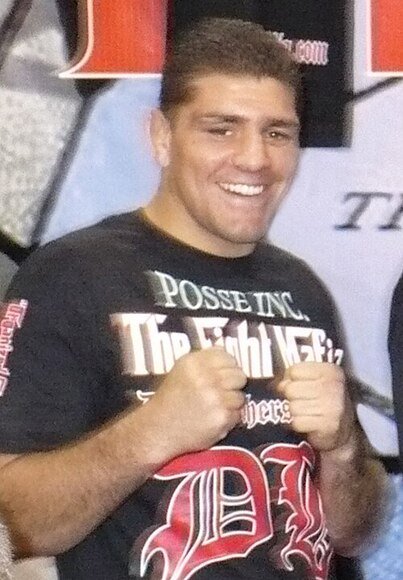
15. Nick Diaz
Dropped by Daley. Finished him before the round ended.
Diaz’s strongest moments begin after an opponent hurts him.
Against Daley in April 2011, he survived genuine finishing danger, reversed the exchange and stopped him at 4:57.
Žaromskis had also knocked him down in January 2010. Diaz avoided significant follow-up damage, resumed attacking and finished that fight in the first round.
His resistance was less consistent. Jeremy Jackson stopped him with strikes early in his career. Noons’s victory was a doctor stoppage, while the Lawler rematch ended after Diaz was dropped and declined to stand when instructed.
Diaz narrowly edges Kattar because he repeatedly regained effective offense after severe trouble. The finishes show how completely those fights turned; winning by stoppage is not an automatic advantage over Kattar’s resistance.
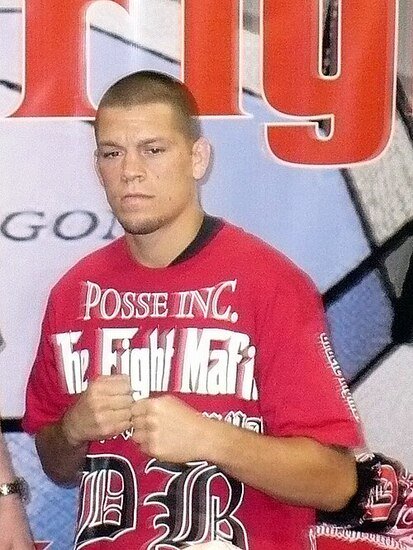
14. Nate Diaz
Three knockdowns against McGregor, then a forceful return to the fight.
McGregor dropped Diaz once in the first round and twice in the second during their UFC 202 rematch in 2016.
Diaz subsequently increased his pressure, took over much of the third and remained competitive through five rounds.
McGregor repeatedly declined to follow him to the canvas. That provided a tactical reprieve, but Diaz still had to recover enough to impose his offense.
Their first meeting adds another test. Diaz absorbed early punches, kept attacking and turned the fight in the second round before winning by submission.
Thomson’s head kick and follow-up punches produced a genuine striking stoppage. Masvidal’s victory came through a doctor stoppage for cuts.
Nick’s best comebacks produced quicker finishes. Nate takes our narrow advantage for repeatedly regaining sustained effectiveness across a longer contest.
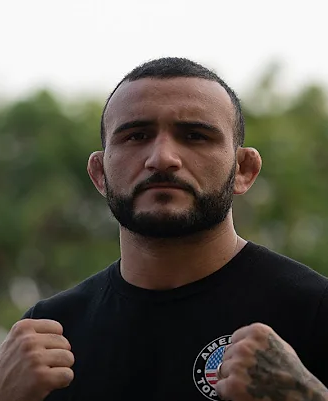
13. John Lineker
Taking return fire while continuing to attack.
Lineker’s durability was part of his offense. He could absorb punches during exchanges and keep countering.
Dodson’s movement complicated their five-round fight, but both men landed during hard exchanges. Lineker continued throwing with intent and won a split decision.
The Andrade rivalry establishes a boundary. Their first meeting ended in a no contest after an accidental groin strike. After four rounds of damaging exchanges in the rematch, Lineker’s corner stopped the contest.
Being conscious did not mean he remained fit to continue.
Lineker ranks above the Diaz brothers because his strongest performances more often show power absorbed with offense retained. His less-developed crisis-recovery record and the Andrade finish prevent a higher placement.
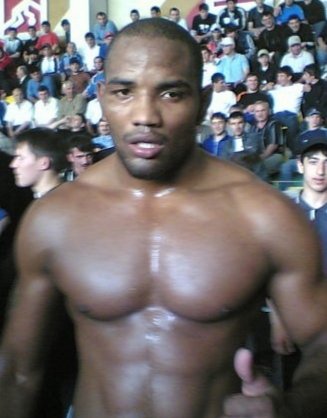
12. Yoel Romero
Costa drops him. Romero answers with a knockdown of his own.
Costa put Romero down in the opening round at UFC 241 in 2019. Romero quickly answered with a knockdown and stayed competitive through three demanding rounds.
That immediate response is his clearest recovery argument.
The Kennedy comeback needs a larger qualification. Kennedy badly hurt him near the end of round two, but the disputed stool incident provided extra recovery time before the third began.
Romero’s subsequent finish demonstrates restored offense with that assistance acknowledged.
His early knockout loss to Cavalcante remains part of the lifetime assessment.
The Costa exchange gives Romero the advantage over Lineker: he returned to dangerous counteroffense almost immediately after being hurt. His resistance was breakable, however, and one of his most famous recoveries involved unusual assistance.
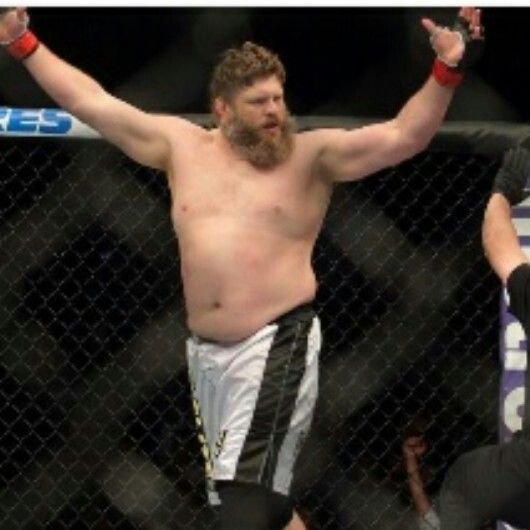
11. Roy Nelson
Damaging heavyweight punches repeatedly connected. Nelson kept fighting.
Dos Santos landed uppercuts and sustained attacks at UFC 117 in 2010. Nelson continued advancing and occasionally returned dangerous punches even as the contest moved decisively away from him.
Miocic supplied another demanding test. Nelson survived three rounds of damaging offense, although fatigue and limited responses reduce the credit for retained effectiveness.
Barnett’s five-round victory adds further exposure, with Barnett maintaining the more productive work.
Hunt exposed a decisive limit with his second-round uppercut knockout. Arlovski and Kharitonov also stopped Nelson with strikes.
Nelson ranks this high for repeated resistance to heavyweight power. He narrowly leads Romero on that quality, but prolonged reductions in offense keep him below the strongest combined resistance-and-recovery cases.
How Nelson compares with other heavyweights is examined separately in the best chins in heavyweight MMA history, using performances within that division.
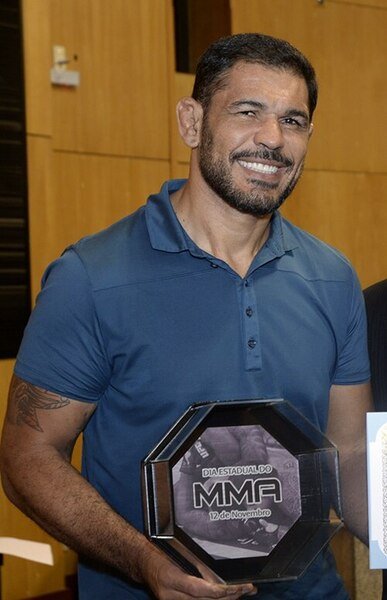
10. Antônio Rodrigo Nogueira
Put close to defeat by different opponents. Repeatedly returned to win.
Cro Cop’s head kick dropped Nogueira near the end of their opening round in 2003. Nogueira returned in the second, took the fight down and won by armbar.
Herring supplied another severe test at UFC 73. His head kick put Nogueira in first-round danger, but he hesitated to pursue the finish. Nogueira recovered and won the decision.
Sylvia adds a third major example. He dropped Nogueira early and continued finding him with punches. Nogueira stayed in the fight and won by third-round guillotine at UFC 81.
Mir stopped him with punches at UFC 92. Their later UFC 140 meeting ended through a kimura, a separate failure that does not belong in the head-strike category. Velasquez and Nelson also stopped him with strikes.
Nogueira narrowly passes Nelson because his repeated recoveries restored enough function to change the outcome. Nelson has the stronger pure-resistance argument; Nogueira has the more complete comeback record.
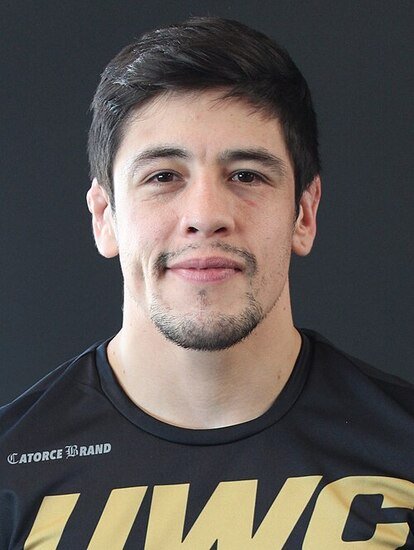
9. Brandon Moreno
Hurt by Figueiredo, still capable of firing back.
Four fights with Figueiredo gave Moreno repeated exposure to a dangerous puncher.
Their third meeting illustrates the balance. Figueiredo knocked him down late in round three, with the horn providing recovery time. In the fifth, Moreno responded to further trouble by firing back.
The Pantoja fights broaden the case. At UFC 290, Moreno continued producing effective offense through sustained, demanding exchanges.
His striking stoppage loss to Taira remains counterevidence. Moreno disputed the intervention, but that does not erase the recorded finish or make it an unconsciousness knockout.
Moreno passes Nogueira for more consistent resistance alongside effective offensive responses. His knockdowns, stoppage and concentration of evidence in recurring rivalries keep the margin narrow.
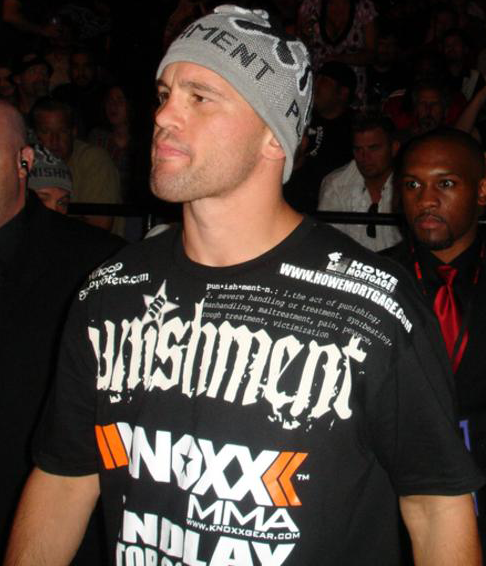
8. Chris Lytle
Fifty-four MMA fights, with his recorded KO/TKO losses coming through doctor stoppages.
Lytle’s record attracts attention, but the exchanges behind it earn his position.
Against Marcus Davis, both men repeatedly traded punches, with Lytle returning offense throughout.
His doctor-stoppage defeats to Riggs and Alves support a remarkable resistance record. They do not prove he was never badly hurt.
Ebersole showed the difference at UFC 127. A knee hurt and dropped Lytle. He survived and completed the fight, but the damage restricted his effectiveness.
Lytle takes the edge over Moreno for consistency across a broader career of genuine firefights.
Moreno offers clearer championship-level power tests. Lytle’s compromised response against Ebersole and less compelling severe-crisis recoveries keep him below the leading candidates.
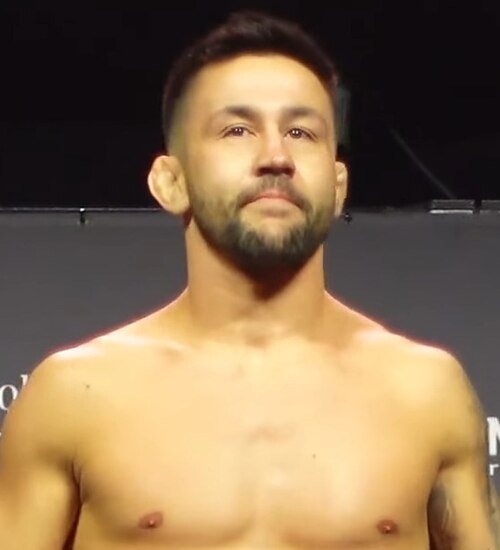
7. Pedro Munhoz
Garbrandt’s punches landed. Munhoz kept attacking.
Munhoz’s Garbrandt victory at UFC 235 in 2019 demonstrates more than knockout power.
During the closing exchanges of the first round, both men landed heavy punches. Munhoz continued attacking through the return fire before securing the finish.
His wider career adds demanding contests against high-level opposition without a recorded KO or TKO defeat.
That record strengthens the pattern, but the contacts and retained offense carry the argument.
Severe-crisis recovery is less established. An opponent’s failure to finish him does not prove repeated escapes from the brink.
Munhoz passes Lytle for resistance demonstrated in concentrated, high-level bantamweight exchanges. Lytle has greater career volume; the quality of those tests decides our comparison.
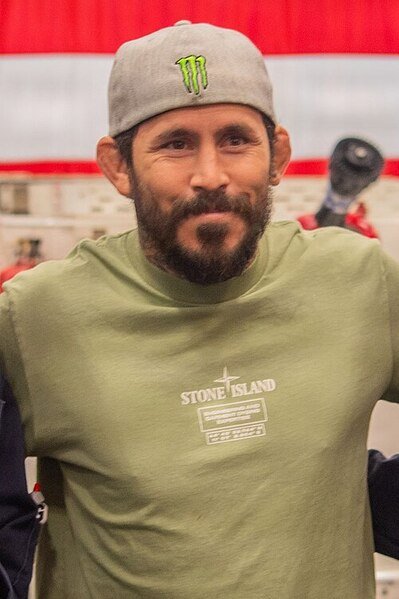
6. Marlon Vera
O’Malley’s knee lands. Vera remains standing, but the damage is unmistakable.
Vera’s UFC 299 rematch with O’Malley offers exceptional resistance without becoming an exceptional competitive performance.
O’Malley repeatedly landed precise punches and a forceful stepping knee. Vera completed five rounds without an officially recorded knockdown.
The 230 significant strikes O’Malley landed include all targets. The knee is more revealing than the total because it identifies a severe impact and Vera’s immediate response.
Standing did not mean escaping the consequences. Vera struggled to answer effectively for long stretches and lost decisively.
He edges Munhoz for the severity and duration of his strongest tests. Munhoz offers a better example of immediate offensive effectiveness against Garbrandt. Vera’s limited responses keep him outside the top five.
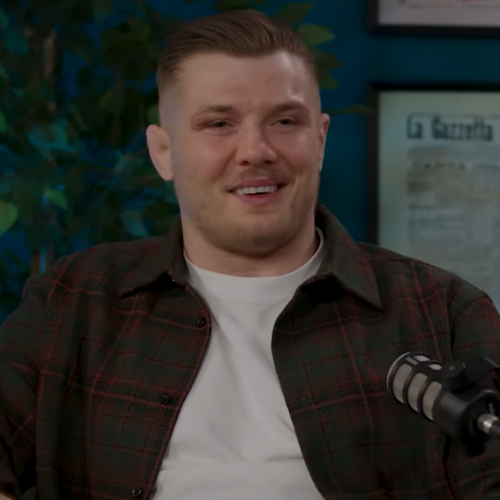
5. Marvin Vettori
Costa’s head kick lands. Vettori survives the attack and returns to winning work.
Costa’s second-round head kick affected Vettori during their 2021 fight.
Vettori defended through the danger without being dropped, resumed effective work and won the five-round decision.
The contest took place at light heavyweight after Costa’s weight issues. It counts here because this is a career-wide assessment.
Cannonier supplied another kind of test. Vettori endured sustained, damaging offense without being stopped, but his influence on the contest diminished substantially.
Against Costa, resistance supported renewed, winning offense. Against Cannonier, endurance was extraordinary while effectiveness declined.
Vettori passes Vera because the Costa performance more clearly combines meaningful power absorbed with restored offensive influence. His severe-knockdown recovery record is less extensive than those of the strongest combined cases.
His position among the best chins in middleweight MMA history rests on a narrower set of fights: the Cannonier test counts, while the Costa performance at light heavyweight does not.
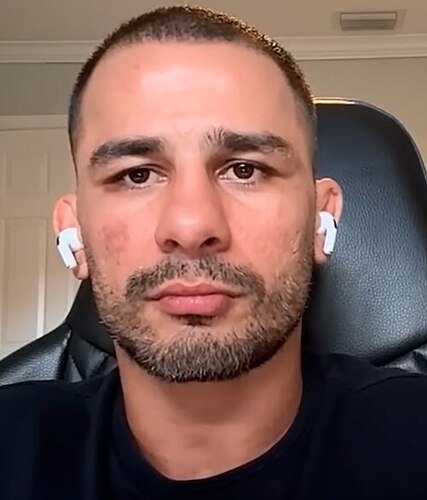
4. Alexandre Pantoja
Damaging championship exchanges did not immediately remove his ability to respond.
The Moreno fights repeatedly tested Pantoja’s ability to take meaningful punches while continuing to create offense.
Erceg added another demanding examination at UFC 301. Punches and cutting elbows challenged Pantoja, yet he kept finding takedowns and enough effective work to retain his title.
Grappling reduced exposure and supplied recovery opportunities. It also demonstrated purposeful responses under pressure.
The Van rivalry adds an important distinction. Their first meeting ended through an injury to Pantoja’s arm. The September 2026 rematch ended in a unanimous-decision victory for Van.
Pantoja narrowly leads Vettori for repeated effective responses through championship exchanges. Grappling protection and the Van rematch make fourth one of our most debatable placements.
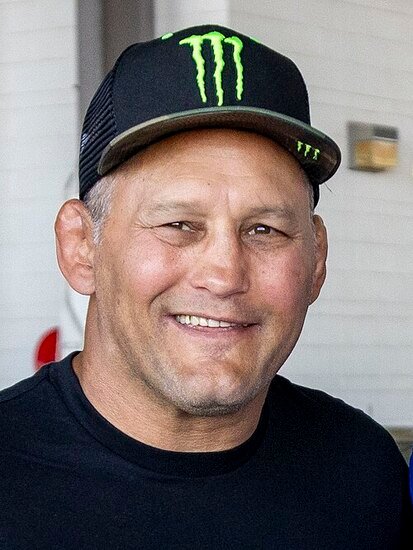
3. Dan Henderson
Dropped early, then capable of producing the winning attack.
Rua dropped Henderson in both opening rounds of their 2014 rematch. Henderson survived, stayed dangerous and delivered the third-round finish.
Cavalcante supplied another recovery-to-victory test. Henderson was dropped early but recovered and stopped him to win the Strikeforce light-heavyweight championship.
Against Fedor at heavyweight, Henderson scrambled into position and landed the uppercut that changed the fight. Fedor’s greater size earns no automatic bonus; the attack and Henderson’s response supply the credit.
Belfort’s striking finishes and Mousasi’s stoppage establish clear lifetime limits.
Henderson outranks Pantoja for the broader combination of meaningful tests and recovery after knockdowns. His repeated winning responses earn third; decisive striking failures separate him from our top two.
His light-heavyweight performances receive a separate assessment in the best chins in light-heavyweight MMA history, where the comparison focuses on that division.
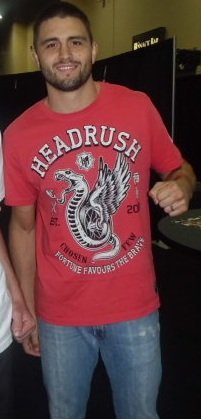
2. Carlos Condit
Hurt and dropped, then back to competitive offense.
Condit’s best case is a repeated pattern.
Ellenberger put him in serious trouble early. Condit survived, restored his working offense and went on to win a competitive fight.
Hendricks supplied another demanding power test. Lawler added five rounds of damaging exchanges in which Condit repeatedly remained capable of answering and creating offense.
Being dropped limits his resistance claim. Returning to effective fighting strengthens his recovery case.
The Woodley finish requires a separate classification: the contest ended following a knee injury rather than a clean head-strike knockout.
Condit passes Henderson for the consistency of his recovery to competitive offense, alongside fewer decisive head-strike failures.
Henderson has the broader cross-divisional sample. Condit’s repeated return to effective fighting makes him the strongest challenger for first place.
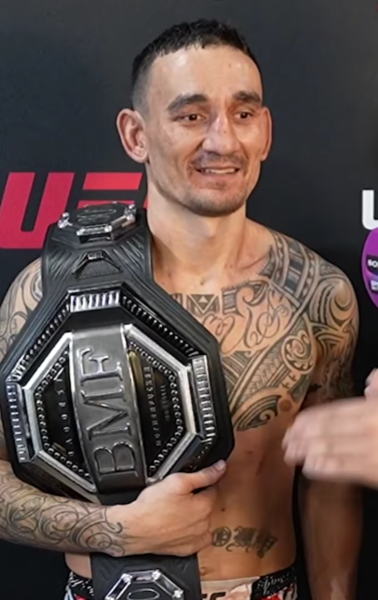
1. Max Holloway
Years of resistance, followed by a last-second finish against Gaethje.
Holloway’s reputation grew from a long run in which clean punches rarely produced a knockdown, let alone a finish.
Poirier supplied a demanding test in 2019. His punches visibly troubled Holloway early, but Holloway kept attacking and became more competitive as the fight progressed.
At UFC 300, Gaethje’s fourth-round punch appeared to drop him. The official statistics did not register a knockdown, although Holloway later said Gaethje deserved credit.
Holloway returned to effective fighting and knocked Gaethje out in the final second.
Topuria’s third-round knockout remains his clearest resistance failure.
Oliveira’s March 2026 decision victory showed that Holloway could be controlled across five rounds. His July victory over McGregor ended through McGregor’s knee injury and supplies little chin evidence.
Condit has the stronger collection of dramatic recoveries. Holloway earns our narrow advantage for combining resistance with sustained offense across repeated demanding tests.
Why Some Famous Names Missed Out
Frankie Edgar is the hardest omission. His Maynard recoveries belong among MMA’s clearest examples of returning from severe trouble to effective offense. His later knockout losses weigh heavily in a career-wide assessment.
Fedor’s recoveries against Fujita and Rogers deserve serious credit. His striking defeats—including the simultaneous-knockdown sequence against Mitrione—weaken the overall balance.
Cro Cop and Liddell also have meaningful durability achievements alongside decisive striking failures.
Silva’s defensive brilliance reduced clean-impact exposure across much of his peak. His surviving exchanges count; avoided attacks do not.
These omissions reflect the balance used here rather than a claim that the fighters had weak chins.
The Rankings at a Glance
| Rank | Fighter | Strongest evidence | Key limitation |
| 1 | Max Holloway | Resistance with sustained offense | Topuria’s decisive knockout |
| 2 | Carlos Condit | Repeated recovery to competitive offense | Knockdowns limit resistance |
| 3 | Dan Henderson | Broad exposure and winning recoveries | Several striking stoppages |
| 4 | Alexandre Pantoja | Effective responses through championship exchanges | Grappling protection and the Van rematch |
| 5 | Marvin Vettori | Clean-power resistance and endurance | Diminished effectiveness against Cannonier |
| 6 | Marlon Vera | Resistance to severe impacts | Long stretches of limited offense |
| 7 | Pedro Munhoz | Resistance while attacking in close exchanges | Less-established crisis recovery |
| 8 | Chris Lytle | Consistency across genuine firefights | Ebersole badly compromised him |
| 9 | Brandon Moreno | Repeated power tests with offense retained | Knockdowns, stoppage and recurring rivals |
| 10 | Antônio Rodrigo Nogueira | Repeated recoveries producing victories | Recovery assistance and striking stoppages |
| 11 | Roy Nelson | Repeated resistance to heavyweight power | Knockout losses and limited responses |
| 12 | Yoel Romero | Immediate counteroffense after being hurt | Additional recovery time against Kennedy |
| 13 | John Lineker | Taking power while continuing to counter | Andrade’s accumulation stoppage |
| 14 | Nate Diaz | Sustained effectiveness after knockdowns | Tactical recovery opportunities against McGregor |
| 15 | Nick Diaz | Same-round recoveries producing finishes | Less-consistent resistance |
Have Your Say
Holloway’s combined resistance and sustained offense narrowly outweigh Condit’s clearer crisis-recovery record in our assessment.
The Diaz–Daley comeback brings the question into focus. The punch exposed a vulnerability; the response revealed an exceptional ability to recover.
Both belong in the judgment.
Disagree with another placement? Tell us who you’d move and which fight convinced you.
Sources and Further Reading
- Nick Diaz–Daley: rivalry retrospective
- Holloway–Gaethje: the disputed knockdown
- Holloway–Oliveira II: official UFC results
- Holloway–McGregor II: official UFC results
- Henderson–Rua II: comeback and finish
- Henderson–Cavalcante: Strikeforce title-fight report
- Van–Pantoja II: official scorecards
- Nogueira–Sylvia: UFC footage
- Nelson–dos Santos: UFC’s fight report
- Jones–Gustafsson: detailed UFC retrospective
- Jackson–Henderson: round-by-round coverage