The deception, control and counters that made basketball’s greatest dribblers so difficult to contain
A defender takes half a step back. Press too closely, and the crossover might leave him trailing. Reach for the ball, and a change of direction could turn that gamble into a foul. Behind him, a teammate edges toward the lane, leaving someone else more space.
The ball handler has already changed the possession.
Great handles create those compromises. They open driving lanes, produce shooting room and draw defenders away from teammates. They also rescue possessions: escaping pressure, backing out of congestion or slowing the action until an offense regains its shape.
The best handle repeatedly makes the defense give something up—and keeps another answer available when the first route closes.
A spectacular crossover can achieve that in one movement. A patient sequence can achieve it over several. What matters is what the dribble makes possible and how dependably the player retains control.
How We Judged
Exceptional ball handling combines control and deception to repeatedly create or preserve useful opportunities against a defense.
| Criterion | What we assess |
|---|---|
| Productive creation | Beating defenders, creating shooting space, opening passing lanes and drawing fouls through the dribble |
| Control under pressure | Protecting the ball, escaping congestion and managing pace without surrendering the attack |
| Deception and counters | Convincing changes of direction and speed, connected moves and responses when the first route closes |
Productive creation leads the comparison. Control determines how dependably a player can pursue it; counters determine what remains available when the defense adjusts. Additional moves matter when they provide additional solutions.
A clean shooting window counts even when the shot misses. Drawing help counts even when the teammate fails to finish. Shooting accuracy and passing execution receive no independent credit here.
The threat of the handle matters, too. A defender giving ground or a helper moving early can concede space before the attacker drives. Those reactions must be considered alongside shooting threat, screens and physical ability.
Lost balls, forced pickups and prolonged dribbling that leaves the offense no better positioned count against a player. Protecting the ball without threatening anything is a different task from protecting it while breaking down a defense.
In close comparisons, we favor the broader set of dependable solutions across different defensive situations. Complexity earns its place through results.
Players are assessed at their demonstrated NBA best through the 2025–26 season. This is an editorial ranking supported by game examples and historical accounts. The linked plays illustrate techniques; they do not constitute a uniform statistical audit.
Comparing Different Eras
Ball handlers faced different restrictions on both sides of the ball.
The stricter enforcement of restrictions on perimeter hand-checking beginning in 2004–05 reduced defenders’ ability to impede a dribbler with their hands. That changes how we compare the contact Isiah Thomas navigated with the conditions facing later guards.
Ball placement matters, too. The NBA rulebook prohibits putting the hand underneath the ball to carry it from one point to another, or to pause it and then continue dribbling.
A hesitation is not automatically a carry. Changing body speed or delaying the next attack can deceive a defender while the dribble remains legal. The relevant question is how the hand controls the ball during that movement.
Historical players must be considered within the enforcement of their time, rather than assuming every modern hesitation would have received the same treatment decades earlier.
Spacing creates another difference. More room can expose an individual defender, while a crowded lane demands tighter protection and quicker decisions.
These conditions inform the comparison. They do not produce an automatic bonus for either older or modern players.
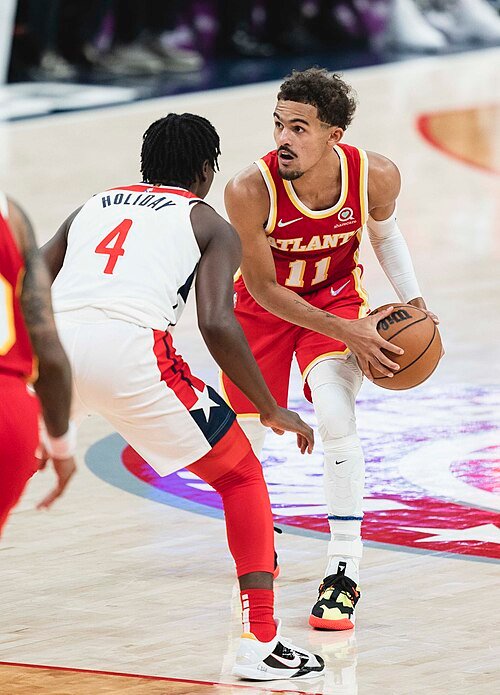
15. Trae Young
Signature craft: hesitation, deceleration and keeping a defender behind him.
Young’s most troublesome move is sometimes a reduction in speed.
After clearing a screen, he can slow down with the pursuing defender behind him. Keeping the ball ahead of his body delays that defender’s return while allowing Young to approach the big man at his own pace.
Against Milwaukee in the 2021 conference-finals opener, Brook Lopez retreated as Young entered the paint, protecting against the lob to Clint Capela. John Schuhmann’s film study examines that defensive dilemma.
The screen helped create the initial situation. Young’s handling sustained it: continue forward, pause or accelerate again while the defender ahead remained responsible for two threats.
Strong pressure can still push him backward or force an early release. His fifteenth place rewards the way his dribble connects penetration with patient probing.
His skill is making that uncomfortable interval last.
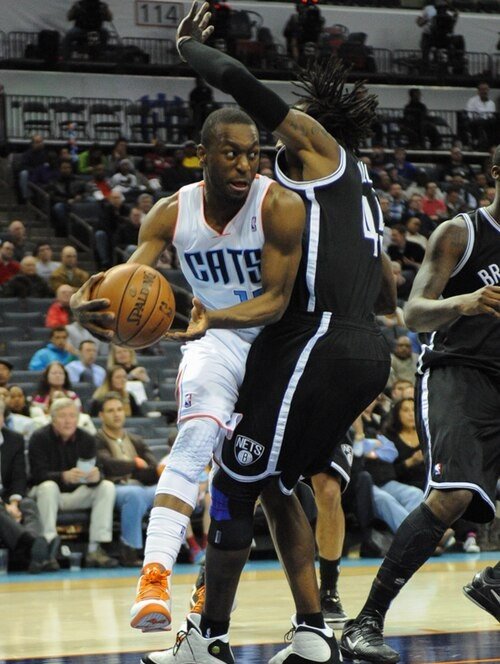
14. Kemba Walker
Signature craft: the low crossover into a drive or pull-up.
Walker could suggest a direction with his shoulders, then send the ball across his body as the defender shifted.
The low bounce shortened the opportunity to reach. His upper body supplied the suggestion; his feet prepared the exit. A defender moving backward could concede a jumper, while one stepping forward risked being beaten beside the hip.
His March 27, 2013 crossover against Orlando created room for a pull-up.
The separation depended on a credible first direction. Without it, the defender could wait for the crossover rather than respond to the drive.
Walker edges Young through the sharpness of his individual direction changes and the alternatives connected to them. Young offers more prolonged manipulation of the help defense.
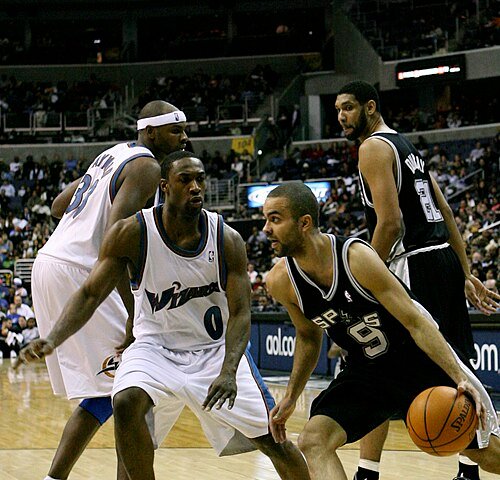
13. Tony Parker
Signature craft: changes of speed and the live-dribble spin.
Parker’s speed attracted attention. His ability to redirect it made the handling special.
A straight drive asks whether the defender can stay in front. A spin changes the question while the defender is still answering it. Parker could turn his back toward the contest, shield the ball and emerge on another line.
An April 30, 2014 playoff sequence against Dallas captures that spin through the lane.
The bounce had to remain available through the turn, and the exit had to lead somewhere useful. A spin that ends against another defender has solved little.
Parker ranks above Walker for handling that continued working after penetration began. His craft addressed the next defender without abandoning the attack.
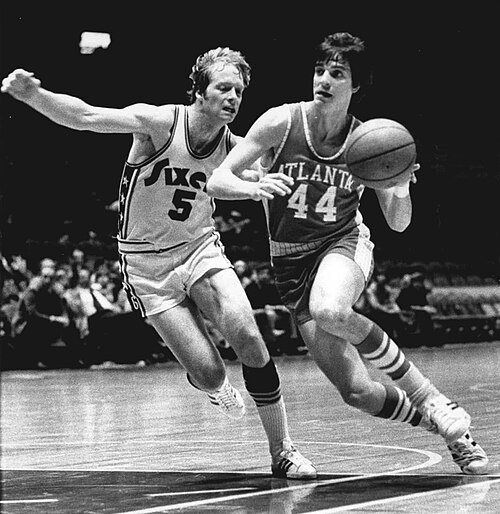
12. Pete Maravich
Signature craft: deceptive direction changes and either-hand combinations.
Maravich’s passing often receives the attention. His handling created some of the uncertainty that made those deliveries possible.
His repertoire included between-the-legs dribbles with either hand. That coordination allowed him to change the ball’s position while keeping his body prepared to continue the attack.
The functional question is what those movements did to the defender. A change of hand could protect the bounce; a convincing body fake could make the opponent prepare for a direction Maravich remained free to abandon.
Nate Archibald’s account of facing Maravich and Isiah Thomas speaks directly to that uncertainty: “You didn’t know where they were going.”
The NBA’s career footage provides the accompanying visual reference. The relevant actions are the live dribbles before the pass or shot.
Maravich takes the place above Parker through greater deceptive variety. Parker’s protection during penetration makes that a close call; the surviving evidence also makes this one of the ranking’s less certain placements.
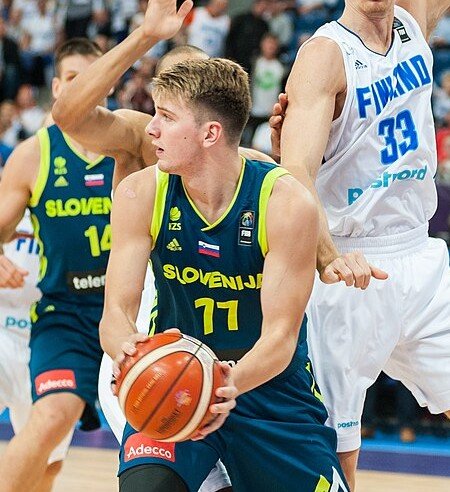
11. Luka Dončić
Signature craft: protected hesitation and slowing down after gaining a step.
Dončić can make a defender lose the exchange without outrunning him.
He changes speed, places the defender beside or behind his hip and moves the bounce to the protected side. His frame makes reaching across him difficult; his timing prevents the defender from simply sliding back into the play.
An NBA film study identifies his hesitation against LaMarcus Aldridge following a switch. The screen establishes the matchup. Dončić then tests whether the bigger defender will retreat, step forward or turn his hips too early.
His passing threat adds another decision for the help defense. Approaching the ball can expose a teammate; remaining with that teammate allows Dončić to continue probing. The handling contribution lies in sustaining that choice while protecting the dribble.
Strength supports the protection. The skill is adjusting the bounce, direction and speed without surrendering the next attack.
He leads Maravich through sustained management of the defender’s position.
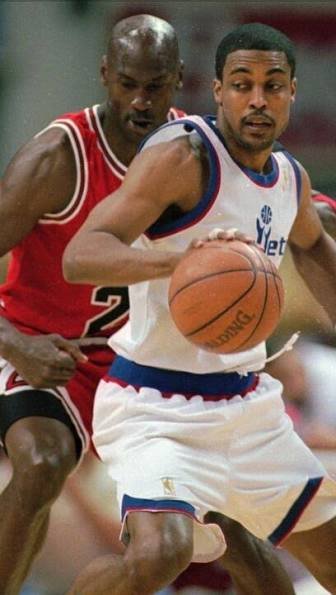
10. Rod Strickland
Signature craft: shielded penetration and changes of direction between defenders.
Strickland’s handle deserves to be examined before the acrobatic finish arrives.
His dribble could take him into a crowded area while retaining a way to turn out of it. Keeping his body between the ball and a reaching opponent allowed him to redirect rather than gather prematurely.
The March 12, 1997 sequence against Vancouver captures his spin-and-handle craft.
His distinctive quality was turning within congestion while keeping another route available. A defender who stayed with the initial drive still had to account for a change of angle before Strickland picked up the ball.
He edges Dončić through close control during abrupt changes of direction. His finishing was memorable, but the handling had already done demanding work before the ball left his hands.
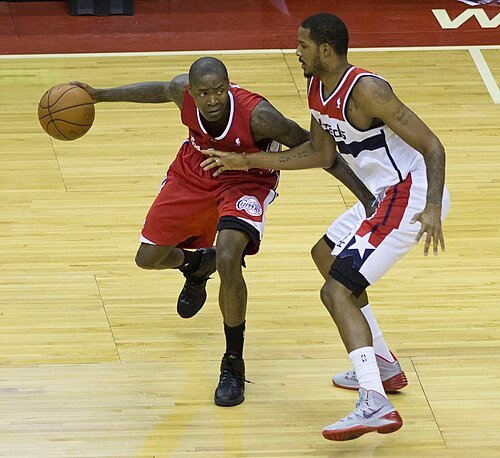
9. Jamal Crawford
Signature craft: the shake-and-bake and connected crossover combinations.
Crawford could make a defender react twice before the attack settled into one direction.
His shake-and-bake linked a behind-the-back transfer with a further redirection. The first movement encouraged a response; the next exploited the defender’s attempt to follow it.
Crawford discusses the version against Deron Williams in his NBA mailbag.
Strickland’s case rests on protected penetration and sharp turns inside congestion; Crawford moves above him through greater depth in connected deception. A hesitation can become a crossover, retreat or another change of direction without an obvious stopping point.
The players above Crawford connect their deception more completely with penetration, pressure escapes or management of the developing attack. His combination depth nevertheless gives him a substantial case higher up.
His best sequences make a defender’s recovery the setup for another move.
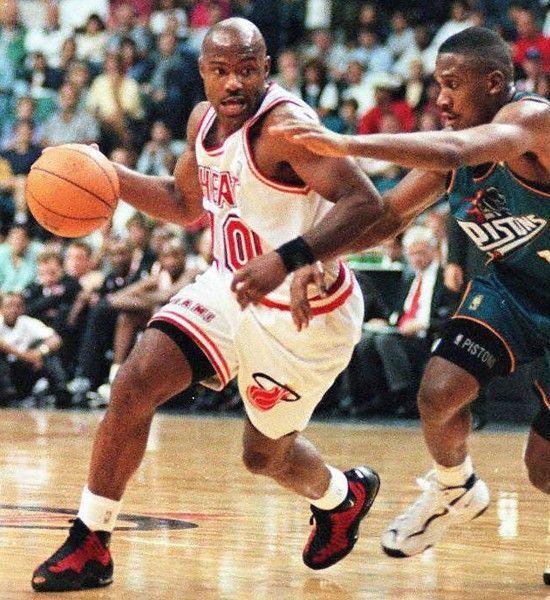
8. Tim Hardaway
Signature craft: the UTEP two-step and killer crossover.
The first movement made the second dangerous.
Hardaway’s between-the-legs setup led into the crossover that became his signature.
Its mechanics explain the effect. The opening movement must look like the beginning of a real drive. Once the defender shifts to contain it, the ball crosses toward the space that response has exposed.
The counter gives the familiar sequence another layer. A defender waiting too aggressively for the crossover can surrender the original direction. Hardaway does not need a new move every time; he needs the same preparation to support more than one ending.
That economy earns him the place above Crawford. Hardaway turns a short sequence into an urgent problem about which side the defender can safely protect.
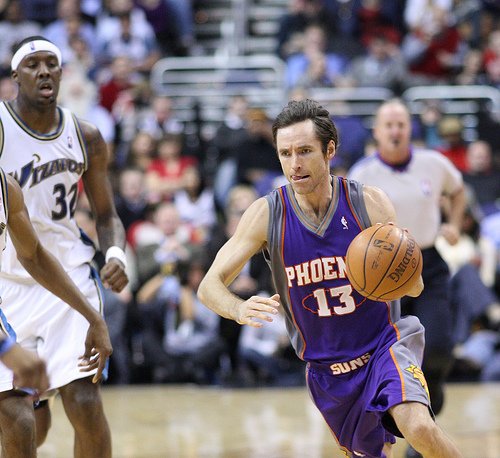
7. Steve Nash
Signature craft: keeping the dribble alive beneath the basket.
Most drives end at the rim, with a pass or with a retreat. Nash could continue underneath.
In the April 15, 2025 episode of Mind the Game, “How Steve Nash Changed Basketball,” he explained that he would circle below the basket and “keep my dribble alive.”
That decision changes the geometry. The original defender is pursuing from behind or across the baseline. A big man who follows the ball may leave a teammate near the rim. A perimeter defender who turns his head can lose track of a cutter.
Nash’s passing completed many of those possessions. His handle kept the choices available long enough to discover which defender would move.
He ranks above Hardaway because his dribble could make several defenders respond within one attack. Reaching the paint did not force him to accept the first opportunity or give up the ball.
His patience remained an attacking action.
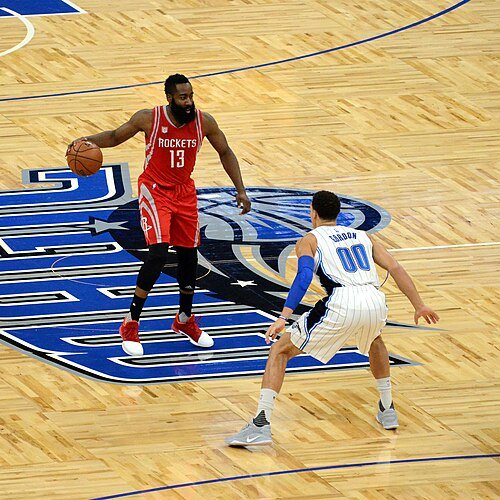
6. James Harden
Signature craft: rhythm changes into the crossover, drive or retreat.
Wesley Johnson fell. Harden still had the ball and time to look at the space he had created.
The February 28, 2018 sequence against the Clippers became one of his most recognizable handling moments.
The fall is the spectacle. The separation is the handling result.
Harden’s wider craft lies in making the same preparation support opposite directions. Repeated bounces establish a rhythm. A hesitation interrupts it. Lean forward to close the distance and the drive becomes available; retreat to protect the basket and shooting space appears.
His handling also creates foul pressure. A direction change can leave the defender recovering beside him, where reaching or moving across his path risks illegal contact.
The dribble earns credit for creating that positional difficulty. A whistle alone does not establish a superior move.
Harden leads Nash in direct isolation creation. He can manufacture an immediate opening while retaining the dribble to retreat, change direction or attack again.
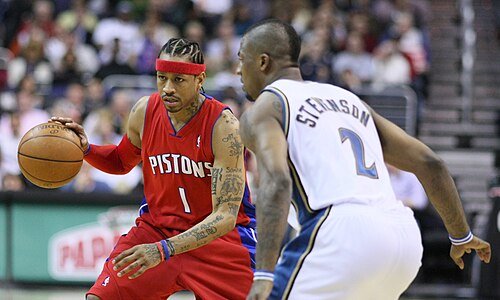
5. Allen Iverson
Signature craft: the wide crossover after a convincing first direction.
Michael Jordan did not disappear from the play.
Iverson’s March 12, 1997 crossover created room for a jumper, but Jordan recovered to contest.
That detail makes the sequence more instructive. A successful move does not require a fallen defender or an uncontested finish. It needs to change the defender’s position enough to make the next action available.
Iverson’s deception began above the ball. His head, shoulders and first step made the suggested direction dangerous. The crossover exploited a response his body had already encouraged.
Acceleration amplified the move. Controlling a wide bounce while changing speed allowed him to use that athletic advantage without leaving the ball behind.
The threat also imposed a precaution. Giving ground reduced the risk of being beaten immediately, but allowed Iverson more space to organize his next attack. Trying to take that space away required the defender to accept the risk of the reversal.
The wide exchange carried demands of its own: the ball had farther to travel, and the next bounce had to arrive where his accelerating body could use it. The quality lay in coordinating that exposure with the defender’s movement.
His edge over Harden rests on the force of his initial deception and the penetration it could produce. Iverson’s handle made the first defensive decision unusually urgent.
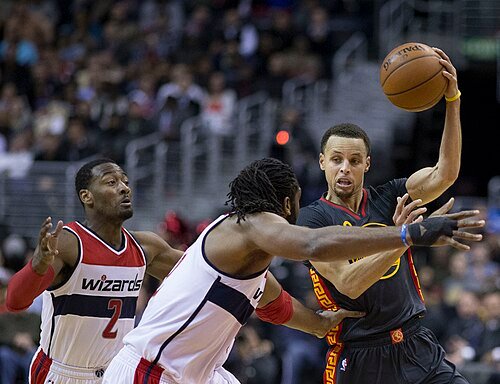
4. Stephen Curry
Signature craft: connected changes of direction without ending the dribble.
Curry’s handle is easiest to appreciate when the first escape does not finish the job.
He can redirect the ball behind his body, change hands again and emerge ready to attack. Those movements require his feet to keep finding balance while the bounce follows a different path. That coordination also features in 10 athletes whose hand-eye coordination was almost unfair, where Steve Kerr singles out Curry’s ability.
The sequence against Chris Paul on March 31, 2015 remains the familiar example.
Its broader lesson is continuity. A defender closing one direction has not necessarily forced Curry to pick up the ball. Another transfer can reopen the floor.
His shooting changes how defenders approach him, so its influence cannot be cleanly removed from real possessions. The handling assessment begins with his response: protecting the bounce, changing direction and escaping the pressure without gathering. His case rests on those connected actions, rather than crediting his handle for every concession his jumper demands.
Curry leads Iverson through the depth of his combinations after the initial direction change. He can keep searching without making every correction a complete restart.
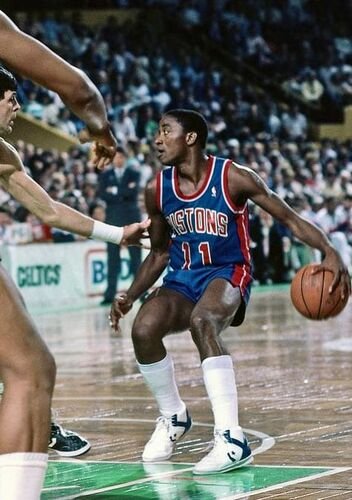
3. Isiah Thomas
Signature craft: low direction changes and renewed attacks through traffic.
Isiah Thomas could enter a gap without making the rest of the possession depend on it staying open.
The Pistons guard’s low bounce left the ball less exposed to reaching hands. A change of pace tested the first defender; a change of hand or direction helped address the next. He could interrupt his own acceleration without ending the dribble.
Curry offers more intricate perimeter combinations. Thomas ranks above him through his balance of penetration, protection through contact and redirection once help arrives.
That is the bridge between breaking down the first defender and managing the rest of the possession. The initial breach matters less if help immediately forces a pickup.
Thomas’s drives-and-playmaking collection is best approached with attention to the ball before the final delivery or finish. The key question is how he remains able to change the play while defenders converge.
His comparison with modern handlers must account for the contact and spacing of his era. A shorter-looking sequence can still demand exceptional coordination when the defender stays physically connected to the drive.
Thomas could initiate penetration and remain equipped for the traffic that followed.
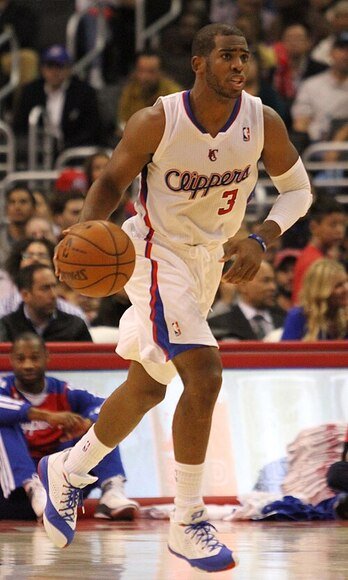
2. Chris Paul
Signature craft: hesitation, retreat and precise re-attack.
Paul can make a defender hurry without hurrying himself.
A hesitation brings the opponent forward. A low crossover changes the line. If the defense closes it, Paul can retreat with the ball protected and begin again from a better angle.
The retreat is part of the attack. Its value lies in reopening space while keeping the defender responsible for another acceleration.
Paul also uses deceleration after gaining a step. Keeping an opponent behind his body delays that defender’s return to the play. Moving laterally can then make the big man choose between approaching the ball and remaining near the basket.
A 2017 playoff crossover against Utah illustrates the more immediate version: a direction change creates the driving route before the finish.
Thomas presents a powerful combination of penetration and adjustment through traffic. Paul’s edge lies in managing the space around those actions: protecting the bounce, controlling the pursuing defender and retreating early enough to keep another attack available.
His strongest handling sequences can also be economical. He does not need the first action to fail before demonstrating control. Ball placement, timing and a well-chosen change of pace can prevent the defender from establishing pressure in the first place.
That economy makes his case for first serious. A shorter sequence that produces a clean lane can be as valuable as a difficult escape.
His precision earns second. He can break the defender’s positioning, preserve the ball and reopen the attack without allowing patience to become inactivity.
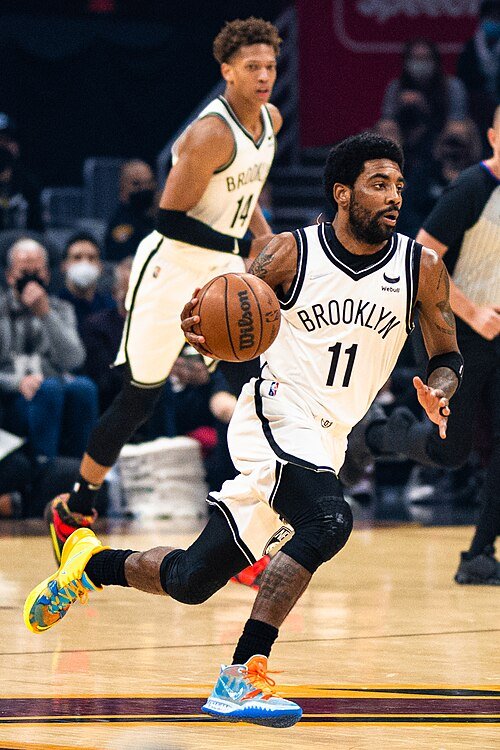
1. Kyrie Irving
Signature craft: either-hand combinations and immediate counters in confined space.
Irving’s strongest argument is the range of actions he can connect while continuing to threaten the basket.
Against Milwaukee on October 26, 2017, he combined his dribbling with a spin in the lane and a floater. The archived sequence illustrates his ability to redirect an attack before gathering.
The technical challenge is maintaining several things at once: a protected bounce, balance through the turn and a useful exit. A spin has little value if the ball becomes exposed or the attacker emerges with nowhere to go.
Irving’s combinations address that problem through either hand. He can change the height and timing of the bounce, redirect behind his body or retreat before attacking again. The next movement does not require the possession to return to its original setup.
That is usable variety. An extended combination matters when it moves the defender, removes the ball from a reach or creates a route that was previously closed.
His 2020–21 handling collection offers further examples across different situations. The common thread is retaining an attacking action while changing the ball’s path.
During the 2017 Finals, Warriors assistant Ron Adams described him as “a nightmare to guard,” in Steve Aschburner’s June 12 report. That assessment concerns Irving’s complete offensive threat; the handling case rests on the actions that create his access to those opportunities.
Paul remains the strongest challenger through economy and possession management. Irving takes first through the combination of direct creation, close control and connected alternatives across different defensive situations.
His advantage is clearest when a defender anticipates one action and must immediately defend another.
The Strongest Argument Against Kyrie at No. 1
If productive handling leads the ranking, why does Paul’s possession management not put him first?
It could.
Paul combines separation, protection and deliberate changes of pace with exceptional economy. His dribble can prevent a possession from becoming difficult in the first place. That deserves as much consideration as escaping pressure after it arrives.
Irving’s advantage is the range of responses he can execute while continuing to threaten the basket. Either-hand combinations let him change direction and attack again without requiring a full reset.
The tiebreaker is the broader set of dependable solutions across different defensive situations. This ranking gives Irving the edge in that range, particularly when space contracts and another direction change is required.
Paul makes the decision difficult because a shorter sequence can produce an equally valuable result. Extra moves earn credit only when they preserve or create something the simpler action cannot.
Honorable Mentions and the Cutoff
Pace and Pressure
Jalen Brunson and Shai Gilgeous-Alexander challenge the cutoff through protected changes of pace and controlled penetration. Their live dribbles are the relevant actions here, assessed separately from the pivots and finishing adjustments that follow the gather.
Rajon Rondo offers a different case through navigation, pressure escapes and keeping the ball available while the defense moves.
Crossovers and Creative Combinations
Deron Williams and Kenny Anderson deserve direct comparison with Walker. Williams brings protection through contact; Anderson brings sharp directional deception and rapid exits.
Steve Francis, Stephon Marbury and Baron Davis combine attacking deception with the ability to protect the dribble. Their cases require attention to ball placement and counters alongside strength and explosiveness.
Jason Williams and Rafer Alston offer inventive handling, but their strongest NBA possessions must support the comparison independently of passing highlights or playground reputation.
Historical Challengers
Bob Cousy, Earl Monroe and Nate Archibald are serious candidates. Cousy’s elusive movement, Monroe’s spins and Archibald’s penetration warrant examination on their own terms.
Historical influence earns no separate ranking credit. Cousy’s importance to the development of the craft therefore does not automatically establish a place above the selected players.
Uneven surviving footage reduces confidence in precise cross-era placements; it does not establish a technical deficiency.
Other Substantial Cases
John Wall combined speed with demanding ball control. The assessment separates his dribbling adjustments from the acceleration supporting them.
Magic Johnson, Michael Jordan and Damian Lillard each used handling to support exceptional offense. Their exclusion reflects this ranking’s preference for greater depth across the combined tasks of live-dribble creation, protection and counters.
The bottom of the list remains more contested than the top. Young and Walker receive the edge here, but the strongest challengers have credible cases under the same criteria.
The Handles at a Glance
| Rank | Player | Technique to watch |
| 15 | Trae Young | Deceleration with a defender trailing |
| 14 | Kemba Walker | Low crossover into a drive or pull-up |
| 13 | Tony Parker | Live-dribble spin through the lane |
| 12 | Pete Maravich | Deceptive either-hand direction changes |
| 11 | Luka Dončić | Protected hesitation and re-attack |
| 10 | Rod Strickland | Shielded penetration into a spin |
| 9 | Jamal Crawford | Shake-and-bake combination |
| 8 | Tim Hardaway | Between-the-legs setup into the killer crossover |
| 7 | Steve Nash | Continuing beneath the basket |
| 6 | James Harden | Rhythm change into crossover or retreat |
| 5 | Allen Iverson | Wide crossover after a convincing first direction |
| 4 | Stephen Curry | Connected direction changes under pressure |
| 3 | Isiah Thomas | Low crossover and redirection through traffic |
| 2 | Chris Paul | Hesitation, retreat and controlled re-attack |
| 1 | Kyrie Irving | Either-hand combinations into immediate counters |
Watch the Next Bounce
Hardaway makes the defender respect the first direction. Nash continues beneath the rim. Paul backs out with another attack available. Irving finds a further change of direction inside the space the defense has left.
Watch what the dribble makes the defender do. Does he retreat, turn his hips or call for help? If he recovers, can the attacker protect the ball and make him commit again?
A great move can win a moment. An exceptional handle keeps shaping what happens next.
Voted “Someone else”? Name your pick in the comments—and tell us what his handle created against a defense.