
From canceled fights and forfeited pay to lost championships, these fighters repeatedly struggled to make their contracted weight
Charles Oliveira beat Justin Gaethje in the first round at UFC 274. He left without the championship he had brought into fight week. The problem had come a day earlier, when he stepped onto the scale half a pound above the lightweight title limit.
Most weight misses cost a share of a purse rather than a world title. A fighter might surrender part of his purse, reach an agreement with his opponent and compete the following evening. But when it happens repeatedly, making weight can become almost as much a part of the fighter’s story as anything he does inside the cage.
John Lineker moved up a division and still encountered problems. Anthony Johnson’s first UFC run ended after another substantial miss. Aspen Ladd had three UFC fights canceled before losing her place on the roster.
These were talented fighters whose opportunities kept running into the same obstacle. Sometimes moving up helped. Sometimes the difficulties followed them. A missed weigh-in can decide what a victory is worth before the fight begins.
Other fighters approached the scales with comparatively little weight to lose. 15 MMA fighters who barely cut weight—or didn’t cut at all examines those contrasting experiences, including champions competing close to their reported everyday size.
How We Ranked and Counted Them
In UFC title fights, competitors must reach the exact division limit; non-title bouts generally allow an extra pound. An overweight bout may continue at an agreed catchweight, often with a purse deduction, but the opponent’s agreement does not override a medical or regulatory refusal. ONE’s weight limits and hydration requirements differ, as explained in Lineker’s entry.
The order balances recurrence, the size of the misses and their consequences, giving particular weight to lost championships, canceled opportunities and patterns that continued across divisions or promotions. These are documented cases, not exhaustive career totals.
An official overweight reading counts even if the fight is subsequently canceled. A withdrawal without an official attempt is noted separately, as is a change to an agreed weight. An initially overweight attempt corrected within the permitted time is not counted as a final miss. A difficult cut alone is not a missed weigh-in.

15. Cynthia Calvillo
Cynthia Calvillo could barely stand on the scale before her fight with Poliana Botelho in November 2018. She weighed 118 pounds, two above the allowance for a non-title strawweight bout. Doctors examined her and cleared her to compete.
The following evening, she submitted Botelho in the first round. It was a successful performance inside the cage, although the weigh-in had given people something else to remember.
A year later, the gap was larger. Calvillo arrived at 120.5 pounds for her December 2019 fight with Marina Rodriguez—4.5 pounds over the permitted limit. Calvillo forfeited 30 percent of her purse to Rodriguez, and the fight ended in a majority draw.
Calvillo subsequently moved to flyweight. Leaving the 115-pound division offered an alternative to another difficult strawweight cut, but her results eventually brought her back down. By April 2024, she was trying to end a five-fight losing streak when she was booked against Piera Rodriguez.
This time, she weighed 119 pounds, three above the allowance. It was her third UFC strawweight miss, and the previous arrangement—surrendering money and fighting anyway—did not follow. The bout was canceled.

14. Norma Dumont
After two unsuccessful attempts to make bantamweight, Norma Dumont said she consulted specialists at the UFC Performance Institute. In her account, they advised moving up—for the time being.
Staying in Las Vegas to work on the problem presented another difficulty.
“Since I don’t have money to stay here,” she explained, her team had requested a featherweight fight instead. Dumont believed she could eventually make bantamweight, but needed more time and a specific approach to training and diet.
Her first UFC attempt at the division had ended at 139.5 pounds, 3.5 above the allowance, before she defeated Ashlee Evans-Smith in November 2020. In April 2021, she reached the same weight for Erin Blanchfield. That fight was canceled.
Dumont returned to featherweight and beat Felicia Spencer and Aspen Ladd, putting together consecutive victories without the bantamweight weigh-in problem.
Then, at UFC 274 in May 2022, she missed again.
This time the margin was smaller: 146.5 pounds, half a pound above the non-title featherweight allowance. Macy Chiasson accepted the fight, received 30 percent of Dumont’s purse and won a split decision.
Dumont’s three misses had now crossed two divisions. Two had cost her part of her pay; the other had cost her the chance to fight at all.

13. Ray Cooper III
Ray Cooper III stopped Brett Cooper in just 24 seconds in July 2022. For a fighter trying to reach the PFL playoffs, it was the sort of performance that should have helped considerably.
He still did not qualify. An earlier defeat and a weight penalty had left too much ground to recover.
Cooper had already encountered the PFL’s punishment for missing weight in June 2021. Before facing Nikolay Aleksakhin, he weighed 171.8 pounds, above the 171-pound welterweight allowance. He lost a point in the standings and could not earn any from the fight—a direct setback in a format where regular-season points determined playoff qualification.
In May 2022, the margin was much larger. The two-time tournament champion weighed 176.4 pounds for Carlos Leal—5.4 pounds over the allowance. Again, he received a one-point deduction and lost the opportunity to collect points from that appearance. He then lost the fight.
His quick finish of Brett Cooper came in his next outing, but his title defense was over before the playoffs began.
Cooper returned against Derek Brunson at middleweight in November 2023.
He weighed 186.8 pounds, eight-tenths above the non-title allowance, and forfeited 20 percent of his purse to keep the bout on the card. He had missed again, this time at middleweight.
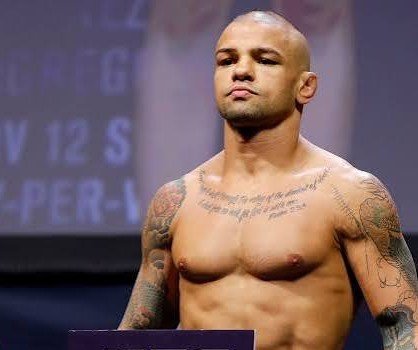
12. Thiago Alves
For Thiago Alves, half a pound once cost $12,000—20 percent of his purse.
Before facing Jon Fitch at UFC 117 in August 2010, he weighed 171.5 pounds, half a pound above the welterweight allowance. Alves said he was offered a choice: continue cutting or surrender 20 percent of his $60,000 purse.
Exhausted by fight week, he accepted the fine.
“It was just easier for me to give up the money,” he later explained.
That decision came with another consequence. Alves had already weighed 174 pounds for Matt Hughes in 2008, and Dana White now wanted him at middleweight. Alves asked for another chance to remain at welterweight and brought in nutrition coach Mike Dolce.
Six years later, he attempted to move in the opposite direction.
Alves’s lightweight debut against Jim Miller at UFC 205 ended on the scale at 162.6 pounds—6.6 above the allowance. He attributed the problem to food poisoning.
Keeping the fight alive required Miller to make an unusual adjustment. Told that Alves was overweight, Miller began rehydrating before his own official weigh-in. He registered 157.6 pounds, keeping their recorded weights within the five-pound difference permitted under New York’s rules.
Alves surrendered 20 percent of his purse and agreed to a further condition: he could weigh no more than 173 pounds at another check on fight day.
Miller won a unanimous decision. The New York State Athletic Commission subsequently issued Alves a three-month suspension for missing weight.
Alves’s three documented UFC misses had ranged from a half-pound he chose not to remove to a lightweight attempt that required his opponent to stop cutting so they could still fight.

11. Luana Carolina
Melissa Mullins made weight for her chance to fight in London. Luana Carolina arrived at 144 pounds.
That would have been comfortably within the allowance for a featherweight bout. But their March 2026 fight was booked at bantamweight, where Carolina needed to weigh no more than 136 pounds.
Mullins was willing to fight anyway. The commission was not, and the bout was canceled.
Carolina’s problems had begun in the division below. In May 2021, she weighed 128.5 pounds before facing Poliana Botelho, 2.5 above the flyweight allowance. The fight proceeded.
Before Julija Stoliarenko in February 2024, she initially weighed 129 pounds. Stoliarenko’s team asked her to lose another pound before agreeing to compete. Carolina returned at 128, still two pounds over, and surrendered 20 percent of her purse. She won by a late third-round stoppage.
The following year, a scheduled fight with Montana De La Rosa disappeared from the card because of Carolina’s weight-management difficulties. She did not make an official weigh-in attempt, so that cancellation belongs alongside her documented misses rather than adding another number to the tally.
At bantamweight, she missed by eight pounds, her largest documented UFC miss.
Across three official misses and a separate weight-related withdrawal, Carolina had lost money, required an opponent to negotiate another weigh-in, and seen two fights canceled. Shortly after London, the UFC let her go.
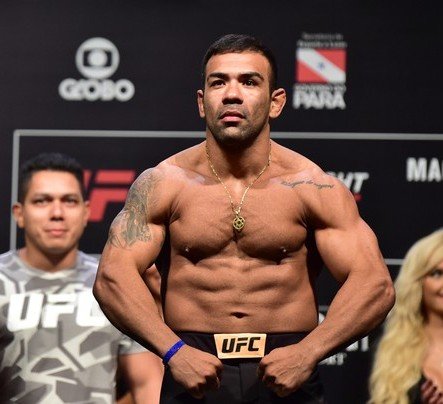
10. Michel Prazeres
Michel Prazeres kept winning at lightweight. Making the weight was another matter.
In September 2016, he weighed 158 pounds before facing Gilbert Burns, two above the non-title allowance. A year later, he reached 159 pounds for Mads Burnell. Before Desmond Green in February 2018, the reading had climbed to 161 pounds.
That was three misses in four appearances, with the largest coming before a fight in his hometown of Belém.
Green accepted the bout, but there was a further agreement: Prazeres was not supposed to arrive at the arena weighing more than 173 pounds.
What happened next produced conflicting accounts. Green said Prazeres arrived at 180. Prazeres said he weighed 176.3. MMA Fighting reported a figure of 179.3 from sources close to the situation. Whichever account was correct, each put him above the agreed ceiling.
“I take full responsibility for the weight,” Prazeres said afterward. He also said he agreed to surrender 40 percent of his purse to Green following further negotiations.
Prazeres won the fight by unanimous decision. It did not earn him another opportunity to make lightweight.
He was required to move to welterweight, a decision he accepted while acknowledging how much the cuts were taking out of him. He believed the higher division would let him perform better, even against taller opponents.
“I’m short, but I can surprise with other things,” he said.

9. Johny Hendricks
When Johny Hendricks announced that he was finished with welterweight, there was good reason to believe him.
His final two appearances in the division had both begun with missed weigh-ins. Before Kelvin Gastelum at UFC 200 in July 2016, he reached 171.25 pounds, a quarter-pound above the allowance. Before Neil Magny that December, he weighed 173.5 pounds, 2.5 pounds over.
Hendricks lost both fights. A separate cut-related withdrawal had already cost him a scheduled meeting with Tyron Woodley in 2015.
Hendricks moved to middleweight. His first appearance there, against Hector Lombard in February 2017, brought a unanimous-decision victory. Hendricks described the cut as the easiest of his life.
Four months later, he missed again.
For Tim Boetsch in June 2017, the former welterweight champion registered 188 pounds, two above the middleweight allowance. It was his third documented UFC miss, now spread across two divisions.
Hendricks said a fever during fight week had disrupted his preparations. He had been trying to manage the illness while continuing to cut, and maintained that middleweight itself was not difficult for him to make.
Boetsch stopped him in the second round.
The move up had initially delivered what Hendricks wanted: an easier weigh-in and a win. By his second middleweight appearance, he was once again explaining an overweight reading after another defeat.

8. Kelvin Gastelum
Kelvin Gastelum’s weigh-in before Tyron Woodley was not a close call. He reached 180 pounds, nine above the allowance for their welterweight fight at UFC 183 in January 2015.
Woodley weighed 170.5.
Gastelum had already missed for Nico Musoke the previous year. Now, before one of the biggest opportunities of his young career, he was much farther away. The fight proceeded, but the UFC directed him to move to middleweight afterward.
Gastelum fought Nate Marquardt at middleweight in June 2015, then returned to welterweight against Neil Magny that November and Johny Hendricks at UFC 200 in July 2016.
A booking against Donald Cerrone at Madison Square Garden in November 2016 ended before Gastelum reached the scale. Unable to make the weight, he did not appear for an official attempt, and the fight was canceled.
“I’ll never let him fight at 170 again,” Dana White said afterward.
That incident belongs beside Gastelum’s documented misses, rather than being presented as another measured weight. Cerrone had still prepared for a fight that would not happen.
Years later, the problem resurfaced in the heavier division.
Before Dustin Stoltzfus at Noche UFC in September 2025, Gastelum registered 191 pounds—five above the middleweight allowance. Stoltzfus accepted a catchweight fight, with Gastelum forfeiting 35 percent of his purse.
His three documented UFC misses stretched from 2014 to 2025 and crossed two divisions.

7. Anthony Johnson
Anthony Johnson’s move to middleweight was supposed to end the trouble he had encountered making welterweight. Instead, it produced the largest miss of his first UFC run.
At welterweight, he had weighed 177.5 pounds for Rich Clementi in 2007 and 176 pounds for Yoshiyuki Yoshida at UFC 104 in October 2009. Those readings were 6.5 and five pounds above the non-title allowance.
Against Yoshida, Johnson needed only 41 seconds to finish the fight. Missing weight nevertheless made him ineligible for the $60,000 Knockout of the Night award, in addition to his purse deduction. Winning could not restore his bonus eligibility.
The January 2012 booking against Vitor Belfort gave him a middleweight allowance of 186 pounds. UFC’s retrospective described his body shutting down during the cut, forcing him to stop and rehydrate. At the official UFC 142 weigh-in, he registered 197—11 pounds over.
Belfort accepted a revised agreement: Johnson would surrender 20 percent of his purse and could weigh no more than 205 pounds at a separate fight-day check. He registered 204.2 at that second check, allowing the bout to proceed. That reading satisfied the revised condition; it did not undo the original miss.
Belfort submitted him in the first round. The UFC subsequently released Johnson after three missed weigh-ins.
One of his quickest victories had cost him bonus eligibility. His biggest miss helped bring his first run with the promotion to an end. Johnson later recalled walking around at approximately 210 pounds during his welterweight years—a starting point examined among 17 of the biggest weight cuts by UFC fighters.
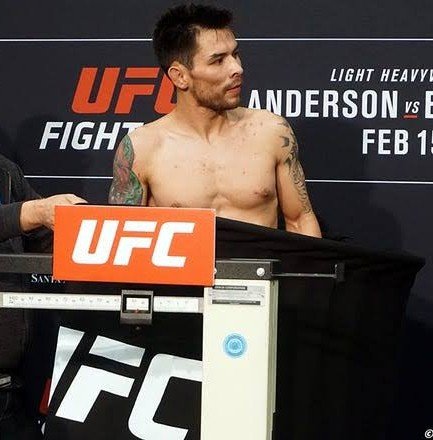
6. Ray Borg
Ray Borg put his career behind a promise in April 2019. If he missed weight again, he said, he would “leave the sport of MMA forever.”
He had just missed for the third time in the UFC. More concerningly, this one had come after moving up to bantamweight.
Borg acknowledged that his habits between fights needed to change. He had neglected his diet and spent too little time training, turning preparation for an opponent into a prolonged struggle to lose weight.
His earlier UFC misses had come against Geane Herrera in 2015 and Louis Smolka in 2016. Against Smolka, he weighed 129.5 pounds, 3.5 above the flyweight allowance. Moving up did not prevent another failure before Casey Kenney in March 2019.
In February 2020, less than a year after his promise, Borg returned to the scale for a flyweight fight with Rogerio Bontorin.
He weighed 128 pounds. Given another hour, he returned at the same number—still two pounds over. The fight proceeded, with Borg forfeiting 30 percent of his purse. He continued competing rather than following through on his retirement pledge.
Looking back in 2022, Borg described a cycle in which he would reach around 163 pounds between flyweight bookings, then spend much of camp trying to undo the gain. By fight week, he said, he had already depleted himself through earlier attempts to bring the number down.
His UFC career eventually ended amid repeated misses and withdrawals. Reflecting on the opportunities he had received, Borg was direct: “I took that for granted.”
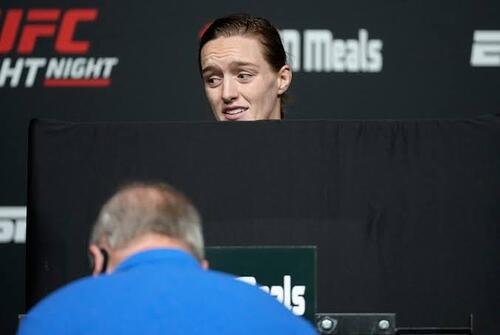
5. Aspen Ladd
Aspen Ladd’s UFC weight misses did not simply reduce her pay. All three resulted in canceled fights.
Before Leslie Smith in April 2018, she weighed 137.8 pounds, 1.8 above the bantamweight allowance. Smith declined to compete against an overweight opponent, and the bout was removed.
The problem had appeared before Ladd reached the UFC. She had weighed 138.1 pounds for Jessica Hoy at Invicta FC 18 in 2016, although that fight proceeded.
In October 2021, another difficult scene unfolded on the scale before Macy Chiasson. Ladd visibly struggled through the weigh-in and finished at 137 pounds, one above the allowance. The fight was canceled amid concerns about her health.
She subsequently fought Norma Dumont at featherweight, but returned to bantamweight. Before Sara McMann in September 2022, she registered 138 pounds. McMann had completed her preparations and made weight, but the fight was canceled.
Ladd’s record requires one distinction. Her alarming weigh-in before Germaine de Randamie in 2019 is often recalled alongside these incidents, but she made weight that day. It does not belong in the missed-weight tally.
That made four documented career misses—three in the UFC and one in Invicta. Shortly after the McMann cancellation, the UFC released her.
Dana White acknowledged her ability while explaining the decision.
“She’s a talented fighter,” he said. “But part of the job is making weight.”

4. Chidi Njokuani
Chidi Njokuani won the RFA welterweight title fight against Gilbert Smith in January 2015. He completed all five rounds and received the unanimous decision.
The championship remained vacant.
Njokuani had weighed 174.6 pounds for a fight that required him to make 170. Only Smith was eligible to win the belt. Once Njokuani beat him, neither man could leave as champion.
It was already a recurring problem. Njokuani had weighed 172 pounds for Chris Heatherly and 173.4 for Steve Hanna during his previous two RFA appearances. The Smith fight made three consecutive misses under that promotion’s banner, with the greatest consequence coming on the night he won a championship-length fight.
The difficulties followed him to Bellator.
He missed before Andre Fialho in December 2016, then reached 175 pounds for Andrey Koreshkov in August 2017—four above the welterweight allowance. His winning streak was growing, but so was the record of bouts requiring an adjustment because he had arrived overweight.
Years later, after competing at middleweight and returning to welterweight, Njokuani missed again in the UFC. Before Elizeu Zaleski dos Santos in March 2025, he registered 172.25 pounds, 1.25 above the allowance.
Those six separately documented failures span three promotions and more than a decade. They are an established minimum, rather than a claim that every catchweight on his record resulted from a miss.
The Smith fight remains the clearest illustration of what it cost him: he did enough to win over twenty-five minutes, but his work on the scale had already taken the belt out of reach.
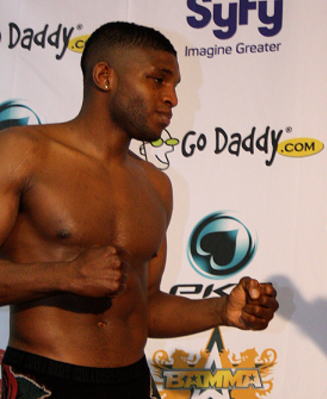
3. Paul Daley
By September 2011, Paul Daley had missed weight six times in his previous fourteen fights.
The pattern crossed promotions: MFC, the UFC, Shark Fights and BAMMA. Some misses were small. Others required a substantial adjustment before the fight could proceed. Changing organizations had not stopped the problem.
At BAMMA 5 in February 2011, Daley was supposed to fight Yuya Shirai for the welterweight championship. He initially weighed 172 pounds, then reduced that to 170.4.
For an ordinary non-title welterweight bout, that would have been within the usual allowance. For this championship fight, he needed to reach 170.
The remaining four-tenths of a pound removed the belt from the contest. What had been scheduled as a title fight became a three-round, non-title bout.
Before Jordan Radev at BAMMA 7 that September, the margin was larger: 176 pounds. Daley was offered another two hours to lose weight but declined. The fight proceeded at a revised catchweight, with a purse deduction.
Contemporary reporting identified earlier failures against John Alessio, Nick Thompson, Dustin Hazelett and Jorge Masvidal. The two BAMMA incidents brought that documented sequence to six.
Nine years later, another weight-cutting episode cost him a main event.
Before Derek Anderson at Bellator 247 in September 2020, Daley missed weight and was subsequently taken to hospital after experiencing difficulties following the cut. He later maintained that he felt ready to compete. Officials did not allow the fight to proceed.
This time, there was no revised agreement that could keep him on the card. Bellator had to find another main event.

2. Charles Oliveira
Charles Oliveira once arrived for a featherweight fight weighing enough to compete at lightweight.
Before Ricardo Lamas in November 2016, he registered 155 pounds. The allowance for their non-title featherweight bout was 146. He was nine pounds over—and this was already part of a recurring problem.
Oliveira had missed before Cub Swanson in 2012. In 2014, he weighed 150 pounds for Nik Lentz before illness forced him out of the fight, then finished at 146.5 for Jeremy Stephens that December. Against Myles Jury in 2015, the reading was 150.5.
The Lamas incident brought his documented featherweight total to five misses. That includes the Lentz booking: Oliveira officially weighed 150 pounds before illness forced his withdrawal. Some were fractions of a pound; others were nowhere close.
His return to lightweight appeared to put that history behind him. Oliveira eventually became champion, and his May 2022 meeting with Justin Gaethje was scheduled as another defense.
Then he weighed 155.5 pounds.
For a non-title lightweight fight, that would have been acceptable. For the championship, he needed to reach 155. Given another hour, he returned at the same weight.
There was controversy over the practice scale. Oliveira maintained that he had been on weight beforehand, while UFC regulatory official Marc Ratner acknowledged a possible calibration problem with that separate scale. Ratner nevertheless defended the accuracy of the commission’s official scale.
The UFC’s decision stood: Oliveira would lose the championship when the fight began. Only Gaethje could win it that evening.
Oliveira submitted him in the first round. The victory made him the leading contender for the vacant title, rather than the reigning champion.
His largest featherweight miss had been nine pounds. The lightweight miss that cost him his championship was half a pound.
Heavyweight champion Elvis Moyo faced a similar consequence after exceeding his title limit by two pounds—a case covered in 10 MMA fighters who missed the heavyweight limit.
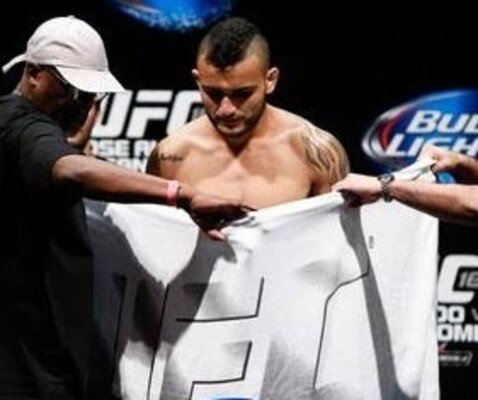
1. John Lineker
Moving up a division usually gives a fighter some relief on the scale. John Lineker moved from flyweight to bantamweight and still missed. Years later, in a different promotion, another overweight reading cost him his championship.
His UFC difficulties began at flyweight. He missed before Louis Gaudinot, Jose Maria Tome and Phil Harris, then arrived at 130 pounds for Ian McCall in January 2015. That was four pounds above the non-title allowance, and his fourth miss in the division.
Lineker beat McCall. The victory kept him among the division’s leading contenders, but the UFC had seen enough of his attempts to make 125. He was required to move to bantamweight.
For a while, the change worked. Lineker put together victories against larger opponents and carried his punching power into the higher division.
Then, before John Dodson in October 2016, he weighed 136.5 pounds. The margin was only half a pound, considerably smaller than his final flyweight miss. It nevertheless brought his UFC total to five, along with another purse deduction.
The most expensive reading came outside the UFC.
By October 2022, Lineker held ONE Championship’s bantamweight belt and was preparing to defend it against Fabricio Andrade. ONE’s division has a 145-pound limit and hydration testing, so its measurements should not be treated as directly equivalent to UFC bantamweight.
Lineker passed the hydration test but finished above the weight limit. ONE stripped him of the championship before the fight.
He later attributed the failure to a miscalculation involving his weight checks. Whatever had gone wrong during preparation, the consequence was settled: only Andrade could win the belt that evening.
Their fight ended in a no contest after an accidental low blow. Neither man left as champion, and the belt Lineker had brought into fight week remained vacant.
Honorable Mentions
Alex Perez
Perez weighed 128 pounds for Matt Schnell at UFC 271, and the fight was canceled. He had already missed for Eric Shelton in 2018; a 128.5-pound reading before Charles Johnson in January 2026 brought his documented UFC total to three. The Johnson bout went ahead.
Leandro Higo
Higo’s 139-pound reading before Eduardo Dantas in April 2017 turned his Bellator championship opportunity into a three-round, non-title fight. He later missed against Ricky Bandejas in 2020 and Darrion Caldwell in 2021, winning both bouts after losing his earlier chance to compete for the belt.
C.J. Vergara
Vergara missed in three of his first six UFC appearances, against Ode Osbourne, Tatsuro Taira and Asu Almabayev. His largest reading was 129 pounds before Taira in October 2022, three above the flyweight allowance. All three fights continued with purse deductions; Vergara lost each one.
Joe Taimanglo
Taimanglo submitted the previously unbeaten Darrion Caldwell in July 2016, but arriving two pounds overweight complicated his route to a title opportunity. A rematch followed instead. Another miss canceled his March 2017 booking against Steve Garcia, and he also missed before Abdul-Rakhman Dudaev at BRAVE 18 in 2018.
Eduarda Moura
Moura missed before her first two UFC fights: 119.5 pounds for Montserrat Conejo in November 2023 and 116.5 for Denise Gomes the following June. After moving to flyweight, she reached 127 pounds for Wang Cong in February 2026—one above the allowance. It was her third UFC miss, now spread across two divisions.
At a Glance: The Misses and Their Consequences
| Rank | Fighter | Documented pattern covered here | Notable consequence |
| 1 | John Lineker | Five UFC misses; another in ONE | Required to leave UFC flyweight; stripped of his ONE championship |
| 2 | Charles Oliveira | Five featherweight misses, including the canceled Lentz booking; one at lightweight | Lost his UFC lightweight championship over half a pound |
| 3 | Paul Daley | Six misses by September 2011; another in 2020 | Lost a title opportunity; later main event canceled |
| 4 | Chidi Njokuani | At least six misses across RFA, Bellator and UFC | Won his RFA title fight but could not claim the championship |
| 5 | Aspen Ladd | Three UFC misses and one in Invicta | All three UFC misses resulted in canceled fights; subsequently released |
| 6 | Ray Borg | Four UFC misses, including one at bantamweight | Repeated purse deductions; missed again after publicly promising to retire if it happened |
| 7 | Anthony Johnson | Three UFC misses across welterweight and middleweight | Lost bonus eligibility after one victory; released after his third miss |
| 8 | Kelvin Gastelum | Three UFC misses, plus a separate cut-related withdrawal | Directed to move up; canceled Cerrone fight; later missed at middleweight |
| 9 | Johny Hendricks | Three UFC misses, plus a separate cut-related withdrawal | Lost a Woodley booking; missed again after moving to middleweight |
| 10 | Michel Prazeres | Three lightweight misses in four appearances | Required to move to welterweight |
| 11 | Luana Carolina | Three official UFC misses, plus a separate weight-related withdrawal | Two bookings canceled; subsequently released |
| 12 | Thiago Alves | Three documented UFC misses across two divisions | Purse deductions; additional fight-day weight condition; commission suspension |
| 13 | Ray Cooper III | Three PFL misses across welterweight and middleweight | Standings penalties and lost opportunities to earn tournament points |
| 14 | Norma Dumont | Two bantamweight misses and one at featherweight | One fight canceled; purse deductions in the other two |
| 15 | Cynthia Calvillo | Three UFC strawweight misses | Purse forfeiture against Rodriguez; third UFC strawweight miss canceled the bout |
ONE uses different weight limits and hydration requirements from the UFC. Lineker’s ONE incident belongs in his history, but its measurements are not directly comparable to his UFC weigh-ins.
Winning Could Not Fix the Weigh-In
Charles Oliveira submitted Justin Gaethje. Chidi Njokuani won five rounds against Gilbert Smith. John Lineker beat Ian McCall. Each had done enough inside the cage to advance his career, yet the weigh-in had already limited what the victory could bring.
For their opponents, the decisions came earlier. Accept a heavier fighter and receive part of his purse, or decline and risk leaving without a fight after weeks of preparation. Sometimes an agreement saved the bout. Other times, a commission or medical decision settled the matter.
The accounts do not point to one explanation. Borg described habits between fights that made camp a struggle to undo weight gain. Hendricks cited illness. Dumont described the cost of staying near specialist support. Ladd’s appearances on the scale raised immediate health concerns. Moving up helped some fighters, but Lineker, Johnson, Hendricks and Gastelum all missed after changing divisions.
The margins could be startlingly different. Johnson missed the middleweight allowance by eleven pounds. Oliveira lost his lightweight championship over half a pound. Both readings changed what happened next, before either man had thrown a punch. In MMA, the scale is part of the competition. It can determine what a victory is worth, whether a bout happens, and whether a championship remains available.
If you chose another fighter, tell us who—and what stood out—in the comments.
Sources
- UFC: Oliveira’s missed weigh-in and subsequent withdrawal against Lentz.
- UFC: Understanding weight classes and weigh-ins.
- MMA Fighting: Daley’s sixth miss in fourteen fights.
- MMA Fighting: Gastelum and Lineker at the UFC 183 weigh-ins.
- UFC: Anthony Johnson’s weight-cutting difficulties and UFC departure.
- ONE Championship: Lineker reflects on losing his championship during fight week.