Who could withstand heavyweight power—and who could recover when it put them down?
Junior dos Santos keeps finding Roy Nelson with damaging punches at UFC 117 in 2010. Nelson continues advancing, occasionally throwing back, even as the fight moves decisively away from him.
Antônio Rodrigo Nogueira offers a different picture. Cro Cop’s head kick puts him on the canvas near the end of their opening round in 2003. In the second, Nogueira returns, takes the fight down and wins by armbar.
One performance demonstrates exceptional resistance. The other demonstrates exceptional recovery.
Which deserves more credit?
A knockout record alone cannot answer it. Facing a feared puncher tells us little if the dangerous shots never connect. Staying conscious through punishment matters, but so does the ability to defend and return effective offense.
This ranking examines what actually landed and what each heavyweight could do afterward.
Ten heavyweights made the cut. Nelson and Nogueira form our closest comparison, with different strengths carrying them to the top.
What Makes a Great Heavyweight Chin?
Here, a great chin means both resisting disruption from head strikes and recovering effective fighting function when those strikes cause trouble.
We considered four qualities together:
| Criterion | What earns credit |
|---|---|
| Resistance | Taking clean head strikes while remaining capable of defending and attacking. |
| Power actually absorbed | Withstanding meaningful impacts from proven heavyweight hitters—not merely facing them. |
| Repeated meaningful tests | Demonstrating durability against different opponents across demanding fights. |
| Functional recovery | Surviving immediate danger and returning to effective fighting after being hurt. |
A knockdown exposes a resistance limit. What happens next can still demonstrate exceptional recovery.
Composure, defensive skill and grappling can help someone survive while recovering. Round breaks and hesitant follow-ups can provide valuable time too. We account for that assistance.
Head kicks and ground punches count as head-strike evidence. Sudden knockouts and accumulation stoppages can both reveal lost fighting function. Cuts, body-led finishes and injuries require separate treatment.
Earlier achievements and later failures both count. Age explains circumstances without removing a knockout from the assessment.
Which Fights Count?
Only heavyweight MMA bouts contribute to this order.
That includes heavyweight contests in historical promotions such as PRIDE. Historical eligibility was assessed through event records, contemporary reporting and whether a bout belonged to a divisional championship or an explicitly openweight competition.
An uncapped heavyweight division is not automatically an openweight contest.
Fights in other divisions and explicitly openweight bouts are excluded. Kickboxing, slams and submission escapes do not earn chin credit.
Limited clean-impact exposure creates uncertainty rather than proving a weak chin. A fighter’s own knockout power cannot substitute for demonstrated resistance.
We used no numerical scores or fixed percentages. Close placements depend on the quality and repetition of the tests, balanced against the striking failures.
That narrower scope explains why these positions can differ from our pound-for-pound ranking of the best chins in MMA history, which considers fighters’ entire professional MMA careers across weight classes.
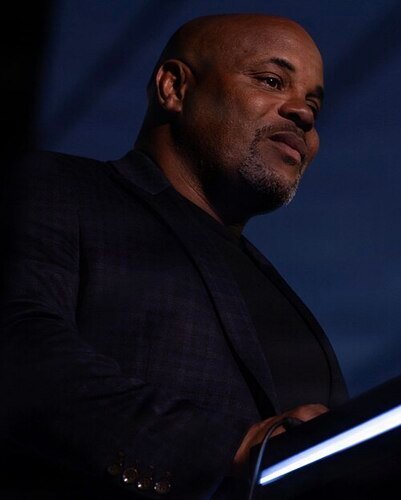
10. Daniel Cormier
Miocic repeatedly tested his ability to stay effective at heavyweight.
Cormier’s three fights with Miocic tell different durability stories.
In their first meeting, Cormier absorbed punches while continuing to work effectively at close range before securing the knockout. His finish demonstrates power; his responses to Miocic’s landed offense supply the chin evidence.
The rematch exposed a limit. At UFC 241, Miocic repeatedly landed left hooks to the body. The accumulating damage weakened Cormier’s responses, opening the way for the head punches that ended the fight.
Their third meeting added five rounds of meaningful exposure. Cormier remained competitive through portions of the contest, though his effectiveness varied as the fight progressed.
That rivalry provides depth: three separate heavyweight encounters in which meaningful punches landed and Cormier continued competing. It offers less opponent variety and fewer severe recovery episodes than the cases above him.
His Johnson comeback falls outside this heavyweight ranking but forms a central part of his case among the best chins in light-heavyweight MMA history.
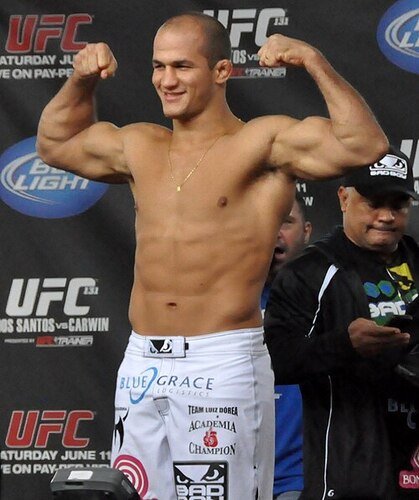
9. Junior dos Santos
Velasquez repeatedly hurt him. Finishing him still proved difficult.
A first-round right hand dropped dos Santos in their second meeting at UFC 155.
Velasquez then controlled the contest, while dos Santos survived five rounds without restoring enough consistent offense to make it competitive.
Their third meeting added another prolonged test before Velasquez stopped him at 3:09 of round five.
Those second and third fights lasted a combined 48 minutes and nine seconds. The duration illustrates the scale of the contests; dos Santos’s responses to the damaging attacks carry the durability argument.
His punishment tolerance was exceptional. His recovery to sustained competitive offense was less convincing.
Later striking defeats to Ngannou, Blaydes, Rozenstruik, Gane and Tuivasa further limit his resistance case.
The Velasquez fights capture both sides of his placement: remarkable endurance, but too little restored offense to join the leading group.
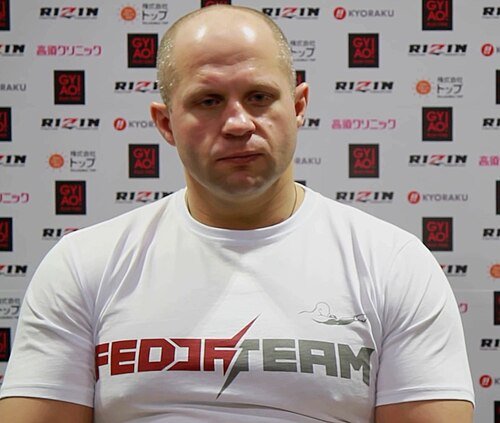
8. Fedor Emelianenko
Fujita disrupted his balance. Fedor recovered and finished him in the same round.
Fujita’s right hand left Fedor unsteady during their 2003 fight.
Fedor sought the clinch, survived the immediate danger and eventually regained effective offense, hurting Fujita before securing the submission. No round break separated the crisis from the turnaround.
Rogers supplied another test. His opening punch damaged Fedor’s nose, and later ground punches forced Fedor to defend through danger. Fedor remained capable of responding and stopped him in round two.
Mitrione showed the opposite outcome. Both men went down after simultaneous punches, but Mitrione recovered first and finished Fedor.
Henderson’s striking finish and both Bader stoppages also remain part of the assessment.
Fedor’s best recoveries are exceptional. Across the wider heavyweight record, however, repeated striking failures weaken both his resistance case and the consistency of his recovery. Eighth reflects that full balance rather than the quality of his finest moment alone.
The Randleman slam falls outside the head-strike evidence used here.
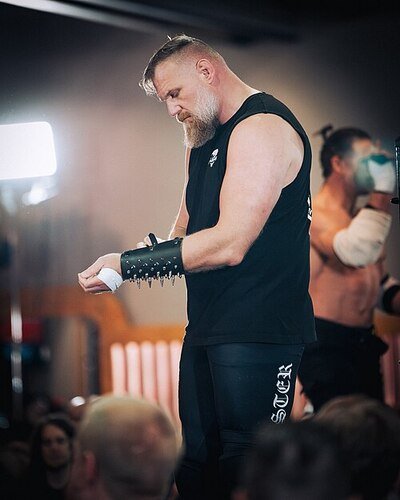
7. Josh Barnett
Five rounds with Nelson showed resistance supported by sustained offense.
Barnett’s 2015 victory over Nelson offers more than survival.
He absorbed return fire, continued working with punches, knees and clinch attacks, and remained effective through a demanding five-round decision.
Nelson’s power matters because punches connected. Barnett kept producing useful offense through those exchanges.
His eligible Cro Cop defeats require different classifications. The first followed a shoulder injury; the second was a decision.
Their third meeting occurred in an explicitly openweight tournament and is excluded under this article’s scope.
The knockout defeats to Rizzo and Browne remain clear limits.
Barnett earns seventh through sustained resistance with offense retained. His strongest performance is less dependent on surviving a crisis, but his severe-crisis recovery record is thinner than those above him.
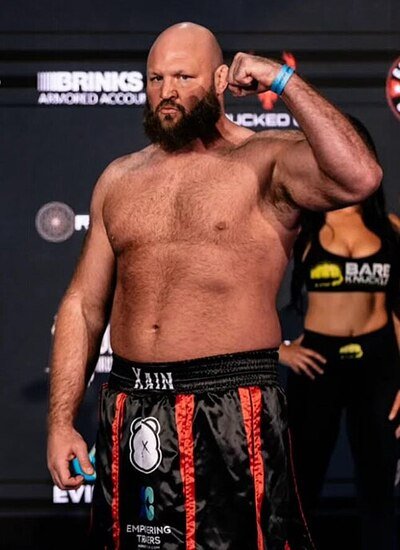
6. Ben Rothwell
Different heavyweight hitters repeatedly tested his ability to keep functioning.
Dos Santos repeatedly connected during their five-round fight in Zagreb, mixing accurate boxing with body attacks.
Rothwell completed the contest but was comprehensively outboxed, with limited success imposing his own offense.
The Hunt fight adds a more complicated example. Rothwell was exhausted, unsteady and taking damaging punches, yet remained capable of grappling responses, including a late reversal and submission threat.
His effectiveness was seriously reduced rather than entirely lost.
Arlovski provided another prolonged striking test in their 2019 rematch. Arlovski’s knockout victory in their earlier meeting establishes the boundary that later survival cannot erase.
Repetition earns Rothwell sixth. Different hitters found him, and he repeatedly continued through demanding contests. Too many of those performances involved diminished offense for a higher placement.
His bare-knuckle fights are excluded.
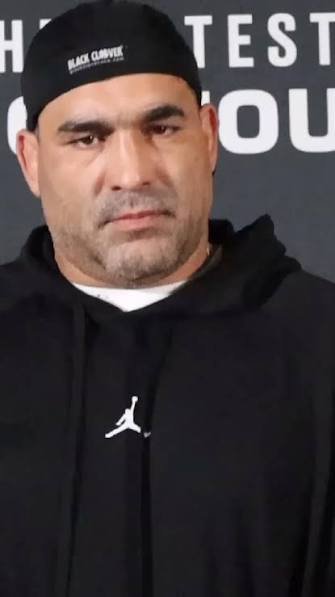
5. Blagoy Ivanov
Tuivasa staggered him. Ivanov recovered and returned to winning exchanges.
Against Tuivasa at UFC 238, a second-round blow sent Ivanov stumbling backward.
He stayed upright, used the clinch to gain recovery time and returned to meaningful exchanges before winning the decision.
Lewis provided another test. Ivanov absorbed punches and remained capable of responding through three rounds, including dangerous late attacks.
Dos Santos supplied the longer examination in Boise. His boxing repeatedly found Ivanov over five rounds. Ivanov continued competing but lost every round on all three scorecards.
His reviewed professional record contains no KO/TKO defeats. The stoppage loss to Volkov was a submission.
Fifth remains a close judgment. Ivanov has fewer elite tests than several rivals, but his resistance across those examinations and the Tuivasa recovery give him a legitimate main-list case.
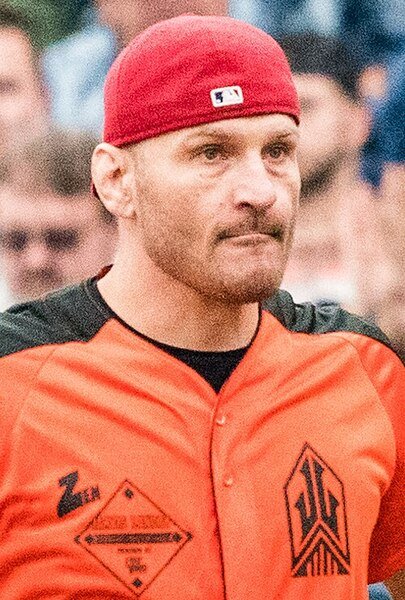
4. Stipe Miocic
Overeem dropped him. Miocic recovered and finished the fight in the same round.
Overeem’s punch put Miocic down at UFC 203 in 2016.
After escaping a guillotine, Miocic resumed attacking and won by first-round stoppage. The relevant achievement is regaining effective offense after the knockdown.
His first Ngannou fight adds resistance evidence. Miocic survived dangerous early exchanges before wrestling increasingly reduced the threat.
The credit belongs to the impacts that connected and Miocic’s continued ability to implement his game plan, rather than the full five-round duration.
Cormier’s knockout and Ngannou’s rematch victory establish decisive head-strike failures. Jones’s later finish involved a spinning back kick to the body followed by punches.
Miocic combines resistance with a particularly sharp recovery-to-victory example. His knockout defeats keep him outside the leading three.
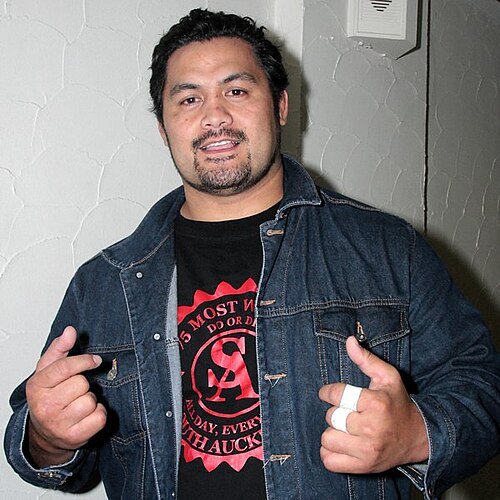
3. Mark Hunt
After serious trouble against Bigfoot Silva, Hunt returned with effective fifth-round offense.
Hunt’s first Silva fight in December 2013 supplies his strongest combined resistance-and-recovery example.
He survived damaging exchanges and a dangerous fourth round. When the fifth began, he was capable of hurting Silva and forcing him to answer—not merely protecting himself until the bell.
Their five-round contest ended in a majority draw.
The interval helped, but Hunt’s renewed attacks are what make the recovery compelling.
Dos Santos, Werdum, Miocic and Overeem all stopped him with strikes. Their power supplies context without making those finishes disappear.
The Manhoef defeat is not used to decide this placement because sources differ over whether that contest was heavyweight or openweight. Hunt’s K-1 career also receives no credit.
The prolonged Silva test gives him a narrow advantage over Miocic’s sharper Overeem comeback. His striking failures keep that comparison close.
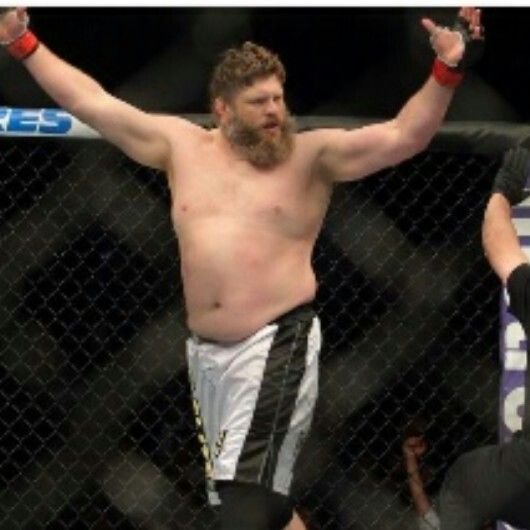
2. Roy Nelson
Powerful shots repeatedly reached him. He kept fighting through them.
Dos Santos landed uppercuts and sustained attacks at UFC 117. Nelson continued advancing and occasionally returned dangerous punches even as dos Santos built a decisive advantage.
The case rests on repeated damaging contact and some retained offensive threat—not an absolute claim that Nelson was never knocked down.
Miocic supplied another demanding test. Nelson survived three rounds of damaging offense, but fatigue and limited responses reduce the credit for effective fighting.
Barnett’s five-round victory adds further exposure, with Barnett maintaining the more productive work.
Hunt’s uppercut establishes a decisive boundary: it knocked Nelson face-first to the canvas at 3:00 of round two. Arlovski and Kharitonov also stopped him with strikes.
Nelson has the strongest pure-resistance argument near the top. He finishes second because prolonged reductions in effectiveness feature heavily in several defining tests.
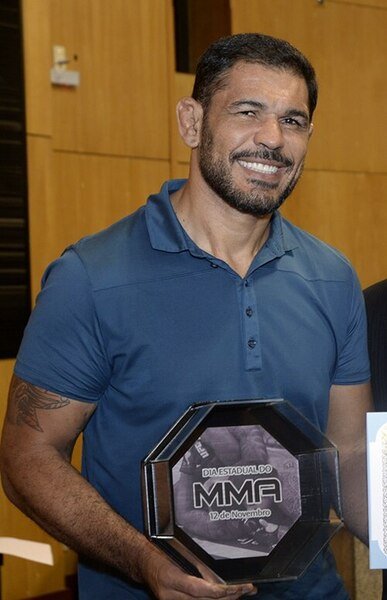
1. Antônio Rodrigo Nogueira
Different opponents put him close to defeat. He returned with winning offense.
Nogueira’s case becomes strongest when the major recoveries are considered together.
Cro Cop’s head kick dropped him near the end of their opening round at PRIDE Final Conflict in November 2003. After the interval, Nogueira returned with purposeful offense, took the fight down and won by armbar.
Herring supplied another severe test at UFC 73. His head kick put Nogueira in first-round danger, but he hesitated to pursue the finish. Nogueira recovered and eventually won the decision.
Sylvia adds a third major example. He dropped Nogueira early and continued finding him with punches. Nogueira remained in the fight and won by third-round guillotine at UFC 81.
Mir’s punch TKO at UFC 92, Velasquez’s stoppage and Nelson’s knockout establish clear resistance limits. Mir’s later kimura submission belongs in a separate category.
Nogueira takes first by the narrowest margin. His repeated recoveries restored enough function to change the fight’s outcome.
Why Nogueira Edges Nelson
Nelson’s strongest argument is resistance: powerful shots repeatedly connected without immediately removing his ability to continue.
Nogueira’s strongest argument is recovery: severe trouble repeatedly gave way to purposeful defense, renewed offense and victory.
Nelson knocked Nogueira out in their meeting. That clear failure counts against Nogueira. But a chin ranking is not a head-to-head results table: their positions reflect the resistance and recovery demonstrated across their eligible careers.
Winning does not automatically make one chin better than another. Here, Nogueira’s comeback victories matter because they show how much effective function he regained.
Nelson’s limited offense in several defining tests reduces his advantage. Nogueira’s recoveries against Cro Cop, Herring and Sylvia narrowly provide the stronger combined case.
Readers who prioritize resistance have a reasonable argument for Nelson.
The Heavyweight Rankings at a Glance
| Rank | Fighter | Strongest evidence | Key limitation |
| 1 | Antônio Rodrigo Nogueira | Repeated recoveries producing victories | Recovery assistance and decisive striking stoppages |
| 2 | Roy Nelson | Repeated resistance to heavyweight power | Knockout defeats and reduced effectiveness in major tests |
| 3 | Mark Hunt | Resistance and renewed offense against Bigfoot Silva | Multiple striking stoppages |
| 4 | Stipe Miocic | Early Ngannou resistance and the Overeem comeback | Decisive knockouts by Cormier and Ngannou |
| 5 | Blagoy Ivanov | Resistance against Lewis and dos Santos; Tuivasa recovery | Smaller elite testing sample |
| 6 | Ben Rothwell | Repeated tests against different heavyweight hitters | Diminished function in several performances |
| 7 | Josh Barnett | Resistance with sustained offense against Nelson | Striking failures and thinner crisis-recovery record |
| 8 | Fedor Emelianenko | Effective recoveries against Fujita and Rogers | Multiple striking stoppages |
| 9 | Junior dos Santos | Prolonged punishment tolerance against Velasquez | Limited offensive recovery and repeated striking defeats |
| 10 | Daniel Cormier | Meaningful exchanges through the Miocic rivalry | Less opponent variety and fewer severe heavyweight recovery tests |
Why Isn’t Francis Ngannou Here?
Ngannou’s offensive threat often changed how opponents approached him, while some of his longest fights became grappling-heavy.
That leaves fewer repeated clean-impact sequences for comparison than his reputation might suggest.
His omission reflects limited comparative evidence rather than a claim that he had a weak chin. His own knockout power cannot establish his ability to withstand someone else’s.
Other Names in the Discussion
Herring, Fujita and Kongo remain relevant durability candidates. Their survival and recovery examples deserve consideration.
Cro Cop, Mir, Werdum, Overeem, Arlovski, Lewis and Velasquez also belong in the wider discussion. Facing elite hitters or winning heavyweight titles does not automatically establish a top-ten chin.
The cutoff rests on responses to landed head strikes, including the tests that ended in stoppages. It does not imply that every omitted fighter lacked durability.
Who Gets Your Vote?
Nogueira’s repeated restoration of winning offense narrowly outweighs Nelson’s stronger resistance profile in our assessment.
The opening contrast captures the choice. One repeatedly continued through powerful shots; the other repeatedly found a way back after being put in severe danger.
Which heavyweight would you move, and which fight convinced you?
Sources and Further Reading
- Nelson–dos Santos: UFC’s fight report
- Nogueira–Cro Cop: UFC footage
- Nogueira–Sylvia: UFC footage
- Nogueira–Sylvia: round-by-round report
- Hunt–Silva: the five-round draw
- Barnett–Cro Cop III: the openweight tournament final
- Junior dos Santos: UFC career retrospective