Football greatness isn’t constant. It appears when enough players share the same idea of the game
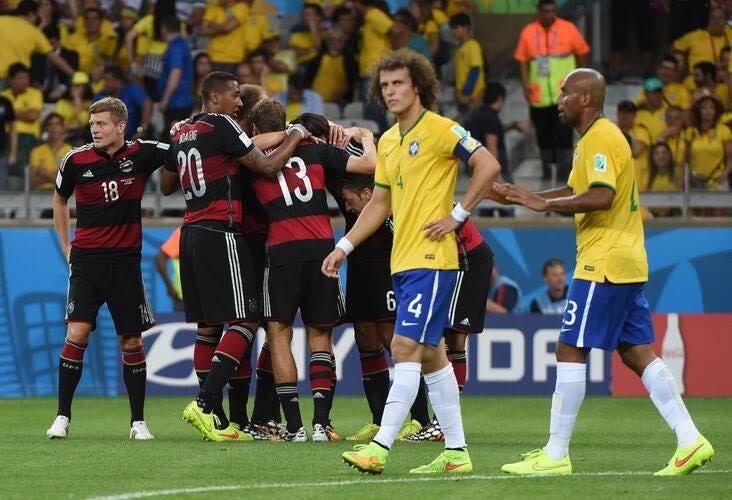
In the 2014 World Cup semifinal, Germany beat Brazil 7–1.
That result still feels out of place.
Not because big losses don’t happen. They do. But they usually follow a path you can track. Something shifts, the game opens, and then it runs away.
This didn’t move like that.
By the third goal, Brazil weren’t just exposed. They looked unsure. Not only defensively. Structurally. Players stepping forward at the wrong moment, others dropping too late, spaces opening that no one seemed to register quickly enough.
Germany didn’t chase it. The same gaps kept appearing and they kept taking them. It felt repetitive in a strange way, like the game had narrowed into one pattern and only one side could see it.
Germany’s team wasn’t sudden. You could trace it back. Youth reforms, club structures, players who had spent years inside similar ideas of how the game should be played.
What showed up that night wasn’t just preparation, it was alignment, and on the other side, everything just slightly out of place.
We talk about football countries as if they produce the same thing over and over.
Brazil, flair. Germany, structure. Spain, midfielders. France, depth.
It works as a shorthand. It doesn’t really hold over time.
The strongest national teams don’t build slowly and stay there. They arrive in clusters. For a few years, enough players shaped by similar ideas overlap at the same time, and the game starts to look simpler than it is.
Then it loosens. Not dramatically, but in smaller ways.
A pass released a fraction late. A player arriving a step behind where he used to be. Someone new coming in who is good, but shifts the balance without meaning to.
And the feeling changes before the results do.
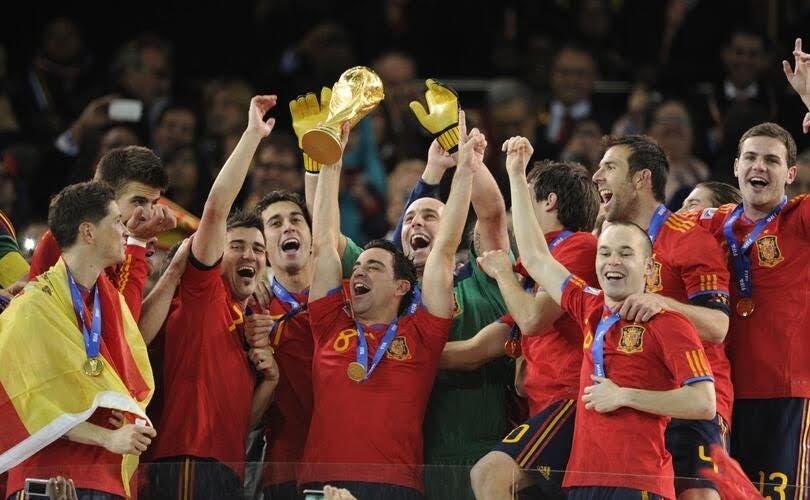
Spain is usually where people start.
For years, they had the players. Technically, they were always there. But it didn’t quite translate when the margins tightened.
Then it did.
If you go back to the 2010 final, there’s that Robben chance. Clean through. It’s the moment. Casillas gets something on it with his foot and it just holds.
Spain don’t go behind.
The game stays where they want it.
Later, Iniesta scores and the whole thing settles into memory as control, as something that was always heading that way.
It wasn’t.
That match could have tilted off one touch.
The version we remember came after.
What held it together wasn’t just quality. It was a shared understanding. Players who had spent years inside the same positional language, seeing the same spaces, making the same decisions without needing to slow the game down to think about them.
For a while, everything lined up, and when it does, the game stops looking complex and starts looking shared.
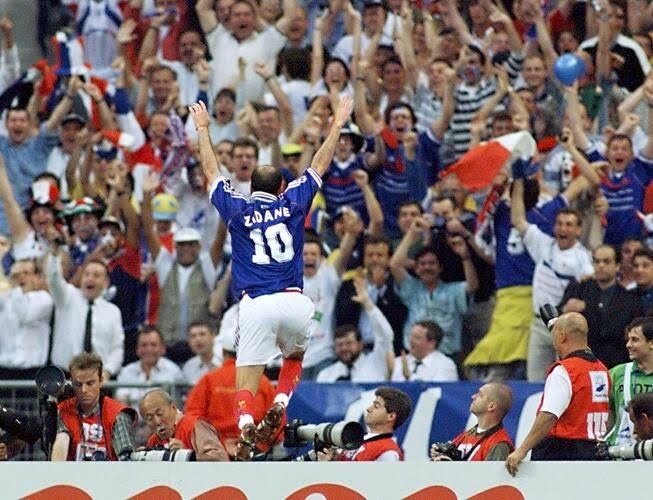
France doesn’t follow a clean rise and fall.
It disappears, then returns.
1998 doesn’t roll forward into 2018 in any neat way. There’s a stretch in between where the players are there, but it doesn’t quite settle into something complete. Then another group arrives and suddenly it does.
People call that depth.
Maybe. But there are other teams with depth that never quite land like that.
With France, it feels more like recombination. Different types of players, from different systems, occasionally fitting together in a way that makes them hard to read but still coherent.
The difference is that, underneath the variation, there’s still a shared baseline, pace, physicality, defensive intensity, a way of competing that doesn’t change. The structure bends, but it doesn’t break.
And when that balance holds, it looks obvious in hindsight.
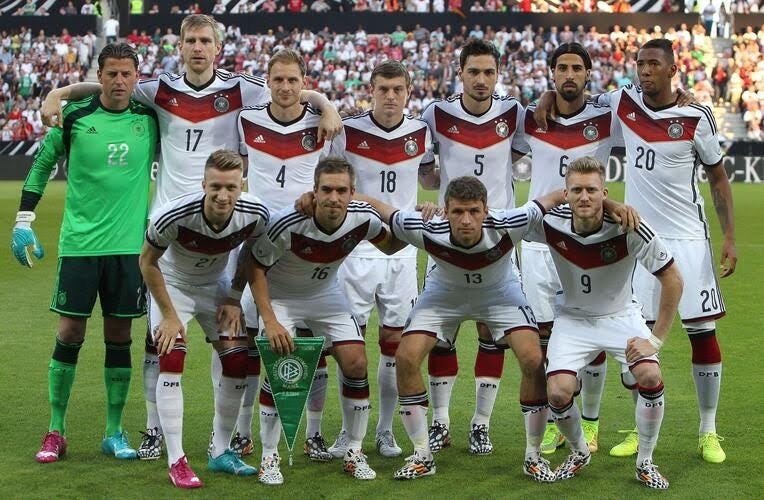
Germany usually gets pulled in as the structured version of this.
Planning and systems matter. The pipeline keeps producing. That part is real.
But if it explained everything, the drop after 2014 wouldn’t have looked the way it did.
The system stayed. The level didn’t collapse.
What changed was the overlap, fewer players arriving at the same time shaped by the same ideas, small differences in timing, in roles, in how the game was being interpreted.
Not enough to break it completely, but enough that it no longer felt inevitable.
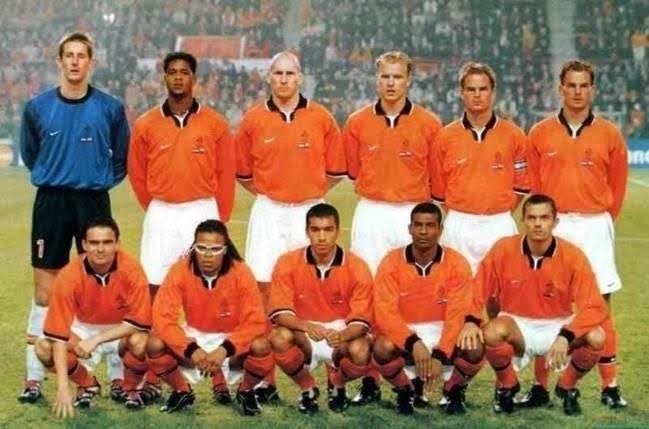
The Netherlands have been circling this for decades.
A smaller pool, but a clear philosophy. Ideas that travel across generations, influencing the game far beyond the size of the country itself.
But even there, it doesn’t hold continuously.
A group comes through and it clicks. Then it fades again, not because the understanding disappears, but because the timing does.
The ideas travel across generations. The alignment that made them visible doesn’t. We saw it when the revolutionary Cruyff-led Total Football era of the 1970s dissolved, and again when the brilliant, fluid midfields of the early 2010s faded into transitional rebuilds.
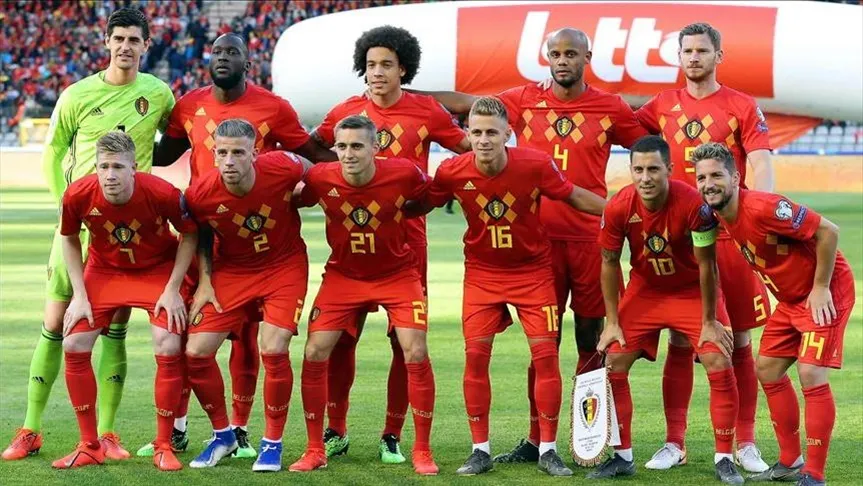
Belgium is the one that unsettles the pattern.
On paper, it had everything. Elite players across the pitch, all in their prime at roughly the same time.
It should have turned into something more definite than it did.
Instead, it hovered.
Good enough to compete with anyone. Not quite something that imposed itself the way people expected.
At times it felt like a very strong collection of players rather than something that fully locked into place.
The difference wasn’t talent.
Those players were shaped in different systems, different leagues, different tactical languages. Individually, they were among the best in the world. Together, they never quite shared the same picture of the game at the same speed.
Nothing was missing in isolation. It just never aligned fully.

The Final Test: Spain’s 2026 World Cup Masterclass
Following the July 19, 2026 final, the World Cup in North America gave this argument its most striking modern example. Spain did not simply win the tournament. They produced another demonstration of what can happen when a generation of players grows within a shared footballing language.
In the final, Spain defeated Argentina 1–0 after extra time at New York New Jersey Stadium, with Ferran Torres scoring the decisive goal in the 106th minute.
The result was not about one player carrying the team. Spain’s tournament was built around collective structure, depth and the ability to maintain their identity while changing the players within it. They conceded only once across the entire tournament, while Rodri was named the tournament’s best player and Unai Simón kept seven clean sheets.
That does not prove that shared footballing ideas are the only reason great generations emerge. Football is too complicated for that. But it adds another striking example to the pattern.
The best generations can look inevitable while they are happening.
They aren’t.
They are the product of players, ideas, development and timing arriving together.
And when those things align, a national team can look like it has been playing the same game for years.
Players don’t arrive evenly. They bunch. Systems produce groups. Styles carry through.
But even with all of that, there’s still a gap between having the right players and everything actually fitting at the same time.
The few that cross it don’t just have talent. They have players shaped by the same ideas, arriving at the same moment, seeing the same game.
For a while, it looks inevitable.
It isn’t.
It’s timing.