Some NFL players had arms more than three inches shorter than expected for their height
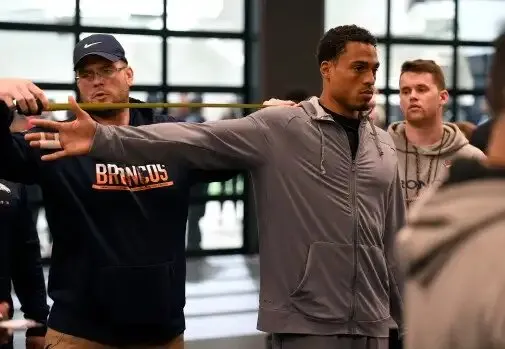
Not every NFL player fits the prototype scouts usually look for.
Some players enter the league with arms that are noticeably shorter than what their height would normally predict. In many cases, that difference is small enough to go unnoticed.
But occasionally, the gap becomes dramatic.
Interestingly, shorter arms are not always a disadvantage. In fact, for interior linemen and linebackers, they can sometimes be beneficial. A shorter reach can make it easier to slip under blockers’ pads and gain leverage in tight, physical battles at the line of scrimmage.
Still, when the difference becomes large enough, it creates one of the most unusual physical disproportions you can find in professional football.
To measure that gap, we can use a simple metric: the Arm Length Index (ALI).
What Is the Arm Length Index (ALI)?
The Arm Length Index (ALI) is a simple way to measure how unusual a player’s arm length is relative to their height.
Instead of looking at arm measurements in isolation, the ALI compares a player’s reach to what is normally expected for someone of the same height in the NFL.
The calculation is straightforward:
ALI = Actual Arm Length − Expected Arm Length
If the result is positive, the player’s arms are longer than average for their height.
If the result is negative, the player’s arms are shorter than expected.
For example, the average arm length for a 6’0″ NFL player is about 31.44 inches.
If a player standing 6’0″ measures 27.88 inches, their ALI would be:
27.88 − 31.44 = −3.56
That means the player’s arms are more than three and a half inches shorter than expected for their height.
Most NFL players fall fairly close to the expected range for their height. But when the difference approaches three inches or more, it becomes a true anatomical outlier.
Those extreme cases are where things start to get interesting.
Average NFL Arm Length by Height
Arm length in the NFL generally follows a predictable pattern: the taller the player, the longer the reach.
Players around 5’9″ typically measure close to 30 inches, while players near 6’0″ usually fall a little above 31 inches. By the time you reach 6’2″, the typical arm length climbs to just over 32 inches.
Because this relationship between height and reach is so consistent, scouts and analysts can estimate what a player’s arm length should roughly be based on height alone.
That baseline allows us to identify when a measurement is unusually long or unusually short.
When a player’s arms fall two or three inches below the expected range, the difference becomes noticeable. When the gap pushes beyond that, it reveals one of the most unusual body proportions you can find in professional football.
Those extreme cases are exactly what the Arm Length Index (ALI) is designed to highlight.
The −3.0 Threshold
Most NFL players fall fairly close to the expected arm length for their height. Differences of an inch or less are common and rarely stand out.
But when the gap reaches three inches or more, the measurement moves into truly unusual territory.
At that point, the player’s reach is no longer just slightly below average. It becomes a clear anatomical outlier.
Across decades of combine measurements and official listings, only a small number of players fall this far below the expected range.
The following players represent some of the most extreme negative Arm Length Index scores recorded in the NFL, with arms dramatically shorter than what their height would normally predict.

Doug Brien (ALI: −3.56)
At 6’0″, the average NFL player has arms measuring about 31.44 inches.
Veteran kicker Doug Brien, however, measured just 27.88 inches, placing him more than three and a half inches below the expected average for someone his height.
That difference gives Brien one of the most extreme negative Arm Length Index scores recorded in the league.
Unlike most positions, arm length has very little impact on kicking performance. Accuracy, leg strength, and consistency matter far more than reach, which likely explains why such a large physical discrepancy never prevented Brien from enjoying a long NFL career.
Arm Length: 27.88″
Height: 6’0″
Expected Arm Length: 31.44″
Arm Length Index: −3.56″
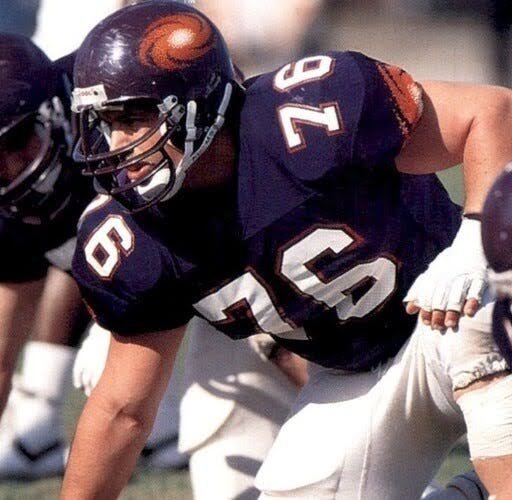
Mike Teeter (ALI: −3.50)
At 6’2″, the average NFL player has arms measuring about 32.25 inches.
Former Houston Oilers defensive tackle Mike Teeter measured just 28.75 inches, placing him three and a half inches below the expected average for someone his height.
For a defensive lineman, that difference is enormous. Long arms are typically prized at the position because they help defenders keep blockers at a distance and shed blocks more effectively.
To put Teeter’s reach into perspective, Bob Sanders, the 2007 NFL Defensive Player of the Year, stood only 5’8″ yet still had longer arms than Teeter.
In other words, a player six inches shorter possessed greater reach.
Arm Length: 28.75″
Height: 6’2″
Expected Arm Length: 32.25″
Arm Length Index: −3.50″
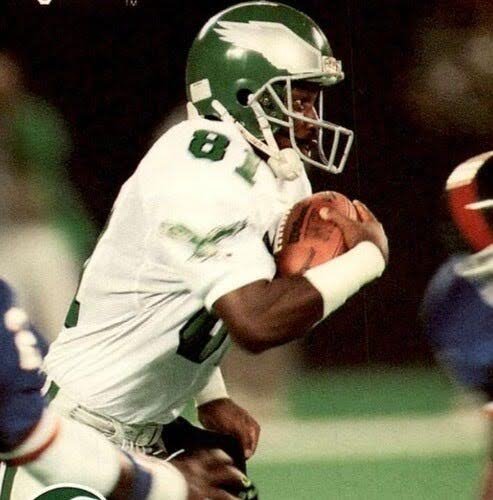
Michael Bellamy (ALI: −3.36)
At 6’1″, the average NFL player has arms measuring about 31.86 inches.
Wide receiver Michael Bellamy measured just 28.50 inches, placing him more than three inches below the expected average for someone his height.
To understand how unusual that is, consider Odell Beckham Jr., who stands only 5’11” but measured 32.75-inch arms.
Despite being two inches shorter, Beckham still has over four inches more reach than Bellamy.
For a wide receiver, that difference represents a massive gap in catch radius at the point of contact.
Arm Length: 28.50″
Height: 6’1″
Expected Arm Length: 31.86″
Arm Length Index: −3.36″
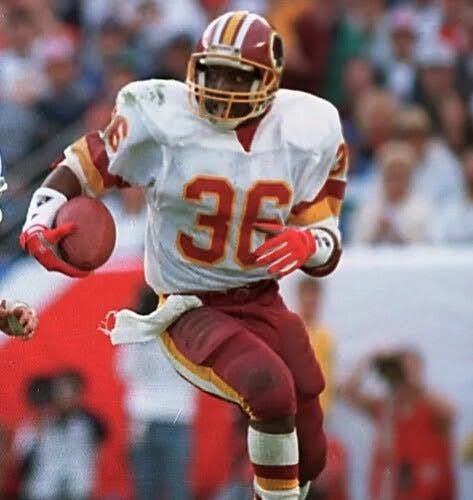
Timmy Smith (ALI: −3.27)
At 5’11”, the average NFL player has arms measuring about 31.02 inches.
Running back Timmy Smith measured only 27.75 inches, placing him more than three inches below the expected average for his height.
To put that into perspective, LeSean McCoy, who also stands 5’11”, measured 31.75-inch arms.
That means McCoy has four full inches more reach than Smith despite being the exact same height.
In a position where stiff-arms, ball security, and pass catching can depend heavily on reach, that difference is enormous.
Yet Smith still delivered one of the most unforgettable performances in NFL history, rushing for 204 yards in Super Bowl XXII, proving that production doesn’t always follow measurements.
Arm Length: 27.75″
Height: 5’11”
Expected Arm Length: 31.02″
Arm Length Index: −3.27″
Near-Extreme Cases (−2.75 to −2.99)
While the previous players represent the most dramatic negative ALI scores, several others also fall well below the expected arm length for their height.
These players don’t quite cross the three-inch threshold, but their reach still sits far enough below average to stand out.
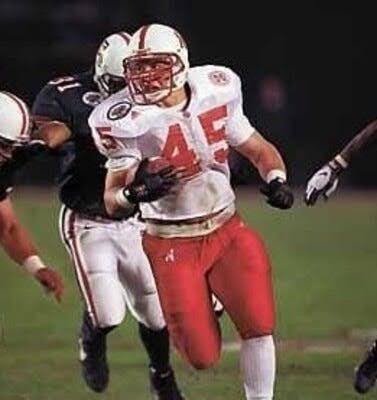
Joel Makovicka (ALI: −2.77)
At 5’11”, the average NFL player has arms measuring about 31.02 inches.
Fullback Joel Makovicka measured 28.25 inches, placing him nearly three inches below the expected range for someone his height.
For comparison, Marshawn Lynch, who also stands 5’11”, measured 31.13-inch arms.
That gives Lynch nearly three inches more reach than Makovicka despite being the same height.
In Makovicka’s role as a blocking fullback, however, leverage and pad level often mattered more than reach, allowing him to carve out a professional career despite the unusually short arm length.
Arm Length: 28.25″
Height: 5’11”
Expected Arm Length: 31.02″
Arm Length Index: −2.77″
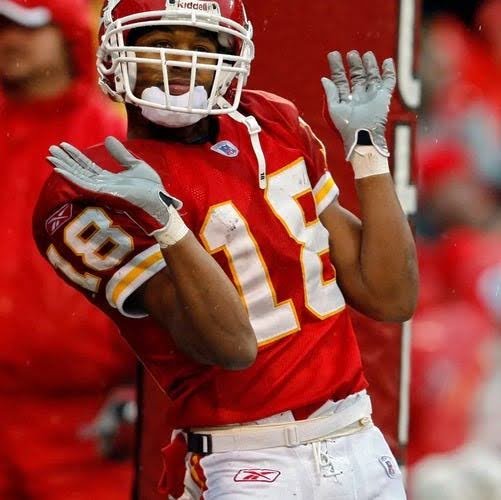
Samie Parker (ALI: −2.77)
At 5’11”, the average NFL player has arms measuring about 31.02 inches.
Wide receiver Samie Parker measured 28.25 inches, placing him nearly three inches below the expected average for someone his height.
To put that into perspective, Antonio Brown, who stands one inch shorter at 5’10”, measured 31.00-inch arms.
Despite being shorter, Brown still has almost three inches more reach than Parker, highlighting how unusual Parker’s arm length is relative to his height.
Even so, Parker built a career as a deep-threat receiver, relying on speed and separation rather than reach at the catch point.
Arm Length: 28.25″
Height: 5’11”
Expected Arm Length: 31.02″
Arm Length Index: −2.77″
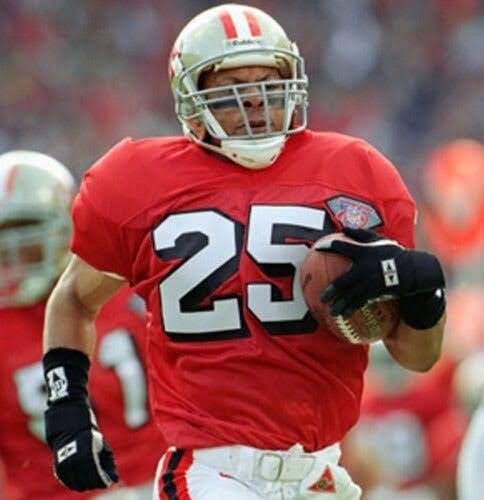
Eric Davis (ALI: −2.77)
At 5’11”, the average NFL player has arms measuring about 31.02 inches.
Cornerback Eric Davis measured 28.25 inches, placing him nearly three inches below the expected average for someone his height.
To put that into perspective, Tyrann Mathieu, who stands two inches shorter at 5’9″, measured 31.13-inch arms.
Despite being shorter, Mathieu still has almost three inches more reach than Davis, highlighting how unusual Davis’s arm length is relative to his height.
Even so, Davis went on to build a successful NFL career and was a key contributor on the San Francisco 49ers’ Super Bowl-winning defense in the 1994 season.
Arm Length: 28.25″
Height: 5’11”
Expected Arm Length: 31.02″
Arm Length Index: −2.77″
Honorable Mentions
Several other players also measured noticeably below the expected arm length for their height, though not quite enough to reach the near-extreme threshold.
These cases still highlight how varied NFL body proportions can be.
Notable examples include:
Johnny Bailey — 5’8–27.13″ (ALI: −2.63)
Doug Thomas — 5’10–28.00″ (ALI: −2.60)
Jason Elam — 5’11–28.63″ (ALI: −2.39)
Braxton Berrios — 5’9–28.00″ (ALI: −2.18)
Giovani Bernard — 5’9–28.00″ (ALI: −2.18)
Gary Wellman — 5’9–28.00″ (ALI: −2.18)
Steve Bartalo — 5’9–28.00″ (ALI: −2.18)
Alan Grant — 5’10–28.50″ (ALI: −2.10)
Jameel Cook — 5’10–28.50″ (ALI: −2.10)
…and several others across multiple positions.
What Positions Tend to Have Shorter Arms?
When looking across the full dataset, a clear pattern begins to emerge.
Most of the players with unusually short arms fall into a few specific positions: running backs, wide receivers, and defensive backs.
These positions rely heavily on speed, agility, and acceleration, traits that are not strongly tied to arm length.
Running backs appear especially frequently among the shorter-arm measurements. Because they operate in tight spaces and depend on vision, balance, and pad level, arm length rarely determines success at the position.
Wide receivers show a slightly different dynamic. Longer arms can expand catch radius, but many successful receivers rely more on route running and separation, which helps offset a shorter reach.
Defensive backs also appear regularly on the list. While longer arms can help contest passes, instincts, positioning, and timing often matter far more in coverage.
One position stands out for a different reason: quarterback.
Across the dataset, no quarterbacks appeared among the players with extremely short arms for their height. That absence likely isn’t a coincidence. Quarterbacks rely heavily on arm extension when throwing, and a longer reach can help generate leverage and control the ball during the passing motion.
A few placekickers do appear on the list, including Doug Brien and Jason Elam. However, arm length has almost no impact on kicking performance, which may explain why unusually short reach shows up more easily at that position.
In contrast, positions such as offensive tackle and defensive end rarely appear among the shortest-arm measurements, since reach is a major advantage when engaging blockers at the line of scrimmage.
Final Thoughts
In the NFL, physical measurements are scrutinized down to the fraction of an inch. Arm length, in particular, can influence leverage, catch radius, and the ability to control opponents at the line of scrimmage.
Yet the players in this list show that the relationship between measurements and success is not always straightforward.
Some of the most unusual arm-length discrepancies belong to athletes who still carved out professional careers. Others delivered memorable performances that had little to do with their physical proportions.
The data highlights something fascinating about the league: while the NFL often favors certain physical prototypes, football success ultimately depends on far more than measurements.
Skill, instincts, preparation, and opportunity can outweigh even the most unusual anatomical quirks.
Sometimes, the numbers reveal interesting patterns.
But the game itself is always more complicated than the numbers.