Ten players who proved that skill, IQ, and determination can outweigh freakish wingspans in the world’s most physically demanding league.
In the NBA, length is currency.
Scouts obsess over it. You’ll see analysts measuring it down to the millimeter, and on draft night, front offices will always reach for it.
The average NBA player has a wingspan roughly four inches longer than their height, giving most players a positive ape index of around +4″. In a league where defensive versatility, rim protection, and passing lanes dominate strategy, longer arms are often seen as a competitive advantage.
For many prospects, elite length can raise their draft stock before they ever prove they can shoot, defend, or think the game.
But what if that advantage isn’t everything?
What if some of the league’s biggest stars, MVPs, champions, and franchise cornerstones, built Hall of Fame careers without elite reach?
This is a look at 10 true NBA stars with an ape index of +2 inches or less, players who succeeded in a league built on wingspan, proving that skill, IQ, and mentality can outweigh raw physical tools.
The NBA Is Built for Long Arms
In basketball, “ape index” is simple:
Wingspan minus height.
If a player is 6’8” with a 7’2” wingspan, he has a +6″ ape index.
If he’s 6’8” with a 6’8” wingspan, he has a 0″ ape index.
In everyday life, wingspan and height are usually close to equal. But the NBA isn’t everyday life.
The average NBA player carries roughly a +4-inch ape index. Long arms are not a bonus, they’re standard equipment.
That extra reach affects everything:
- Shot contests without fouling
- Passing lane disruption
- Finishing over rim protectors
- Defensive switching versatility
- Rebounding radius
Over time, scouting departments began prioritizing wingspan almost as heavily as height. The modern game, with its emphasis on switching defenses and positionless schemes, made length even more valuable.
Which makes one thing clear:
An ape index of +2″ or lower in today’s NBA isn’t impressive.
It’s below average.
And yet, some of the most dominant stars of the past two decades fall into that exact category.
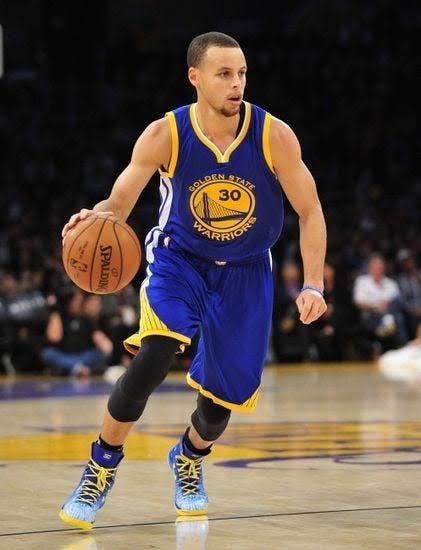
1. Stephen Curry
Height: 6’2″ | Wingspan: 6’3.5″ | Ape Index: +1.5″
In a league obsessed with length, Stephen Curry is almost physically ordinary. His wingspan barely exceeds his height, giving him a tight upper-body reach that sits dramatically behind the standard basketball baseline. Yet Curry changed the sport more than any player of his generation, redefining dominance without structural extension. He didn’t overwhelm defenders with arm length or swallow up passing lanes. Instead, his range, handle, and off-ball movement turned him into a two-time MVP, Finals MVP, and the most transformative offensive force of the modern era.
To put his conservative dimensions into perspective, consider Isaiah Thomas. Thomas stands at just 5’9″—five inches shorter than Curry—yet he carries an almost identical 6’2″ span. The fact that a multi-time championship engine functions with the upper-body reach of a sub-6-foot point guard highlights just how much Curry relies on pure shooting physics over default physical tools. If arm length were destiny, Curry would have been severely limited. Instead, he proved that skill, IQ, and structural innovation can easily outweigh raw physical assets.
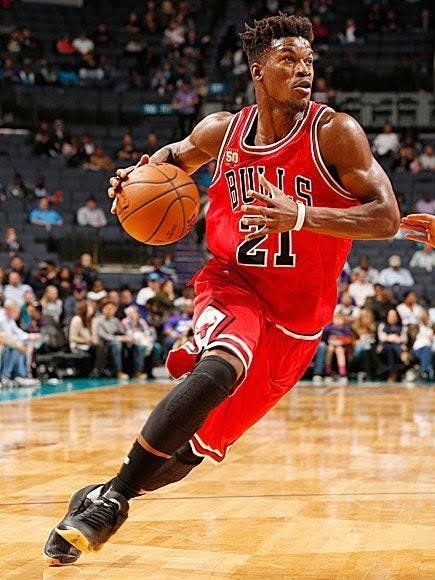
2. Jimmy Butler
Height: 6’6″ | Wingspan: 6’8″ | Ape Index: +2″
Even with a slightly above-average wingspan for his height, Jimmy Butler doesn’t boast the freakish structural reach that many NBA stars rely on. In a ecosystem where long arms are standard equipment, his physical frame is remarkably compact. Yet Butler has become one of the premier two-way players in the world. His success is built on elite basketball IQ, positioning, and relentless effort. Defensively, he can guard multiple positions and anticipate plays to completely shut down the leverage of longer-armed opponents. On offense, his craftiness, footwork, and clutch mentality make him a top scorer and a Finals-caliber competitor.
For a stark look at the league’s skewed anatomy, contrast Butler with elite point guard Damian Lillard. Lillard stands at 6’2″ but possesses a 6’7.75″ reach, meaning that Lillard essentially matches Butler’s upper-body extension despite giving up four full inches of height. Butler’s ability to lock down elite wings and protect the paint without a traditional forward’s extension is a masterclass in core strength. He stands as living proof that willpower can overcome a standard skeletal frame, proving that long arms are not the only path to superstardom.
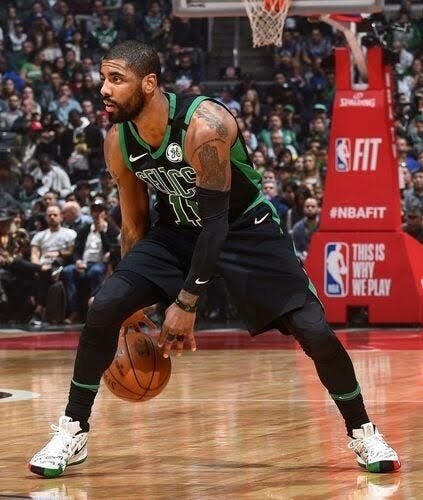
3. Kyrie Irving
Height: 6’2″ | Wingspan: 6’4″ | Ape Index: +2″
Kyrie Irving is one of the most electrifying point guards in NBA history, yet his wingspan is completely average by pro standards. Operating with half of the typical basketball advantage, Kyrie relies almost entirely on skill, agility, and precision rather than a massive physical wingspan. His handles are legendary, his finishing around the rim surgical, and his ability to create space doesn’t require an extreme upper body. Defensively, he faces a regular physical challenge, but he makes up for it with anticipation, quick feet, and savvy positioning.
The tight parameters of Irving’s reach are exposed when compared to Derrick Rose. Standing at the exact same 6’2″ height, Rose entered the league sporting a long 6’8″ wingspan. While other guards could rely on raw physical extension to finish over collapsing rim protectors, Kyrie had to engineer the most complex spin, english, and ball-control angles in basketball history. His career proves that elite skill and creativity can easily compensate for standard dimensions, turning an ordinary frame into a canvas for unmatched offensive artistry.
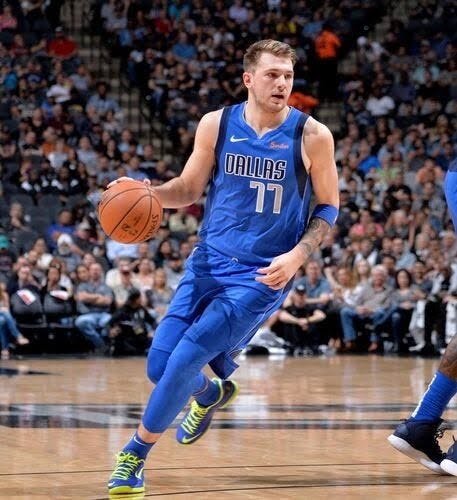
4. Luka Dončić
Height: 6’8″ | Wingspan: 6’9″ | Ape Index: +1″
Despite being a generational talent, Luka Dončić doesn’t rely on freakish wingspan to dominate. His +1″ reach gap is exceptionally close to equal in a league built for giants, meaning he doesn’t have the extreme structural reach advantage many stars enjoy. Luka’s success comes from elite basketball IQ, anticipation, and craftiness. Offensively, he threads impossible passes through defenses, manipulates opponents with subtle fakes, and uses footwork to get to his spots, all without needing extraordinary length.
To see how unusual Dončić’s frame is for a primary playmaker, look at shooting guard Donovan Mitchell. Mitchell stands at just 6’2″ but wields a massive 6’10” wingspan, leaving a player six inches shorter than Luka with longer arms than the Slovenian superstar. Luka’s ability to lead the league in scoring and control defensive glass proves that master-level deceleration and size deployment matter far more than elite extension. He completely rewrites the scouting playbook, proving that game intelligence can easily outweigh raw physical tools.

5. Dirk Nowitzki
Height: 7’0″ | Wingspan: 7’2″ | Ape Index: +2″
Dirk Nowitzki never had the monstrous wingspan of a typical NBA seven-footer. Possessing a standard, non-freakish upper-body reach, he didn’t rely on arm length to dominate in the paint. Instead, Dirk’s game was a masterclass in skill, timing, and precision. Known for his signature one-legged fadeaway, Dirk stretched defenses in an era dominated by traditional post play. His shooting range, footwork, and understanding of spacing allowed him to score over taller, longer defenders without needing elite length.
The conservative nature of Dirk’s 7’2″ reach is made clear when contrasted with perimeter wing Kawhi Leonard. Wielding a wild 7’3″ wingspan on a 6’6″ frame, Leonard possesses more absolute arm length than the legendary Mavericks power forward despite standing six inches shorter. Dirk bypassed this standard big-man limitation by elevating his release point, creating a high, unblockable shooting arc that rendered defensive reach completely useless. His career proves that a seven-footer doesn’t need freakish wings to become a Finals MVP, league MVP, and a 30,000-point scorer.
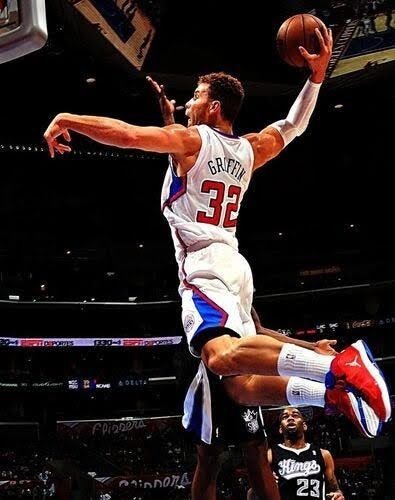
6. Blake Griffin
Height: 6’9″ | Wingspan: 6’11” | Ape Index: +2″
Blake Griffin entered the NBA as a high-flying athletic specimen, but unlike some of his big-man peers, he didn’t have a jaw-dropping wingspan. His physical extension is remarkably ordinary for a 6’9″ player. Griffin’s dominance came from sheer explosiveness, timing, and agility. He could elevate over taller defenders, finish with authority, and grab boards with instinctive positioning rather than extraordinary reach.
Griffin’s shorter arm proportions are highlighted when compared to Dwyane Wade. Wade, an elite 6’4″ shooting guard, possessed a monstrous 6’11” wingspan—matching Griffin’s total reach down to the exact millimeter. While other power forwards could rely on long arms to secure rebounds, Blake had to maximize absolute vertical jump mechanics and box-out positioning to dominate the interior. His mid-range game and passing ability further allowed him to impact the offense without relying on freakish arm length, proving you don’t need giant arms to be an All-NBA star.
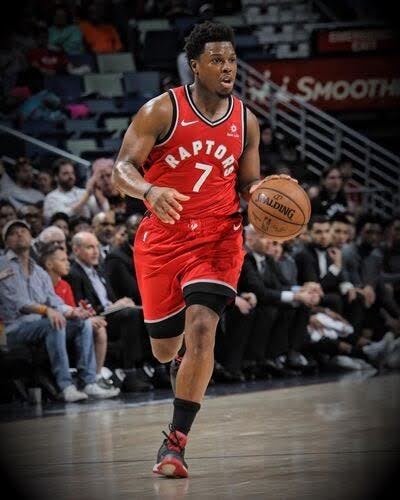
7. Kyle Lowry
Height: 6’0″ | Wingspan: 6’2″ | Ape Index: +2″
Kyle Lowry is known for his heart, leadership, and clutch play, not for freakish length. With a small two-inch reach gap, his wingspan is only slightly above his height, remaining well below the league’s default standard for arms. Despite this, Lowry became a perennial All-Star and NBA champion. His defensive prowess comes from anticipation, quick hands, and relentless effort rather than an intimidating reach.
To understand the baseline of a normal guard frame, compare Lowry to slam-dunk icon Nate Robinson. Standing at just 5’9″, Robinson carried a 6’1″ wingspan—nearly identical to Lowry’s 6’2″ reach despite giving Lowry three inches of height. Lowry built an elite defensive legacy not by using default length to disrupt passing lanes, but by weaponizing a low center of gravity to draw charges and strip driving ball-handlers. His career proves that intelligence and toughness can easily allow a player with standard dimensions to thrive at the highest level.
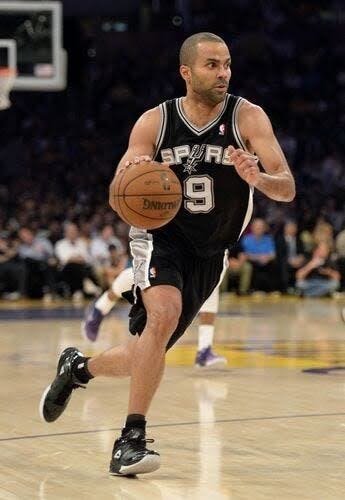
8. Tony Parker
Height: 6’2″ | Wingspan: 6’4″ | Ape Index: +2″
Tony Parker wasn’t blessed with a freakish wingspan, but what he lacked in reach, he made up for with speed, craft, and precision. Operating with a very standard upper body, Parker became one of the most successful point guards in NBA history. He excelled at navigating traffic, finishing at the rim, and creating for teammates, all while being difficult to defend due to his elite footwork and quickness.
Parker’s tightly packed upper-body frame is isolated clearly when compared directly to modern flyer Ja Morant. Morant stands at the exact same 6’2″ height line but checks into games with a long 6’7″ wingspan. Parker couldn’t rely on expansive reach extensions to finish over elite size, forcing him to master the league’s most lethal, high-velocity teardrop floater to evade incoming shot-blockers. His career, multiple NBA championships, and Finals MVP honors demonstrate that agility and timing can triumph over physical limitations.

9. Yao Ming
Height: 7’6″ | Wingspan: 7’5″ | Ape Index: -1″
Yao Ming was an absolute anomaly: one of the tallest players in NBA history, yet his wingspan was actually shorter than his height. A negative ape index of -1″ is almost unheard of for a player of his stature, yet Yao became a dominant force in the paint. His success wasn’t built solely on reach. Yao’s skill, basketball IQ, footwork, and soft touch around the rim allowed him to score efficiently and anchor defenses.
The true extent of Yao’s negative reach is unmasked by defensive center Alonzo Mourning. Mourning stood at 6’10″—a full eight inches shorter than the Chinese icon—yet he possessed a longer total wingspan at 7’6.5″. This meant Yao frequently anchored low-post defenses against opponents who could outreach him on paper, proving that his Hall of Fame peak relied on pure positional placement and an elite baseline of basketball intelligence. He stands as the ultimate reminder that while wingspan is an advantage, it is not destiny.
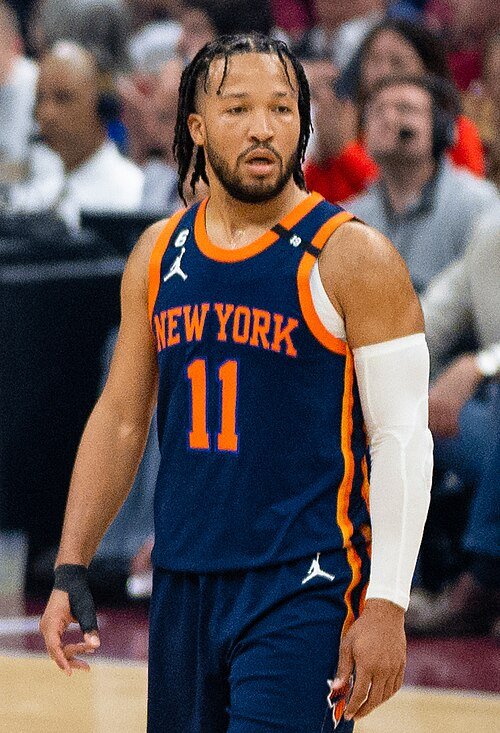
10. Jalen Brunson
Height: 6’2″ | Wingspan: 6’4″ | Ape Index: +2″
Jalen Brunson serves as the definitive modern blueprint for an elite franchise scoring engine operating entirely without traditional physical length. Navigating the hardwood with a balanced two-inch reach gap, the Knicks’ captain completely defies the league’s long-armed scouting defaults. He doesn’t rely on sweeping physical tools or structural explosion to manipulate space. Instead, his historic game relies entirely on master-level deceleration, low-post footwork craft, and an unmatched basketball IQ that allows him to carry a championship offense.
To truly understand how much Brunson maximizes his ordinary dimensions, contrast his physical build directly with Rajon Rondo. Rondo stood a full inch shorter than Brunson at 6’1″, yet he brandished a floor-warping 6’9″ wingspan that granted him a massive five-inch absolute reach advantage. While other point guards could lean on extreme arm extensions to finish plays above the paint, Brunson had to master the absolute fundamentals of body shields, change-of-pace hesitations, and elite mid-range spatial awareness. His historic run to the 2026 Finals MVP trophy proves that complete technical mastery and structural intelligence can comfortably conquer a wingspan-obsessed league.
Honorable Mentions
These players meet the strict criteria but did not quite reach the franchise-superstar tier. Some were decorated multi-time All-Stars, others were long-time culture-setting starters or elite role players. What they share is a masterclass in athletic execution: none relied on a freakish upper-body reach to carve out a legacy in the league.
- Kevin Love: Height: 6’10” / Wingspan: 6’11” / Ape Index: +1″. A five-time All-Star and key frontcourt engine of Cleveland’s iconic 2016 championship team, Love built his career on elite positioning, historic defensive rebounding volume, and masterful full-court outlet passing. His wingspan is incredibly modest for a modern power forward, but his basketball IQ and floor spacing made him one of the original stretch-big prototypes in the modern era.
- Gordon Hayward: Height: 6’7” / Wingspan: 6’8” / Ape Index: +1″. A peak All-Star forward, Hayward thrived as a highly creative primary scorer and versatile playmaker without elite physical length. His diverse mid-range skill set, high shooting efficiency, and on-court intelligence allowed him to outmaneuver longer wings cleanly.
- Ben Simmons: Height: 6’10” / Wingspan: 7’0” / Ape Index: +2″. Simmons’ career stands as a fascinating mix of generational brilliance and ultimate frustration. Despite lacking traditional reach for an elite modern big man, he weaponized elite foot speed to become a multi-time All-Star, an All-Defensive First Team anchor, and a lethal transition playmaker.
- T.J. Ford: Height: 6’0″ / Wingspan: 5’11.5″ / Ape Index: -0.5″. Before severe spinal stenosis cut his prime short, Ford was widely voted by his peers as the single fastest end-to-end player in the league. What makes his velocity staggering is his upper-body skeletal structure, as he is one of the few logged starting point guards to compete with shorter arms than his actual height. He relied entirely on elite deceleration and a blistering first step to manipulate interior defense angles.
- JJ Redick: Height: 6’3” / Wingspan: 6’3” / Ape Index: 0″. Redick’s incredible fifteen-year career durability proves that elite off-ball movement doesn’t require a wingspan advantage. His perpetual motion tracking, conditioning, and lightning-quick release mechanics made him one of the most feared and respected perimeter floor-spacers of his generation.
- Roy Hibbert: Height: 7’2” / Wingspan: 7’4” / Ape Index: +2″. A multi-time All-Star center who anchored Indiana’s historic Eastern Conference Finals defensive fronts, Hibbert protected the rim strictly through verticality and master-level positional awareness. He wasn’t a long-armed anomaly, but his physical discipline in the paint made him a nightmare for driving guards.
- Mason Plumlee: Height: 7’0” / Wingspan: 6’11” / Ape Index: −1″. Plumlee’s arms are actually shorter than his height, a massive rarity for a seven-foot center. Despite this limitation, his physical mobility, high-volume passing mechanics, and screen-setting intelligence have sustained a highly productive multi-decade career.
- Kelly Olynyk: Height: 7’0” / Wingspan: 6’10” / Ape Index: −2″. Olynyk thrives purely on frontcourt finesse and floor-spacing craft. His soft shooting touch, passing versatility, and offensive IQ allowed him to carve out a highly valued role across the league despite a distinct lack of traditional reach.
- Cody Zeller: Height: 6’11” / Wingspan: 6’11” / Ape Index: 0″. Zeller lacked the physical reach of modern shot-blockers, but his master-level footwork, high-percentage screening, and paint awareness made him a steady, reliable interior presence for years.
- Frank Kaminsky: Height: 7’0” / Wingspan: 6’11” / Ape Index: −1″. A national college player of the year and lottery pick, Kaminsky built an active career as a perimeter-oriented stretch-five, proving technical skill can easily compensate for a below-average reach.
- Sviatoslav Mykhailiuk: Height: 6’7″ / Wingspan: 6’5” / Ape Index: −2″. Operating with an exceptionally rare negative ape index for a modern wing specialist, Mykhailiuk has carved out a highly productive, long-term professional career entirely through elite perimeter gravity. The veteran sniper and 2024 NBA Champion utilizes a lightning-fast catch-and-shoot release to serve as a lethal floor-spacing equalizer, completely neutralizing the reach advantages of closing perimeter defenders.
- Kevin Willis: Height: 7’0” / Wingspan: 6’10” / Ape Index: −2″. Willis enjoyed a legendary, historically long NBA career that spanned over two decades. He survived the grueling low post entirely through brute core strength, physical toughness, and fundamental positioning rather than outlier body length.
Closing Thoughts
Looking at these ten headline stars and their veteran counterparts, a clear pattern emerges: an extreme upper-body reach is not a mandatory prerequisite for elite success. While a massive percentage of players across the league carry an extended arm span, these athletes carved out legendary careers with entirely standard, or even below-average, physical proportions.
Key Takeaways:
- Skill Trumps Length: Shooting accuracy, ball-handling depth, and pristine footwork serve as the ultimate equalizers. Icons like Stephen Curry and Tony Parker prove daily that high-end technical precision and spatial agility can completely neutralize a natural reach disadvantage.
- Court Intelligence Matters Most: True basketball IQ easily bypasses default physical levers. Mastering positional geometry, anticipating offensive plays, and reading floor spacing allowed Jimmy Butler, Luka Dončić, and Gordon Hayward to regularly shut down longer, more physically imposing opponents.
- Versatility Outlasts Raw Reach: Elite defensive execution is driven by positioning rather than arm extension. Mental anticipation, low-center-of-gravity quickness, and physical toughness can easily turn standard physical dimensions into a highly disruptive competitive edge on the floor.
- Effort and Mindset: Many of these performers share a relentless, historic work ethic. They consistently compensate for shorter wingspans with exceptional hustle, elite recovery timing, and strict defensive discipline, proving a calculated mental edge can easily override an anatomical gift.
- Rethinking the Draft Board: For professional scouts and basketball purists alike, this tracking index serves as a reminder to never overvalue loose physical dimensions during evaluation sweeps. Some of the most impactful, system-altering players in basketball history lacked giant wingspans, surviving instead because they were simply the smartest, hardest-working, and most skilled masters of the craft.
In a professional landscape heavily infatuated with raw physical tools, these stars remind us that the game ultimately rewards complete technical mastery, on-court strategy, and competitive heart. A long arm span is undoubtedly a valuable asset, but it is never absolute destiny.