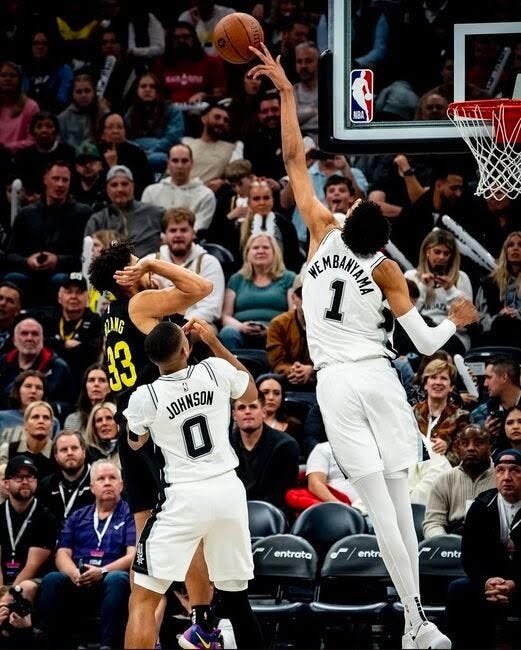
Exploring the NBA’s longest wingspans and how extreme reach changed games, careers, and defensive ceilings
Height has always been basketball’s most visible advantage. But quietly, often overlooked, wingspan has shaped the NBA just as much, if not more.
Two players can stand the same height and live in completely different physical realities. One struggles to contest shots. The other turns the paint into restricted airspace. The difference isn’t vertical leap or strength; it’s reach.
Below are the 10 longest wingspans ever recorded in NBA history, along with why those measurements mattered far beyond shock value.
This isn’t just a list of long arms. It’s a look at how extreme wingspan changed games, careers, and defensive ceilings.
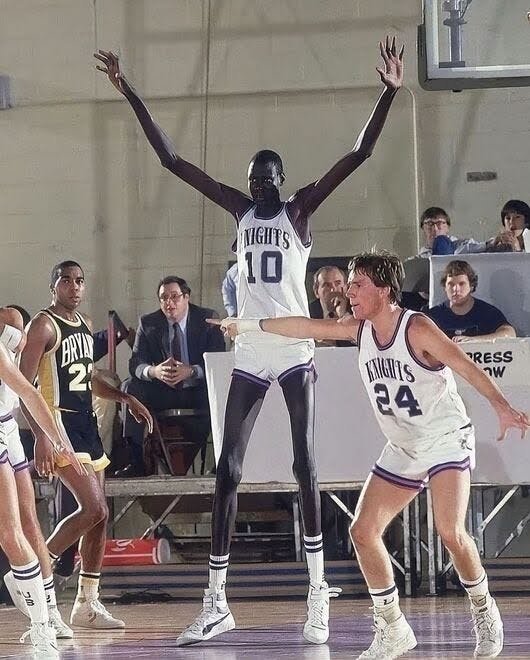
1. Manute Bol — 8’6” Wingspan
Height: 7’7”
Ape Index: +11”
Manute Bol’s wingspan remains the gold standard, and possibly the ceiling, of NBA length.
At 8 feet 6 inches, Bol’s arms stretched nearly 15 inches longer than the average NBA center’s. Despite averaging fewer than 19 minutes per game across his career, Bol finished with 3.3 blocks per game, an almost impossible rate.
Bol didn’t just block shots; he altered behavior. Guards hesitated. Bigs rushed. Entire offenses warped around his presence. Even Tacko Fall, who stands nearly the same height, has a wingspan four inches shorter than Bol’s.
No player before or since has weaponized wingspan quite like him.
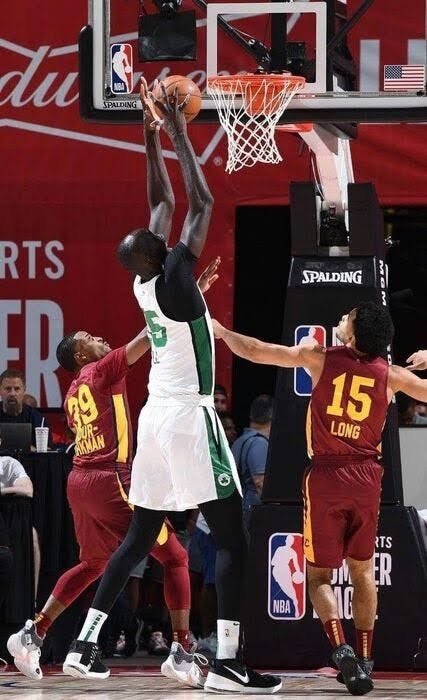
2. Tacko Fall — 8’2” Wingspan
Height: 7’6”
Ape Index: +8”
Tacko Fall owns the longest officially measured wingspan in modern NBA history.
At 8 feet 2.25 inches, his reach allowed him to contest shots without leaving the floor. While Fall never became a rotational mainstay, his physical presence alone could tilt matchups.
What separates Fall from Bol is not length, but coordination. Fall’s wingspan was historic; Bol’s was instinctive. That distinction explains why length alone doesn’t guarantee dominance.
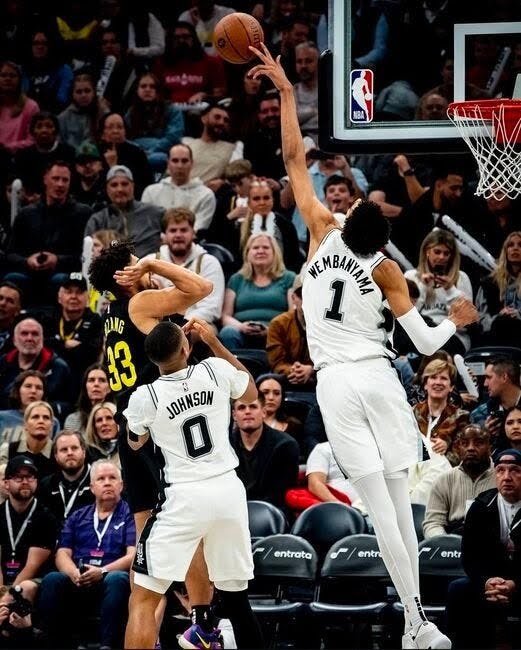
3. Victor Wembanyama — 8’0” Wingspan
Height: 7’4”
Ape Index: +8”
Victor Wembanyama is the modern prototype of what the NBA now values.
At 7’4” with an 8’0” wingspan, Wembanyama combines elite length with guard-level fluidity. Unlike many giants before him, he moves effortlessly in space, closes gaps instantly, and contests shots from impossible angles.
What makes Wembanyama terrifying isn’t just his reach; it’s that he uses every inch of it without sacrificing mobility.
He may not surpass Bol’s record, but he could surpass his impact.
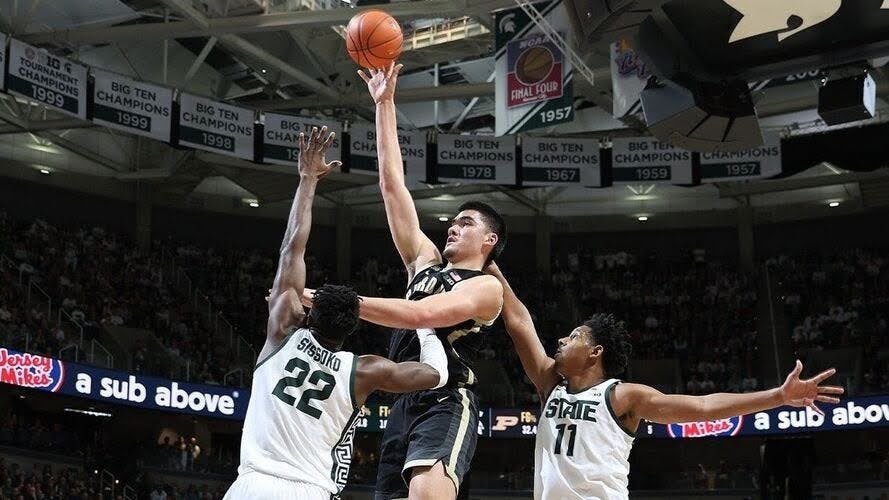
4. Zach Edey — 7’10.75” Wingspan
Height: 7’3”
Ape Index: +7.75”
Zach Edey’s wingspan places him among the longest players ever measured, and unlike many giants, his length is paired with brute strength.
Edey’s reach allows him to finish plays without fully elevating and defend vertically without fouling. While his NBA ceiling depends on foot speed, his physical tools alone make him a matchup problem.
His wingspan rivals some centers who stood taller, and that matters in a league obsessed with inches.

5. Mohamed Bamba — 7’10” Wingspan
Height: 7’0”
Ape Index: +10”
Mo Bamba’s wingspan shocked scouts long before fans learned his name.
At 7’10”, Bamba’s reach exceeded many players several inches taller. His length alone made him a rim-protection threat, allowing him to block or alter shots without perfect positioning.
Bamba represents the modern scouting gamble: elite measurements + developmental upside. While consistency has been elusive, his wingspan remains one of the most extreme ever recorded.
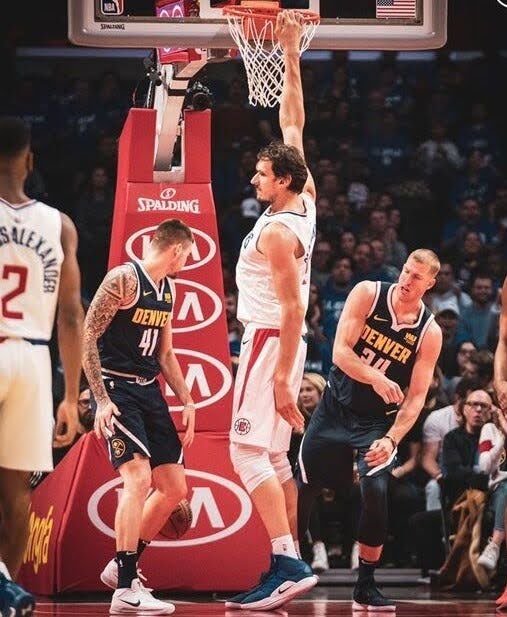
6. Boban Marjanović — 7’10” Wingspan
Height: 7’4”
Ape Index: +6”
Boban is proof that extreme size still matters, situationally.
His wingspan, paired with massive hands, makes him one of the most efficient per-minute scorers and rebounders in NBA history. While his mobility limited extended minutes, few players could match his interior presence.
Boban didn’t dominate games, but when he played, the court felt smaller.
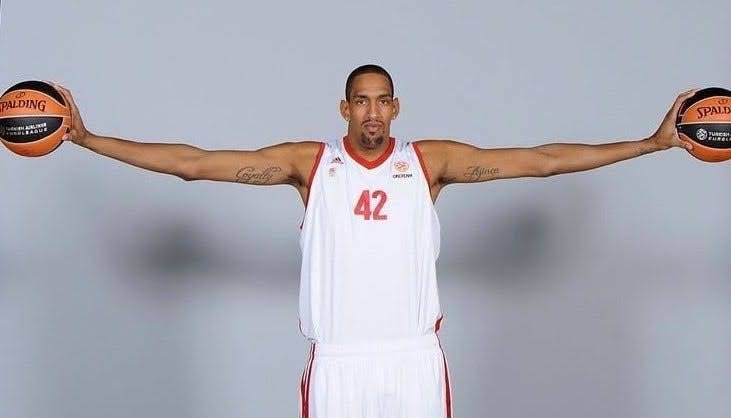
7. Alexis Ajinça — 7’9” Wingspan
Height: 7’1”
Ape Index: +8”
Alexis Ajinça quietly possessed one of the longest wingspans in NBA history.
At nearly 7’9”, his reach exceeded Kristaps Porziņģis’ despite Porziņģis being taller. Ajinça never became a star, but his length allowed him to survive defensively against bigger, stronger centers.
He’s a reminder that wingspan can extend careers, even when skill ceilings are modest.
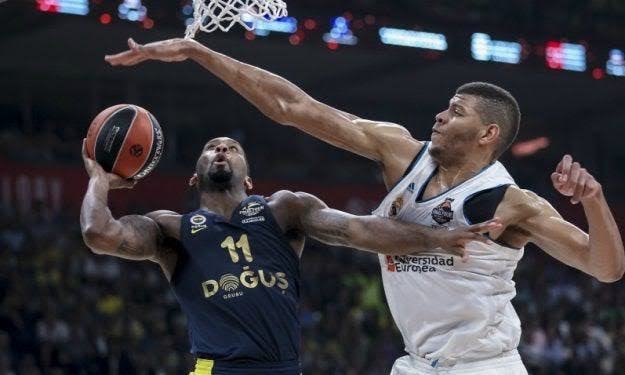
8. Walter Tavares — 7’9” Wingspan
Height: 7’3”
Ape Index: +6”
Though best known for his dominance overseas, Walter Tavares’ wingspan belongs in any historical discussion.
His reach allows him to control the paint without chasing blocks; he simply occupies space. In the modern NBA, that ability is rare and valuable, even if it doesn’t always translate to pace and space systems.
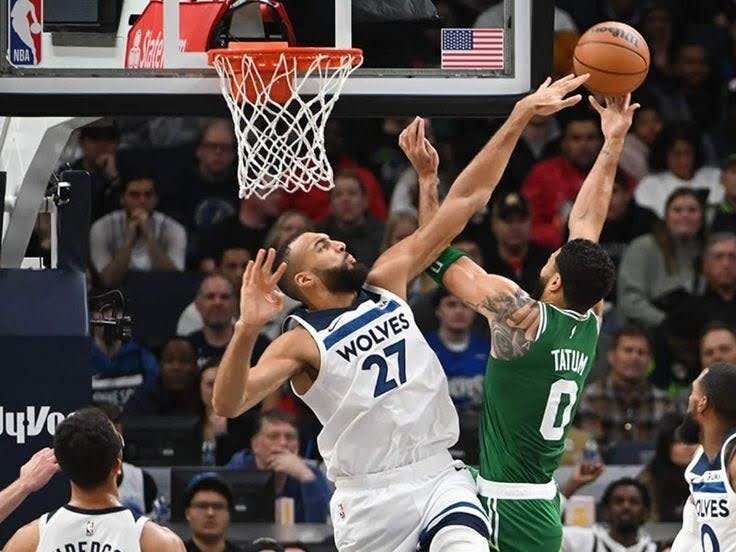
9. Rudy Gobert — 7’8.5” Wingspan
Height: 7’1”
Ape Index: +7.5”
Rudy Gobert proves that wingspan isn’t just about spectacle, it’s about results.
A multi-time Defensive Player of the Year, Gobert’s length allows him to contest shots while staying grounded, recover instantly, and deter drives before they begin.
Gobert may not be the longest ever, but he’s arguably the most effective modern example of wingspan dominance translating directly to winning.

10. Wilt Chamberlain — 7’8” Wingspan (Unofficial)
Height: 7’1”
Ape Index: ~+7”
Wilt Chamberlain’s measurements are legendary, and debated.
While official Combine data doesn’t exist, multiple credible accounts place his wingspan around 7’8”. Considering his strength, speed, and endurance, this reach helps explain how Wilt dominated physically in ways the league had never seen.
Even by modern standards, Wilt’s dimensions remain absurd.
Why These Measurements Matter More Than Ever
The NBA has evolved, but the importance of wingspan hasn’t diminished. It’s expanded.
In today’s positionless game, length determines:
- Defensive versatility
- Switching ability
- Shot deterrence
- Passing-lane control
Height may get you noticed. Wingspan keeps you relevant.
Final Thought
We may see taller players. We may see faster ones.
But it’s entirely possible we’ve already witnessed the outer limits of human wingspan in basketball.
And if that’s true, Manute Bol’s 8’6” reach may stand forever, not just as a measurement, but as a reminder that sometimes the biggest advantages in sports aren’t the most obvious ones.