Fifteen players, three enormous lineups, and a final question: which team would actually win?
Kevin Durant makes the Second Team. Victor Wembanyama makes the Third.
That is what happens when a basketball team is selected with a tape measure.
We have assembled three lineups using the longest documented or credibly reported wingspans we found at each traditional position. Each team has a point guard, shooting guard, small forward, power forward and center. Every player appeared in an NBA regular-season game.
Some names are familiar. Others might send you searching for old highlights. All bring unusual reach to their positions.
But the longest lineup does not automatically win the game. Once the measurements have decided the teams, we will put all three on the same court—hypothetically—and choose a winner.
How the teams were selected
Wingspan determines selection. First Team means the longest selected wingspan at that position, followed by Second and Third. This ranks absolute reach. For the proportional comparison, 27 NBA players with wingspans that are absurd for their height examines how far a player’s reach exceeds his stature.
Every documented fraction counts. A 7’2¼″ measurement stays 7’2¼″. Rounding it to 7’2″ could erase the margin separating two candidates.
Reported figures remain eligible. A † marks a selected figure whose original standardized testing record has not been located; unmarked selections are attributed to identified testing, including college testing where stated. Credible reports qualify, but rounded figures cannot establish exact fractional advantages over nearby testing results; material discrepancies are disclosed in the profiles.
Each player gets one position. Assignments reflect established NBA roles and career identity, rather than height alone or an occasional experiment. Versatile players receive an explanation where needed.
Identical figures need a tiebreaker. When recorded wingspans match, NBA achievement decides team placement. That separates the selections without pretending one player has longer arms.
Role assignments recognize substantial NBA use through the 2025–26 season, rather than requiring one career position. A college role or theoretical fit alone does not qualify.
All Three Teams at a Glance
| Position | First Team | Second Team | Third Team |
| Point guard | Frank Ntilikina — 7’1″† | Shake Milton — 7’0¾″ | Ben Simmons — 7’0¼″ |
| Shooting guard | Bilal Coulibaly — 7’3″† | Jalen Williams — 7’2¼″ | Cedric Coward — 7’2¼″ |
| Small forward | Bruno Caboclo — 7’7″† | Kevin Durant — 7’4¾″ | Andrei Kirilenko — 7’4″† |
| Power forward | Bol Bol — 7’7″ | Chet Holmgren — 7’6″† | Anthony Davis — 7’5½″ |
| Center | Manute Bol — 8’6″† | Tacko Fall — 8’2¼″ | Victor Wembanyama — 8’0″† |
First Team: The Maximum-Reach Lineup
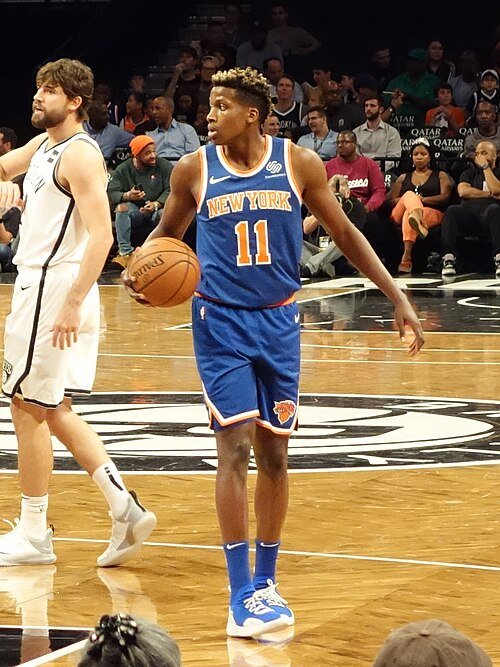
Point Guard: Frank Ntilikina — 7’1″†
Ntilikina brings the reach of a frontcourt player to the point of attack. His appeal begins with how much space those arms can close: a passing window that looks open can disappear as he slides into position.
Charlotte’s official team coverage lists his wingspan at 7’1″. That supports his selection, although an original measurement sheet with finer precision has not been located.
Wingspan: 7’1″ — 85 inches, reported
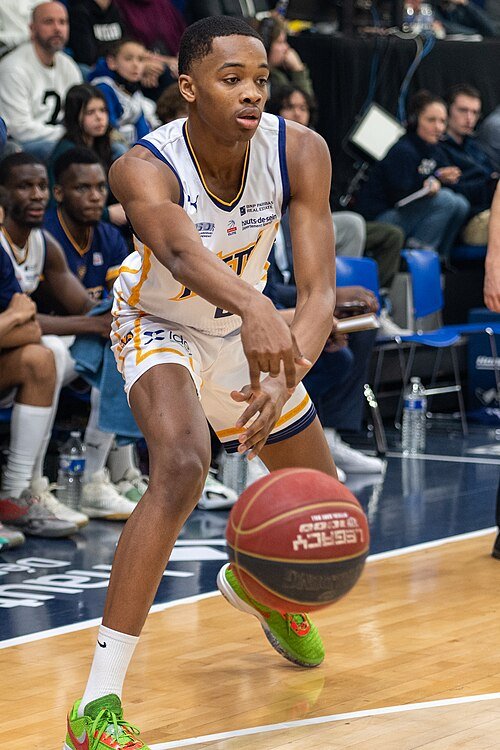
Shooting Guard: Bilal Coulibaly — 7’3″†
Coulibaly gives this backcourt another defender who can make routine passes feel ambitious. The length matters when he recovers after being beaten, reaches into a passing lane or contests a jumper without crowding the shooter.
Washington’s team-published feature carries his own reported 7’3″ wingspan. Earlier Wizards coverage gave 7’2″; we use the later figure while keeping the distinction visible.
Wingspan: 7’3″ — 87 inches, reported
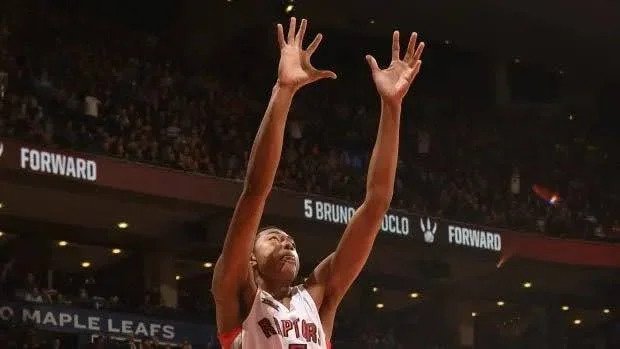
Small Forward: Bruno Caboclo — 7’7″†
Here is where the lineup starts to look strange.
Caboclo’s reported wingspan matches Bol Bol’s. They occupy different positions in this lineup. Toronto and Memphis team coverage both describe a 7’7″ reach, putting extraordinary length on the wing.
He entered the NBA as a small-forward prospect before moving toward power forward and small-ball center. We assign him to his established early NBA wing role and use him only once.
Wingspan: 7’7″ — 91 inches, reported
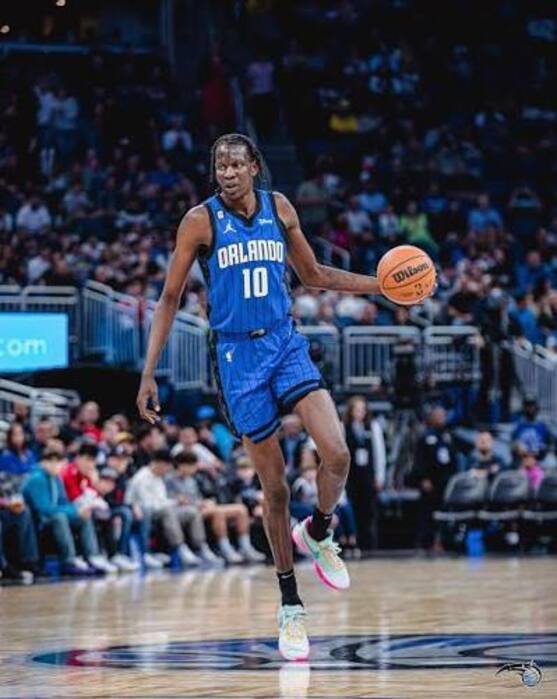
Power Forward: Bol Bol — 7’7″
Bol Bol looks like the obvious center until you remember that NBA teams have actually used him alongside one. His power-forward role lets this lineup put another 7’7″ wingspan between the wing and the basket.
His reach was recorded at the 2019 combine. The intrigue is the combination: a towering player who can face the basket, handle the ball and shoot, rather than spending every possession planted beside the rim.
Wingspan: 7’7″ — 91 inches, measured
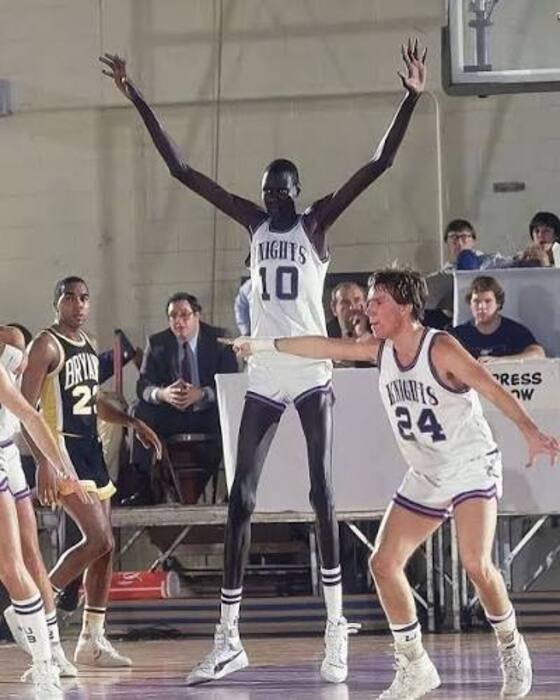
Center: Manute Bol — 8’6″†
The First Team ends with its most extreme measurement.
Bol’s widely reported 8’6″ wingspan is eleven inches longer than the reported reach of either forward beside him. For an attacking guard, getting past the first defender would only begin the problem.
His place here comes with the historical qualification: the figure is reported rather than traced to an original combine record. It is also the number that makes this lineup’s defensive ceiling so intriguing.
Bol also leads our broader comparison of the longest wingspans in NBA history, which examines extreme reach without separating players by position.
Wingspan: 8’6″ — 102 inches, reported
The First Team’s identity: passing-lane pressure and layers of shot-blocking length. Its biggest question is whether it can create enough efficient offense.
Second Team: Reach With Scoring Power
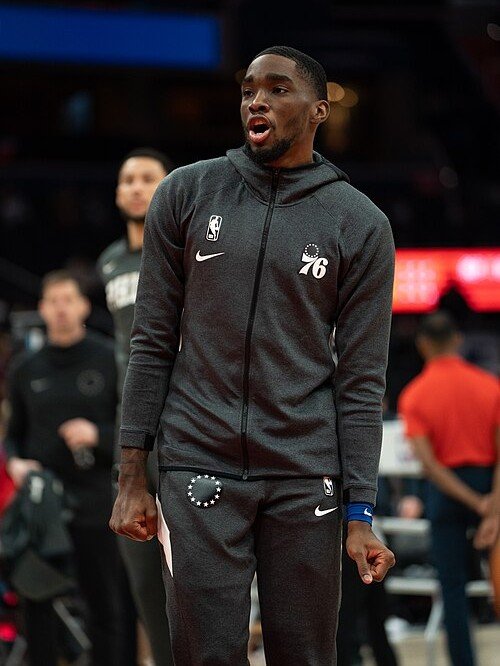
Point Guard: Shake Milton — 7’0¾″
Milton is the kind of discovery that makes this exercise worthwhile. His 2018 combine wingspan stretches beyond seven feet, giving a guard the reach many people would expect from a forward.
He has an established NBA point-guard role, including time directing Philadelphia’s second unit. Here, he would not need to dominate the ball. Get the offense organized, make an open shot and put the ball in the hands of the scorers around him.
Wingspan: 7’0¾″ — 84.75 inches, measured
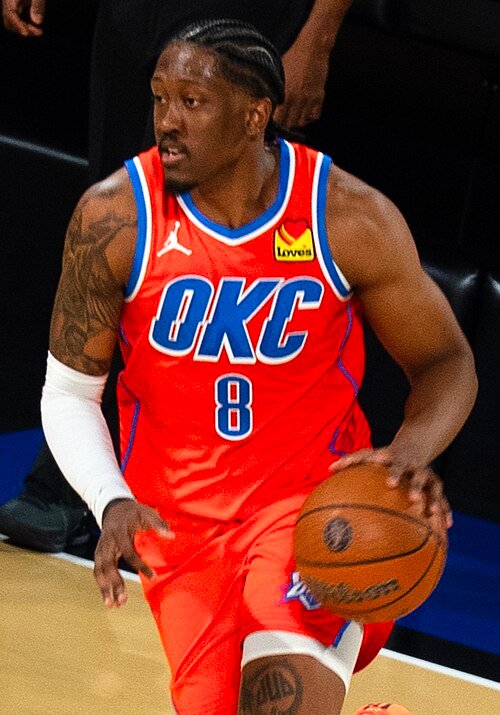
Shooting Guard: Jalen Williams — 7’2¼″
Williams combines exceptional length with the offensive versatility this particular lineup needs. He can attack a closeout, create off the dribble and make the next pass when the defense commits.
His 2022 combine measurement matches Cedric Coward’s 2025 combine figure. Williams takes the higher team through the NBA-achievement tiebreaker. The tape measure itself calls it even.
Wingspan: 7’2¼″ — 86.25 inches, measured
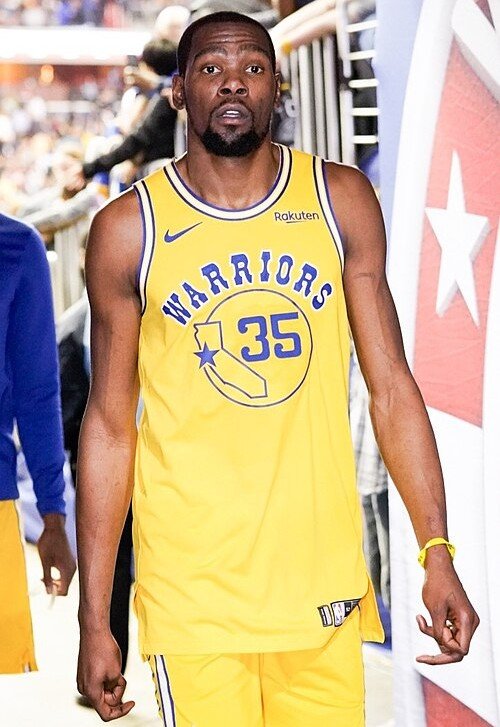
Small Forward: Kevin Durant — 7’4¾″
Durant is the strongest reminder that Second Team does not mean second-rate.
His recorded 2007 pre-draft wingspan is 7’4¾″, preserving the quarter-inch often lost in the familiar 7’5″ description. Put that reach behind his shooting touch and this lineup has someone who can manufacture a credible attempt when a possession breaks down.
Caboclo’s longer reported figure takes First Team at small forward. Durant gives the Second Team a formidable answer when it needs a basket.
Wingspan: 7’4¾″ — 88.75 inches, measured
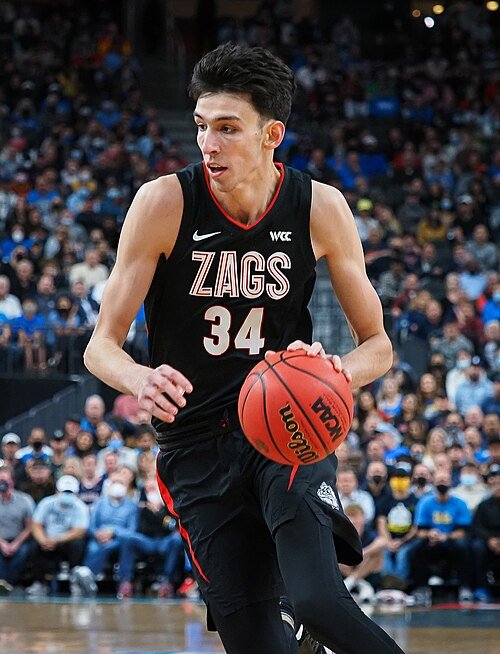
Power Forward: Chet Holmgren — 7’6″†
Holmgren gives Durant another big man who can score away from the basket. His shooting opens space, while his finishing and help defense let him work alongside a conventional center.
That is an established NBA role: Oklahoma City has used him at power forward beside Isaiah Hartenstein. The Thunder reports a 7’6″ wingspan, longer than Davis’s recorded 7’5½″.
Wingspan: 7’6″ — 90 inches, reported
Measurement note: NBA’s 2022 draft profile gives 7’5¼″. We use the Thunder’s longer reported figure under the same rule applied to other team-reported measurements. Neither publication identifies a standardized measurement event here. Using 7’5¼″ would restore Davis and Brand to Second and Third Team. Second Team would still get the basketball vote: Davis would replace Holmgren’s outside shooting with stronger finishing and defensive flexibility, while Third Team would lose the Davis–Wembanyama pairing.
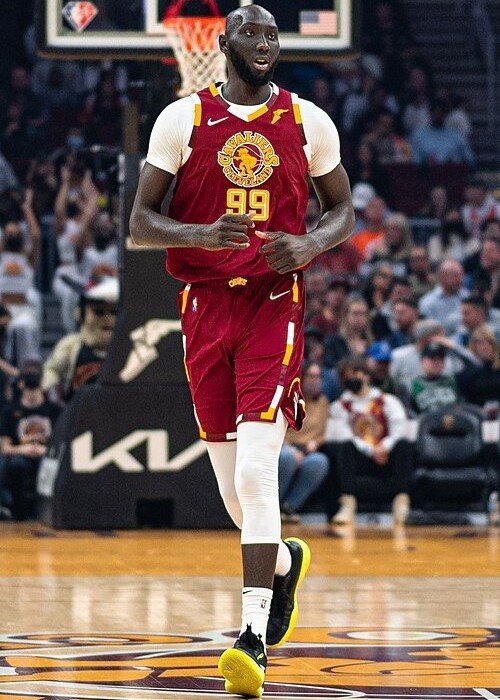
Center: Tacko Fall — 8’2¼″
Fall’s 8’2¼″ in 2019 is the NBA Draft Combine’s longest recorded wingspan.
His job in this lineup would be straightforward: protect the basket, collect rebounds and finish the chances created for him. The challenge would come farther from the rim, where opponents could force him into repeated screening actions.
The Second Team has enough scoring elsewhere that it would not need to build its offense around him. His limited NBA minutes, however, leave much less evidence for sustained effectiveness than the established careers around him. His dimensions suggest possibilities; they do not establish an elite defensive anchor.
Wingspan: 8’2¼″ — 98.25 inches, measured
The Second Team’s identity: multiple scoring options with enormous protection behind them. Managing Fall’s exposure on the perimeter would be essential.
Third Team: The Versatile Challengers
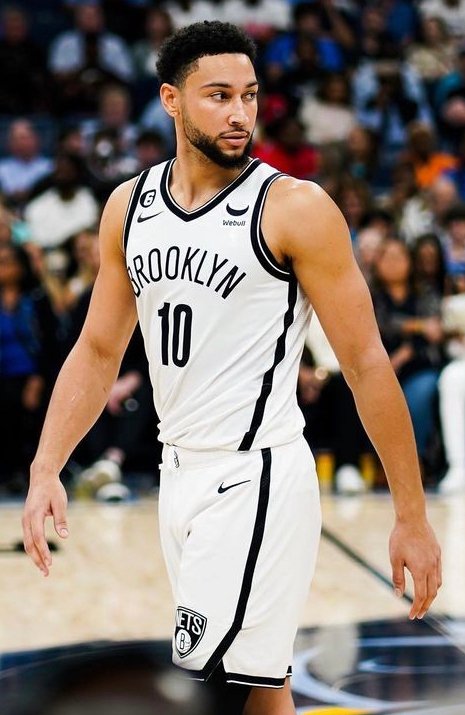
Point Guard: Ben Simmons — 7’0¼″
Simmons qualifies through the NBA point-guard role he established in Philadelphia. His 7’0¼″ wingspan is attributed to LSU’s 2015 testing in Minnesota’s published draft profile; it is a college testing figure, not an NBA combine measurement.
At his NBA peak, he would give this lineup transition passing, downhill pressure and defensive flexibility. The difficulty is spacing: opponents would have an obvious reason to leave him outside and crowd the players attacking the paint.
Wingspan: 7’0¼″ — 84.25 inches, LSU testing figure
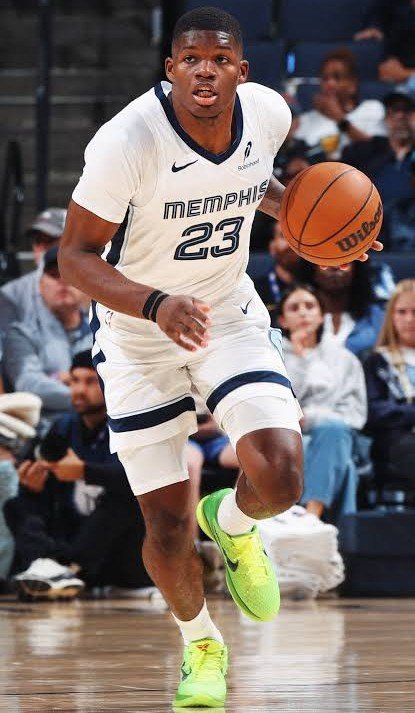
Shooting Guard: Cedric Coward — 7’2¼″
Coward shares Williams’s exact recorded wingspan, making this a genuine tie rather than a case of two rounded figures looking alike.
His perimeter shooting would be particularly valuable beside Simmons. In this hypothetical lineup, the opportunity is clear: punish defenders who drift toward the paint and provide another long body on the perimeter.
He takes Third Team because Williams has the stronger established NBA résumé, not because his arms are shorter.
Wingspan: 7’2¼″ — 86.25 inches, measured
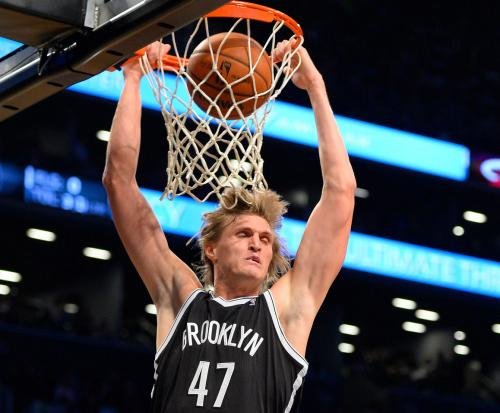
Small Forward: Andrei Kirilenko — 7’4″†
Kirilenko makes the Third Team difficult to describe with a conventional matchup chart.
His reported 7’4″ wingspan accompanied a game built around defensive activity, helping, cutting and connecting possessions. He would not need a steady diet of isolation attempts to contribute.
Alongside Simmons and Wembanyama, he gives this lineup several ways to disrupt an offense before the ball reaches the basket.
Wingspan: 7’4″ — 88 inches, reported
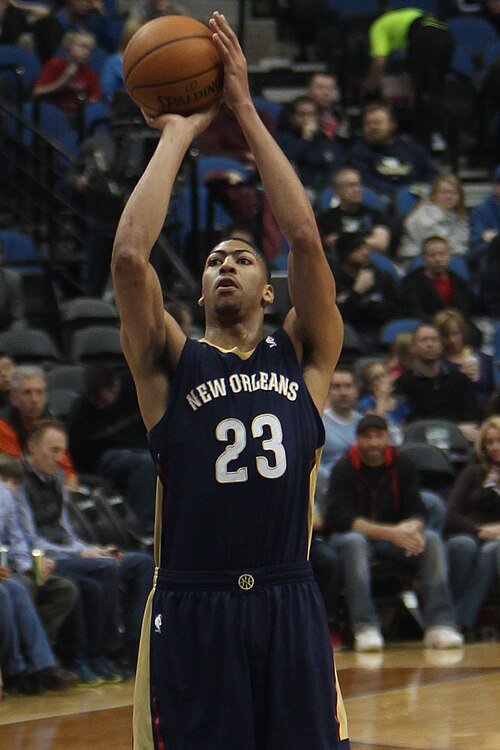
Power Forward: Anthony Davis — 7’5½″
Davis turns the Third Team’s frontcourt into its strongest argument. Alongside Wembanyama, he supplies finishing, rebounding and mobile rim protection without requiring the offense to run through post-ups.
His 2012 combine wingspan matches Elton Brand’s published pre-draft figure. NBA achievement breaks that tie in Davis’s favor; Holmgren’s longer team-reported measurement takes the spot above him.
The difficult possessions would come at the other end: an opponent who escapes Simmons or Kirilenko could still encounter Davis, then Wembanyama.
Wingspan: 7’5½″ — 89.5 inches, measured
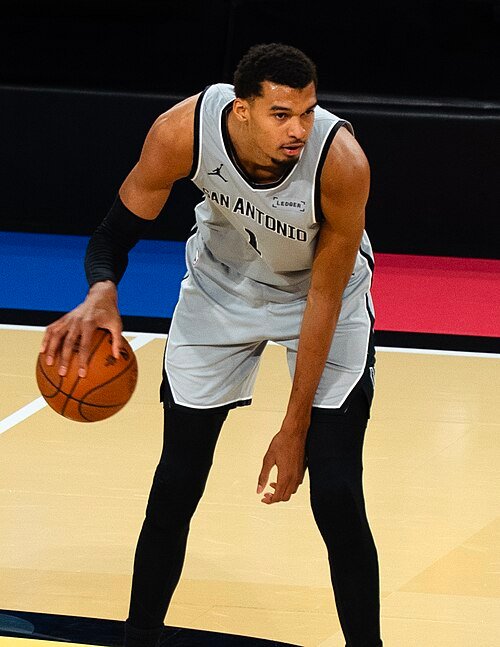
Center: Victor Wembanyama — 8’0″†
Third in wingspan here, Wembanyama could still be the hardest center for these opponents to defend.
Wembanyama’s widely reported eight-foot reach is supported throughout NBA coverage. His ability to operate away from the basket gives this team something its two rival centers would have to think about.
An opposing center who stays near the rim concedes Wembanyama’s outside attempts. Following him to the perimeter instead opens the paint for his teammates. That choice is one of the Third Team’s strongest tactical weapons. The dribble combinations and shooting techniques behind that versatility receive a closer examination among the most skilled seven-footers in NBA history.
Wingspan: 8’0″ — 96 inches, reported
The Third Team’s identity: defensive versatility, transition passing and a center who can change where the opposition has to defend. Half-court spacing is the concern.
The Closest Omissions
- Point guard: Reggie Jackson — reported 7’0″. Below Simmons’s 7’0¼″ in the published figures, with rounding leaving their physical separation uncertain.
- Shooting guard: Rayan Rupert — measured 7’2″. A quarter-inch behind Williams and Coward. Melvin Frazier Jr.’s 7’1¾″ is another notable near-miss.
- Power forward: Elton Brand — published 7’5½″†. Contemporary 1999 draft reporting supports the figure. He ties Davis, who wins the NBA-achievement tiebreaker. Holmgren’s selected 7’6″ figure keeps Brand outside the teams; using 7’5¼″ would return him to Third Team. Rakeem Christmas measured 7’5¼″.
- Center: Zach Edey — measured 7’10¾″. Exceptional length still leaves him behind the three selected centers.
Kevin McHale’s alleged eight-foot wingspan does not enter the ranking: conflicting historical claims have not been resolved by an original measurement record.
Which Team Would Actually Win?
For this hypothetical matchup, each player gets his most impactful established NBA version, healthy, under the same modern rules. Actual NBA performance counts, rather than a prospect’s imagined ceiling. The verdict is basketball judgment, not a statistical simulation.
Our Pick: The Second Team—Narrowly
Durant, Williams and Holmgren give the Second Team the cleanest combination of perimeter creation and shooting. The Third Team, now featuring Davis beside Wembanyama, has the stronger defensive counterargument.
Picture Williams using a Holmgren screen. If the defense crowds Williams, Holmgren can pop outside; if it rotates to both, Durant becomes the next decision. Late in the clock, Durant supplies the most dependable isolation option in this exercise.
The First Team could disrupt those passes and protect the basket in layers. Its problem is generating comparable chances of its own. Length would make an entry pass difficult; it would not make Ntilikina or Caboclo a dependable half-court creator. The First Team’s best scoring plan would start with forcing turnovers, running before the defense sets, and turning offensive rebounds into putbacks.
The Second Team would try Holmgren on Wembanyama and Fall on Davis, with Williams beginning on Simmons. That keeps Fall closer to the paint, but Davis can move him through screens and face-up attacks. Durant would need to track Kirilenko’s cuts and help rebound; his length would not make every rotation automatic.
Transition makes those assignments harder to establish. Picture Simmons rebounding and running while Williams tries to slow the ball. Holmgren retreats toward Davis’s rim run, and Wembanyama trails outside while Fall works back into the play. The defense must stop the drive, cover Davis and recover to Wembanyama. Its size offers protection once set; getting set is the problem.
Third Team could win through defense, transition and offensive rebounding. In the half court, Simmons’s defender can help toward Davis’s catches or Kirilenko’s cuts while conceding an outside shot to Simmons. Third Team can use Simmons as a screener, cutter or handoff partner to force another defensive decision. Those counters help, but his defender can still retreat after the action, and they place more responsibility on Coward and Wembanyama to make perimeter shots. Second Team has more ways to create perimeter shots, although Fall keeps it from being a five-out offense. That gives it the narrow edge.
- Second Team — Durant’s shot creation, Williams’s ball handling and Holmgren’s spacing.
- Third Team — Davis and Wembanyama make it a much closer contest than the team labels suggest.
- First Team — extraordinary defensive length, with the fewest reliable offensive solutions.
Tell us which matchup decides it in the comments.
Sources and Method
Wingspans draw on NBA draft and combine records, team publications and contemporary reporting. Figures marked † are reported; material discrepancies are explained beside the relevant player. Position assignments reflect established NBA roles through 2025–26.