They may have shorter-than-average reach, but skill, speed, and heart turned these fighters into legends despite giving up inches to almost everyone in their division
In MMA, reach is more than a stat; it’s a defining tool. Most fighters have a reach slightly longer than their height, giving them a natural edge in striking and clinches. But a rare few, fighters with a negative ape index, sometimes nicknamed “T-Rex arms,” break that mold.
Take Artem Lobov, for example. At 5’9”, the average UFC lightweight would have a reach around 71 inches, yet Lobov’s is only 65 inches. That’s a foot of reach difference compared to an equally tall opponent like Kevin Lee. In a sport where inches decide takedowns, jabs, and positioning, that kind of disadvantage could be career ending. Yet fighters like Lobov, Max Holloway, Cody Garbrandt, and Justin Gaethje have turned it into a story of skill, timing, and sheer heart, showing that raw physical measurements aren’t the only path to success in the octagon.

9. Justin Gaethje — 5’11” Height / 70″ Reach
- Division: Lightweight (average height ~5’10”, average reach ~72”)
- Ape Index: -1”
- Reach Disadvantage vs. Average: ~2 inches shorter than typical lightweights
Justin Gaethje is one of the most exciting fighters in the UFC, and his slightly shorter reach didn’t stop him from becoming a fearsome striker and fan favorite. At 5’11”, his 70-inch reach is a touch below the division average, meaning he often had to bridge the gap just to connect his leg kicks and punches, a task he turned into part of his aggressive, in-your-face fighting style.
Gaethje’s success highlights a key lesson: negative ape index doesn’t define a fighter’s ceiling. Instead of relying on reach, he mastered pressure, timing, and unrelenting pace, forcing opponents into exchanges where his power and endurance became the decisive factors.
Even against opponents with longer arms, Gaethje’s ability to close distance quickly and strike explosively makes his fights some of the most thrilling in MMA history. His career is proof that heart and technique can overcome a physical disadvantage in reach.
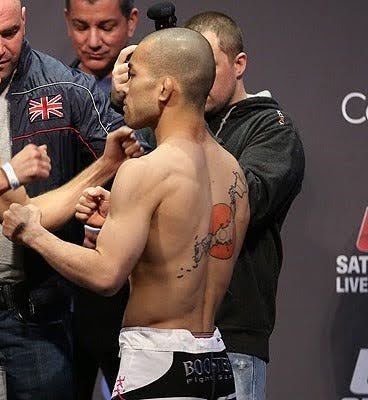
8. Issei Tamura — 5’5″ Height / 63″ Reach
- Division: Bantamweight (average height ~5’7”, average reach ~69”)
- Ape Index: -2”
- Reach Disadvantage vs. Average: ~6 inches shorter than typical bantamweights
Issei Tamura is a fighter whose reach was noticeably shorter than his division’s average, making every exchange in the Octagon a tactical challenge. At 5’5”, his 63-inch reach meant he had to close significant distance just to land strikes that other fighters could reach from a comfortable range.
Despite this, Tamura showed tenacity and adaptability, relying on speed, angles, and precision to mitigate his disadvantage. His fights illustrate how fighters with negative ape indices often have to fight smarter, using footwork and timing to turn a seeming weakness into a competitive edge.
While he never became a household name, Tamura’s career is a reminder that in MMA, overcoming physical limitations is as much about strategy and heart as it is about raw physical tools.

7. Max Holloway — 5’11” Height / 69″ Reach
- Division: Featherweight (average height 5’9”, average reach ~70”)
- Ape Index: -2”
- Reach Disadvantage vs. Average: Slightly below average, giving up ~1 inch compared to typical featherweights
Here’s the jaw-dropping part: Alexander Volkanovski, standing just 5’6”, actually enjoys a reach advantage over Holloway. That’s right, Holloway is five inches taller, yet his wingspan is shorter. In a sport where every inch can define who lands first, this makes Holloway’s achievements even more remarkable.
Despite giving up reach to shorter opponents, Holloway became one of the most feared featherweights in UFC history. His secret? relentless pace, impeccable combinations, and unmatched endurance. He didn’t rely on natural reach; he relied on skill, strategy, and volume striking to control fights and dismantle opponents.
This contrast between Holloway and Volkanovski shows that in MMA, reach isn’t destiny, it’s how you use your tools that defines greatness. Holloway proves that even with a reach disadvantage, you can dominate the division and rewrite the rules of what a fighter can achieve.
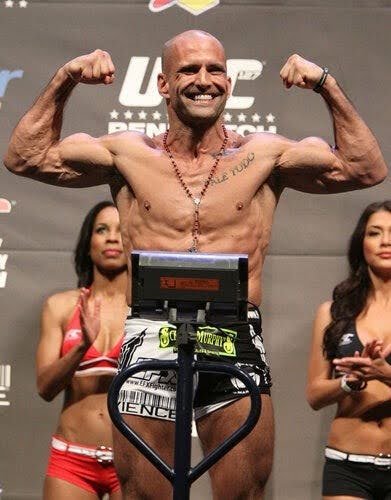
6. Jason Reinhardt — 5’6″ Height / 64″ Reach
- Division: Bantamweight (average height ~5’7”, average reach ~69”)
- Ape Index: -2”
- Reach Disadvantage vs. Average: ~5 inches shorter than typical bantamweights
Jason Reinhardt may not have reached championship glory, but his story highlights the extreme challenges faced by fighters with shorter-than-average reach in their division. Standing at 5’6”, Reinhardt gave up roughly five inches of reach to most bantamweights, making every punch and submission attempt a fight against physics as well as skill.
Despite this, Reinhardt carved out a career in the UFC and WEC, relying on explosive speed, tight combinations, and relentless aggression to compensate for what he lacked in wingspan. His bouts remind fans that in MMA, reach is just one factor, and a fighter’s heart, timing, and technique can sometimes level the playing field against seemingly unfair physical disadvantages.
Reinhardt’s career may not have been decorated with titles, but it offers a compelling lens into how fighters overcome structural challenges, making his story a testament to grit and perseverance in the face of literal arm-length deficits.

5. Darren Uyenoyama — 5’6″ Height / 64″ Reach
- Division: Primarily Flyweight (also competed at Bantamweight and catchweight fights up to Featherweight)
- Ape Index: -2”
- Reach Disadvantage vs. Average Flyweight: ~2 inches shorter than typical
Darren Uyenoyama wasn’t afraid to step up in weight despite his shorter reach. While primarily a Flyweight, he fought as high as Featherweight in tournaments like Dream 4, facing opponents significantly taller and with longer reach. His 64-inch wingspan meant he often gave up several inches of reach to opponents even in his natural weight class, let alone higher divisions.
This forced Uyenoyama to rely on speed, precision, and positional strategy. Closing distance safely, finding angles, and executing quick submissions became his tools to counter opponents’ reach advantage. His career is a testament to tenacity and adaptability, showing that fighters can succeed through technique and courage even when physically outmatched in range.

4. Cody Garbrandt — 5’7″ Height / 65″ Reach
- Division: Bantamweight (average height ~5’7”, average reach ~69”)
- Ape Index: -2”
- Reach Disadvantage vs. Average: ~3 inches shorter than typical bantamweights
Cody “No Love” Garbrandt may have looked ordinary on paper, but in the octagon, his compact frame and shorter reach were no barrier to dominance. Despite giving up reach to almost every opponent in his division, he became the UFC Bantamweight Champion, showing that lightning-fast hands, explosive footwork, and precision striking can neutralize the natural advantage of longer arms.
Facing fighters who could theoretically jab from distances he couldn’t, Garbrandt had to fight smarter, move faster, and commit fully to each combination. His matches were a masterclass in closing the distance, slipping shots, and striking before the opponent could leverage their reach.
In essence, Garbrandt proves that a negative ape index doesn’t dictate failure, it just forces fighters to adapt creatively, sharpen their timing, and rely on skill over size. His story makes fans appreciate the physical challenges he overcame to reach the top of one of UFC’s most competitive divisions.

3. Andy Wang — 5’6″ Height / 63″ Reach
- Division: Lightweight (average height 5’10”, average reach ~72”)
- Ape Index: -3”
- Reach Disadvantage vs. Average: Giving up ~9 inches on most opponents
Competing in the lightweight division at just 5’6” with a 63-inch reach, Andy Wang was facing an enormous structural challenge. Most lightweights stand 5’10” with a reach around 72 inches, meaning Wang was often at a severe disadvantage just to connect his punches. Against fighters of equal height, he would still lose significant reach, forcing him to rely on speed, angles, and impeccable timing rather than raw power.
Wang’s journey shows the reality of competing with a negative ape index at a high level: even skilled fighters can struggle to close distance and land strikes efficiently, making every tactical choice in the octagon crucial. His career highlights just how much heart, intelligence, and precision matter when natural reach isn’t on your side.

2. Chris Lytle — 5’11” Height / 68″ Reach
- Division: Welterweight (average height 5’11½”, average reach ~73½”)
- Ape Index: -3”
- Reach Disadvantage vs. Top Peers: Often giving up 5–8 inches of reach
Chris Lytle was a versatile UFC veteran whose career spanned over a decade. Standing 5’11” with a 68-inch reach, he consistently faced opponents with longer arms in the welterweight division. To put it in perspective, Georges St-Pierre, at 5’10”, had a 76-inch reach, meaning Lytle would give up 8 inches of reach against one of the greatest fighters in UFC history.
Despite this significant disadvantage, Lytle turned his limitations into a tactical approach. He relied on speed, timing, and relentless aggression, often forcing close-range exchanges where his shorter reach mattered less. His career reminds fans that success in the octagon isn’t just about natural gifts, it’s also about grit, adaptability, and making the most of every inch you have.
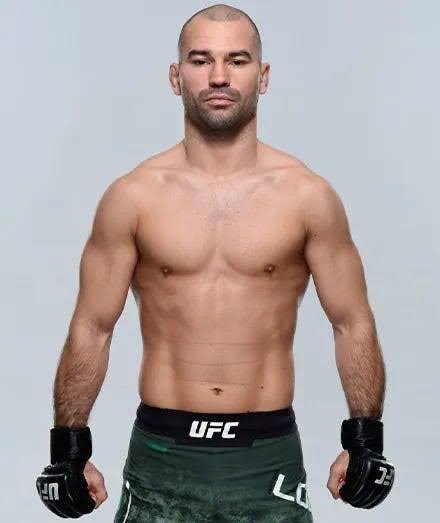
1. Artem Lobov — 5’9″ Height / 65″ Reach
- Division: Lightweight (average height 5’10”, average reach ~72”)
- Ape Index: -4”
- Reach Disadvantage vs. Top Peers: Faces opponents giving up to a foot of reach in his weight class
Artem Lobov is the quintessential example of a fighter who entered the octagon already behind on paper. Standing at 5’9”, his 65-inch reach is shockingly short for a lightweight, especially when the average UFC fighter in the division has a reach close to 72 inches. Put in perspective, against someone like Kevin Lee, also 5’9” but with a 77-inch reach, Lobov is giving up 12 inches of arm length, a huge margin in a sport where every inch counts for jabs, clinches, and submission setups.
Despite this glaring disadvantage, Lobov carved out a niche in the UFC through pressure fighting, relentless pace, and scrappy durability. He often had to close the distance faster than his opponents, turning what might have been a liability into a defining part of his style. Lobov’s fights were rarely won on reach; they were won on grit, heart, and timing, making him one of the more compelling underdog stories in MMA history.
Final Thoughts: Turning a Disadvantage into a Story of Grit
In MMA, reach is often seen as a defining advantage, but these fighters prove that shorter arms don’t automatically mean shorter careers. From Artem Lobov giving up nearly a foot of reach against a lightweight like Kevin Lee, to Alexander Volkanovski using clever timing to out-reach taller opponents like Max Holloway, and Darren Uyenoyama stepping up multiple weight classes, these athletes turned a physical disadvantage into a testament of skill, resilience, and strategy.
Their careers remind fans that MMA isn’t just about who has the longest arms, it’s about how you use what you have, how you adapt, and how determination can make up for what nature didn’t provide. In some ways, these “T-Rex arms” fighters make the sport more compelling: every inch matters, but heart matters more.